
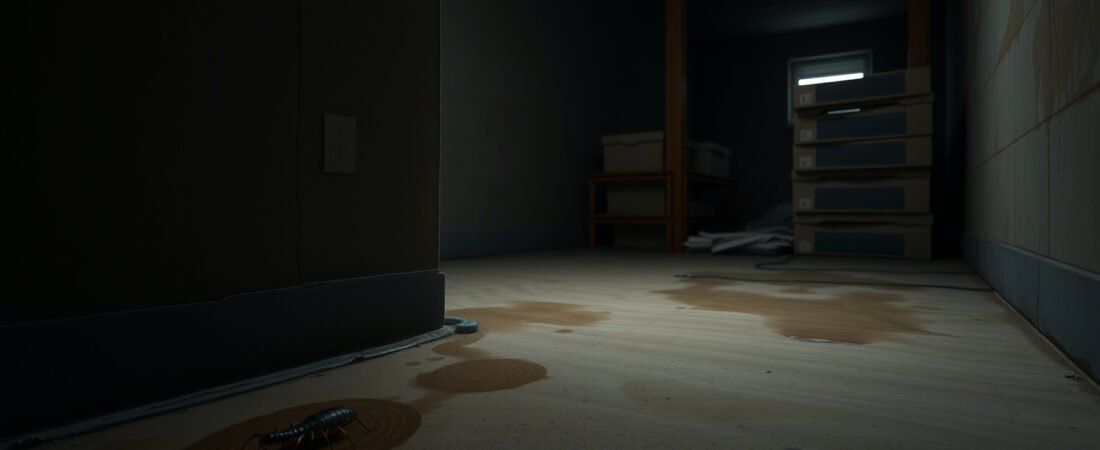
Killing centipedes one by one is the wrong strategy — and it’s why most people still have them six months later. House centipedes aren’t the problem. They’re a symptom. Every centipede you see in your bathroom or basement is there because something else is already living in your walls, drains, or crawl space feeding them. Fix the food source, fix the moisture, seal the entry points — and the centipedes disappear on their own. This article walks you through exactly how to do that.
Why Do You Have Centipedes in Your House in the First Place?
House centipedes (Scutigera coleoptrata) are predatory arthropods that eat other bugs — silverfish, spiders, cockroach nymphs, earwigs, and small flies. They don’t come inside for your food or your garbage. They follow their prey. If you’re seeing centipedes regularly, you almost certainly have a secondary pest population you haven’t found yet, and the centipedes are just the visible tip of that iceberg.
Moisture is the other half of the equation. Centipedes breathe through spiracles and lose water rapidly in dry air, so they’re physically compelled to seek out humid environments. Basements that sit at 70% relative humidity or higher, bathrooms with slow-draining pipes, crawl spaces with no vapor barrier — these aren’t just inconvenient; they’re centipede habitat. A dehumidifier that brings a basement down to below 50% relative humidity will do more to drive centipedes out than any spray you can buy.
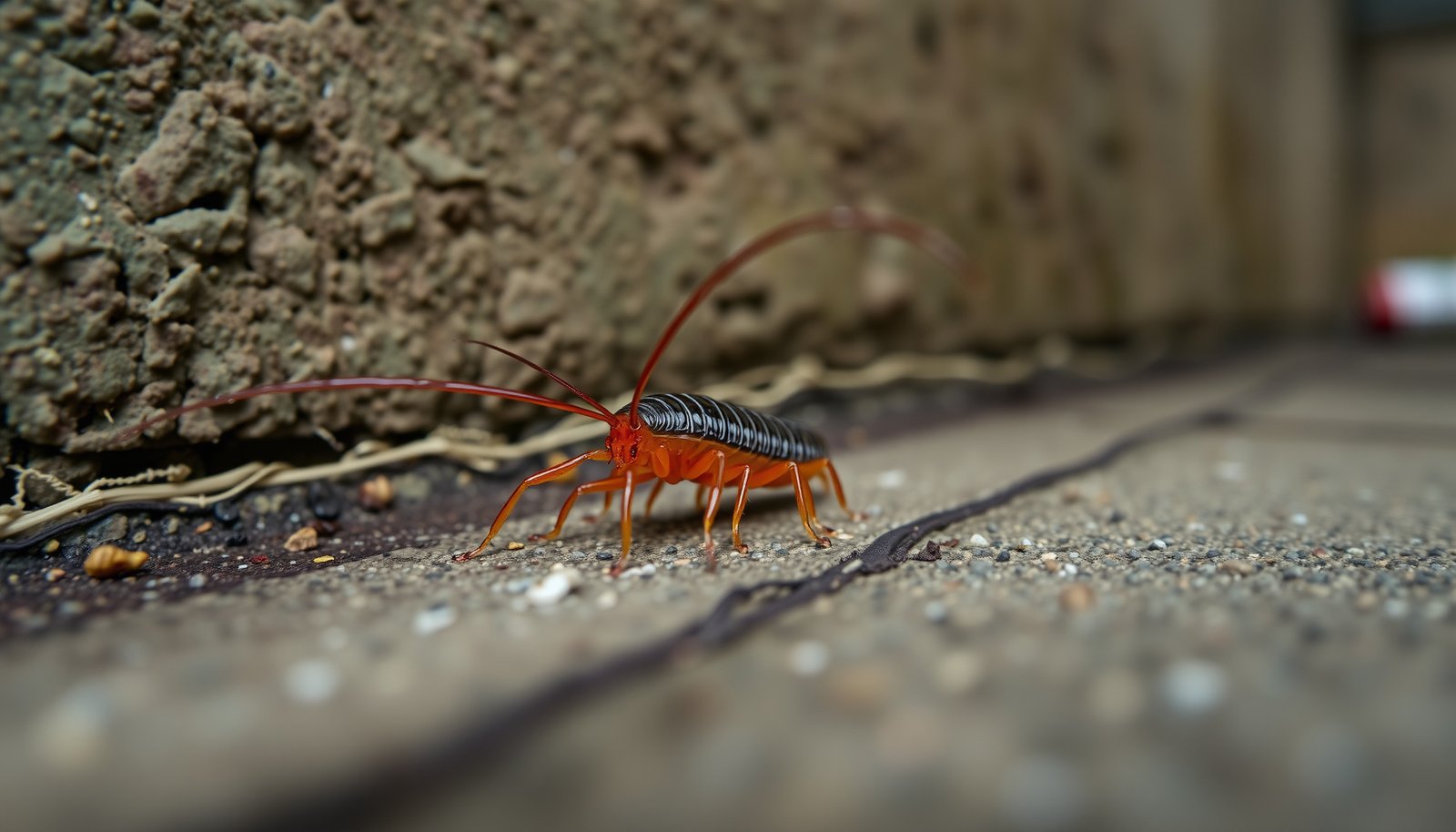
This close-up shows the long, banded legs and flattened body of a common house centipede — notice how thin and fast-moving it appears, which explains why it’s often mistaken for something far more dangerous than it actually is.
What’s Actually Attracting Centipedes to Specific Rooms?
Picture this: you walk into your basement laundry room at night, flip the light, and something with what looks like thirty legs sprints across the floor and disappears behind the water heater. That’s not random. That water heater produces condensation, the laundry area has a floor drain where organic debris accumulates, and there’s a dark, undisturbed corner behind the appliances where silverfish have been quietly breeding for months. The centipede knew exactly where to be.
Different rooms attract centipedes for different reasons, and treating them the same way is a waste of time and money. Here’s what’s actually driving centipede activity by location:
| Room / Area | Primary Attractant | What to Address First |
|---|---|---|
| Basement | High humidity, prey insects, dark corners | Dehumidifier, vapor barrier, clutter removal |
| Bathroom | Drain moisture, silverfish, slow drains | Drain cleaning, fix leaks, seal pipe gaps |
| Crawl space | Standing water, soil contact, insects | Vapor barrier, ventilation, entry sealing |
| First-floor walls / garage | Exterior entry, prey near foundation | Caulk gaps, exterior perimeter spray |
One thing that surprises a lot of homeowners: centipedes found upstairs — in bedrooms or living areas — are almost always there by accident. They wandered from a lower level and got disoriented. Upstairs sightings mean you have an active population somewhere below, not that your bedroom has a problem of its own.
How to Get Rid of Centipedes in Your House: Step-by-Step
Getting rid of centipedes permanently requires attacking three things simultaneously: their food supply, their moisture sources, and their entry points. Skipping any one of these and just spraying insecticide is like bailing water from a boat without plugging the hole. You’ll get short-term reduction and long-term frustration.
Work through these steps in order — the sequence matters because sealing entry points before addressing interior conditions just traps existing centipedes (and their prey) inside with you.
- Eliminate their food source first. Treat for the bugs centipedes are hunting. Look for silverfish in bathrooms and book storage areas, spider populations in undisturbed corners, and any visible cockroach activity near drains or under appliances. Sticky traps placed in corners and along baseboards for 72 hours will tell you exactly what prey insects are present — the variety you catch will point you toward what’s feeding your centipede population.
- Reduce moisture aggressively. Run a dehumidifier in the basement and crawl space targeting below 50% relative humidity. Fix any dripping pipes within 24-48 hours of finding them — even minor leaks under sinks create the damp microclimates centipedes need to survive. If your crawl space has exposed soil, a 6-mil polyethylene vapor barrier covering the entire floor makes a measurable difference in the moisture that migrates up into the living space.
- Remove harborage sites. Centipedes don’t nest — they hide. Stacked cardboard boxes, piles of lumber, undisturbed storage in basements and garages, and leaf litter against the foundation exterior all give them places to shelter between hunting. Clearing these areas within 10 feet of the foundation reduces the exterior population that feeds interior migration significantly.
- Seal entry points from the outside in. Centipedes enter through gaps around pipe penetrations, foundation cracks, window wells, and the gap between the sill plate and foundation. Use caulk rated for masonry on foundation cracks and expanding foam for utility penetrations. Door sweeps on basement doors and weather stripping on ground-level entry points close the most common pathways. A standard house centipede can compress its body and move through a gap as small as 1/4 inch.
- Apply targeted insecticide as a supplemental tool. A residual pyrethroid spray (bifenthrin or cyfluthrin) applied as a perimeter band 3 feet up the exterior foundation and 3 feet out on the ground creates a treated zone that kills centipedes crossing into the house. Indoors, diatomaceous earth applied in a thin layer behind appliances, under water heaters, and along the base of basement walls damages the centipede’s waxy exoskeleton over repeated contact, causing dehydration. Don’t saturate — a light, even application is more effective than a heavy dump.
Pro-Tip: Before applying any indoor spray, run sticky traps for 3 nights to map exactly where centipede activity is concentrated. Spraying random baseboards wastes product and often misses the 2-3 specific spots where 80% of the traffic is occurring. Let the traps show you where to treat.
Are House Centipedes Dangerous — Or Are You Solving the Wrong Problem?
Here’s the counterintuitive part that most pest control articles skip: house centipedes are technically beneficial. They’re eating the bugs you’d rather not have. A house centipede can consume up to 10-15 prey insects per day, and in a home with a silverfish or spider mite problem, that’s free pest control running 24 hours a day. The discomfort of seeing them is real, but the biological role they’re filling is useful.
That said, their presence as an indicator species is the most valuable information they give you. If you’re seeing 4 or more centipedes per week in a single area, you have a significant prey insect population that needs to be addressed regardless of your feelings about the centipedes themselves. Some homeowners dealing with what looked like a centipede problem have discovered active German cockroach nymphs under a rarely-moved appliance — the centipedes were just the visible sign of something much more pressing happening in the dark. As for bites: house centipedes can bite if handled roughly, but their venom is weak and the bite is generally compared to a mild bee sting. Unless you’re handling them, the risk is essentially zero.
“House centipedes are one of the most reliable indicator species in a residential pest assessment. When a homeowner reports frequent centipede sightings, my first question isn’t how to eliminate the centipedes — it’s what prey insects are sustaining a population that active. Nine times out of ten, we find a secondary infestation that would have gone unnoticed without the centipede activity drawing attention to it.”
Dr. Rachel Simms, Board-Certified Entomologist and University Extension Specialist in Urban Pest Management
When Should You Call a Professional for Centipedes?
DIY works well for most house centipede situations — if you can identify the moisture source, treat for prey insects, and seal the entry points, you’ll typically see a dramatic reduction within 2-4 weeks. The cases where professional help genuinely makes sense are narrower than pest control companies sometimes suggest, but they’re real.
Consider calling a licensed pest control professional when:
- You’re seeing 10 or more centipedes per week consistently across multiple rooms — this level of activity usually means an established prey insect population that requires professional-grade treatment, not just perimeter spray.
- You’ve addressed moisture and harborage and the problem hasn’t improved in 30 days — at that point, there’s likely a hidden entry point or a prey insect source (like a wall void infestation) that requires inspection equipment to locate.
- You live in a multi-unit building and the centipede activity is coming from a shared wall or neighboring unit — this is a structural and coordination problem, not a solo DIY fix. If you’re a renter in this situation, it’s worth understanding your rights around pest control responsibility, and knowing that a landlord cannot legally evict you for reporting a pest infestation in most states.
- Your crawl space has standing water, structural moisture damage, or significant insect activity — this requires remediation beyond what a homeowner can safely or effectively do alone.
- You’ve identified a secondary infestation (cockroaches, heavy silverfish, drain flies) that is beyond a minor outbreak — treating the centipedes without professionally addressing the prey population just delays the problem.
One honest nuance worth naming: in dry climates like the Southwest, centipede pressure from outdoors is naturally higher year-round because species like the desert centipede actively seek climate-controlled interiors during extreme heat. In those regions, even a meticulously maintained home may see occasional centipede entries through foundation gaps that are genuinely difficult to eliminate completely. Reducing frequency is a realistic goal; zero sightings forever may not be, depending on where you live and the age of your foundation.
One thing worth double-checking before you assume you have centipedes: some small, fast-moving pale insects get misidentified as centipede juveniles when they’re actually something else entirely. If you’re finding tiny pale bugs in unexpected places like bedding or mattress seams, it’s worth reading about what tiny white bugs in a bed might actually be — the identification changes the fix completely.
The centipedes in your house are telling you something. Once you fix what they’re responding to — the moisture, the prey insects, the cracks in the foundation — most of them leave on their own within a few weeks. The ones that remain are easy enough to handle with a targeted perimeter spray and some diatomaceous earth in the right spots. Start with the root causes, and you won’t be back to square one next spring.
Frequently Asked Questions
what causes centipedes to come inside your house?
Centipedes come inside chasing moisture and prey — if you’ve got them, you almost certainly have other bugs like silverfish, spiders, or roaches too. They’re also drawn to dark, damp spaces like basements, bathrooms, and crawl spaces, especially when outdoor temperatures drop. Fixing leaks, reducing clutter, and sealing entry points removes the conditions that attract them in the first place.
how do I get rid of centipedes in my house fast?
The fastest way to knock down a centipede problem is to apply a residual insecticide spray like one containing cypermethrin or deltamethrin along baseboards, in corners, and around drains. Sticky traps placed near walls and in cabinets can also catch them quickly and show you where activity is highest. For most homes, you’ll see a noticeable drop in centipede sightings within 3 to 7 days of treatment.
are house centipedes dangerous to humans?
House centipedes can technically bite, but they rarely do unless you’re handling one or accidentally trap it against your skin. Their venom is weak — at worst you’ll get minor swelling and redness similar to a bee sting, which typically clears up within a few hours. They’re not dangerous to healthy adults, though people with insect venom allergies should still use caution.
why do I suddenly have so many centipedes in my basement?
A sudden spike in basement centipedes usually means moisture levels have gone up or their food supply has grown — both are common after wet weather or a slow plumbing leak. Basements with humidity above 50% are prime habitat, so running a dehumidifier and fixing any leaks is a critical first step. If the centipede count is high, it’s also worth inspecting for other pest activity since centipedes don’t stick around where there’s nothing to eat.
what smells or natural remedies keep centipedes away?
Peppermint oil is the most commonly used natural repellent — mix about 25 drops with water in a spray bottle and apply it along entry points and baseboards. Diatomaceous earth sprinkled in cracks, along walls, and under appliances also works well by damaging centipedes’ exoskeletons when they walk through it. These methods help deter centipedes but work best as a prevention tool after you’ve addressed the moisture and clutter issues that attract them.
Disclaimer: This article is for informational purposes only and isn’t a substitute for professional pest control advice. Always read and follow the product label instructions exactly — label directions are legally binding and vary by brand and active ingredient. Keep all pesticides, baits and traps away from children and pets, ventilate treated areas as directed, and consider calling a licensed pest control professional if an infestation is large, recurring, or involves a structural pest like termites or carpenter ants.