
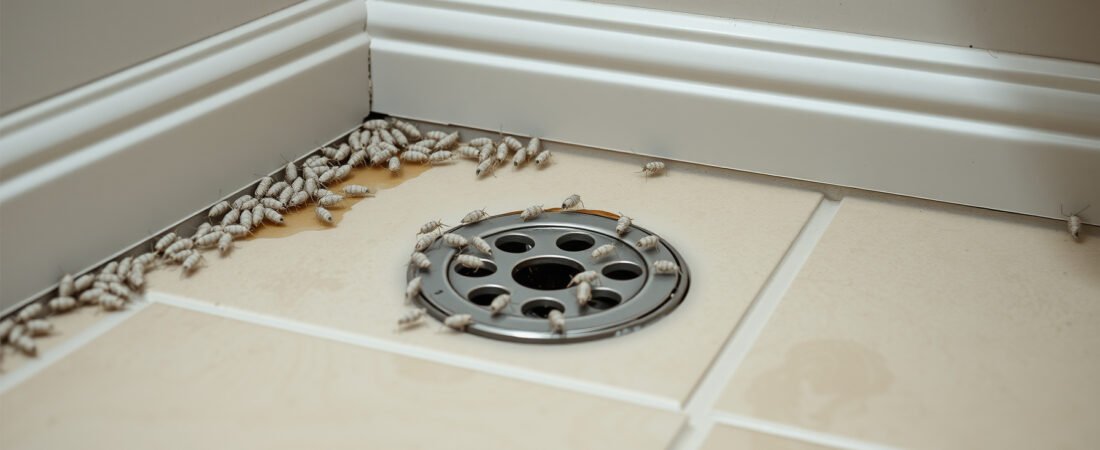
Springtails don’t come from your drain — they come from your moisture problem. That single misunderstanding is why thousands of homeowners scrub their drains obsessively, pour bleach down every pipe in the house, and watch the springtails come right back within a week. The bugs aren’t living in your plumbing. They’re living in the wet drywall behind it, the saturated grout under the tile, the soaking-wet subfloor beneath your basement carpet. Kill the source — the chronic dampness — and the springtails leave on their own. Skip that step and you’re just chasing them around your house forever.
Why Do Springtails Appear in Bathrooms and Basements Specifically?
Springtails are fungivores — they eat mold, algae, and decaying organic matter, not your food or your wood. That’s the key to understanding why they concentrate in bathrooms and basements rather than your kitchen pantry or bedroom. These are the two rooms in a home most likely to sustain relative humidity above 80%, which is the threshold where mold grows fast enough to feed a visible springtail population. A bathroom with poor ventilation and a slow drip under the vanity can support hundreds of springtails in the wall cavity without a single one ever touching your drain.
Basements add a second layer: direct soil contact. Springtails are native soil organisms — a healthy outdoor lawn can host 100,000 springtails per square meter without any visible signs. When a basement has a hairline crack in the foundation, condensation on cold concrete walls, or a sump pit that never fully dries, it creates a seamless indoor extension of their natural habitat. They’re not “infesting” your home the way cockroaches do. They’re following a moisture gradient from outside to inside, and they’ll keep following it as long as it exists.
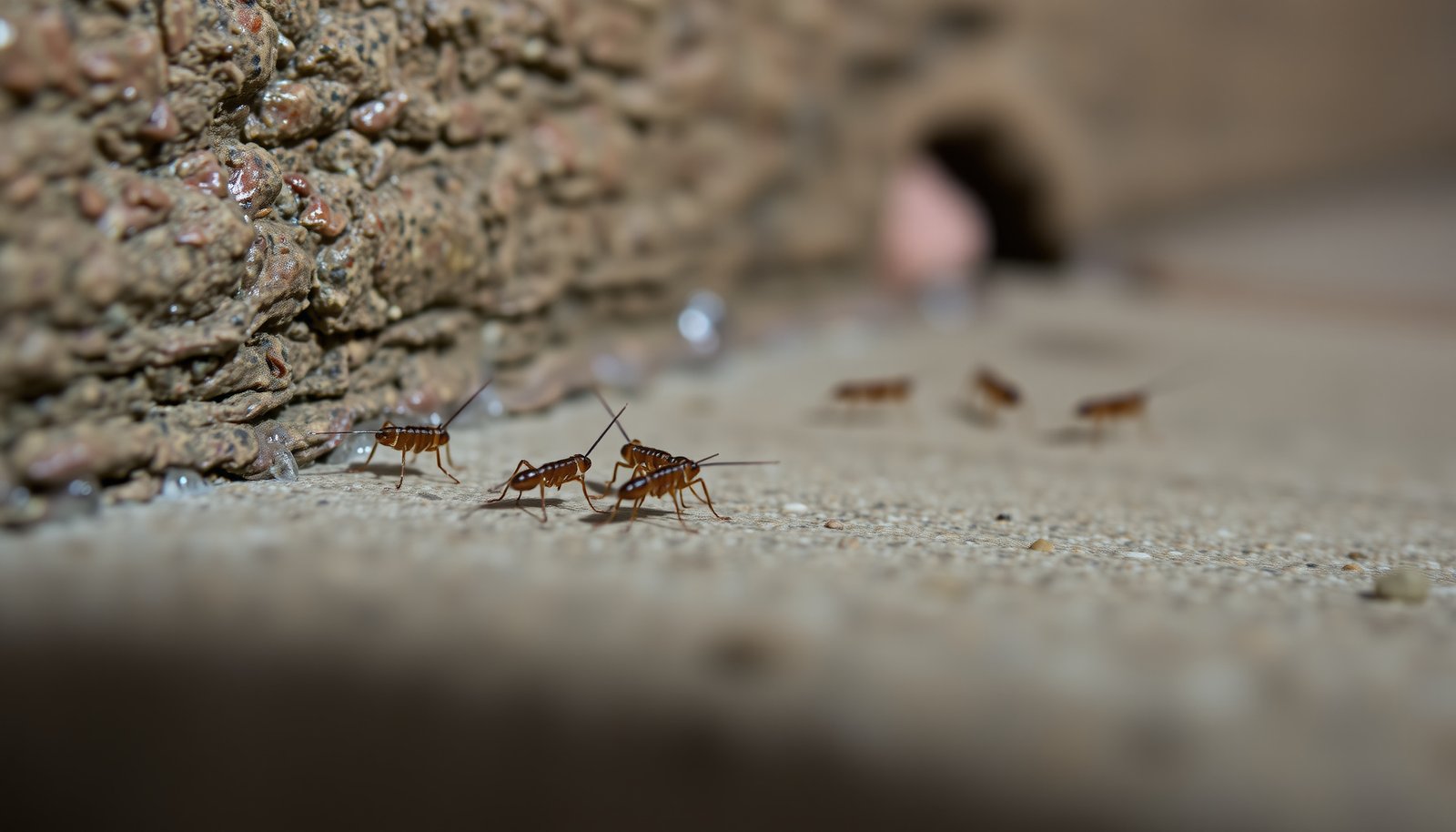
This close-up shows springtails clustered near a damp grout line — exactly the kind of surface moisture that draws them indoors and the real starting point for any effective treatment.
How Do You Know It’s Actually Springtails and Not Something Else?
Springtails are tiny — most species measure between 1 and 2 millimeters long — which means they get confused with fleas, mites, and even mold gnats regularly. The single fastest identification test: disturb them. Springtails have a forked tail structure called a furcula tucked under their abdomen that releases like a spring, launching them several inches into the air in an instant. If a cluster of tiny bugs near your shower base scatters by jumping rather than flying or crawling away, you almost certainly have springtails. Fleas also jump, but fleas are reddish-brown, visibly larger, and don’t congregate in wet grout.
Color matters too. The most common indoor springtails are white or gray, though some species are dark blue or purple. You’ll often see them massed near standing water — a puddle on the basement floor, the water tray under a houseplant, a slow-draining shower corner. People frequently mistake them for tiny moving specks of dirt until the specks jump. One honest caveat here: if you’re seeing bugs in your bed or on dry surfaces well away from any moisture source, it’s probably not springtails. Their need for humidity is that absolute — they actually breathe through their skin and die within hours on a dry surface.
“Springtails are one of the most moisture-dependent arthropods we deal with in structural pest control. I’ve seen cases where a homeowner treated for months with no success because the actual entry point was a failed vapor barrier in the crawlspace — not the basement drain everyone assumed. Fix the moisture source and 90% of springtail cases resolve without any chemical treatment at all.”
Dr. Ellen Marsh, Board-Certified Entomologist and Extension Specialist, Urban Pest Management Program
What Actually Gets Rid of Springtails — And What Wastes Your Time?
Here’s the counterintuitive reality of springtail control: insecticide is the last tool you should reach for, not the first. Spraying a pyrethroid around your shower base will kill the springtails touching those surfaces within a few hours. But the colony living in the moisture-saturated wall behind the tile? Completely untouched. You’ll see a drop in visible numbers for a week or two, then they’re back — because the damp, mold-covered substrate they’re feeding on is still sitting two inches behind the wall you just sprayed. This pattern is exactly why so many homeowners conclude springtails are impossible to kill.
Effective control follows a strict sequence: reduce moisture first, treat surfaces second, seal entry points third. Picture this — a homeowner spends three weekends spraying every commercial bug killer available, calls a pest control company twice, and still has springtails in the basement bathroom. A plumber finally identifies a slow leak in the supply line behind the wall. Within three weeks of fixing that single pipe, the springtail population collapses entirely — no additional pesticide needed. That outcome isn’t unusual. It’s the norm when the root cause gets addressed.
Pro-Tip: Buy an inexpensive digital hygrometer (under $15 at any hardware store) and place it in your basement and bathroom. Springtail populations thrive when relative humidity stays above 80%. If your reading is consistently at or above that level, no amount of insecticide will solve the problem long-term — you need a dehumidifier, improved ventilation, or a plumbing inspection first.
Step-by-Step: How to Get Rid of Springtails in a Bathroom
Bathrooms are usually the easier of the two spaces to fix because the moisture sources are more contained and visible. The goal is to eliminate every chronically wet surface that isn’t actively in use — standing water, perpetually damp grout, and the hidden wet zones that most people never check. Work through this sequence in order rather than jumping to the spray step.
- Check under every fixture for hidden leaks. Run your hand along the supply lines under the sink and behind the toilet. Even a drip rate of one drop per minute creates enough sustained moisture in the cabinet base to support a springtail colony for months. Fix any active leaks before doing anything else.
- Improve exhaust ventilation immediately after showers. Run your bathroom exhaust fan for at least 20 minutes after every shower — not just during. Most people run it for 5 minutes. That’s not enough to drop humidity below the springtail threshold. If your fan is old and weak, replacing it is one of the highest-return investments in springtail prevention.
- Re-caulk or regrout any deteriorating tile joints. Cracked caulk at the tub/wall seam or missing grout between floor tiles allows water to penetrate the substrate beneath. That substrate — usually cement board or drywall — stays wet indefinitely and becomes a feeding ground. A $6 tube of mold-resistant caulk can eliminate the habitat entirely.
- Apply a residual insecticide to cracks and crevices — not open surfaces. Once moisture is controlled, a product containing deltamethrin or bifenthrin applied specifically into cracks around the toilet base, vanity edges, and floor-wall junctions will eliminate stragglers. Don’t broadcast spray the whole floor — it’s unnecessary and less effective than targeted crack-and-crevice application.
- Treat visible mold on grout and caulk lines. A diluted bleach solution (1 cup bleach per gallon of water) applied to discolored grout eliminates the mold that springtails are feeding on. Let it sit 10 minutes before scrubbing. This removes the food source, not just the bugs.
One thing that genuinely surprises people: bathroom exhaust fans are often the single most impactful fix in the whole process. A fan that moves less than 50 CFM (cubic feet per minute) in a standard bathroom is essentially decorative — check the rating on your unit’s label and replace anything below that threshold if springtails keep returning.
How to Get Rid of Springtails in a Basement — It’s a Different Problem
Basements require a different approach because the moisture often comes from outside the structure, not from plumbing inside it. Foundation seepage, condensation on concrete walls, and inadequate vapor barriers under slab or in crawlspaces are the primary drivers of basement springtail populations — and none of those respond to caulk and fan upgrades the way bathroom problems do. You’re dealing with hydrostatic pressure and ground-level humidity, which means the fixes are bigger and sometimes more expensive.
That said, there’s a lot you can do before calling a waterproofing contractor. A quality dehumidifier rated for your basement’s square footage — running continuously and draining into a floor drain rather than filling a tank you forget to empty — can reduce relative humidity from 85% to under 55% within 48 to 72 hours. At that humidity level, the mold dies back and springtails begin dying from desiccation within days. For readers who are also dealing with other moisture-loving pests showing up alongside springtails, it’s worth knowing how to distinguish different pest signs — for example, How to Identify Bat Droppings vs Mouse Droppings is a useful reference if you’re finding unidentified debris near basement entry points.
| Moisture Source | What You’ll See | Fix |
|---|---|---|
| Foundation seepage | Springtails clustered near base of walls, white mineral deposits on concrete | Exterior grading correction, interior waterproof paint, or sump pit installation |
| Condensation on cold walls | Bugs on wall surfaces, damp spots without visible leak | Dehumidifier, insulate cold pipes, improve airflow |
| Failed vapor barrier (crawlspace) | Springtails throughout basement, musty smell, high humidity readings | Replace or install 6-mil polyethylene vapor barrier over soil |
| Overwatered houseplants or plant trays | Springtails concentrated around specific plants | Let soil dry fully between waterings, eliminate standing water in trays |
Here’s what the treatment options look like across common basement scenarios, in terms of surface-level chemical options once moisture is under control:
- Diatomaceous earth along wall-floor junctions: Food-grade DE applied as a thin line where the wall meets the floor damages the springtail’s exoskeleton on contact. It works mechanically, not chemically, and stays effective as long as it remains dry.
- Cinnamon or cedar-based deterrents near entry points: These aren’t pesticides but they do disrupt the sensory trail springtails follow along moisture gradients. Apply near foundation cracks as a supplemental measure, not a primary fix.
- Boric acid dust in wall voids and crawlspace areas: Applied into cracks and voids with a hand duster, boric acid provides residual control in areas you can’t reach with spray. Use a light application — too much and it cakes up and becomes ineffective.
- Perimeter insecticide spray (bifenthrin or lambda-cyhalothrin): For severe infestations, spray the lower 2 feet of basement walls and the floor-wall junction with a residual pyrethroid. Reapply every 30 days until the population drops — usually 2 to 3 applications are sufficient once moisture is controlled.
- Seal visible foundation cracks with hydraulic cement or epoxy injection: This is the most permanent fix for springtails entering through the foundation. Hydraulic cement expands as it cures and creates a waterproof seal even in damp conditions.
Renters dealing with persistent springtail problems in a basement apartment should know that landlords have legal obligations around habitability — if a chronic moisture intrusion is causing both springtail infestations and mold growth, that’s a habitability issue, not a cosmetic one. For context on how far those rights extend, the article on Moving Out Because of Roaches: Is It Legally Justified? covers the broader legal framework around pest-related habitability claims that applies to springtail situations in rental properties too.
One honest nuance worth acknowledging: in older homes with block-wall foundations in high water-table areas, springtail pressure from outside can be so persistent that complete elimination isn’t realistic without professional waterproofing. In those cases, ongoing dehumidification and quarterly perimeter treatment are more practical goals than a permanent zero-bug result. That’s not failure — that’s managing the actual conditions you’re working with.
Springtails are a symptom of a building problem, not the problem itself. Once you start reading them that way — as moisture indicators rather than pests to be exterminated — the path forward becomes much clearer. Fix the wet conditions, and you’re not just getting rid of springtails. You’re preventing the mold growth and structural damage that come with chronic moisture, which is a far bigger win than any bug spray could ever deliver.
Frequently Asked Questions
what causes springtails in bathroom and basement?
Springtails are drawn to moisture, mold, and decaying organic matter. They typically show up when indoor humidity stays above 50% for extended periods, which is common in bathrooms with poor ventilation and basements with water seepage or leaky pipes. Fixing the moisture source is the only long-term fix — killing the bugs without addressing humidity just brings them back.
how do I get rid of springtails in my bathroom drain?
Pour a mixture of white vinegar and boiling water down the drain to kill springtails and break down the organic buildup they’re feeding on. You can also use a foaming drain cleaner or a diluted bleach solution — about 1 cup of bleach to 1 gallon of water — flushed directly into the drain. Do this once a week for 2-3 weeks until the infestation clears up.
are springtails in the bathroom harmful to humans?
Springtails don’t bite, sting, or spread disease, so they’re not directly harmful to people or pets. That said, their presence usually signals a moisture or mold problem in your home, which can be a health concern on its own. If you’re seeing springtails regularly, it’s worth checking for hidden leaks or mold behind walls and under flooring.
what spray kills springtails in basement?
Residual insecticide sprays containing deltamethrin, bifenthrin, or cyfluthrin work well for killing springtails on contact and leaving a barrier that keeps them away. Apply along baseboards, wall cracks, and anywhere you’ve seen activity. For a non-chemical option, diatomaceous earth spread in dry areas of the basement is effective — though it loses effectiveness if it gets wet.
how do I stop springtails from coming back in my home?
The single most effective prevention step is keeping indoor humidity below 50% using a dehumidifier, especially in basements and crawl spaces. Fix any leaky pipes, improve bathroom ventilation with an exhaust fan, and seal cracks in the foundation where moisture and bugs can enter. Removing leaf litter, mulch, or soil buildup from right against your home’s exterior also cuts off a major entry point.
Disclaimer: This article is for informational purposes only and isn’t a substitute for professional pest control advice. Always read and follow the product label instructions exactly — label directions are legally binding and vary by brand and active ingredient. Keep all pesticides, baits and traps away from children and pets, ventilate treated areas as directed, and consider calling a licensed pest control professional if an infestation is large, recurring, or involves a structural pest like termites or carpenter ants.