

Yes — moving out because of roaches can be legally justified, and in many states it’s a recognized tenant remedy called “constructive eviction.” But here’s what almost every article on this topic gets wrong: the legal question isn’t really about the roaches. It’s about what your landlord did — or didn’t do — after you told them.
That distinction matters more than the severity of the infestation, the species involved, or how long you’ve lived there. A single conversation with your landlord — even a text message — can either protect you legally or leave you holding an unpaid lease and a collections notice. Most tenants skip straight to “can I leave?” without understanding that the answer depends almost entirely on a paper trail they probably haven’t built yet.
This article won’t tell you to just break your lease and hope for the best. What it will do is walk you through the legal mechanism behind tenant-initiated lease termination, what you actually need to document, and where most renters go wrong before they ever call a lawyer.
What Does “Legally Justified” Actually Mean for a Roach Infestation?
Every state has some version of the “implied warranty of habitability” — a legal baseline that says your rental unit must be livable. Roach infestations that are severe enough to pose a health hazard almost universally fall under this standard. The tricky part is that “severe enough” is a legal judgment, not a pest control one, and courts have interpreted it differently depending on the state, the building type, and the specifics of the case.
Constructive eviction is the legal term for what happens when a landlord’s failure to maintain habitable conditions effectively forces a tenant to leave. To successfully claim it, you generally need to show three things: the conditions were severe, you notified your landlord, and they failed to act within a reasonable timeframe. Walking out without that paper trail — even with a kitchen literally carpeted in German cockroaches — can leave you liable for every remaining month of rent.
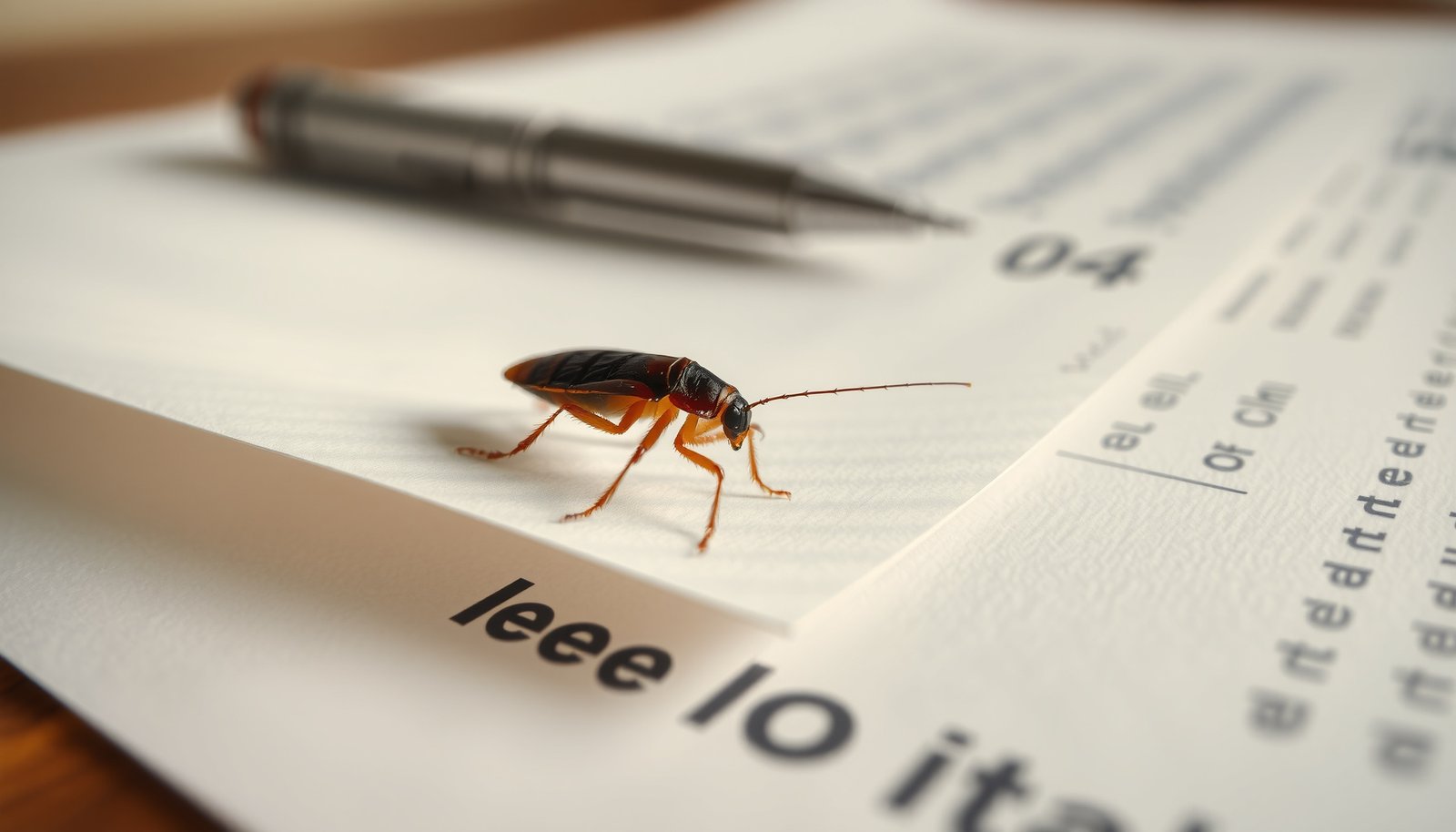
This close-up shows the kind of visible cockroach activity — droppings, shed skins, and live insects in a kitchen cabinet — that courts and housing inspectors consider evidence of an active, uncontrolled infestation rather than an isolated sighting.
Can a Roach Infestation Actually Void Your Lease?
In many states, yes — but not automatically. Most tenant-friendly states allow a renter to terminate a lease without penalty when a landlord has received written notice of a habitability violation and failed to remediate it within a set window, typically 14 to 30 days. Some states, like California and New York, have codified this right explicitly. Others rely on case law, which means you’d need an attorney to assess your specific situation before acting.
Here’s a detail that surprises a lot of people: the lease itself often can’t override the warranty of habitability. Even if your lease contains language that says the tenant is responsible for pest control, courts in most jurisdictions have ruled that landlords can’t contractually waive their duty to provide a habitable unit. A clause that shifts all pest responsibility to you might be unenforceable — but you’d need to test that in court or a housing tribunal, which is why documentation is everything before you move.
What You Need to Document Before You Consider Leaving
This is where most tenants lose their legal standing. They’re frustrated, they’re grossed out — rightfully — and they move out thinking the roaches speak for themselves. They don’t. You need a documented record that shows the infestation, your notification to the landlord, and their response (or lack of one).
Picture this: you’ve been texting your landlord about roaches for three months. He keeps saying he’ll “send someone.” No one ever comes. You finally move out and he sues you for four months of unpaid rent. Without screenshots of those texts — dated and saved — you’re relying on your word against his in front of a judge who’s seen this exact situation a hundred times. The texts alone could be the difference between winning and owing thousands of dollars.
Pro-Tip: Send your landlord a written notice of the infestation via certified mail — even if you’ve already texted or emailed them. Certified mail creates a legally recognized delivery record that text messages and emails sometimes don’t, depending on your state’s evidentiary rules. Keep the tracking receipt.
Here’s a practical documentation checklist to build before you take any action:
- Photograph and video the infestation — capture live roaches, droppings, egg cases (oothecae), and shed skins. A German cockroach produces 30–40 eggs per capsule, and visible egg cases signal an established colony, not a fluke.
- Log every communication with your landlord — dates, methods, exact wording. Screenshot everything and back it up to cloud storage immediately.
- Send written notice via certified mail — a formal letter describing the problem, what you’ve already reported, and a request for written confirmation of the remediation plan.
- Contact your local housing authority or code enforcement — a filed complaint creates an official third-party record. An inspector’s report is far more persuasive than your personal photos alone.
- Keep a dated journal — note every sighting, every failed exterminator visit, every day you couldn’t use your kitchen or sleep without disturbance. This establishes the ongoing nature of the harm.
- Consult a tenant’s rights attorney or legal aid clinic — many offer free consultations. Do this before you move out, not after. The legal strategy changes significantly depending on what’s already in your file.
How Bad Does the Infestation Have to Be to Justify Leaving?
This is the honest nuance most articles skip: there’s no universal threshold. A single roach spotted once in a month is unlikely to meet the habitability standard in any jurisdiction. An infestation that has spread across multiple rooms, contaminated food, triggered allergic reactions, or resulted in a code violation from a housing inspector is a very different situation. The severity, duration, and demonstrable impact on your health and ability to use the unit all factor in.
German cockroaches — the species most commonly found in apartments — reproduce at a rate that makes “minor” infestations rare once they’re established. A single fertilized female can produce a population of over 10,000 offspring within a year under ideal conditions. Roach allergens are also a documented trigger for asthma, particularly in children, and the CDC recognizes cockroach exposure as a significant indoor air quality concern in multi-unit housing. If you or a family member has documented health effects tied to the infestation, that significantly strengthens a habitability claim.
“The legal question of habitability in roach infestations almost always comes down to landlord response time and documented severity. Courts don’t want to be pest inspectors — they want to see that a tenant reported a problem, gave the landlord a reasonable opportunity to fix it, and that nothing meaningful happened. That sequence is what converts a pest complaint into a viable constructive eviction claim.”
Dr. Marcus Elroy, Ph.D. Urban Entomology, Licensed Pest Management Consultant and Tenant Housing Advocate, Northeastern Housing Dispute Panel
What Happens to Your Security Deposit and Remaining Rent If You Leave?
Leaving without legal justification means you’re typically still on the hook for rent until a new tenant is found — and your landlord is legally required to make reasonable efforts to re-rent the unit in most states, which limits how much they can collect. But “on the hook” can still mean months of rent, plus potential collection actions and credit damage. Leaving with documented justification, on the other hand, triggers a very different outcome.
If you’ve successfully established constructive eviction — through a formal notice process, code enforcement involvement, and a landlord who demonstrably failed to act — you’re generally entitled to your security deposit back and free of further rent liability. Some states also allow you to recover costs for temporary housing, damaged belongings, and documented medical expenses tied to the infestation. Whether you get any of that in practice depends on how well you’ve documented everything and whether you’re willing to pursue it in small claims court or through a tenant rights organization.
| Situation | Likely Outcome |
|---|---|
| Leave without notice or documentation | Liable for remaining rent; deposit likely withheld |
| Written notice sent, landlord fails to act within required window | Strong constructive eviction claim; deposit returnable; rent liability limited |
| Code enforcement violation on record + landlord non-response | Strongest legal position; potential recovery of additional costs |
| Infestation partially treated but recurring; ongoing complaints documented | Moderate claim; outcome depends on state law and judge discretion |
One thing worth knowing: landlords sometimes attempt to charge tenants for pest control costs as a “damage” deduction from the security deposit, even when the infestation predates the tenant or spread from another unit. That’s a legally questionable practice in most states, and it’s worth pushing back on — especially with documentation showing when you first reported the problem. Just as tenants dealing with other infestations need to understand which legal remedies apply to their situation, the same careful, documented approach applies here. If you’ve ever dealt with a similarly frustrating situation — like a landlord refusing to act on a separate infestation — the strategy outlined in resources like our guide on how to get rid of bed bugs permanently shows just how much documentation and systematic action changes the outcome.
The financial stakes are real enough that acting emotionally — packing up and walking out after a bad night with roaches — is almost always the wrong move, even when leaving is ultimately the right decision. Slowing down long enough to document correctly costs you days. Moving out without documentation can cost you months of rent and years of credit damage.
The counterintuitive reality that most people don’t realize until it’s too late: a landlord who drags their feet on treatment is actually building your legal case for you — but only if you’re documenting every delay. Every week they don’t respond to a certified notice is another brick in your constructive eviction argument. The frustrating wait period, handled correctly, becomes leverage rather than just suffering.
It’s also worth noting that infestations in multi-unit buildings — apartments, condos, townhomes — carry additional legal complexity compared to single-family rentals. When roaches are migrating between units through shared walls and plumbing, the source of the infestation matters legally. Building-wide problems are categorically the landlord’s responsibility in most jurisdictions, while a single-unit problem originating from tenant behavior (extremely rare with roaches, despite the stereotype) might be treated differently. Understanding which scenario applies to your building genuinely affects your legal strategy. If you’re weighing how much of your pest problem to handle yourself before involving legal channels, it’s the same calculation a homeowner faces when deciding between professional wildlife removal versus DIY trapping — sometimes doing it yourself first undermines your position more than it helps.
Here’s a quick breakdown of what affects whether leaving is legally defensible in your specific situation:
- State law on constructive eviction — some states make the process explicit and straightforward; others rely on general habitability case law that’s less predictable
- Type of building — multi-unit buildings with shared walls have clearer landlord liability; single-family rentals can involve more dispute over origin
- Whether health effects are documented — physician visits, asthma diagnoses, or allergy testing tied to roach exposure substantially strengthen a habitability claim
- Your lease language — some leases try to assign pest control responsibility to tenants; whether those clauses hold up legally varies by state
- How quickly you acted after discovering the infestation — waiting months to report can imply you accepted the condition, which weakens your case
Moving out because of roaches is sometimes the only reasonable option — and in the right circumstances, the law is genuinely on your side. But “the law is on your side” only matters if you’ve set yourself up to use it. File the notice, report to code enforcement, save every communication, and talk to a tenant rights attorney before you hand in your keys. The renters who come out of this without financial damage aren’t the ones with the worst infestations — they’re the ones who treated the legal process as seriously as the pest problem itself.
Frequently Asked Questions
can I break my lease because of roaches?
Yes, in most U.S. states you can legally break your lease if your landlord fails to address a roach infestation after written notice. Most states require you to give your landlord a reasonable window to fix the problem — typically 14 to 30 days — before you’re legally allowed to terminate. This falls under the implied warranty of habitability, which landlords are required to uphold in all 50 states.
how bad does a roach infestation have to be to move out?
There’s no official roach count that triggers a legal right to move out, but courts generally look at whether the infestation makes the unit unsafe or unlivable. Seeing roaches during the day, finding them in multiple rooms, or spotting egg cases and droppings throughout the unit are strong signs the problem is severe. Document everything with dated photos and written complaints to your landlord before taking any legal action.
what happens if I just leave without notice because of roaches?
Walking out without following the proper legal steps can leave you on the hook for the remaining rent on your lease. Even in a legitimate habitability case, most states require you to notify your landlord in writing and give them a set period to respond — skipping that step weakens your legal position significantly. If you leave without that paper trail, your landlord can sue you for unpaid rent and it’ll be much harder to defend yourself.
is a landlord responsible for roaches when moving in?
Yes — if roaches are present when you move in, that’s almost always the landlord’s responsibility to fix, not yours. You should document the infestation on your move-in checklist and notify your landlord in writing within the first few days. Roaches don’t appear overnight, so an infestation present at move-in is strong evidence the problem existed before your tenancy.
can I withhold rent because of a roach infestation?
Rent withholding is legal in many states, but only if you follow a strict process — usually paying rent into an escrow account rather than just stopping payments entirely. States like California, New York, and Texas each have different rules, and doing this wrong can get you evicted even if your complaints are valid. Talk to a local tenant’s rights organization or attorney before withholding a single payment.
Disclaimer: This article is for general informational purposes only and does not constitute legal advice. Landlord-tenant laws and pest-related disclosure or habitability requirements vary significantly by state and even by city, and they change over time. Before withholding rent, breaking a lease, or taking other legal action over a pest infestation, consult a licensed attorney or your local tenant rights organization familiar with the laws in your area.