
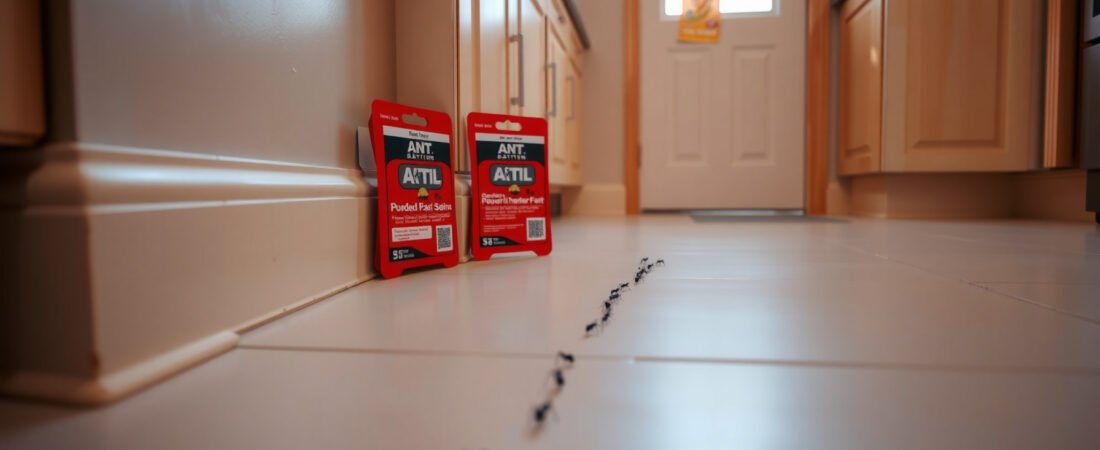
Ant bait stations don’t fail because you bought the wrong brand — they fail because most people place them correctly but use them completely wrong. The real issue isn’t Terro vs. Amdro vs. Raid. It’s that homeowners treat bait stations like traps, expecting dead ants within hours, then wipe out the trails when they see activity and wonder why the colony comes back three weeks later. That impatience is why ant problems drag on for months in homes that have already spent $40 on bait products that were actually working fine.
Why Ant Bait Stations Work Slower Than You Think — and Why That’s the Point
Every effective ant bait station uses the same basic mechanism: slow-acting poison mixed into an attractive food matrix. Worker ants carry the bait back to the colony, feed it to other workers, larvae, and — critically — the queen. Kill the queen, and the colony collapses. That process takes 3 to 7 days on average, and sometimes up to 2 weeks with larger colonies. A bait that killed ants in 20 minutes would never reach the queen because workers would die before they made it home.
This is the insight most product comparisons skip entirely. The speed of kill is deliberately engineered to be slow. Borax-based baits like Terro use a 5.4% sodium tetraborate solution — slow enough for foragers to survive the trip back to the nest, fast enough to eventually kill the entire colony. The implication: if you see ants swarming your bait station on day two, that’s not a failure. That’s the product doing exactly what it should.
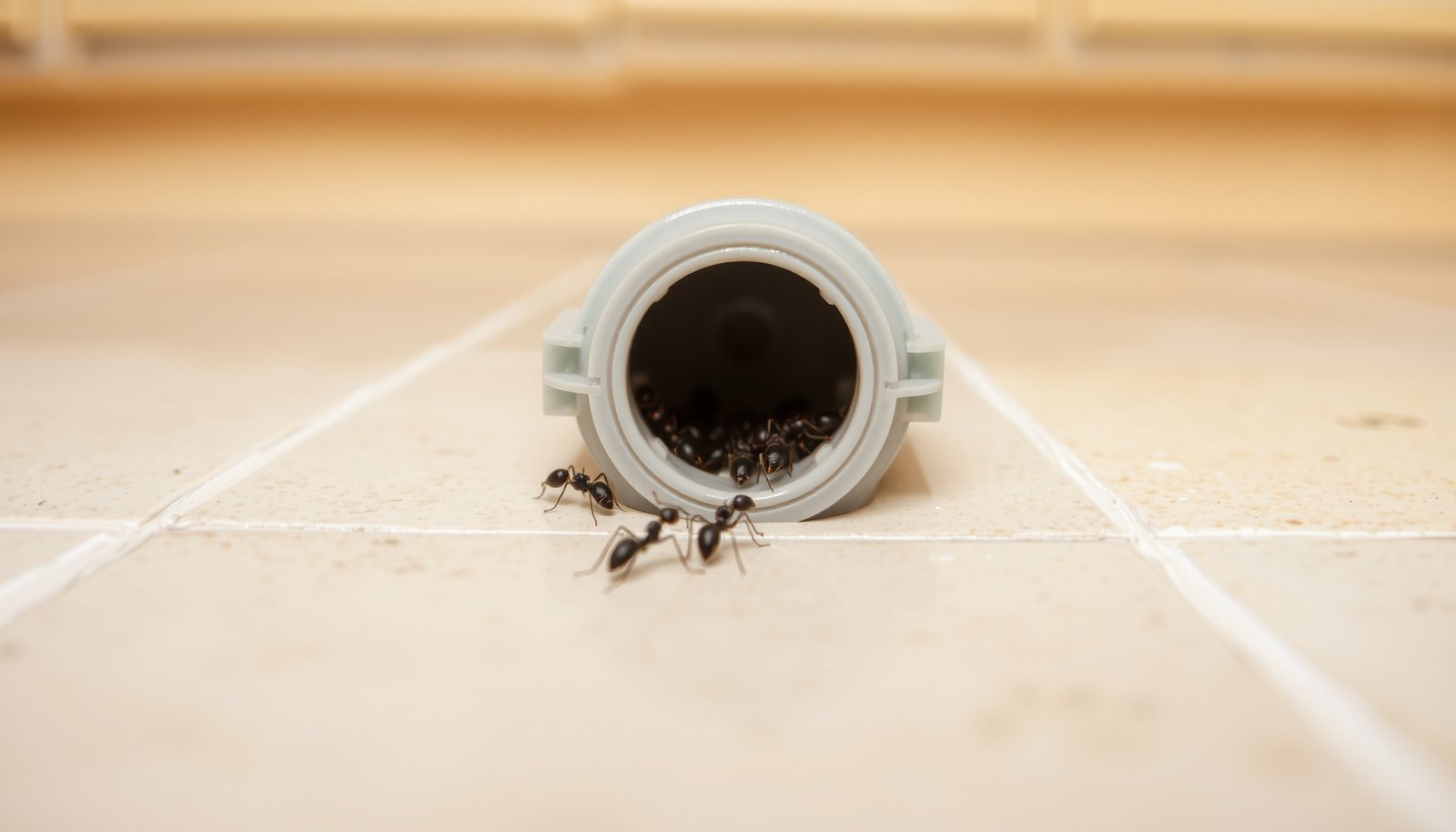
This close-up shows the interior bait matrix of a typical liquid bait station — understanding what’s inside (and how much of it is left) is the single most overlooked factor in whether a station actually eliminates a colony or just temporarily displaces it.
Terro vs. Amdro vs. Raid: What Each Product Actually Does Differently
These three brands are often lumped together, but they use different active ingredients targeting different ant behaviors — and that distinction matters more than the label on the box. Choosing the wrong formulation for your ant species is one of the most common reasons bait stations seem to “stop working” after a week.
Here’s a direct comparison of the three most widely available options for US homeowners:
| Product | Active Ingredient | Best For | Kill Timeline |
|---|---|---|---|
| Terro T300 Liquid Bait | Sodium tetraborate (Borax) 5.4% | Sugar-feeding ants (odorous house, pavement, carpenter ants foraging indoors) | 3–7 days to colony collapse |
| Amdro Ant Block / Bait Stations | Hydramethylnon 0.88% | Protein/grease-feeding ants, fire ants, outdoor infestations | 1–2 weeks to colony collapse |
| Raid Ant Baits III | Avermectin B1 0.05% | Moderate indoor infestations, multi-species use | 3–5 days initial, full colony up to 2 weeks |
The most counterintuitive detail in that table: Amdro’s hydramethylnon breaks down in sunlight, which means outdoor stations left in direct sun for more than a week may become ineffective before the colony is eliminated. Shaded placement isn’t optional with Amdro — it’s part of how the product actually works.
How to Know Which Bait Station Actually Fits Your Ant Problem
Picture this: a homeowner in Georgia buys Terro liquid bait, places it along the kitchen counter, watches hundreds of ants swarm it for four days straight, then declares it useless when new ants appear in the bathroom two weeks later. What actually happened is that the Terro wiped out the sugar-foraging colony in the kitchen — but a second, separate protein-feeding colony had already established a trail to the bathroom drain. Two ant problems, one product that only addressed one of them.
Identifying what your ants are eating — or what they’re attracted to — tells you which bait matrix will work. Ants drawn to sweets, juice rings, or sugary spills respond to borax-based liquid baits like Terro. Ants found near grease, pet food, or meat scraps are protein feeders and need a hydramethylnon or protein-matrix bait. Some species, particularly Argentine ants, switch between sugar and protein depending on the season — which is why a bait that crushed your ant problem in spring may completely fail in summer.
Pro-Tip: Set out two small drops of peanut butter and two small drops of honey near active ant trails 24 hours before placing any bait station. Whichever one draws more ants tells you the food preference — and saves you from buying the wrong product entirely.
The Placement Mistakes That Make Every Bait Station Fail
Bait station placement isn’t about putting them “near” where you see ants. It’s about placing them directly on active foraging trails — the invisible scent highways ants use to communicate between the food source and the nest. Placing a station six inches off a trail drops ant pickup rates by more than 50% in field studies. These insects are following pheromone signals, not randomly wandering.
Follow these placement rules in order — skipping any one of them cuts your effectiveness significantly:
- Place stations directly on the ant trail, touching the line of moving ants — not beside it, on it.
- Use multiple stations simultaneously — one station per trail entry point. A single station can’t bait a colony that’s accessing your home from 4 different gaps.
- Do not spray insecticides near the stations. Repellent sprays contaminate the trail and cause ants to avoid the bait entirely — a phenomenon called bait aversion that can persist for weeks.
- Do not wipe up ant trails while the bait is active. The forager traffic is the mechanism of delivery to the queen.
- Replace stations before they empty, not after — an empty station stops colony elimination mid-process and lets survivors rebuild.
- Wait a full 2 weeks before evaluating results. Ant activity often spikes in days 3–5 as more foragers discover the bait source, then drops sharply as the colony collapses.
One honest nuance here: in apartment buildings or condos with shared walls, your bait may eliminate the foragers and even a satellite nest, but a parent colony in a neighboring unit or inside a shared wall void can continue sending new workers into your space indefinitely. That’s a structural problem bait stations alone can’t solve — and it’s worth knowing before you assume the product failed. (If you’re in a shared building and wondering who’s responsible for that kind of treatment, the rules around HOA and Condo Pest Responsibility: Who Pays in Shared Buildings? are more complicated than most people realize.)
When Bait Stations Aren’t Enough — And What You Should Add
Bait stations handle trailing workers and reachable colony segments extremely well. What they don’t address are moisture conditions and structural access points that will keep attracting new colonies after the current one is gone. Ant problems that “keep coming back” almost always mean the same entry points are being used by new colonies, not that the bait failed to kill the original one.
These are the conditions that bait stations cannot fix on their own — each of these will cause reinfestation regardless of which brand you use:
- Moisture damage near foundation walls — carpenter ants specifically seek wet, softened wood and will return to the same structural area repeatedly if the moisture source isn’t fixed
- Open utility penetrations — even a 1/8-inch gap around a pipe or conduit is more than large enough for most ant species to use as a permanent highway
- Mulch or ground cover touching the foundation — this creates a sheltered moisture corridor that ant colonies exploit to reach wall voids
- Pet food left out overnight — a consistent protein source within 50 feet of a colony guarantees continued foraging activity regardless of what bait you’ve placed
- Damaged weatherstripping or door sweeps — these give ground-level species like odorous house ants direct indoor access that no amount of bait placement will permanently block
“Homeowners consistently underestimate how many individual workers a single colony can produce. A mature odorous house ant colony can have anywhere from 10,000 to 100,000 workers across multiple satellite nests. Bait needs to reach the reproductive queens — and there may be more than one queen per colony in some species. That’s why patience and consistent bait availability over 10 to 14 days is non-negotiable for real colony elimination, not just surface suppression.”
Dr. Sandra Hollis, Board-Certified Entomologist and Urban Pest Management Specialist, University Extension Program
There’s also a category of moisture-related pest overlap that catches homeowners off guard. If you’re dealing with ants trailing through a bathroom or bedroom and also noticing skin irritation or tiny crawling sensations at night, it’s worth ruling out a separate problem entirely — issues like mites in your bed and bedroom are often misidentified as ant bites, especially in homes with humidity problems that attract multiple pest species simultaneously.
The bottom line is that the brand comparison — Terro vs. Amdro vs. Raid — is genuinely less important than matching the bait matrix to your ant’s food preference, placing it on the actual trail, and leaving it alone long enough to work. Get those three things right and almost any reputable bait station product will eliminate a standard household colony. Get them wrong and you’ll cycle through every brand on the shelf and conclude that none of them work — when the product was never the problem in the first place. Start with the peanut butter and honey test, identify your ant species if you can, and commit to a full two-week baiting cycle before making any judgment about whether it’s working.
Frequently Asked Questions
what are the best ant bait stations for indoor use?
Terro T300 liquid bait stations are the top pick for most indoor ant problems — they use borax as the active ingredient, which worker ants carry back to kill the whole colony. They work best against sugar ants, pavement ants, and odorous house ants. Place them along ant trails and give them 1-2 weeks to fully eliminate the colony before switching products.
how long does it take for ant bait stations to work?
Most ant bait stations take anywhere from 3 days to 2 weeks to wipe out a colony. Terro tends to show results within 3-5 days because liquid bait is easier for ants to carry back quickly, while granule-based baits like Amdro can take up to 2 weeks. Don’t kill the ants you see foraging — they’re doing exactly what you want them to do.
does Amdro work better than Terro for fire ants?
Yes, Amdro is the stronger choice for fire ants. It uses hydramethylnon as its active ingredient, which is specifically formulated for fire ant mounds and outdoor infestations. Terro’s borax formula is better suited for common household ants indoors, so the best product really depends on what species you’re dealing with.
are ant bait stations safe to use around pets and kids?
Most ant bait stations are low-toxicity when used as directed, but they’re not completely risk-free. Terro uses borax at about 5.4% concentration, which is minimally toxic but can still cause stomach upset if a child or pet eats multiple stations. Keep them out of reach when possible, and place them in corners or along baseboards where kids and pets can’t easily get to them.
how many ant bait stations do I need for my house?
A standard box of Terro T300 comes with 6 stations, which is enough for a typical apartment or small home with a moderate infestation. For a larger home or a heavy ant problem, plan on placing stations every 10-15 feet along active trails, especially near entry points like doors, windows, and under sinks. It’s better to use more stations upfront than to under-bait and have the colony rebound.