
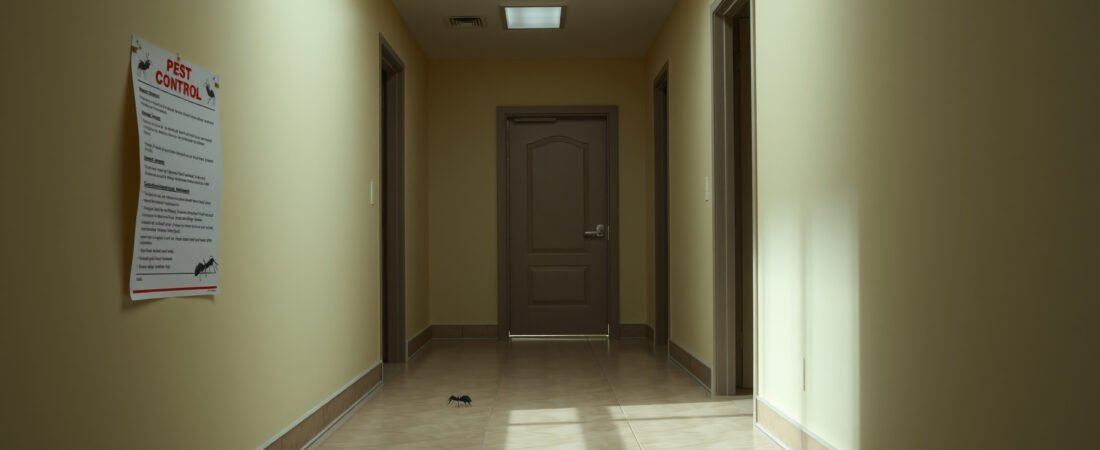
Your HOA’s governing documents almost certainly say who’s responsible for pest control — but they’re probably wrong about where that responsibility actually ends. The legal line between “your unit” and “common area” sounds clean on paper, but pests don’t read bylaws. A termite colony can contain over 1 million individuals tunneling through shared structural wood that belongs to the HOA, yet the damage shows up inside your walls. That gap between legal responsibility and physical reality is where most homeowners in condos and planned communities get blindsided — and where disputes drag on for months while the infestation compounds.
Why the HOA’s Governing Documents Are the Wrong Place to Start
Most people assume the CC&Rs (Covenants, Conditions & Restrictions) or the condo association’s bylaws are the definitive answer for pest responsibility. They’re not — at least not on their own. What those documents define is maintenance responsibility for structural components, and pest responsibility follows that maintenance responsibility. So if your HOA owns the exterior walls, sub-flooring, shared attic space, and foundation, any pest that originates in or travels through those components is technically the HOA’s problem first.
Here’s where it gets genuinely complicated: “originates in” is nearly impossible to prove after the fact, and HOA boards know it. A cockroach found in your kitchen could have come through a shared wall void, up a shared drainpipe, or through a gap in your front door threshold — three different entry points, three different responsibility outcomes. Without professional documentation at the time of discovery, you’re arguing from a position that’s easy to dismiss.
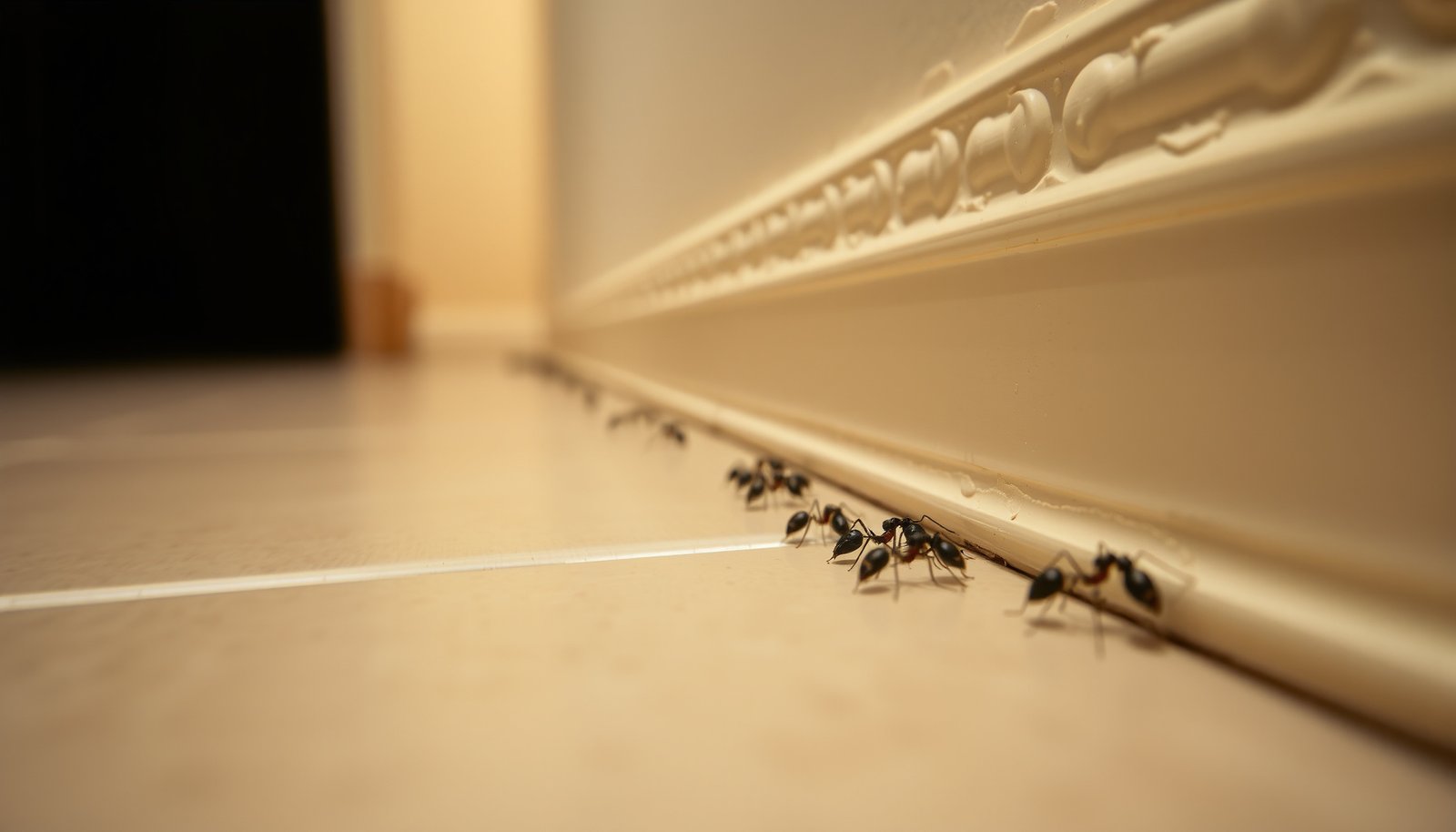
This photo illustrates a shared wall void between two condo units — the kind of gap that pest inspectors flag as a primary migration route, and exactly the structural gray zone where HOA and individual unit responsibility collide.
What “Common Area” Actually Means for Pest Liability
Common areas in a condo or HOA community aren’t just the lobby and pool deck. In most states, shared structural elements — the building envelope, foundation, shared plumbing risers, roof, and party walls — are legally classified as common elements, even when they’re inside or immediately adjacent to your unit. Pests that live in these zones are the HOA’s financial responsibility to eliminate, full stop.
The practical list of what typically falls under HOA pest responsibility in a multi-unit building looks like this:
- Exterior foundation and crawl spaces (subterranean termites, carpenter ants, moisture pests)
- Shared attic or roof cavities (rodents, bats, wasps, carpenter bees)
- Common-area trash rooms, trash chutes, and utility corridors (German cockroaches, rodents)
- Shared plumbing and drain lines running through walls (drain flies, cockroaches)
- Landscaping and mulched beds within 18 inches of the structure (fire ants, subterranean termites)
Where individual unit owners typically bear responsibility: pest problems that arise from conditions they created or maintained — a moisture leak they didn’t report, food storage attracting rodents, or a pet bringing in fleas. The key legal standard is negligence, not just proximity. An HOA that can prove you created the conditions that invited the pest has a legitimate argument to shift at least partial cost back to you.
How Bed Bug Responsibility Gets Handled Differently Than Other Pests
Bed bugs occupy a uniquely difficult legal category in condo and HOA disputes, and here’s the counterintuitive part: most HOA documents were written before bed bugs re-emerged as a widespread US pest, so they often say nothing specific about them. That silence usually benefits the HOA board, which can argue that bed bugs are a “personal property” issue — brought in by the resident, not originating in common elements. Courts in several states have pushed back hard on this interpretation.
Picture this: a unit on the third floor of a condo building gets bed bugs. The resident has barely traveled and bought no used furniture. Six weeks later, the unit directly below reports the same thing. At that point, the infestation is no longer a “personal” problem — it’s a building problem traveling through wall voids and electrical conduit gaps. Adult bed bugs can survive over 300 days without feeding, which means an untreated shared wall void can serve as a reservoir that re-infests treated units repeatedly. When that pattern emerges, the HOA’s obligation to treat the common structural pathway becomes much harder to deny. If you’re dealing with a situation like this, understanding your options for best bed bug heaters for whole room treatment can be valuable both for your own unit and for making a case about the scope of treatment needed.
“The biggest mistake condo owners make is assuming the HOA’s pest control contract covers their unit automatically. In most buildings, that contract covers common areas and maybe a perimeter treatment — individual units are entirely separate, and when an infestation migrates between units through shared infrastructure, there’s no protocol in place. Homeowners need to demand a written scope of work that explicitly addresses shared wall voids and utility penetrations.”
Dr. Renata Colwell, Board-Certified Entomologist and Structural Pest Control Consultant, NPMA Member
What Happens When the HOA Has a Pest Control Contract — But It Doesn’t Cover You
HOAs in multi-unit buildings almost always carry a standing pest control contract. Here’s what most unit owners don’t realize: those contracts are typically scoped for common areas only, and the fine print specifically excludes individual units. That means the building gets quarterly perimeter sprays, lobby treatments, and maybe trash-room baiting — while your unit is legally outside the contract entirely, even if you’re paying HOA dues that fund it.
This creates a scenario where pests can be continuously suppressed in common areas while re-colonizing individual units that have no coverage. German cockroaches, for example, produce 30–40 eggs per capsule, and a population that’s displaced from a treated common hallway will push through wall gaps into adjacent units within 24–48 hours. The pest control company has done exactly what it was hired to do; the gap in coverage is entirely a function of how the HOA wrote the contract. Knowing this, it’s worth asking your HOA board directly — in writing — what the current pest control contract covers and requesting a copy of the scope of work.
Pro-Tip: Submit your request for the pest control contract scope of work via email or certified letter to the HOA board. If they refuse or stall, that paper trail becomes evidence of negligence if you need to escalate to your state’s HOA regulatory body or small claims court. Many states require HOAs to provide governing documents and service contracts to unit owners within a legally defined timeframe — often 10 business days.
How to Actually Force an HOA to Act (and When You Pay Out of Pocket Instead)
Getting an HOA to take pest responsibility seriously usually requires following a specific escalation sequence — skipping steps weakens your position considerably. Here’s the order that holds up legally and creates the documentation trail you’ll need if this escalates:
- Document the infestation professionally. Get a licensed pest control company to inspect and provide a written report identifying the pest species, estimated scope, and likely origin point. This report is your foundational evidence. Don’t skip this step and go straight to the HOA board — verbal reports carry almost no weight.
- Submit a formal written complaint to the HOA board. Reference specific sections of your CC&Rs that assign maintenance responsibility for the structural elements involved. Keep a copy of everything. Email is better than a phone call — you want a timestamp.
- Request an emergency board meeting if the infestation is active and spreading. Most HOA governing documents allow unit owners to request special meetings. Frame it as a habitability issue, not a pest complaint — the legal standard is higher and harder for boards to dismiss.
- File a complaint with your state’s HOA regulatory agency. As of the last decade or so, most states have a formal body that oversees HOA compliance — many homeowners don’t know this exists. A complaint on record creates pressure without requiring litigation.
- Consider small claims court for reimbursement if you paid out of pocket. If the HOA failed to act and you hired an exterminator yourself, keep every receipt and invoice. Small claims court in most jurisdictions handles disputes up to $5,000–$10,000 without an attorney, and documented pest-related damages have a reasonable success rate when the paper trail is solid.
The honest nuance here: whether you’ll win depends on your specific governing documents, state law, and the pest in question. A termite infestation originating in shared structural wood is a much cleaner case than a cockroach problem where origin is disputed. Climate also plays a role — HOA pest responsibility case law is much more developed in Florida, Texas, and California (high pest-pressure states) than in northern states where structural infestations are less common and the legal precedents are thinner.
| Pest Type | Likely Responsible Party | Key Factor |
|---|---|---|
| Subterranean Termites | HOA (structural common element) | Originates in foundation/soil shared by all units |
| German Cockroaches | Disputed — depends on origin | Common-area trash/drains = HOA; unit conditions = owner |
| Bed Bugs | Unit owner initially; HOA if spread confirmed | Requires documented spread pattern between units |
| Rodents (mice/rats) | HOA if entry through building envelope | Mice can enter through gaps as small as 1/4 inch in shared walls |
One thing worth knowing if you’re dealing with roaches that appear to be migrating through a shared vehicle parking structure into the building: the same documentation logic applies. Roaches can establish in a shared garage and migrate into units through utility penetrations — it’s a common pattern in attached condo buildings with underground or attached parking. If that’s your situation, the guide on how to get rid of roaches in car covers the vehicle side of this migration problem, which you may need to address in parallel with the structural issue.
The counterintuitive reality of HOA pest disputes is that the homeowners who win them quickly aren’t the ones who complain loudest — they’re the ones who built a paper trail before the infestation got worse. An HOA board that gets a certified letter with a professional pest inspection attached behaves very differently than one fielding a verbal complaint at a board meeting. You’re not just reporting a problem; you’re creating a record of the board’s knowledge and inaction, which is exactly what shifts legal liability. Start there, and the rest of the process has a much better chance of actually resolving in your favor.
Frequently Asked Questions
who is responsible for pest control in a condo HOA or the owner?
It depends on where the infestation is. HOAs are typically responsible for pests in common areas like hallways, lobbies, and shared walls, while individual unit owners are responsible for pests that originate inside their own unit. Your CC&Rs will spell out the exact boundary — it’s worth reading that section carefully before filing a complaint or paying out of pocket.
can I make my HOA pay for bed bug treatment in my condo?
You might be able to, but it’s not guaranteed. If the bed bugs spread from a common area or a neighboring unit through shared walls or hallways, the HOA may share liability — especially if you can document the source. However, if the infestation is isolated to your unit with no evidence it came from shared spaces, most HOAs will push the cost back to you.
what does the CC&Rs say about pest control responsibility?
CC&Rs typically define the boundary between ‘common elements’ and ‘limited common elements’ or individual unit space, and pest responsibility usually follows that same line. Common elements like structural walls, roofs, and shared plumbing are the HOA’s problem, while everything inside your unit’s walls is yours. If the language is vague, some states have default rules that fill in the gaps, so it’s worth checking your state’s condo act.
HOA won’t treat roach infestation in my building what can I do?
Start by submitting a written complaint to the HOA board and keeping a copy — this creates a paper trail. If they still refuse, you can file a complaint with your local housing authority or code enforcement, since many municipalities require landlords and condo associations to maintain pest-free common areas. In serious cases involving health violations, a tenant or owner rights attorney can send a demand letter, which often moves things faster than repeated calls to the board.
does renters insurance or HOA master policy cover pest control costs?
Most standard renters insurance and HOA master policies don’t cover pest control because infestations are considered a maintenance issue, not a sudden or accidental loss. HOA master policies typically cover structural damage from things like fire or water, not extermination fees. A few specialty policies or add-ons exist, but you’d need to read your declarations page carefully — pest coverage is the exception, not the rule.
Disclaimer: This article is for general informational purposes only and does not constitute legal advice. Landlord-tenant laws and pest-related disclosure or habitability requirements vary significantly by state and even by city, and they change over time. Before withholding rent, breaking a lease, or taking other legal action over a pest infestation, consult a licensed attorney or your local tenant rights organization familiar with the laws in your area.