
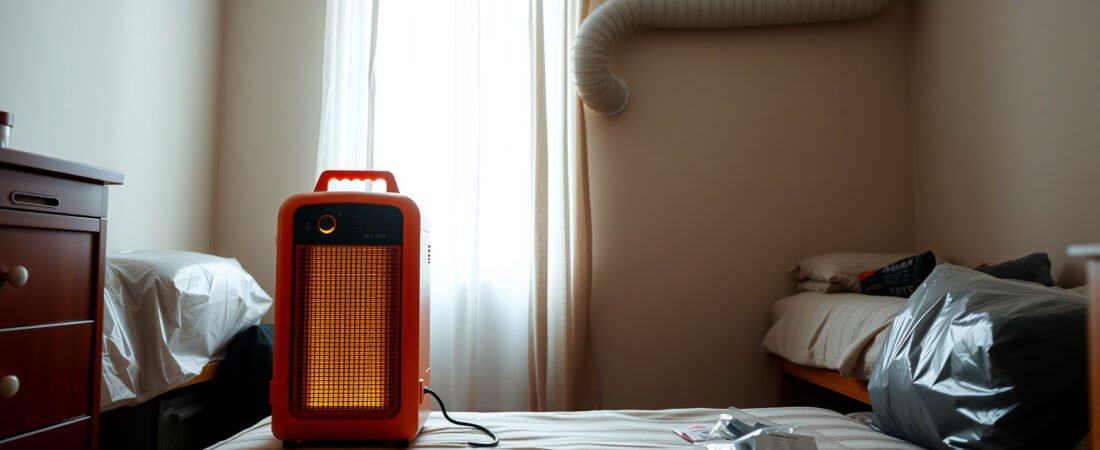
Heat kills bed bugs at every life stage — eggs included — and no spray on the market can claim that with the same certainty. That’s the real reason whole-room heat treatment exists. But here’s what most people get wrong: they buy a bed bug heater, prop it in the corner of the bedroom, and assume the room will cook evenly like a convection oven. It won’t. The single biggest reason DIY heat treatments fail isn’t the heater itself — it’s airflow management and thermal dead zones. A $500 heater sitting against a wall while cold air pockets survive inside a dresser drawer or under a box spring is money wasted. Understanding heat distribution is just as important as picking the right unit.
Why Does Heat Kill Bed Bugs When Sprays Don’t?
Bed bugs die when their internal body temperature reaches 113°F for 90 minutes, or 122°F almost instantly. Heat denatures the proteins in their cells — it’s a physical kill mechanism, not a chemical one, which means there’s no resistance possible. That matters enormously right now, because pyrethroid-resistant bed bug populations have been documented in over 20 U.S. cities, and standard over-the-counter sprays are increasingly ineffective against them.
Eggs are what make bed bug infestations so persistent. A single female lays 1 to 5 eggs per day and up to 500 over her lifetime, tucked into seams, cracks, and fabric folds that sprays rarely penetrate. Heat has no such problem — it moves through soft goods, inside furniture joints, behind baseboards, and into mattress interiors in a way that contact insecticides simply cannot. That’s why heat is the only treatment method with a realistic shot at a single-treatment elimination rather than multiple chemical rounds weeks apart.
This image shows how a whole-room bed bug heater circulates heated air toward furniture and wall voids — the exact areas where bed bugs hide and where standard spray treatments routinely fall short.
What Temperature Do Whole-Room Bed Bug Heaters Actually Need to Reach?
The target isn’t just the air temperature — it’s the temperature inside the objects in the room. Air in the room might read 130°F while the center of a thick mattress is still only 105°F. Professional heat treatments aim for a sustained 120–135°F air temperature precisely to drive the core temperature of furnishings up to the lethal threshold. Most quality DIY heaters are designed to produce air temps in this range, but they can only do their job if fans are positioned to circulate that heat into every corner continuously.
Thick items — mattresses, upholstered furniture, stacked clothing — act as thermal insulators. A good rule of thumb is to allow a minimum of 8–12 hours of sustained heat for a heavily furnished room, with fans aimed to prevent stratification (hot air at the ceiling, cooler air near the floor where bed bugs actually live). Budget heaters that cycle off when the ambient air hits the target temperature are particularly problematic for this reason; they let objects cool before the core ever reaches a lethal temp.
Which Bed Bug Heaters Actually Work for Whole-Room Treatment?
There are three realistic categories of DIY whole-room bed bug heaters: propane-powered units, electric resistance heaters, and high-capacity electric heaters with integrated fans. Each has a real use case — and a real limitation. Here’s how they compare honestly:
| Heater Type | Best For | Key Limitation | Approximate Cost |
|---|---|---|---|
| Propane (e.g., ZappBug, Titan Propane) | Large rooms, garages, off-grid use | Ventilation required; fire risk if unattended | $300–$800+ |
| Electric Resistance (e.g., ZappBug Room, Heater Pro) | Standard bedrooms, apartments | Requires 240V outlet or multiple 120V circuits | $200–$500 |
| Electric w/ Integrated Fans (e.g., Pest Destruct, TempAir) | Even heat distribution, whole-room use | Higher upfront cost; requires planning circuit load | $400–$1,200 |
The ZappBug Room and the Pest Destruct Bed Bug Heater are the two units that come up repeatedly in field reports from pest control professionals who rent or resell them to homeowners. Both consistently hit and maintain the required temperature range across a standard 12×12 bedroom when deployed correctly with supplemental fans. The Pest Destruct in particular has a digital thermostat that holds temperature without constant cycling — that continuous heat is what actually drives temps into the core of thick objects.
“The number one DIY heat treatment mistake I see is under-powered equipment for the room size. People buy a heater rated for 150 square feet and try to treat a 300-square-foot room. The math doesn’t work — you’ll get lethal temps in the air but never inside a couch cushion or box spring. Match your BTU output to the room, add a dedicated fan, and monitor temperature with a separate probe thermometer placed inside a mattress fold, not just in open air.”
Dr. Megan Hoffstead, BCE — Board Certified Entomologist and urban pest consultant with 14 years of field experience in multi-unit residential settings
How Do You Set Up a DIY Heat Treatment So It Actually Works?
Setup is where most DIY heat treatments succeed or collapse. Picture this: a homeowner in a second-floor apartment sets up a 1,500-watt electric heater in a cluttered 200-square-foot bedroom. The heater runs for six hours. The room air temperature hits 128°F. They pack everything up, satisfied. Three weeks later, the bed bugs are back — because the piles of clothes against the wall never exceeded 100°F inside, and any eggs tucked into dresser joints survived completely untouched. Heat treatment without preparation is just an expensive way to heat a room.
Follow this preparation sequence before you run any heater:
- Strip the room down. Remove all clothing and bedding from drawers and closets and spread them out flat on surfaces so heat can penetrate every layer. Hanging items from a rod is even better. Never leave laundry in a pile — a 6-inch pile of fabric is a cold-core heat trap.
- Remove heat-sensitive items. Candles, certain plastics, aerosol cans, vinyl records, and medications can warp, melt, or ignite above 120°F. Get these out of the room entirely before treatment — no exceptions.
- Pull furniture away from walls. Every piece of furniture needs at least 6 inches of clearance on all sides so heated air can circulate around it, not just above it. Bed bugs concentrate at wall-contact points — that’s exactly where you need the heat to reach.
- Place a probe thermometer inside a mattress fold. Ambient air temperature is nearly useless as your only data point. The real measure is what’s happening inside dense objects. A wireless probe thermometer slid into a mattress seam tells you whether you’re actually hitting lethal temps where it counts.
- Seal gaps where bed bugs can escape. Bed bugs detect rising heat and will actively move away from it — into wall voids, under door gaps, or into adjacent rooms. Seal the base of the door with a towel and cover electrical outlets. This isn’t overkill; it’s how professionals prevent re-infestation from treated rooms into untreated adjacent spaces.
- Run the heater with at least one supplemental fan. Position the fan to push heated air low and toward the far corners, not just to circulate air at head height. The goal is eliminating thermal dead zones — cool pockets that persist even when the rest of the room is hot.
Pro-Tip: Rent a second wireless probe thermometer and place it inside a dresser drawer filled with folded clothing. If that probe reads below 113°F after two hours of treatment, you have a circulation problem — reposition fans before continuing, not after the treatment is done.
Are There Situations Where a Bed Bug Heater Isn’t the Right Tool?
Whole-room heat treatment is genuinely powerful, but it has real limitations that most product listings and review articles gloss over entirely. The method depends on being able to raise and hold temperature in a contained space — and that assumption breaks down in several common situations. Older homes with significant air gaps in walls and floors, multi-unit apartments where wall voids connect between units, and homes with window-unit ACs that can’t be fully sealed all present serious challenges to maintaining the required temperature range.
There’s also the question of infestation scope. A single infested bedroom in an otherwise clean home is an ideal candidate for DIY heat treatment. A whole-house infestation involving multiple rooms, living room upholstery, and wall voids in a 2,000-square-foot home is a different problem — one where the cost of renting or buying enough equipment to do it right often approaches what a professional treatment would cost anyway. In those cases, it’s worth doing the math honestly before committing. If your situation has crossed into landlord-tenant territory, resources like What to Include in a Demand Letter to a Landlord About Pests can help you document the problem and push for professional treatment at the landlord’s expense rather than absorbing the cost yourself.
One underexplored fact worth knowing: bed bugs can survive over 300 days without feeding under cooler conditions, which means an infestation you think you eliminated can resurface months later if even a small cluster of eggs survived in a thermal dead zone. That’s not an argument against heat treatment — it’s an argument for doing it correctly the first time rather than rushing a second attempt weeks later. It’s also why combining heat treatment with a residual insecticide dust (like CimeXa or diatomaceous earth) in wall voids and outlet boxes after treatment is a sound follow-up strategy that most DIY guides skip.
Renters dealing with bed bugs that seem to keep returning despite treatment should also consider whether the source is a neighboring unit — a reality in apartment buildings where bed bugs travel through shared wall voids and electrical conduit. That’s a landlord problem, not a heater problem. The same principle applies to other pest infiltration issues in shared housing — for example, How to Get Rid of Mice in Garage: What Homeowners Miss covers a related concept about how pests use structural gaps to move between spaces, which matters when you’re trying to seal a treated room against reinvasion.
The bottom line is that whole-room bed bug heaters work — and they work well — when the setup is right, the equipment is sized properly, and the room is genuinely sealed and prepared. Cut corners on any of those three factors and you’re not treating bed bugs; you’re just heating a room. If you do it right, you can realistically achieve full elimination in a single treatment without a professional service call. That’s a meaningful outcome. Just go in with accurate expectations about what the equipment can and can’t do on its own.
Here’s what to look for when evaluating any whole-room bed bug heater before you buy:
- BTU or wattage rated for your room size — never undersize; always buy for the largest space you might treat
- A thermostat that holds temperature rather than cycling off at the target setpoint — continuous heat is what drives temps into dense objects
- Integrated or compatible fan system — a heater without dedicated airflow management is half a solution
- Digital temperature readout — analog dials on budget units are notoriously inaccurate at the temperatures required for bed bug elimination
- Safety shutoff — any unit without an automatic overheat shutoff is a fire risk in an unattended room; this is non-negotiable
The pest control industry is moving toward heat as the default treatment for severe infestations precisely because chemical resistance is a growing problem with no simple solution. DIY heat treatment, done correctly, puts that same tool in your hands at a fraction of the professional service cost. The technology isn’t complicated — the execution is what separates a successful treatment from an expensive failure.
Frequently Asked Questions
What temperature do bed bug heaters need to reach to kill bed bugs?
Bed bugs die when exposed to temperatures of 118°F or higher for at least 90 minutes, but most professionals target 130–140°F throughout the room to make sure heat penetrates furniture, mattresses, and wall voids. The key isn’t just hitting that number in the air — it’s sustaining it long enough in every corner where bugs and eggs are hiding.
Can I use a bed bug heater for whole room treatment myself or do I need a professional?
You can do it yourself with a rental or purchased whole-room heater, but it takes careful planning — you’ll need enough heaters and fans to push hot air evenly, and the process typically takes 6–8 hours. DIY heat treatment works best in smaller spaces like a single bedroom; larger homes with multiple rooms are harder to treat thoroughly without professional-grade equipment.
How long does a whole room bed bug heat treatment take?
A typical whole-room heat treatment takes anywhere from 6 to 8 hours from setup to cool-down, depending on the room size and how well-insulated the space is. You’ll want to monitor temperatures with multiple thermometers placed around the room to confirm every area — especially inside furniture and along baseboards — hits and holds the lethal threshold.
What are the best bed bug heaters for whole room treatment on the market?
The most well-regarded options include the ZappBug Room, the Titan 450 electric heater, and propane-based units like the Dr. Infrared Heater for larger spaces. Electric heaters are safer for indoor use and easier to control, while propane units heat up faster but require ventilation and more safety precautions.
What should I remove from a room before a bed bug heat treatment?
Before running a whole-room heat treatment, you’ll need to remove anything that can melt, warp, or combust — think candles, aerosol cans, houseplants, pets, medications, and anything with a low heat tolerance like vinyl records or certain plastics. Electronics like TVs and laptops can usually stay if you check the manufacturer’s specs, but it’s safer to pull them out if the room will exceed 120°F for several hours.