
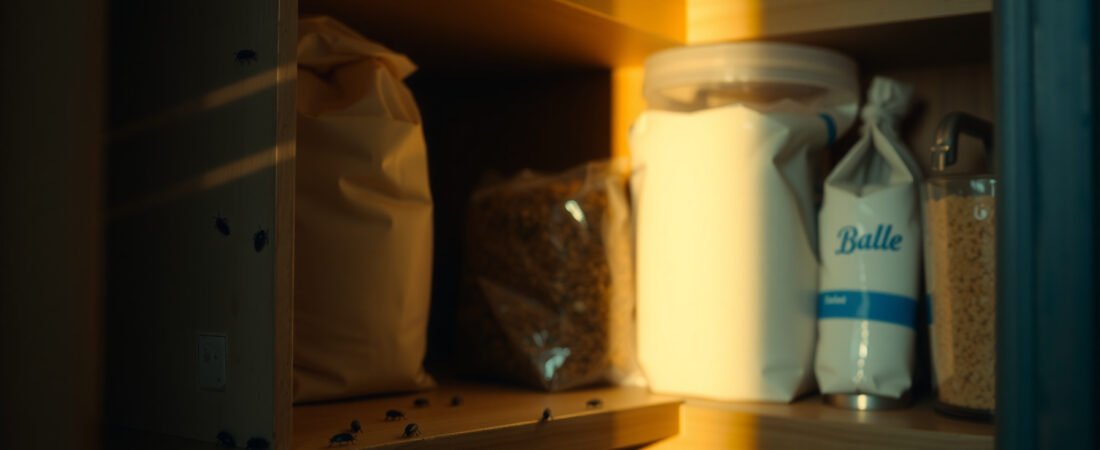
Treating every beetle the same way is exactly why most DIY efforts fail. There are roughly 400,000 known beetle species, and the six types that commonly invade US homes each require a completely different elimination strategy — what kills one actively does nothing to another. The real problem isn’t that beetles are hard to kill. It’s that homeowners spend money treating the wrong stage of the life cycle, in the wrong location, with the wrong product.
Why You Can’t Treat All House Beetles the Same Way
Here’s the part most pest control articles skip: adult beetles are often the least important target. By the time you see adult beetles crawling around your pantry shelf or windowsill, the larvae have already been feeding — sometimes for months — in a location you haven’t checked yet. Spraying the adults you see does almost nothing to stop the infestation, because the damage and the reproduction are happening somewhere else entirely.
Different beetles also enter and colonize homes through completely different pathways. Ground beetles come in through gaps in your foundation. Carpet beetles hitchhike on cut flowers or second-hand rugs. Powderpost beetles arrive already hidden inside lumber or antique furniture. Treating your kitchen cabinets when the source is an old wool blanket in a closet is a waste of time and money — every time.
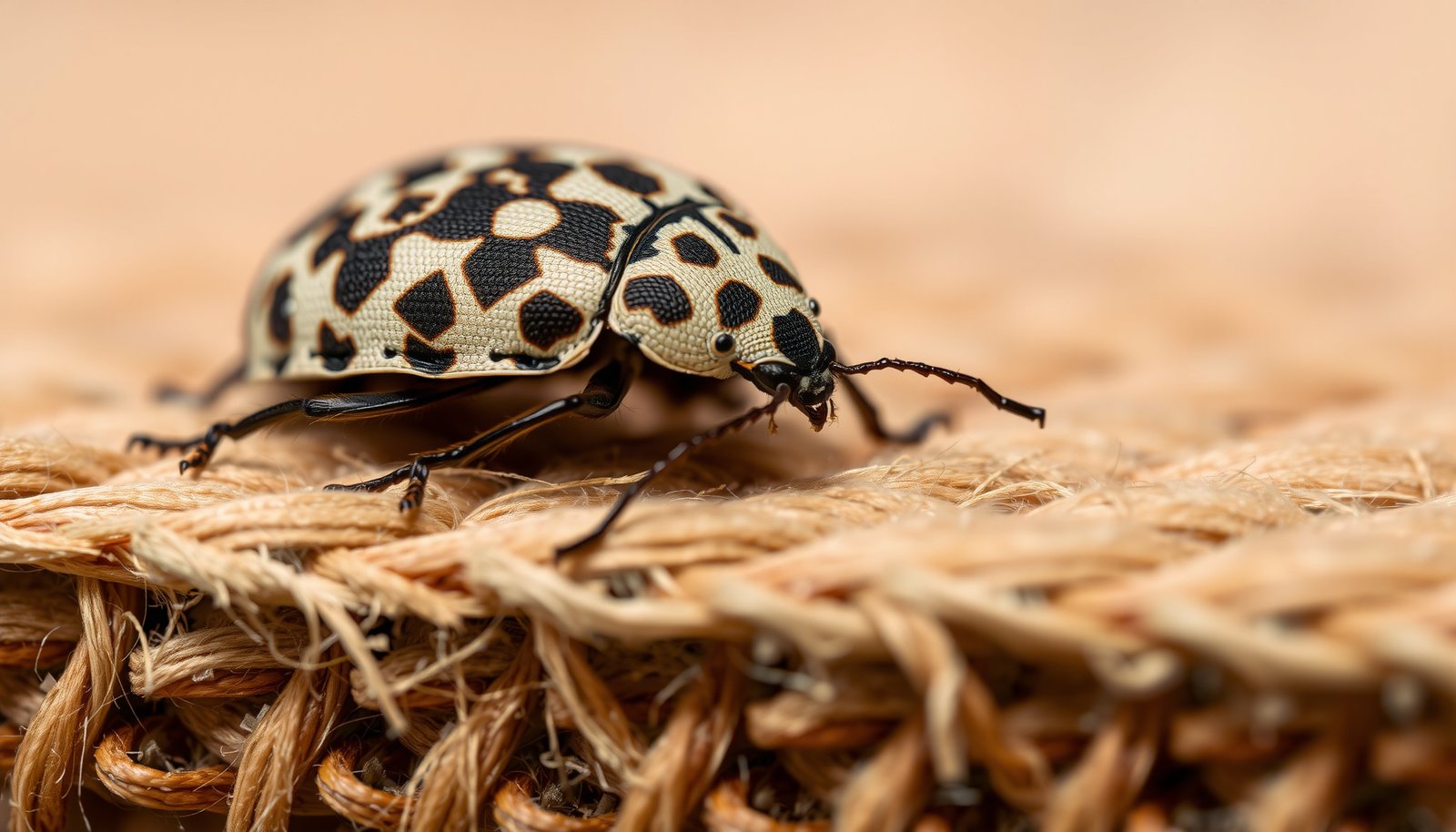
This close-up shows the key visual differences between common house beetles — details that matter because misidentifying the species is the single biggest reason DIY treatments fail repeatedly.
What Are the 6 Types of Beetles That Invade US Homes?
Knowing which beetle you’re dealing with isn’t optional — it’s the whole game. Each of the six common house beetle types targets a different material, breeds in a different spot, and responds to different treatments. A quick visual ID before you buy anything will save you weeks of frustration and money spent on the wrong approach.
| Beetle Type | Primary Target in Your Home | Key ID Feature | Hardest-to-Reach Breeding Site |
|---|---|---|---|
| Carpet Beetle | Wool, silk, leather, dead insects | Tiny, rounded, patterned scales | Under baseboards, inside air ducts |
| Powderpost Beetle | Hardwood floors, furniture, lumber | Fine sawdust piles under tiny round holes | Inside wood grain — invisible from outside |
| Drugstore/Cigarette Beetle | Pantry dry goods, spices, tobacco | Humped back, smooth reddish-brown | Sealed packages, forgotten spice jars |
| Ground Beetle | None — accidental intruder | Flat, shiny black, fast-moving | Exterior mulch beds, leaf litter |
| Flour Beetle | Flour, cereals, processed grains | Flat, elongated, red-brown | Cracks in pantry shelving |
| Larder Beetle | Cured meats, pet food, dead insects | Dark with a pale band across back | Forgotten pet food bags, wall voids |
How Do You Find Where Beetles Are Actually Breeding?
Picture this: you’ve thrown out everything in your pantry, wiped every shelf, and two weeks later the beetles are back. That’s not bad luck — that’s what happens when you clean the symptom instead of the source. Flour beetles, for example, can survive inside the cracks of wooden shelving itself, in the gap between a shelf and the wall, or inside an unopened bag of pasta that got pushed to the back. A female flour beetle lays 300–500 eggs over her lifetime, and those eggs hatch in as little as 5–12 days depending on temperature.
Carpet beetles are even sneakier about their breeding locations. Their larvae actively avoid light, which means they’re almost always found in dark, undisturbed areas: underneath area rugs that rarely get moved, inside heating vents, in old bird or wasp nests in the attic or walls, and in the spaces behind permanently installed furniture. One overlooked dead bird in a wall void can sustain a carpet beetle population for an entire season — and you’ll only ever see a few adult beetles crawling toward your windows as they try to get outside to feed on pollen.
Pro-Tip: To locate carpet beetle breeding zones, run a piece of tape — sticky side out — along the top of your baseboards in closets and under furniture. Check it after 48 hours. Tiny bristly larvae stuck to the tape confirm active feeding sites you can’t see with a casual inspection.
How to Get Rid of Each Beetle Type: Step-by-Step by Species
The elimination steps below are organized by beetle type because the treatment sequence genuinely depends on what you’re dealing with. Applying a broad pesticide spray before removing the food source is the most common DIY mistake — it kills exposed adults but leaves larvae completely protected inside whatever material they’re feeding on.
Work through these steps in order for your specific beetle. Skipping step one — source removal — makes every step after it significantly less effective, regardless of what product you use.
- Carpet Beetles: Vacuum thoroughly under rugs, furniture, and inside vents. Launder or dry-clean all wool, silk, and feather items at 120°F or higher — that temperature kills all life stages. Apply a residual insecticide containing deltamethrin or bifenthrin along baseboards and in closets. For severe infestations, cedar oil sprays applied directly to fabric storage areas disrupt larval development without staining. Reapply every 2–3 weeks for at least two treatment cycles.
- Powderpost Beetles: This one often needs a professional opinion first, because the beetles may be in structural lumber. For furniture, remove and isolate affected pieces immediately. Freezing small infested items at 0°F for at least 72 hours kills all life stages without chemicals. For floors and structural wood, a licensed applicator applying a borate-based wood treatment (like Tim-bor or Bora-Care) is the most reliable long-term solution — borates penetrate wood and kill larvae feeding inside.
- Drugstore and Cigarette Beetles: Remove and bag all infested pantry items — check every dry good in the cabinet, including spices, because cigarette beetles readily infest paprika, cayenne, and other spices most people never think to check. Wipe shelves with white vinegar. Store all replacements in airtight glass or hard plastic containers. Place pheromone traps to monitor for reinfestation — these attract adults and tell you if the population is growing or gone.
- Ground Beetles: These are accidental intruders and almost never establish colonies inside. Seal gaps around doors, windows, and foundation penetrations with caulk or weatherstripping. Eliminate exterior harborage by pulling mulch at least 12 inches away from your foundation — ground beetles love moist mulch beds. A perimeter spray of permethrin-based insecticide around your foundation exterior creates a barrier that kills beetles before they enter.
- Flour Beetles: Empty the entire pantry — every single shelf. Vacuum shelf cracks and corners, then wipe everything down. Discard any open or damaged packages. Spread food-grade diatomaceous earth lightly along the back corners of shelves before restocking; it damages the beetles’ exoskeletons over 24–72 hours of contact without leaving toxic residues near food. Place pheromone-based flour beetle traps to track whether your cleanup worked.
- Larder Beetles: Check every high-protein item in the house — cured meats, dog food bags, feather pillows, and any dead rodent or bird that might be decaying inside a wall. Larder beetles are often a secondary infestation, meaning there’s another pest problem (a dead mouse in the wall, an old nest in the attic) that’s feeding them. Fix that underlying issue first. Residual sprays along baseboards and around food storage areas work for exposed adults, but they won’t solve the infestation if a decomposing animal is still providing a food source.
Which Beetle Treatments Actually Work — and Which Are a Waste of Money?
Ultrasonic repellers don’t work on beetles. Neither does the general-purpose “bug spray” most people reach for first — those contact killers have no residual effect on larvae inside wood or fabric, and they degrade quickly on porous surfaces like shelving and carpet backing. Spending $15 on a can of Raid and calling it done is how a small carpet beetle problem becomes a wardrobe full of damaged sweaters by spring.
What does work depends on the beetle and the severity of the infestation. For pantry beetles, pheromone traps combined with proper food storage are genuinely effective — and the pheromone traps serve double duty as monitors, telling you whether you’ve actually eliminated the population or just suppressed it temporarily. For wood-boring beetles like powderpost beetles, the honest answer is that DIY treatment has real limits: if the infestation is in structural wood rather than furniture, a professional applying borate treatments is almost always the better call. Just like with some other difficult home pest problems — the approach that works in a 500-square-foot apartment won’t necessarily translate to a full house with an attic and crawlspace.
“The most consistent mistake I see is homeowners treating adult beetles without ever locating the larval feeding site. Adults are mobile and visible — larvae are doing the actual damage and they’re almost completely hidden. If you’re not addressing both life stages in the right location, you’re not treating the infestation at all.”
Dr. Melissa Carver, Board Certified Entomologist and Urban Pest Management Specialist, University Extension Program
Here’s what’s worth spending money on, and what isn’t:
- Worth it: Pheromone monitoring traps (drugstore beetles, flour beetles, carpet beetles) — these tell you where the population is concentrated and whether it’s growing
- Worth it: Airtight glass or BPA-free plastic containers for all pantry dry goods — this eliminates the food source entirely for pantry-infesting species
- Worth it: Borate-based wood treatments (Tim-bor, Bora-Care) for confirmed powderpost beetle infestations in accessible wood — borates remain active in wood for years
- Worth it: Professional inspection if you’re seeing unexplained fine sawdust appearing repeatedly on hardwood floors — powderpost beetle damage can be mistaken for normal wood dust until serious structural damage is already done
- Not worth it: Foggers or “bug bombs” — these don’t penetrate into the wall voids, fabric interiors, or wood grain where beetle larvae actually live
- Not worth it: Moth balls for beetles — naphthalene concentrations needed to kill carpet beetle larvae are far higher than what’s safe in a living space, and the smell lingers for months
How Do You Stop Beetles From Coming Back?
Long-term prevention is much simpler than most people think, and it’s almost entirely about eliminating the conditions that make your home attractive in the first place. Carpet beetles don’t just appear out of thin air — they come inside on flowers, on used furniture, through attic vents, and occasionally through gaps similar to the ones that let in much larger pests. The same principle of sealing entry points and removing harborage that works for wildlife — like the approach outlined in dealing with How to Get Rid of Raccoons in the Attic Without Trapping — applies directly to preventing beetles from establishing themselves in wall voids or attic spaces where bird nests and debris accumulate.
For pantry beetles, the single most effective prevention measure is switching entirely to airtight hard-sided containers for every dry good you store — including pet food, birdseed kept indoors, dried herbs, and even decorative dried flower arrangements, which are a surprisingly common source of carpet and drugstore beetle introductions. For wood-boring beetles, the prevention is about moisture control: powderpost beetles preferentially attack wood with a moisture content above 8%, so keeping your home’s relative humidity below 50% makes structural wood significantly less vulnerable. That same low-humidity environment also makes your home less attractive to dozens of other pest species, which is a genuinely underappreciated dividend of running a dehumidifier in a basement or crawlspace. Unlike broadcast pesticide treatments — which work similarly whether you’re dealing with beetles or trying to apply something like the targeted chemistry described in the Best Fire Ant Killers: Granules and Mound Treatments Compared guide — moisture control is a passive, ongoing deterrent that requires no reapplication.
One thing worth being honest about: if you have a large older home with original hardwood floors, structural timbers, or an unfinished basement, powderpost beetles are genuinely difficult to fully eliminate without professional help and regular monitoring. The same property that’s easy to keep beetle-free in a dry climate can struggle year after year in humid coastal or southeastern states, where wood stays wetter and beetle breeding cycles run nearly year-round. That’s not a reason to give up — it’s a reason to set realistic expectations and stay consistent with monitoring rather than assuming one treatment solved everything permanently.
Start with the ID, find the actual breeding site before you buy anything, and match your treatment to that specific beetle’s life cycle. Do those three things in order and you’ll get further in one weekend than most people get in months of random spraying.
Frequently Asked Questions
how do I get rid of beetles in my house fast?
The fastest way to get rid of beetles in the house is to vacuum them up immediately, then treat affected areas with a residual insecticide spray containing deltamethrin or cypermethrin. For stored product beetles like weevils or flour beetles, throw out all infested food and wipe down shelves with white vinegar before restocking. Most infestations clear up within 1-2 weeks if you remove the food source and treat entry points.
what kind of beetles get into houses?
The 6 most common beetles that invade US homes are carpet beetles, powderpost beetles, ground beetles, flour beetles, drugstore beetles, and Asian lady beetles. Each type is attracted to something different — carpet beetles eat natural fibers and pet hair, while flour and drugstore beetles infest dry pantry goods. Identifying which type you have is the key first step because the treatment methods are different for each one.
why do I suddenly have beetles in my house?
Beetles usually show up suddenly because something changed — a new bag of flour or pet food brought in pantry beetles, a gap or crack opened up letting ground beetles inside, or an old wool rug is now shedding enough fiber to attract carpet beetles. They’re also more likely to come indoors during fall when temperatures drop, searching for warmth. Check your pantry, any natural-fiber rugs or furniture, and your window and door seals first.
are beetles in the house dangerous?
Most beetles found in houses aren’t dangerous to people — they don’t bite, sting, or transmit diseases. The real damage is to your property: carpet beetles can destroy wool rugs, clothing, and upholstery, while powderpost beetles can structurally weaken wood furniture and flooring over time. If you’re seeing small round exit holes in wood or bare patches in fabric, that’s a sign the infestation has been going on long enough to cause real damage.
does bug spray kill beetles?
Standard aerosol bug sprays will kill beetles on contact, but they don’t leave much residual protection, so they’re not enough to eliminate a full infestation on their own. For better results, use a residual liquid insecticide with an active ingredient like bifenthrin or lambda-cyhalothrin along baseboards, door frames, and wherever you’re seeing beetles. For pantry beetles specifically, skip the spray entirely and focus on sealing dry goods in airtight containers — spraying near food isn’t safe.
Disclaimer: This article is for informational purposes only and isn’t a substitute for professional pest control advice. Always read and follow the product label instructions exactly — label directions are legally binding and vary by brand and active ingredient. Keep all pesticides, baits and traps away from children and pets, ventilate treated areas as directed, and consider calling a licensed pest control professional if an infestation is large, recurring, or involves a structural pest like termites or carpenter ants.