
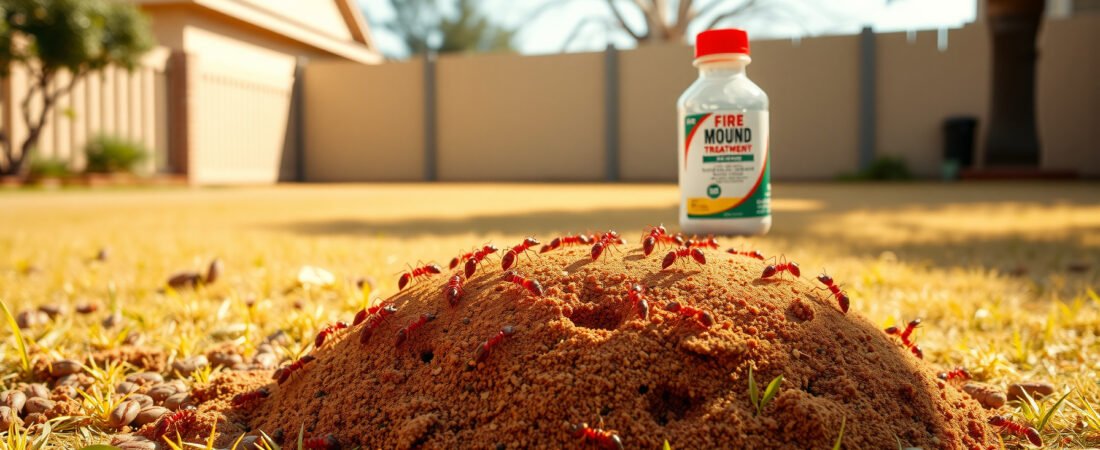
Pouring boiling water on a fire ant mound does almost nothing — the colony just relocates 2 feet to the left and rebuilds within 48 hours. That’s the uncomfortable truth most fire ant articles skip past on their way to selling you a product. The real problem isn’t the mound you can see; it’s the 200,000–500,000 workers and the queen buried 3–6 feet underground who never get touched by whatever you pour on top. Choosing the right fire ant killer means understanding how the colony actually functions — and matching your product to that reality, not to the mound’s surface area.
Why Most Fire Ant Treatments Fail Before You Even Open the Bag
The single biggest mistake homeowners make is treating fire ants like a surface pest. A mature fire ant colony — Solenopsis invicta — can contain up to 500,000 workers, multiple queens in polygyne (multi-queen) colonies, and tunnels that extend well below the frost line. When you drench a mound with a contact killer, you’re hitting maybe 10–15% of the colony population. The rest are deep underground, and the queen — the only individual whose death actually matters — is rarely near the surface at all.
This is why the product format matters as much as the active ingredient. Granular broadcast treatments work by exploiting forager behavior: workers carry treated granules back to the colony as food, exposing the queen and brood to insecticide over 1–2 weeks. Mound drench treatments, by contrast, rely on volume — flooding the tunnels with enough liquid insecticide to reach the queen’s chamber. Each approach has a specific role, and using one where you should use the other is why so many people feel like nothing works.
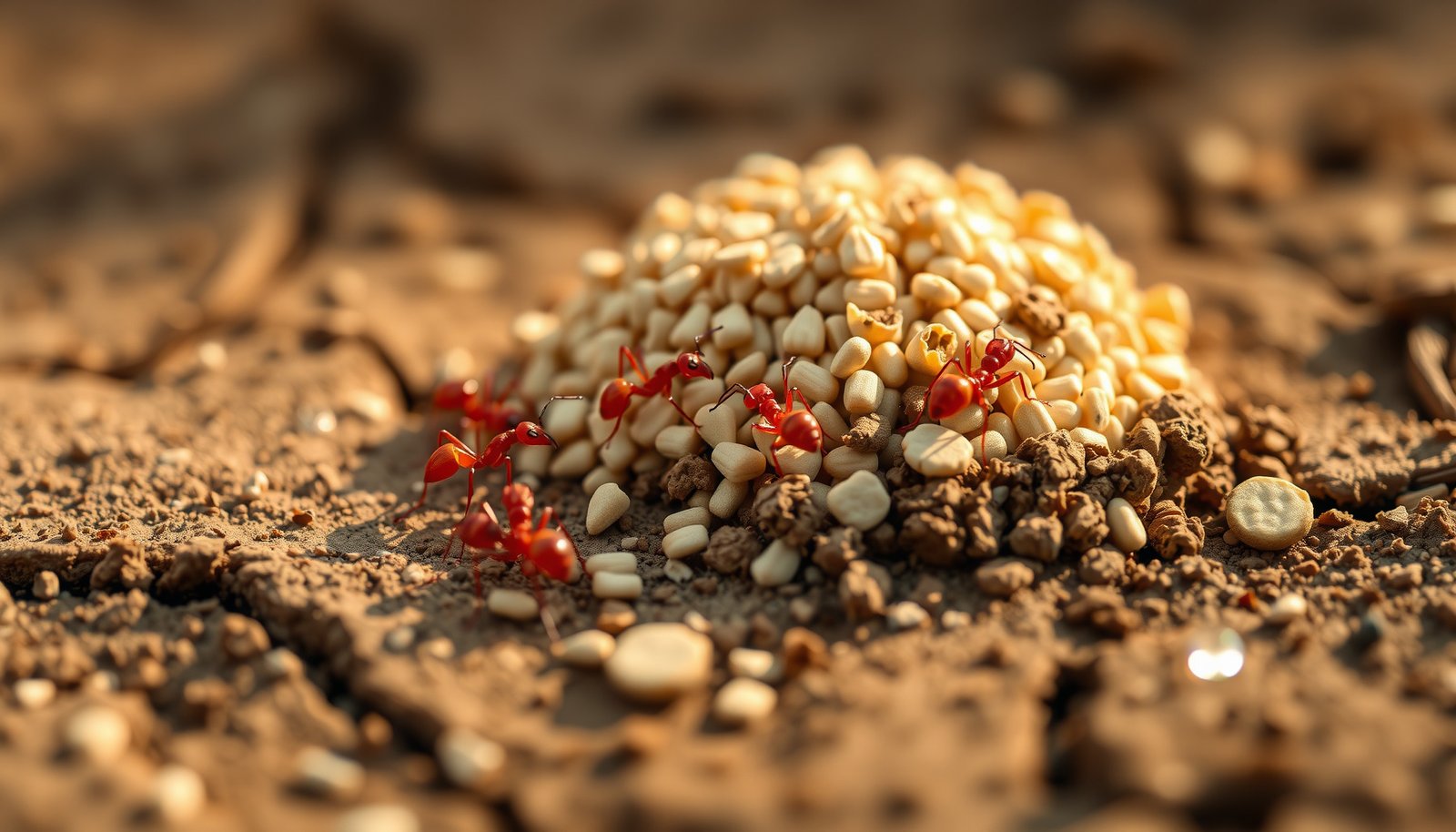
This close-up shows the difference between a surface mound and the deeper tunnel architecture underneath — understanding that structure is what separates a treatment that works from one that just moves the problem 3 feet over.
Granular Broadcast Treatments: Which Ones Actually Reach the Queen
Broadcast granules are your best long-term yard defense, especially if you’re dealing with multiple mounds or you’re in the Southeast, Texas, or any state where fire ants are endemic. The mechanism is slow by design — foragers pick up the bait granules, mistake them for food, and transport them into the colony. At that point, the insecticide (usually an insect growth regulator like s-methoprene or a slow-acting toxicant like spinosad or hydramethylnon) disrupts brood development or kills the queen directly over 7–14 days. Patience is the whole strategy here.
The top-performing broadcast granule products tested against multiple colony types are below. Note that efficacy depends heavily on soil temperature — fire ant foragers are most active when soil temps are between 70°F and 95°F, which means early morning or late afternoon application in spring and fall gets far better results than midday summer applications when ants retreat underground.
| Product | Active Ingredient | Time to Colony Elimination | Best For |
|---|---|---|---|
| Amdro Fire Ant Bait | Hydramethylnon | 7–10 days | Broadcast or mound treatment |
| Ortho Fire Ant Killer Broadcast Granules | Bifenthrin | 15 minutes (contact) / weeks (colony) | Large yard perimeter defense |
| Spectracide Fire Ant Killer Bait | Indoxacarb | 1–2 weeks | Slow-kill bait transfer to queen |
| Monterey Ant Control (organic) | Spinosad | 2–4 weeks | Organic-priority households |
Pro-Tip: Never water in broadcast bait granules — moisture degrades the food attractant coating and ants will ignore them entirely. Apply on dry ground, then wait 24–48 hours before any rainfall or irrigation. Check the label specifically for this; it’s the step most people skip.
Mound Drench Treatments: When Speed Matters More Than Long-Term Control
Picture this: your kid’s birthday party is in two hours, there are three active mounds right next to the swing set, and you don’t have two weeks to wait for bait to work. That’s exactly when a mound drench earns its place. Contact insecticides applied as a liquid drench — using 1–2 gallons of solution per mound — can knock down a colony in 15 minutes to a few hours when applied correctly. The key word is “correctly”: you need to drench slowly enough to saturate the entire tunnel network, not just the surface dome.
The most effective drench active ingredients are bifenthrin, permethrin, and spinosad (for organic approaches). One underappreciated tip: don’t disturb the mound before drenching. Fire ants respond to vibration by moving the queen deeper — if you’ve been stabbing the mound with a stick to “stir things up,” you’ve actually made your treatment less effective. Pour the drench gently and start from the outside edge of the mound, working inward, so workers can’t escape the perimeter before the insecticide penetrates.
“The two-step method — broadcasting a slow-acting bait across the entire yard first, then spot-treating individual mounds with a contact insecticide — consistently outperforms either approach used alone. Bait reduces the overall colony density by 80–90% within six weeks, and contact treatments handle the visible nuisance mounds in the meantime. Homeowners who skip the broadcast step and only treat mounds they can see are essentially playing whack-a-mole indefinitely.”
Dr. Linda Hooper-Bùi, Urban Entomologist and Professor, Louisiana State University AgCenter
The Two-Step Method: How to Combine Granules and Mound Treatments Correctly
University extension programs across fire ant territory — Texas A&M, LSU, Clemson — all recommend the same protocol, often called the “Texas Two-Step.” It’s not a marketing phrase; it’s genuinely the most evidence-backed approach for full-yard control. The logic is simple: bait handles the colonies you can’t see (and fire ants move their mounds constantly, so there are always more than are visible), while contact treatments handle the immediate hazards. Using both in sequence drops fire ant populations by up to 90% within 8 weeks.
Here’s the correct sequence for implementing it yourself:
- Broadcast bait first. Apply granular bait across the entire yard at label rate — typically 1–1.5 lbs per 5,000 sq ft — when soil is dry and ants are actively foraging. Early evening in warm months works best.
- Wait 24 hours before any mound treatment. Applying contact insecticide immediately after bait disrupts forager behavior and the ants stop collecting bait, breaking the transfer chain to the queen.
- Spot-treat high-priority mounds with a drench or granule applicator. Focus on mounds within 10 feet of foot traffic areas, playsets, or structures — not every visible mound in the yard.
- Reapply broadcast bait at 4–6 weeks. One application won’t eliminate all satellite colonies. A second round is what actually breaks the population cycle.
- Inspect again at 8 weeks. If you still have active mounds after two bait cycles and mound treatments, you may be dealing with re-invasion from neighboring properties — at that point, a perimeter treatment with a residual contact insecticide creates a chemical barrier.
One honest nuance worth acknowledging: the two-step method works exceptionally well in yards with defined borders. If your property backs up to an untreated field, vacant lot, or neighborhood green space that’s heavily infested, you’ll need to maintain ongoing quarterly bait applications — because re-invasion pressure never fully stops. Climate matters too; in Florida and coastal Texas, fire ant pressure is year-round, while homeowners in the upper South may get natural population dips in winter that reduce how aggressive their treatment schedule needs to be.
Which Fire Ant Products Are Worth Buying (And Which Are Overhyped)
The fire ant product market is cluttered with gimmicks — granules that promise “instant mound elimination” (biologically impossible with any bait product), natural orange oil treatments that provide zero residual protection, and oversized containers of bifenthrin sold as mound treatments when the same active ingredient in a broadcast granule would do more work for less money. Here’s what actually holds up across product categories:
- Amdro Fire Ant Bait (Hydramethylnon): The most widely recommended bait by university extension programs. Hydramethylnon is a slow-acting mitochondrial disruptor — workers feed on it, carry it to the queen, and the colony collapses from the inside out over 7–10 days. Shelf life is limited once opened (use within 2–3 years; check the date stamp on the bag).
- Ortho Orthene Fire Ant Killer (Acephate): Applied dry directly on the mound without water — the dust penetrates tunnels effectively and is one of the few contact products with genuine deep-penetration capability. Strong odor is the main downside; don’t use it near open windows.
- Spectracide Fire Ant Shield (Indoxacarb): A newer-generation bait that works well in wetter climates where hydramethylnon degrades faster. Slightly slower than Amdro but shows better stability in high-humidity conditions.
- BioAdvanced Fire Ant Killer (Bifenthrin granules): A dual-action product that works as both a perimeter contact killer and a mound drench when watered in. Good choice if you want one product for multiple uses, but it won’t replace a true bait for deep colony elimination.
- Monterey Garden Insect Spray (Spinosad): The best organic option, derived from soil bacteria. Works as a mound drench and foraging bait. Slower than synthetic options but safe for vegetable gardens and around pets once dry. Expect 2–4 weeks for full colony effect.
Orange oil and diatomaceous earth are popular in natural pest control communities, but both have a significant limitation against fire ants specifically: they require direct contact and have no residual transfer mechanism, so they can’t reach the queen. That’s not a knock on either product category in general — just an honest assessment of the wrong tool for this specific job. Some pest problems genuinely do respond to physical or natural controls. Just as with how to get rid of raccoons in the attic without trapping, the most effective approach often depends on understanding the biology of the animal first, then matching the strategy to that biology — not to what’s marketed as “natural.”
A counterintuitive fact most fire ant articles don’t mention: hydramethylnon-based baits like Amdro lose their attractant properties quickly after the bag is opened and exposed to air. Ants that ignored your bait application last summer probably weren’t resistant to the insecticide — the soybean oil food attractant had gone stale. Fresh bait from a sealed bag makes an enormous difference in acceptance rates, and it’s a variable almost no one accounts for when a treatment “doesn’t work.” Store opened bags in a sealed container in a cool, dry place and use within a single treatment season.
Are Fire Ant Treatments Safe for Pets, Kids, and Pollinators?
Safety concerns are legitimate, especially since fire ant treatments are applied to outdoor areas where children play, dogs dig, and beneficial insects forage. The good news is that bait products are formulated at very low active ingredient concentrations — Amdro, for example, contains only 0.365% hydramethylnon in an inert corn grit carrier. Once distributed at label rate across a lawn, the actual insecticide density is low enough that pets and children can re-enter treated areas as soon as the granules are no longer visible on the surface — typically within a few hours of application.
Pollinators are a different consideration. Spinosad, while derived from natural soil bacteria and approved for organic use, is acutely toxic to bees when wet. Always apply spinosad-based products in early evening after bees have returned to hives, and never apply to flowering plants directly. Hydramethylnon and indoxacarb baits have very low bee toxicity and are considered safer choices if you have active pollinator traffic in your yard. If your concern about chemical exposure has ever led you to dig into how tenant protections work for pesticide applications — and how that differs by pest type and state — the approach is similar to how bed bug laws differ by state, where knowing the specifics of your situation matters more than general advice.
Contact insecticides like bifenthrin and permethrin carry higher risks to aquatic invertebrates — don’t apply near storm drains, ponds, or drainage swales. Always read the environmental hazard section of the label, not just the application rate. The label is a legal document, and the environmental precautions aren’t filler — they’re there because the risks are real in specific situations even when they’re minimal for typical yard use.
Fire ants aren’t a pest you eliminate once and forget. Colonies re-establish, scouts from neighboring properties move in, and polygyne colonies — which can have dozens of queens — require multiple treatment cycles to suppress because killing one queen doesn’t collapse the entire colony the way it does in single-queen colonies. Your best outcome is persistent suppression to below a nuisance threshold, not eradication. Build that expectation in before you start, and you’ll interpret your results accurately instead of concluding the product failed when it actually worked as intended.
Frequently Asked Questions
what is the best fire ant killer that actually works?
The most effective approach is the Texas Two-Step method: broadcast a bait like Amdro or Ortho Orthene across your whole yard first, then treat individual mounds directly with a contact killer. Baits work slower — usually 1 to 2 weeks — but they wipe out the queen, which is what actually kills the colony for good.
how long does it take for fire ant granules to work?
Most fire ant bait granules take 1 to 2 weeks to fully kill a colony because the worker ants have to carry the bait back to the queen. Contact killers work faster — sometimes within 24 to 72 hours — but they often miss the queen and the colony can rebuild. For best results, apply bait when soil temps are between 65°F and 90°F and ants are actively foraging.
is it safe to use fire ant killer around pets and kids?
It depends on the product — always check the label before applying. Most granule baits like Amdro are considered low-risk once dry or watered in, but you should keep kids and pets off treated areas for at least 24 hours. Products containing bifenthrin or permethrin need more caution, especially around cats, which are more sensitive to pyrethroids than dogs or humans.
should I use fire ant bait or mound treatment?
Use both if you can — they target different parts of the problem. Bait spreads through the whole colony and kills the queen, while mound treatments give you faster knockdown of visible mounds. If you only have a few mounds, a direct drench with a product like Ortho Orthene can work well on its own, but for yard-wide infestations, broadcast bait is the smarter move.
what kills fire ant queens?
Insect growth regulators (IGRs) like methoprene and indoxacarb-based baits are the most reliable queen killers because they disrupt the colony’s reproduction from the inside. Worker ants carry the bait into the mound and share it with the queen, usually killing her within 1 to 2 weeks. Contact insecticides poured directly into a mound can also kill the queen, but only if you reach the deep chambers where she’s living.