

Only 13 states have an explicit bed bug statute on the books — and if you’re renting in one of the other 37, your rights still exist, they’re just buried inside general habitability law instead of a dedicated bed bug rule. That distinction matters more than most renters realize, because it changes how you document a complaint, how fast your landlord is legally required to respond, and whether you can withhold rent without getting evicted.
Here’s the angle most “state bed bug law” articles miss entirely: the state law itself is rarely the thing that protects you. What actually protects you is the combination of your state’s habitability standard, your city’s housing code, and the specific language in your lease — and those three things frequently contradict each other. Knowing only your state law and stopping there is the mistake that leaves renters either doing nothing when they have real leverage, or overplaying their hand and ending up in worse legal shape than when they started.
Why “Bed Bug Laws by State” Is the Wrong Way to Frame Your Search
Picture this: a renter in Austin, Texas calls her landlord on a Monday morning, reports bed bugs in her apartment, and gets told the lease says she’s responsible for pest control. She Googles Texas bed bug laws, finds out Texas has no dedicated bed bug statute, and assumes she’s stuck. She isn’t. Texas’s Property Code Section 92.056 covers landlords’ duty to repair conditions that materially affect health and safety — bed bugs squarely qualify. She had leverage she didn’t know she had, and she lost weeks of pressure time because she was looking for a bed bug law that doesn’t exist in that form.
The real framework is this: every state has some version of an implied warranty of habitability, which is the legal backbone that requires landlords to keep units livable. Bed bugs almost universally qualify as a habitability violation because they cause documented health effects — allergic reactions, secondary infections from scratching, and psychological distress. The difference between states isn’t whether bed bugs are covered; it’s how explicit, how fast, and how enforceable the rules are.
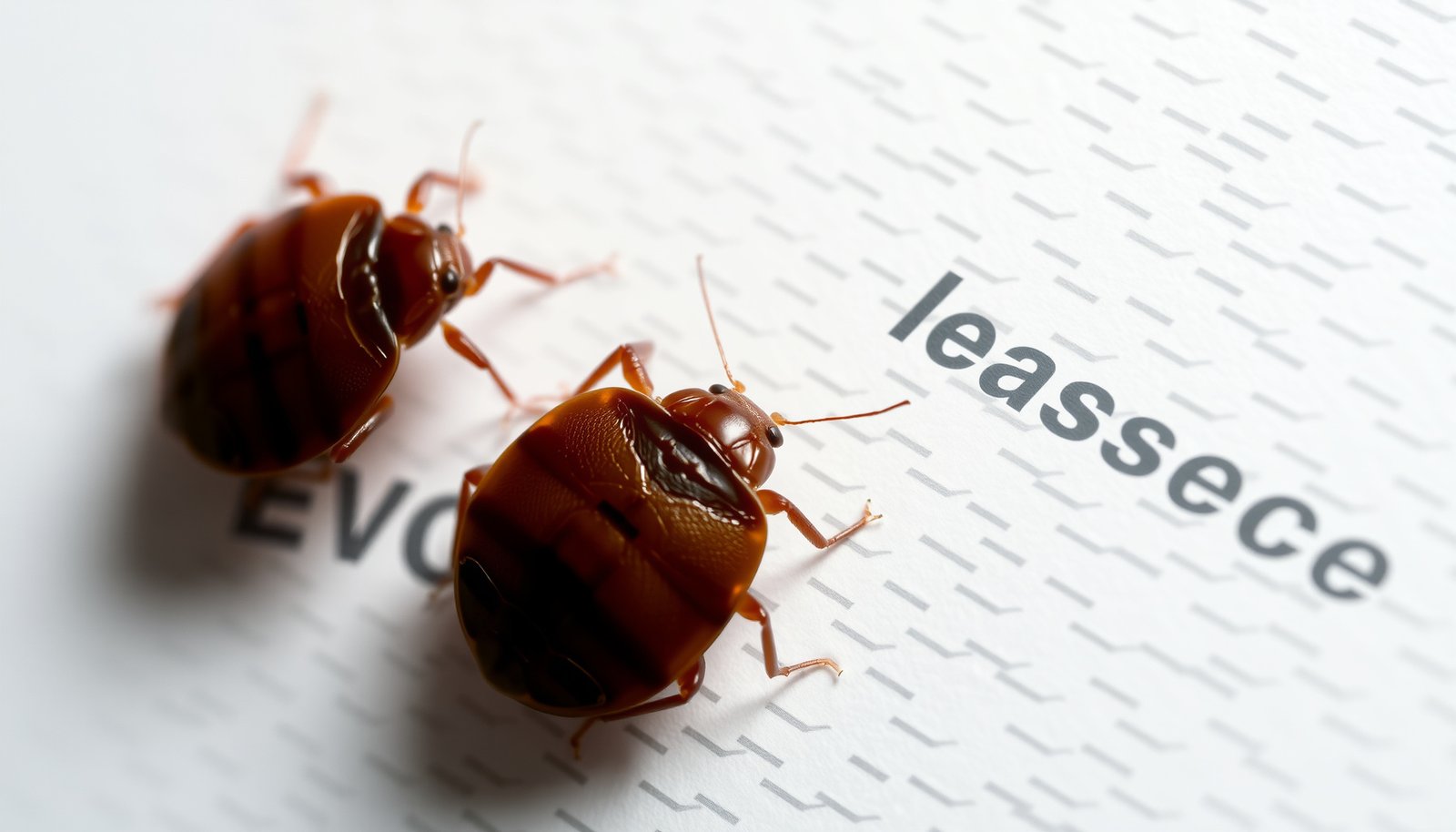
This close-up shows exactly what a bed bug infestation looks like at mattress seams — the kind of evidence you’ll want to photograph before you report anything to your landlord, because your documentation is often worth more than the law itself.
Which States Have Explicit Bed Bug Statutes — and What They Actually Require
The states with dedicated bed bug language in their landlord-tenant laws include Arizona, California, Florida, Georgia, Maine, Michigan, Nevada, New Jersey, New York, Ohio, Oregon, Tennessee, and Virginia. Each one handles it differently — some mandate specific landlord response timelines, others focus entirely on disclosure obligations, and a few address both. Lumping them together as “states with bed bug laws” obscures the fact that a renter in New Jersey has dramatically stronger statutory protections than a renter in Georgia, even though both states technically have bed bug provisions.
New York, for example, requires landlords in buildings with multiple units to inspect adjacent units — above, below, and on both sides — within a specific window after a bed bug complaint. That’s a meaningful procedural protection that most other states don’t come close to matching. Florida’s law, by contrast, leans more heavily on tenant disclosure duties at lease renewal. Understanding the specific flavor of your state’s law is the difference between knowing you have a right and knowing how to actually use it.
| State | Explicit Bed Bug Statute? | Key Landlord Obligation | Tenant Disclosure Required? |
|---|---|---|---|
| New York | Yes | Inspect adjacent units; provide treatment history on request | Yes — tenant must report promptly in writing |
| California | Yes | Disclose known infestations before lease signing | Yes — tenant must not knowingly bring in infested items |
| Texas | No | Covered under general habitability (Property Code §92.056) | No explicit requirement |
| Ohio | Yes | Landlord must treat within reasonable time after notice | Tenant must notify within set window or risk responsibility shift |
What Happens in States With No Dedicated Bed Bug Law?
In states without an explicit statute — think Idaho, Wyoming, South Dakota, Mississippi — your protection comes from the implied warranty of habitability, and in some cities, from local housing codes that are stricter than the state baseline. Chicago’s Municipal Code, for instance, gives renters in Chicago stronger bed bug protections than Illinois state law does on its own. This is a pattern worth knowing: major metro areas frequently layer city-level housing rules on top of whatever the state provides.
The practical implication is that your ZIP code matters more than your state border in some cases. A renter in Kansas City, Missouri may have access to city housing authority enforcement that a renter in rural Missouri doesn’t. Before you assume you have no legal ground to stand on, check your city or county housing code — it takes about ten minutes and can completely change your position. Just search “[your city] housing code pest infestation” and look for what triggers a housing inspector’s authority to act.
“Renters in states without explicit bed bug statutes often give up too early because they assume silence in the law means they have no rights. In reality, bed bugs have been upheld as habitability violations in courts across all 50 states under general health and safety standards — the legal hook exists everywhere, it just requires more work to pull.”
Dr. Ramona Thiessen, Ph.D. Urban Entomology, University Extension Specialist and Licensed Pest Management Consultant
The Lease Clause That Overrides State Law (And How to Spot It)
Here’s the counterintuitive part that most renters don’t expect: in several states, landlords can legally shift pest control responsibility to tenants through lease language — and it holds up in court, as long as the language is clear and the infestation wasn’t pre-existing. Arizona, for example, allows landlords to assign pest control duties to tenants in single-family rentals via lease agreement. That’s not a loophole or a trick — it’s an explicit carve-out in state law. If you signed a lease with that clause and you’re in a single-family home in Arizona, the landlord may genuinely not owe you treatment.
What breaks that clause, in Arizona and elsewhere, is evidence that the infestation was present at move-in. Adult bed bugs can survive over 300 days without a blood meal, which means an empty apartment can harbor a full infestation from a previous tenant and show zero visible signs until you move in. That biological fact is your legal argument: an infestation discovered within the first 30-60 days of occupancy is very hard for a landlord to credibly blame on new tenants, regardless of what the lease says. Document everything on day one — photograph the mattress seams, the box spring, the headboard, and baseboards — even if you see nothing. That timestamp proves you looked.
Pro-Tip: Before you sign any lease, search your state’s landlord-tenant statute for the phrase “pest control” and “tenant responsibility.” If it appears with conditions attached (single-family unit, written agreement, etc.), that’s the exact language a landlord would use to legally shift treatment costs to you. Knowing what’s permitted in your state before you sign is worth far more than knowing it after the bugs appear.
Step-by-Step: How to Actually Use Bed Bug Law as a Renter
Knowing your state has a habitability standard is one thing. Using it effectively is another. The single biggest mistake renters make is reporting a bed bug problem verbally — a phone call, a knock on the door — and then waiting. Verbal notice is almost impossible to prove later, and in several states, the landlord’s legal response clock doesn’t even start ticking until you’ve provided written notice. Starting in writing, every time, is non-negotiable.
The steps below apply across most states and are designed to protect your rights whether or not your state has explicit bed bug language. Honestly, the process is similar to handling any documented habitability complaint — what changes by state is the timeline and the specific remedies available to you if the landlord doesn’t comply.
- Document before you report. Photograph bed bugs, cast skins, fecal stains, and bite patterns on your body. Collect a specimen in a sealed bag or take a clear video. Timestamp everything. This is your evidence baseline.
- Send written notice to your landlord. Email is ideal because it creates a timestamp and a paper trail. State the problem clearly, reference your right to a habitable unit, and request a response timeline — typically 24 to 48 hours for acknowledgment in most states.
- Check your state’s required landlord response window. States with explicit statutes (like Ohio and New York) have specific timelines — often 3 to 7 days for inspection and 7 to 14 days for treatment initiation. States without explicit law default to “reasonable time,” which courts have generally interpreted as no more than 2 weeks for an active pest infestation.
- Contact your local housing authority if the landlord doesn’t act. File a formal complaint with your city or county code enforcement office. An official inspection creates a government record, which strengthens any future legal claim dramatically. Many cities will send an inspector within 3 to 5 business days.
- Know your rent remedies — but be careful with them. Some states (California, New York, New Jersey among them) permit rent withholding or rent escrow when a landlord fails to address a habitability violation. Other states require you to keep paying rent and pursue damages separately. Using rent withholding in a state that doesn’t permit it can get you evicted even if you’re right about the infestation.
- Keep all related receipts. If you purchase mattress encasements, temporary lodging, or laundry costs to bag and wash all your clothing, those are potentially recoverable damages. Documented expenses tied to the landlord’s failure to act go directly into your claim, whether in small claims court or mediation.
State-Specific Triggers That Change Everything About Your Situation
Beyond the state law baseline, there are a handful of specific legal triggers that shift the entire picture depending on where you live. One of the most important — and least discussed — is the multi-unit adjacency rule. In states like New York and New Jersey, once a bed bug infestation is confirmed in one apartment, the landlord has a legal obligation to inspect immediately adjacent units. This matters to you even if you aren’t the one with bugs yet: if your neighbor has reported an infestation and the landlord hasn’t knocked on your door, they may already be in violation.
Disclosure laws are another trigger renters overlook. California requires landlords to disclose known bed bug infestations to prospective tenants before a lease is signed. It also prohibits landlords from renting a unit they know to be infested. If you signed a lease, moved in, and found bugs within the first two weeks, and your landlord had received any prior complaint from that unit — even from a tenant two years ago — that’s potentially a disclosure violation on top of the habitability claim. Disclosure violations sometimes carry separate statutory damages, meaning the compensation can exceed your actual costs.
- Multi-unit adjacency inspection requirement: New York, New Jersey — landlord must inspect units above, below, and beside a confirmed infestation.
- Pre-lease disclosure obligation: California, Maine — landlord must disclose known infestation history before you sign.
- Rent escrow option: California, New York, New Jersey, Maryland, Virginia — you can pay rent into a court-held escrow rather than to the landlord during an unresolved habitability dispute.
- Retaliation protection: Nearly all states — landlords cannot legally evict you or raise your rent in response to a formal pest complaint filed in good faith.
- Lease termination for uninhabitable conditions: Most states permit constructive eviction claims — if the unit is genuinely uninhabitable due to the infestation and the landlord hasn’t acted, you may be able to break your lease without penalty.
One honest nuance here: “uninhabitable” is a legal bar, not a comfort bar. Courts set it higher than renters often expect. A single room with bed bugs in a larger apartment may not meet the threshold for constructive eviction in some states, while a whole-unit infestation with no sleeping area unaffected almost certainly does. Severity, duration of landlord inaction, and your documented health effects all feed into that determination.
It’s also worth noting that this article is specifically about bed bugs and housing law — if you’re dealing with pest issues that extend outdoors or to other insects entirely, resources like Best Tick Repellents for Yard and Clothing: Permethrin vs DEET cover an entirely different legal and practical landscape, because outdoor pest exposure typically falls outside landlord-tenant habitability frameworks altogether. And if you’re in a situation where you’re managing pests yourself while waiting on a landlord to act, even something like How to Get Rid of Fungus Gnats in Houseplant Soil is a reminder that renter pest management is often about containment while the legal process plays out, not permanent eradication.
The forward-looking reality is this: bed bug law at the state level is still evolving. Several states that currently rely on general habitability standards have active legislative efforts to add explicit bed bug language — pushed largely by tenant advocacy groups who’ve seen how the documentation gap plays out in eviction court. The renters who fare best in these disputes aren’t necessarily the ones in states with the strongest statutes. They’re the ones who treated their first written complaint like it might end up in front of a judge, because sometimes it does.
Frequently Asked Questions
which states require landlords to disclose bed bugs before renting?
Several states including Maine, Arizona, and New York require landlords to disclose known bed bug infestations before a new tenant moves in. Maine goes further by requiring landlords to provide the date of the last inspection and any previous infestation history. If your state has a disclosure law and your landlord withheld that information, you may have grounds to break your lease without penalty.
how long does a landlord have to fix a bed bug problem after being notified?
It depends on your state, but most states with specific bed bug statutes require landlords to begin remediation within 5 to 30 days of written notice. New York City landlords, for example, must respond within 30 days and file an annual bed bug infestation history report. Always notify your landlord in writing so you have a timestamped record if you need to escalate to housing court.
can I withhold rent if my apartment has bed bugs?
Rent withholding for bed bugs is legal in some states like California, Texas, and Massachusetts, but the rules are strict — you typically can’t just stop paying. Most states require you to provide written notice, give the landlord a set number of days to respond, and in some cases deposit rent into an escrow account rather than withholding it outright. Skipping these steps can get you evicted even if the infestation is real, so check your specific state’s habitability statutes first.
are landlords or tenants responsible for bed bug treatment costs?
In most states, landlords are responsible for bed bug treatment costs as long as the tenant didn’t cause the infestation. However, states like Idaho and Wyoming have limited landlord-tenant statutes, which can make it harder to force a landlord to pay. If your lease has a clause shifting pest control responsibility to you, its enforceability depends on your state — some states void those clauses entirely when bed bugs are involved.
what can I do if my landlord ignores my bed bug complaint?
If your landlord isn’t responding, your first step is to file a complaint with your local housing authority or city code enforcement office — most municipalities have inspectors who can formally cite a landlord for an unresolved infestation. In states like New Jersey and California, tenants can also pursue rent reduction or repair-and-deduct remedies after proper notice goes ignored. Small claims court is another option if you’ve paid out of pocket for treatment or suffered property damage.
Disclaimer: This article is for general informational purposes only and does not constitute legal advice. Landlord-tenant laws and pest-related disclosure or habitability requirements vary significantly by state and even by city, and they change over time. Before withholding rent, breaking a lease, or taking other legal action over a pest infestation, consult a licensed attorney or your local tenant rights organization familiar with the laws in your area.