
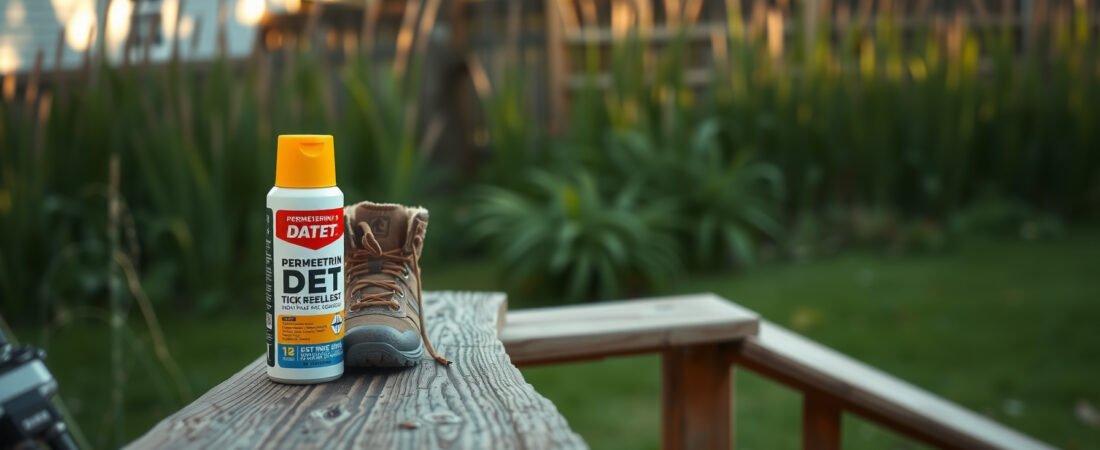
DEET on your skin and permethrin on your clothes sounds like a solid plan — and it is — but most people apply both products in exactly the wrong way, which means they get half the protection they paid for. The real mistake isn’t choosing the wrong repellent; it’s treating these two chemicals as interchangeable when they work through completely different mechanisms on completely different surfaces.
Why Using Permethrin on Skin — Or DEET on Fabric — Actually Defeats the Purpose
Permethrin is a synthetic pyrethroid — it kills and repels ticks on contact by disrupting their nervous system. The critical detail that most product labels don’t emphasize loudly enough: permethrin degrades rapidly on skin because your skin oils and body heat break it down within minutes, rendering it essentially useless as a skin-applied repellent. It was engineered specifically to bond with fabric fibers, where it remains effective through 6 to 7 washings when factory-applied, or 2 to 3 washings with a DIY spray application.
DEET, by contrast, works by creating a vapor barrier that interferes with a tick’s ability to detect carbon dioxide and human odor — the chemical cues ticks use to locate hosts. Apply DEET to clothing instead of skin and you lose that vapor barrier effect almost entirely, because the chemical isn’t directly next to the skin surface that’s emitting those cues. These are not two versions of the same product. They’re two halves of a system, and using them in the right pairing is what makes tick repellent genuinely effective.
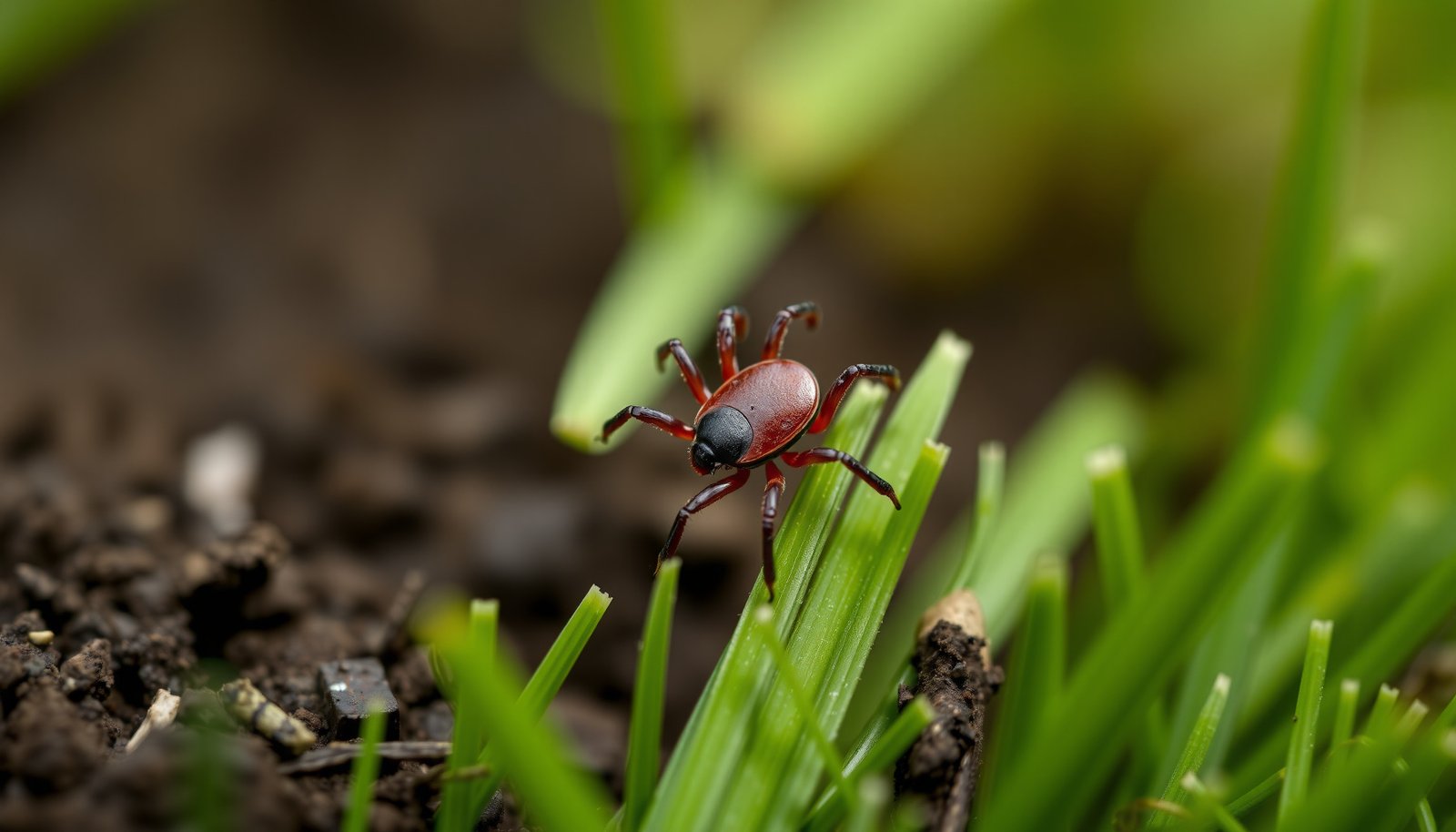
This side-by-side comparison shows permethrin-treated fabric versus untreated fabric under magnification — the difference in how a tick responds to each is visible within seconds of contact, which is exactly why the fabric application method matters so much.
How Does DEET Actually Repel Ticks — and What Concentration Do You Need?
DEET (N,N-diethyl-meta-toluamide) has been registered for use in the US since 1957, which gives it one of the longest safety and efficacy track records of any repellent on the market. Research published through the CDC and university extension programs consistently shows that concentrations between 20% and 30% provide the best balance of protection time and skin safety for adults — higher concentrations don’t necessarily work better, they just last longer per application. A 30% DEET product provides roughly 6 to 8 hours of protection against ticks specifically.
For children, the American Academy of Pediatrics recommends no more than 30% DEET, and the product should never be applied to children under 2 months old. One thing that surprises a lot of parents: you apply DEET to exposed skin, not under clothing. Skin under your shirt isn’t what ticks are crawling across to find you — they’re on the fabric surface first. This is why the two-layer approach (permethrin on fabric, DEET on exposed skin) closes the gap that either product alone leaves open.
“Most tick exposures happen in the 30 to 120 minutes people spend in transitional habitat — lawn edges, leaf litter near woods, overgrown path margins. If you’re only treating your skin and not your clothing, you’re essentially leaving the first point of contact completely unprotected. Ticks don’t jump or fly; they crawl upward from contact points on fabric, and that’s exactly where permethrin does its job.”
Dr. Susan Holt, PhD Entomology, University Extension Tick Surveillance Program
What Are the Best Permethrin Products for Clothing — and How Should You Apply Them?
Picture this: you spend a Saturday doing yard work along your fence line where grass meets a wooded border, wearing jeans and a t-shirt you treated with permethrin spray 24 hours earlier. When you do your post-outdoor tick check, you find one dead tick caught in the fabric of your pants — never made it past your knee. That’s permethrin working exactly as designed, and it wouldn’t have happened with DEET alone.
The best permethrin clothing sprays contain 0.5% permethrin — that’s the concentration that’s proven effective and EPA-registered for this use. Here’s a ranked breakdown of how to apply and what to look for:
- Treat clothing 24 hours before wearing — permethrin needs to fully dry and bond to fabric fibers. Applying it right before you head outside means it hasn’t set, so protection is significantly reduced.
- Treat socks and shoes first — ticks typically climb upward from ground contact at the foot and ankle. These are the highest-priority items to treat, and most people forget them entirely.
- Spray in a well-ventilated area, outdoors — wet permethrin is toxic to cats, who lack the liver enzyme to metabolize pyrethroids. Don’t bring treated gear inside until it’s fully dry (at least 2 hours).
- Choose factory-treated clothing for extended seasons — brands like Insect Shield and Sawyer Products offer clothing pre-bonded with permethrin at 0.5% that maintains effectiveness for up to 70 washings versus 2 to 3 with a spray-on application.
- Don’t retreat after every wash — test your spray-treated fabric first. Wash once and reapply. Overlapping permethrin applications without checking efficacy wastes product and doesn’t meaningfully improve protection.
Pro-Tip: Store permethrin-treated clothing in a sealed plastic bag between uses. Light and heat degrade the compound faster than washing does, so a dark, cool storage spot — not a sunny mudroom hook — extends the life of each treatment significantly.
Which Yard Treatments Actually Reduce Tick Populations — and Where Should You Apply Them?
Yard-applied permethrin and bifenthrin products target ticks in the places they actually live — not your open lawn, but the transition zones. Ticks spend most of their life cycle off a host, hiding in leaf litter, tall grass, and the first 3 to 9 feet of wooded areas adjacent to your yard. A broadcast spray across your open lawn does almost nothing useful. Concentrating treatment along those edges — particularly within 9 feet of any wooded border, under decks, and along shaded fence lines — is where the product earns its cost.
Here’s how the most common yard tick repellent approaches compare on real-world metrics:
| Product Type | Active Ingredient | Effective Duration | Best Application Zone |
|---|---|---|---|
| Permethrin Concentrate Spray | 0.5%–1% Permethrin | 4–6 weeks per treatment | Wooded edges, leaf litter, fence lines |
| Bifenthrin Granules | Bifenthrin 0.2% | 6–8 weeks with moisture activation | Perimeter beds, mulch borders, under shrubs |
| Natural Cedar Oil Spray | Cedar oil | 1–2 weeks | Low-traffic decorative borders only |
| Tick Tubes (permethrin-treated cotton) | 0.5% Permethrin | Seasonal (targets mice as tick vectors) | Wooded edges, under decks, near rodent runways |
Tick tubes are one of the most underappreciated tools in this category. White-footed mice are the primary reservoir host for Lyme disease-carrying blacklegged ticks in the northeastern US, and tick tubes work by letting mice take permethrin-treated cotton back to their nests — killing the larval ticks feeding on the mice before they can pick up the Borrelia bacteria that causes Lyme. It’s an indirect control method that most homeowners have never heard of, but university extension data suggests tick tube programs can reduce blacklegged tick populations by 70 to 90% in high-pressure zones when deployed consistently. This connects to a broader point: if you’re buying property in a tick-heavy area and have questions about land history, resources like Buying a House and Finding a Pre-Existing Pest Problem: Your Options may help you think through what disclosures to expect and what questions to ask before closing.
Are There Effective Alternatives to DEET and Permethrin for People Who Want Fewer Chemicals?
Picaridin (also called KBR 3023 or icaridin) is the most legitimate DEET alternative for skin application. At 20% concentration, EPA-registered picaridin provides protection comparable to 20% DEET against ticks, with a lighter feel on skin — it doesn’t dissolve plastics or synthetic fabrics the way DEET can, which matters if you’re wearing sunglasses or synthetic athletic wear. It’s also odorless to humans, which some people find preferable for all-day wear. Products like Sawyer Picaridin and Ranger Ready use 20% picaridin and perform well in independent tick protection testing.
Oil of lemon eucalyptus (OLE) — not the essential oil, but the synthesized active compound PMD — is the only plant-derived repellent the CDC recommends as an alternative to DEET. At 30% concentration it provides around 6 hours of tick protection. Here’s the honest nuance: in high-pressure tick environments like the northeastern US during peak nymph season (late spring through summer), where blacklegged tick nymphs are smaller than a poppy seed and responsible for most Lyme transmissions, the performance gap between OLE and 30% DEET or picaridin matters more than it does in low-pressure environments. Choose based on where you live and how much time you spend in tick habitat, not just personal preference. And for what it’s worth, even natural product skeptics who’ve dealt with infestations in other areas — say, someone dealing with how to get rid of fungus gnats in houseplant soil — often discover that “natural” and “effective” don’t always overlap as cleanly as the marketing suggests.
Here’s a quick comparison of what each alternative actually covers:
- Picaridin 20% — Comparable to DEET for tick protection, gentler on plastics and synthetics, odorless, safe for ages 2 months and up
- Oil of Lemon Eucalyptus (OLE/PMD) 30% — CDC-recommended, plant-derived active, not for children under 3, 4 to 6 hours effective protection
- IR3535 20% — EPA-registered, lower-irritation profile, less independently tested data for hard ticks vs. mosquitoes
- Cedar oil yard spray — Some evidence for contact kill of soft-bodied insects, minimal residual activity, requires very frequent reapplication to have any measurable effect
- Essential oils (rosemary, clove, peppermint) — No reliable EPA registration data for tick repellency at any concentration; not recommended for Lyme-risk zones
One thing worth saying plainly: a tick doesn’t need to bite you for long before disease transmission becomes possible. Lyme-carrying blacklegged ticks typically need to be attached for 36 to 48 hours to transmit Borrelia burgdorferi — but other tick-borne pathogens like the Powassan virus can transmit in as little as 15 minutes. That’s not a reason to panic, but it is a reason to take repellent selection seriously rather than defaulting to whatever smells the most natural.
Your best move going into any tick season is to layer both approaches: permethrin-treated clothing as your first line of contact defense, a quality DEET or picaridin product on exposed skin, and yard treatment concentrated at edge habitats rather than broadcast across open turf. Check your body thoroughly within 2 hours of coming indoors — the quicker you find and remove an attached tick, the smaller your risk window. That combination of fabric, skin, and habitat management is what actually moves the needle on tick exposure, and it costs a fraction of what most people assume.
Frequently Asked Questions
What is the best tick repellent for yard and clothing?
For clothing and gear, permethrin is the top choice — it bonds to fabric fibers and keeps killing ticks for up to 6 washes or 6 weeks. For skin and light clothing, DEET at 20–30% concentration gives you solid protection for several hours. Most outdoor experts recommend using both together for the best coverage.
Is permethrin safe to spray in your yard around kids and pets?
Permethrin is generally safe for yards once it’s fully dry, but it’s highly toxic to cats while wet — keep cats out of treated areas for at least 24 hours. It’s also harmful to fish and beneficial insects like bees, so avoid spraying near water or flowering plants. Kids and dogs can typically re-enter treated areas once the product has dried completely.
How long does permethrin last on clothing?
Factory-treated clothing like Insect Shield or Sawyer Permethrin-treated gear can last up to 70 washes. If you apply permethrin spray yourself, expect protection to last through 6 washes or about 6 weeks, whichever comes first. Retreating regularly is key if you’re spending a lot of time in tick-heavy areas.
Can you put DEET directly on clothing to repel ticks?
Yes, DEET can be applied to clothing, but it can damage synthetic fabrics like nylon and spandex, and it may melt or warp plastic accessories like watch bands and sunglasses frames. It also washes off clothing quickly, so it doesn’t last as long on fabric as it does on skin. For clothing protection, permethrin is a much better option.
What percentage DEET do you need to repel ticks?
The CDC recommends using products with at least 20% DEET for effective tick repellent protection. Concentrations between 20% and 30% offer protection for roughly 4–8 hours, and going above 30% doesn’t significantly extend that window. Products like OFF! Deep Woods and Repel 100 hit that effective range and are widely available.