
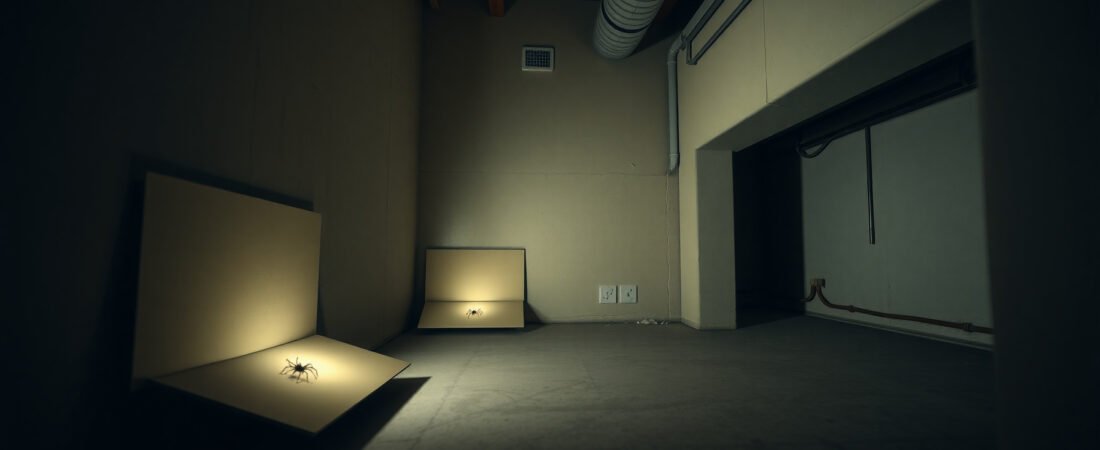
Glue traps catch far more than spiders — and that’s actually the problem most people run into. You buy a multi-pack, slap them in corners, and two weeks later you’ve got a trap full of dust, a few gnats, and zero spiders. Not because the traps don’t work. Because you put them in the wrong places for the wrong reasons, using the wrong style of board for indoor spider behavior. That’s the angle almost nobody covers, and it’s the reason most people give up on glue traps entirely after one bad experience.
Why Spider Traps Fail — And It’s Not the Trap’s Fault
Spiders don’t roam the middle of a room the way mice or roaches do. They follow edges — walls, baseboards, the tight gap behind a bookshelf, the crease where a cardboard box meets the floor. This “thigmotactic” behavior means a trap placed even six inches away from a wall can be completely invisible to a wandering spider. The trap isn’t defective. It’s just not where the spider is walking.
There’s another issue that compounds this: spiders in a house typically cover very small territories. A cellar spider might spend weeks in a 3-foot radius. A wolf spider moves more, but still follows wall lines and corners. Placement within about 2–3 inches of a wall, preferably flush against it in a true corner, makes a glue board exponentially more effective — some field comparisons by university extension programs have shown corner placement catches 4–6 times more spiders than open-floor placement of the identical product.
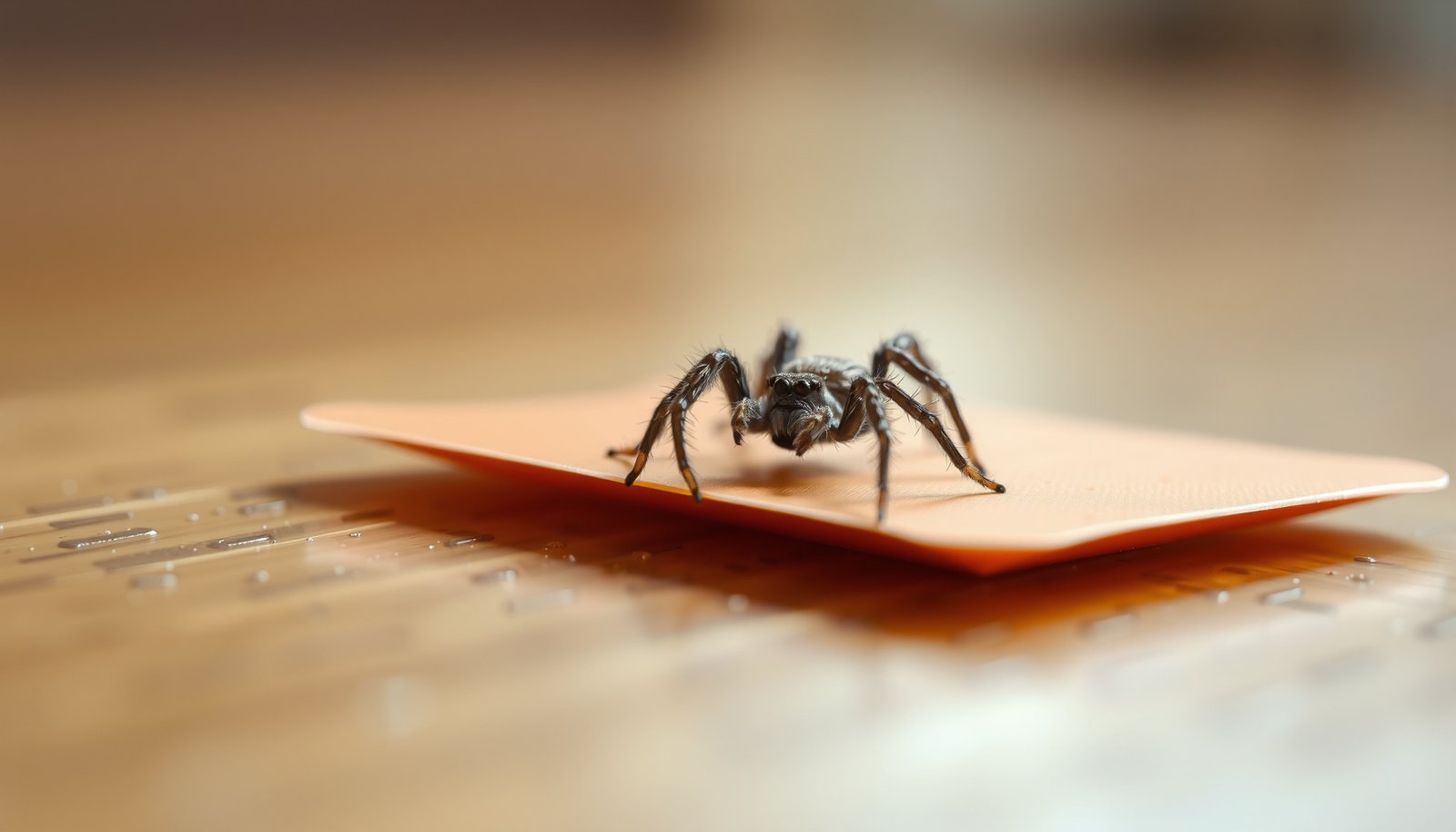
This close-up shows the difference in adhesive coverage and trap depth between flat glue boards and folded tent-style traps — the detail that actually determines whether a spider makes contact before it walks around the sticky surface entirely.
Flat Glue Board vs. Tent-Style Trap: Which Actually Works Better Indoors?
Flat glue boards — the thin cardboard rectangles coated in a pressure-sensitive adhesive — have a larger exposed surface area, which sounds like an advantage. And for crawling insects like cockroaches or silverfish, it usually is. For spiders specifically, the flat board has a real weakness: spiders have long legs, and some species can physically step across a flat trap without their body or leg joints touching the adhesive. It sounds unlikely until you’ve actually watched it happen with a larger house spider.
Tent-style traps (folded into a triangular tunnel shape) force any spider that enters to make contact at multiple points — the floor of the trap, the angled sides, and sometimes the roof. That contact geometry matters enormously for larger spider species like wolf spiders or brown recluses, which can clear a flat board’s adhesive zone in two strides. For small spiders — sac spiders, jumping spiders under 1/3 inch — flat boards work fine. The honest nuance here is that building type matters too: if you’re in an older home with a basement or crawl space and you’re dealing with larger wandering spiders, tent-style wins. In a modern apartment where most spiders are small sheet-web species, a flat board is adequate and cheaper.
The Best Spider Traps and Glue Boards Worth Buying — Ranked by Actual Use Case
There are dozens of options in this category, but most of them are essentially the same polypropylene glue board with a different label. A few products genuinely differentiate themselves through adhesive strength, trap geometry, or attractant design — and those are the ones worth spending money on. Here’s how the best options stack up against each other by use case.
| Product | Trap Style | Best For | Adhesive Strength |
|---|---|---|---|
| Catchmaster 72MAX | Flat board (foldable to tent) | General indoor use, basements, garages | High — holds large wolf spiders |
| Terro T3206 Spider & Insect Trap | Tent-style | Living areas, closets, along baseboards | Medium-high — good for most house spiders |
| Black Flag Spider & Scorpion Glue Trap | Flat board | Utility rooms, crawl spaces, entry points | High — non-drying formula |
| Trapper Max Glue Boards (Bell Labs) | Flat board | Pest monitoring, multi-pest catch | Very high — used by professionals |
One thing that separates Catchmaster 72MAX from cheaper alternatives is the dual-use design — you can use it flat for maximum surface area, or fold it into a tent to work specific corners. That flexibility makes it the most practical choice for a homeowner dealing with an unknown mix of spider species. Trapper Max boards are the go-to for pest management professionals for a reason: the adhesive doesn’t dry out for months and holds even larger arthropods reliably.
Where Exactly Should You Place Spider Glue Traps Indoors?
Picture this: you’ve just found a brown recluse in your laundry room. You want to know if it’s a one-off or if there are more. Where you place the traps in the next 48 hours will determine whether you get useful information or just collect dust. Most people scatter traps randomly. The method that actually works is systematic — covering the zones where spiders concentrate based on what they need: shelter, humidity, and prey access.
Follow this placement sequence for best results, especially in a new infestation scenario:
- True corners at floor level — Place traps in the 90-degree angle where two walls meet the floor. This is the single highest-traffic zone for any ground-hunting spider. Both trap sides should touch a wall.
- Behind and beside large appliances — The gap behind refrigerators, washing machines, and water heaters is warm, dark, and often has insect activity. Spiders follow prey; prey clusters near heat and moisture.
- Along garage or basement walls at 6–8 foot intervals — Don’t cluster them; space them out systematically so you’re monitoring the full perimeter of high-risk rooms.
- Inside closets along the back wall — Especially in ground-floor or basement closets where shoes and stored items provide shelter. Brown recluses are famously closet-dwellers.
- Entry points from the exterior — Any gap around pipes, utility lines, or door thresholds is a highway for spiders entering from outside. A trap within 12 inches of these entry points acts as an early warning system.
Check traps every 5–7 days initially, and replace them when they’re more than 50% covered with debris or catches — a saturated trap loses adhesive contact area and becomes unreliable. Most glue trap adhesives remain effective for 60–90 days in low-dust environments, but in a dusty basement or garage, that drops to 3–4 weeks.
“Glue boards are as much a diagnostic tool as a control tool. If you’re catching spiders consistently in one corner of the basement, that tells you where your exclusion work needs to happen — it’s not random. Spiders are following something, usually moisture or prey insects, and the traps show you the pattern.”
Dr. Karen Vail, Extension Urban Entomologist, University of Tennessee Institute of Agriculture
What Glue Traps Tell You That Pesticide Sprays Can’t
Here’s the counterintuitive part that most pest control coverage completely ignores: spider glue traps are arguably more valuable as a monitoring system than as a kill method. A spider population in a house is rarely the primary problem — it’s a symptom. Spiders are predators. If you have a consistent, self-sustaining spider population indoors, you almost certainly have a sustainable prey population too, usually small flies, fungus gnats, booklice, or stored-product insects. The glue boards will often catch those too, and that secondary catch is diagnostically gold.
Spray treatments, by contrast, give you a count of zero information about what’s happening ecologically in your home. You spray, things die temporarily, and you don’t know whether you solved the problem or just paused it. Glue boards tell you what species you’re dealing with, which directions they’re entering from, and whether numbers are increasing or decreasing over successive trap checks. That data is what lets you make an informed decision about whether you need further treatment — or whether you’ve already broken the cycle. Interestingly, the same monitoring logic applies to entirely different pest problems: when people investigate unusual flying insects around the house, correctly identifying them (like distinguishing termites vs. flying ants) before committing to a treatment approach saves both money and effort.
Pro-Tip: Date each trap with a marker when you place it. When you check it, note how many spiders were caught and whether they’re all the same species or a mix. Three or more of the same species on one trap in a single week means you have a localized population in that zone — not just a wandering spider from outside. That’s the threshold where exclusion work (caulking, weatherstripping, vapor barriers) becomes more important than adding more traps.
Are Spider Attractants and Pheromone Lures Worth Adding?
A handful of spider glue traps on the market now include a scent attractant — typically a food-based lure designed to draw insects into the trap, which secondarily attracts spiders hunting those insects. The honest answer on whether these work specifically for spiders: not reliably. Spiders don’t respond to the same pheromone cues that social insects like ants or moths do. They locate prey primarily through vibration, air movement detection, and visual motion — not chemical scent in most species. The lure in “spider-specific” traps is mostly attracting the prey insects, not the spiders themselves.
That said, some products now incorporate components from research into spider sex pheromones, which are an active area of study, particularly for controlling Loxosceles species (brown recluse). Field results so far have been inconsistent enough that no commercial product has convincingly demonstrated significant uplift in catch rates over unlured traps in real-home conditions. The better investment for most homeowners is buying more traps and placing them correctly than paying a premium for a lure. The one exception: if you’re trying to monitor specifically for brown recluse in a high-risk region (the south-central and Midwest U.S., where colonies can exceed 200 individuals in a single home), some pest management professionals do use specialized brown recluse traps with tested attractants. The same principle of understanding what you’re dealing with before reacting — rather than just treating broadly — applies whether you’re handling a spider situation or something like figuring out yellow jackets in the ground that you initially can’t identify.
Here’s what actually matters more than any lure when it comes to getting spider traps to perform:
- Surface texture around the trap — Traps placed on smooth surfaces (tile, linoleum) perform better than those on carpet, where spiders can sometimes step on carpet fibers and avoid adhesive contact entirely. On carpet, use tent-style traps only.
- Trap profile relative to wall — The trap should be absolutely flush against the wall. Even a 1/2-inch gap defeats the purpose for a thigmotactic spider.
- Ambient temperature — Glue adhesive becomes less tacky in cold environments. In an unheated garage or basement in winter, adhesive performance can drop noticeably below 50°F. Check manufacturer specs — some adhesives are rated for cold conditions, others aren’t.
- Interference from cleaning products — Residual floor cleaner, wax, or oil-based products near the trap can degrade adhesive edges. Keep traps away from any recently mopped zones for at least 48 hours after cleaning.
- Trap saturation from non-target insects — If you have an active gnat or fly problem alongside spiders, your traps will fill with small insects before catching spiders. Address the primary pest issue first, or use separate dedicated traps for each.
Used systematically, spider traps and glue boards give you something that almost no other DIY product does: actual evidence of what’s happening inside your walls before you decide how to respond. That’s a genuinely different way to think about pest control — less about reacting to what you see, and more about building a picture of what’s living in the spaces you never look. Start with a 12-trap deployment across your basement and entry-level rooms, check at one week and two weeks, and let the data tell you where to focus next. You’ll know within a month whether you have a passing visitor problem or something that warrants real intervention.
Frequently Asked Questions
do spider traps and glue boards actually work for indoor use?
Yes, they work well as a monitoring and reduction tool, but they won’t eliminate a full infestation on their own. Glue boards catch spiders that cross them, which helps you track where activity is heaviest and reduce the population over time. For best results, place them along walls and in corners where spiders travel, since spiders rarely walk through open spaces.
where should I place spider glue traps inside my house?
Put them flat against baseboards, in the back corners of closets, under furniture, and along garage walls — spiders hug edges when they move, so placement right up against a wall is key. Avoid open floor areas or spots with heavy foot traffic, since they’ll collect dust and lose stickiness fast. Checking and replacing them every 2 to 4 weeks gives you the best results.
are glue traps safe to use around pets and kids?
Most standard glue boards aren’t toxic, but the adhesive can seriously harm small pets like cats, dogs, and birds if they step on or mouth the trap. Keep them in areas your pets and children can’t access, like inside cabinet toe-kicks, behind appliances, or inside a covered bait station. Some brands sell enclosed trap housings specifically to block pet and child contact while still catching spiders.
how many spider glue traps do I need for a typical home?
A good starting point for a standard-sized home is 8 to 12 traps placed strategically, rather than spreading dozens randomly. Focus on high-risk zones like basements, garages, utility rooms, and any area where you’ve already spotted spiders. Once you see which traps are catching the most, you can concentrate more traps in those specific spots.
what’s the difference between spider-specific traps and regular glue boards?
Spider-specific traps are usually scented with pheromones or attractants designed to lure spiders, while standard glue boards rely on spiders wandering across them by chance. In practice, many pest control pros find that unscented flat glue boards placed correctly catch just as many spiders as the specialty versions. The bigger factor is placement — a well-positioned basic glue board will outperform a specialty trap stuck in the wrong spot every time.