
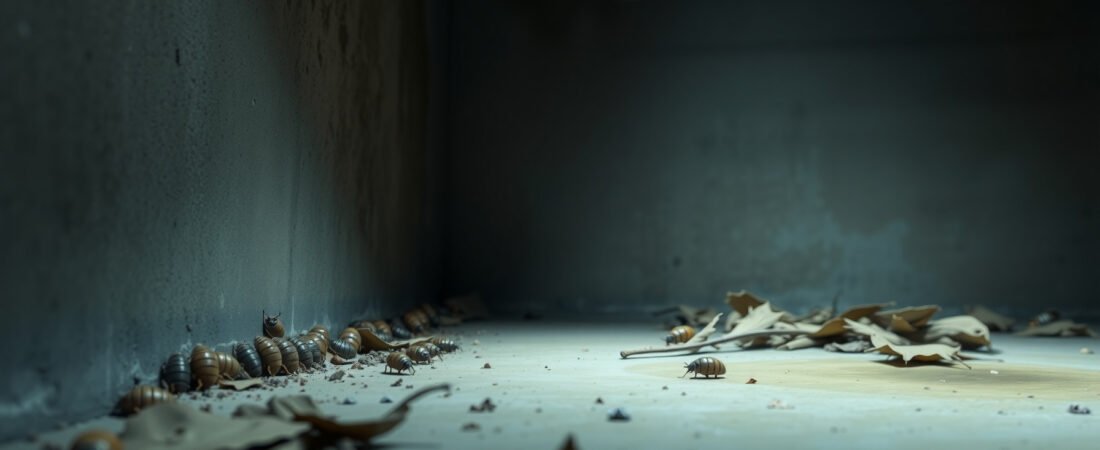
Pill bugs don’t actually want to be in your house. That’s the part most pest control advice skips over — and it’s exactly why the usual kill-on-contact sprays keep failing you. A roly poly that’s rolled across your bathroom floor isn’t looking for food or a place to breed. It wandered in by accident, it’s already dying, and the real problem is outside. Treat the interior and ignore the exterior, and you’ll be sweeping up the same little armored visitors every single week.
Here’s the bottom line: pill bugs (Armadillidium vulgare) are outdoor crustaceans — yes, crustaceans, closer to shrimp than insects — that require constant moisture to survive. They breathe through gill-like structures that must stay wet. Any pill bug you find inside your home has typically been there less than 24–48 hours before dehydration kills it. That’s not a comfort; it’s a diagnostic clue. Finding them indoors means your home’s perimeter has a moisture and entry-point problem that needs fixing, not just a bug to kill.
Why Pill Bugs Keep Coming Inside (It’s Not What You Think)
The assumption most people make is that pill bugs are attracted to the inside of the house — to food, to warmth, or to something they’re finding along your baseboards. That’s backwards. Pill bugs migrate inward accidentally when their outdoor habitat becomes temporarily uninhabitable: after a heavy rain saturates the soil, during a dry spell that dries out their mulch layer, or when they’re simply following moisture gradients that happen to lead under a door. They’re not invaders. They’re refugees that took a wrong turn.
What’s actually drawing them close enough to your foundation to wander in is a separate issue entirely. Decomposing wood mulch piled against your siding, waterlogged soil next to the foundation, rotting leaves in window wells, or even damp cardboard stored in a garage — all of these create thriving pill bug colonies within a foot or two of your home’s entry points. One healthy outdoor colony can contain hundreds of individuals per square foot of leaf litter. The fix starts there, not at the bug itself.
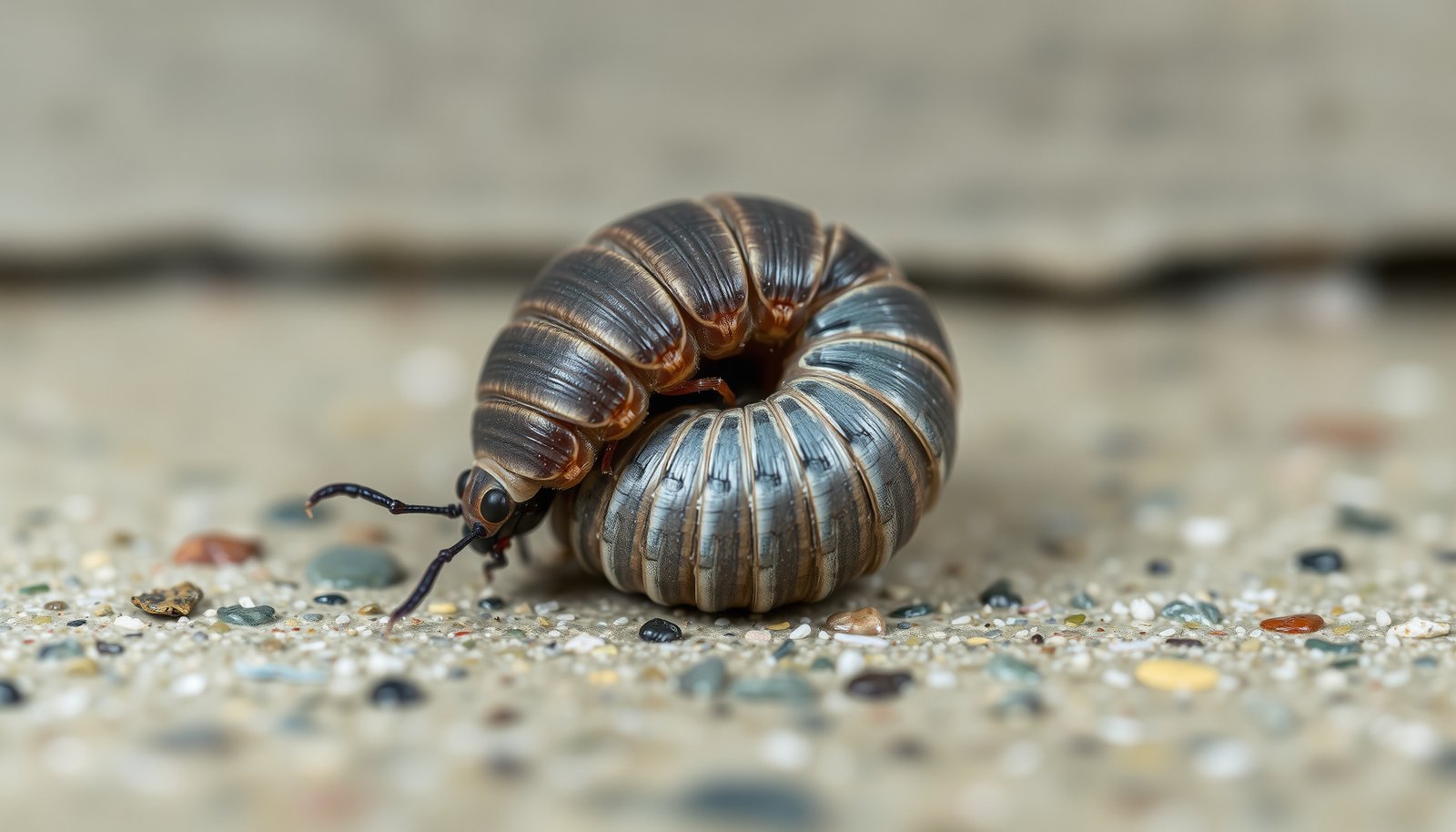
This close-up shows the segmented exoskeleton and short antennae that distinguish pill bugs from similar-looking pests — details worth knowing because sowbugs (which can’t roll into a ball) require a slightly different approach and are often mistakenly treated the same way.
How Do You Know If You Have a Real Infestation or Just Occasional Strays?
Honest answer: most homeowners finding a few pill bugs on the basement floor or under a sink do not have an infestation — they have a moisture problem and a gap in their perimeter. A true interior infestation, where pill bugs are reproducing and living indoors, is genuinely rare. It would require persistently wet conditions inside your home — a chronic leak under a slab, a perpetually damp crawl space with exposed soil, or a heavily waterlogged area behind finished walls. If that’s your situation, you’ll find them consistently in the same wet zone, not scattered randomly.
The numbers help clarify the scale. A female pill bug carries 7–200 eggs in a brood pouch under her body for roughly 45 days. Offspring reach reproductive maturity in about a year. That life cycle is slow by pest standards — nothing like the explosive reproduction you’d see with cockroaches or fleas. So if you’re finding more than a dozen per week indoors, that’s a signal of a serious moisture issue, not just casual wandering. Fewer than that? You’re likely dealing with strays from a large outdoor population, and the solution is exclusion plus habitat reduction, not chemical treatment inside.
“Pill bugs are an indicator species. When I see them consistently inside a home, I stop looking at the bugs and start looking at the moisture map — gutters, grading, mulch placement, crawl space vapor barriers. Treat the water problem and the pill bugs resolve themselves in most cases without a single pesticide application.”
Dr. Raymond Selby, Ph.D. Entomology, University Extension Pest Management Specialist
How to Get Rid of Pill Bugs in the House: The Right Order of Operations
Most guides jump straight to pesticide recommendations. The problem is that spraying your baseboards with a contact killer when you have mulch piled eight inches deep against your foundation is like bailing out a boat without plugging the hole. The steps below are sequenced intentionally — exterior habitat reduction first, exclusion second, moisture control third, and targeted treatment only where it’s actually warranted.
- Pull mulch away from the foundation. Keep a dry zone at least 6–12 inches wide between any mulch, wood chips, or ground cover and your home’s exterior walls. This single step eliminates the primary harborage zone for pill bugs living close enough to wander inside.
- Fix your grading and drainage. Soil should slope away from the foundation at roughly a 1-inch drop per foot for the first 6 feet. Flat or inward-sloping ground keeps the soil perpetually damp — ideal for pill bugs, terrible for your foundation.
- Seal entry points below 18 inches. Door sweeps on exterior doors, weatherstripping on garage doors, and caulk around pipe penetrations close the routes pill bugs use. They can squeeze through gaps as thin as a credit card.
- Address crawl space moisture. If you have a vented crawl space with bare soil, a 6-mil polyethylene vapor barrier covering the ground reduces humidity dramatically. Pill bugs in a crawl space almost always trace back to exposed soil and poor ventilation.
- Apply a perimeter treatment if the population is high. A granular insecticide containing bifenthrin or permethrin applied in a 3-foot band around the exterior creates a kill zone before pill bugs reach your foundation. Reapply after heavy rain. This is optional if you’ve done steps 1–4 correctly.
- Use diatomaceous earth inside selectively. Food-grade DE dusted along interior entry points — under door thresholds, around utility pipe gaps — dehydrates pill bugs mechanically without chemical exposure. It works slowly but remains effective as long as it stays dry.
Picture this: a homeowner in the Pacific Northwest spends two seasons buying roach-style spray for pill bugs appearing in their attached garage, gets nowhere, then finally rakes out the decomposed bark mulch that had built up 14 inches deep along the garage wall. The pill bugs were essentially living in a perfectly humid hotel two inches from the door gap. Removing the mulch and adding a door sweep stopped the problem in under two weeks — no pesticide needed.
Which Treatments Actually Work — and Which Ones Are a Waste of Money
The pest control market is full of products that technically kill pill bugs on contact but do nothing to solve why they’re showing up. Here’s a frank breakdown of what works, what doesn’t, and under what circumstances each approach makes sense.
| Treatment Type | Effectiveness Against Pill Bugs | Best Used For | Realistic Limitation |
|---|---|---|---|
| Granular bifenthrin (exterior perimeter) | High — kills on contact, residual up to 3 months | Large outdoor populations near foundation | Washes out in rain; won’t stop entry if gaps exist |
| Diatomaceous earth (interior) | Moderate — works mechanically, no resistance | Crawl spaces, under door thresholds | Loses effectiveness when wet; needs reapplication |
| Indoor aerosol sprays (pyrethrin-based) | Low — kills strays on contact only | Nothing, effectively | Does not address entry points or outdoor population |
| Habitat modification (mulch, grading) | Very high — removes the root cause | Any pill bug situation | Takes effort; results visible in 1–3 weeks |
One thing worth noting: pill bugs don’t build nests, don’t chew through materials, and don’t contaminate food. They’re essentially harmless inside the house. The calculus on how aggressively to treat is different than it would be for something like cockroaches, which pose genuine health risks through fecal contamination and allergen production. That said, a high pill bug population near your foundation can signal conditions — damp soil, decaying wood — that also attract termites and carpenter ants, so it’s not something to fully ignore either.
Pro-Tip: Before applying any granular perimeter treatment, water the application zone lightly first. Bifenthrin granules need moisture to activate and bind to soil particles — applying to bone-dry dirt significantly reduces absorption and effectiveness. A light pre-soak and a light post-soak gives you a much more even distribution of active ingredient.
What Pill Bugs in Specific Rooms Are Telling You About Your Home
Location matters a lot when diagnosing a pill bug problem. They don’t roam freely through a house the way German cockroaches do — they follow moisture. So where you find them is a direct map to where your moisture problem is. This is the diagnostic piece that most generic pest guides skip entirely, and it’s genuinely useful information.
- Basement or crawl space: Almost always a soil moisture or vapor barrier issue. Check for exposed earth, standing water after rain, and whether your sump pump (if present) is functioning. Pill bugs here indicate conditions that could also be supporting mold growth.
- Garage: Decomposing material stored on the floor (cardboard boxes, wood scraps, bags of mulch or potting soil) or a gap at the bottom of the garage door. These are the two most common causes, and they’re fixable without any product at all.
- Bathroom or laundry room: A slow leak under the sink, around the toilet base, or behind the washer. Pill bugs can survive in a dripping cabinet for weeks if the moisture level stays high enough. Fix the leak and they vanish.
- Under sliding glass doors or back doors: Classic entry point problem. The door sweep is either missing, worn, or the threshold has a gap. This is a common issue in older homes and easily fixed with a $12 door sweep from any hardware store.
- Random spots throughout the house: If you’re finding dead or dying pill bugs in dry, random locations — living room floor, hallway — they likely wandered in from a single entry point and are dying from dehydration as they try to find their way back out. No interior treatment needed; find and seal the entry point.
This location-based approach to diagnosis applies to a lot of indoor pest problems beyond pill bugs. The same logic of “where they appear tells you what they need” works for a surprising range of occasional invaders. It’s the same reason that cockroaches living inside walls require a completely different elimination approach than cockroaches foraging across a kitchen counter — the location reveals what resources they’re accessing and how to cut them off. And similar to how Asian lady beetle infestations are driven primarily by exterior entry points and seasonal pressure rather than anything happening inside the home, pill bug control is 80% an outdoor and structural problem.
The honest nuance here is that results vary based on your home’s construction type and climate. A slab-on-grade home in a dry southwestern climate will rarely see pill bugs indoors at all — the soil dries out too quickly near the foundation. A home with a dirt-floor crawl space in the Pacific Northwest or Gulf Coast states faces a genuinely different challenge where crawl space encapsulation may be the only permanent solution, and that’s a job that often warrants professional assessment. No single fix works identically in every situation.
Pill bugs are one of those pests where doing less — but doing the right things — beats any combination of products you could buy. Seal the gaps, dry out the perimeter, pull the mulch back, and you’ll have solved it. The few that do wander in after that are a temporary inconvenience, not a problem. Focus your energy on making your home’s exterior an inhospitable place for them to congregate, and the interior takes care of itself.
Frequently Asked Questions
why do I have pill bugs in my house?
Pill bugs come inside when outdoor conditions get too dry, too wet, or too cold. They’re almost always a sign of a moisture problem — things like leaky pipes, poor drainage, or damp soil pressed up against your foundation. If you’re seeing more than a few at a time, there’s likely a consistent moisture source attracting them.
what kills pill bugs instantly?
Diatomaceous earth kills pill bugs quickly by damaging their exoskeleton and causing them to dehydrate — sprinkle it along baseboards, in crawl spaces, and near entry points. Chemical options like pyrethrin-based sprays or permethrin insecticides also work fast on contact. For indoor use, diatomaceous earth is the safer choice if you have kids or pets.
are pill bugs harmful to humans or pets?
Pill bugs aren’t harmful — they don’t bite, sting, or carry diseases, and they’re not toxic to pets if ingested. They’re actually crustaceans, not insects, and they only feed on decaying organic matter. That said, a large infestation indoors usually signals a dampness problem that can lead to mold or structural damage over time.
how do I keep pill bugs from coming inside?
Seal gaps around doors, windows, and where utility pipes enter your home, since pill bugs can squeeze through cracks as small as 1/16 of an inch. Move mulch, woodpiles, and leaf debris at least 12 inches away from your foundation to remove their outdoor harborage spots. A dehumidifier in basements or crawl spaces, combined with a moisture barrier, does a lot to make your home less inviting.
where are pill bugs coming from in my basement?
Basement pill bugs almost always enter through foundation cracks, gaps around basement windows, or unsealed crawl space vents. They’re drawn in by high humidity — basements with moisture levels above 50% are prime territory. Check for standing water, condensation on pipes, and any spots where soil is in direct contact with your foundation walls.
Disclaimer: This article is for informational purposes only and isn’t a substitute for professional pest control advice. Always read and follow the product label instructions exactly — label directions are legally binding and vary by brand and active ingredient. Keep all pesticides, baits and traps away from children and pets, ventilate treated areas as directed, and consider calling a licensed pest control professional if an infestation is large, recurring, or involves a structural pest like termites or carpenter ants.