
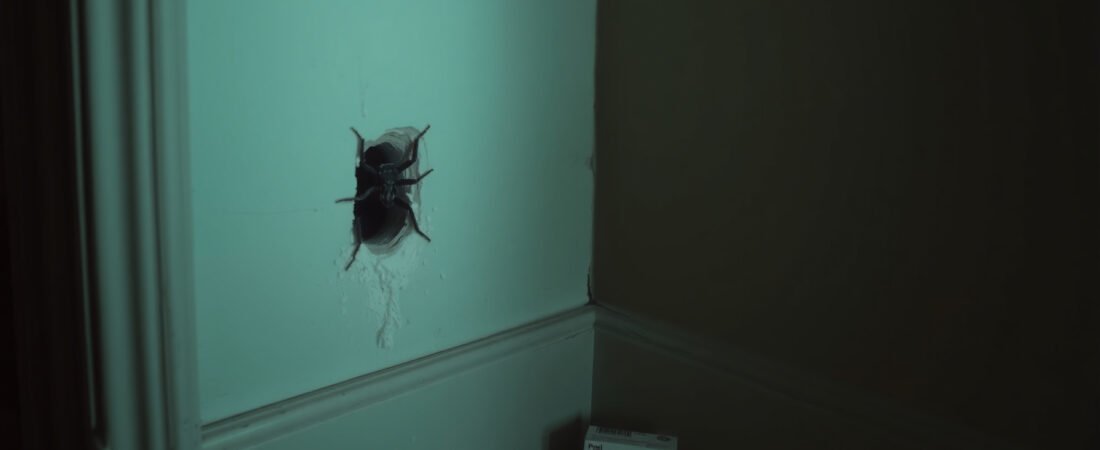
Spraying baseboards won’t touch cockroaches living inside your walls — and that’s the exact reason most DIY treatments fail the first time. The roaches you see skittering across your kitchen floor at night are often just scouts; the colony itself is tucked 6 to 18 inches deep inside wall voids, pipe chases, and hollow door frames where no spray bottle can follow. Getting rid of them means understanding that the wall itself is the problem, not just a hiding spot — and treating it differently than every surface-spray product tells you to.
Why Cockroaches Move Into Walls in the First Place
Wall voids offer everything a cockroach colony needs: consistent warmth from electrical wiring and pipes, near-total darkness, humidity from plumbing, and shelter from predators. A wall cavity running behind a kitchen sink checks every box on a cockroach’s habitat wishlist simultaneously. That’s not an accident — it’s why infestations concentrated inside walls tend to be more entrenched and harder to collapse than those living openly under appliances.
Here’s the counterintuitive part: wall-void infestations are often larger in spotlessly clean homes than in messy ones, because clean kitchens push roaches to forage less and retreat deeper into protected voids between meals. A female German cockroach produces 30–40 eggs per capsule and can generate up to 8 capsules in her lifetime — inside a wall where nothing is disturbing her, those numbers compound fast. By the time you’re seeing a handful of roaches nightly, there may already be hundreds or thousands living behind the drywall you can’t access.
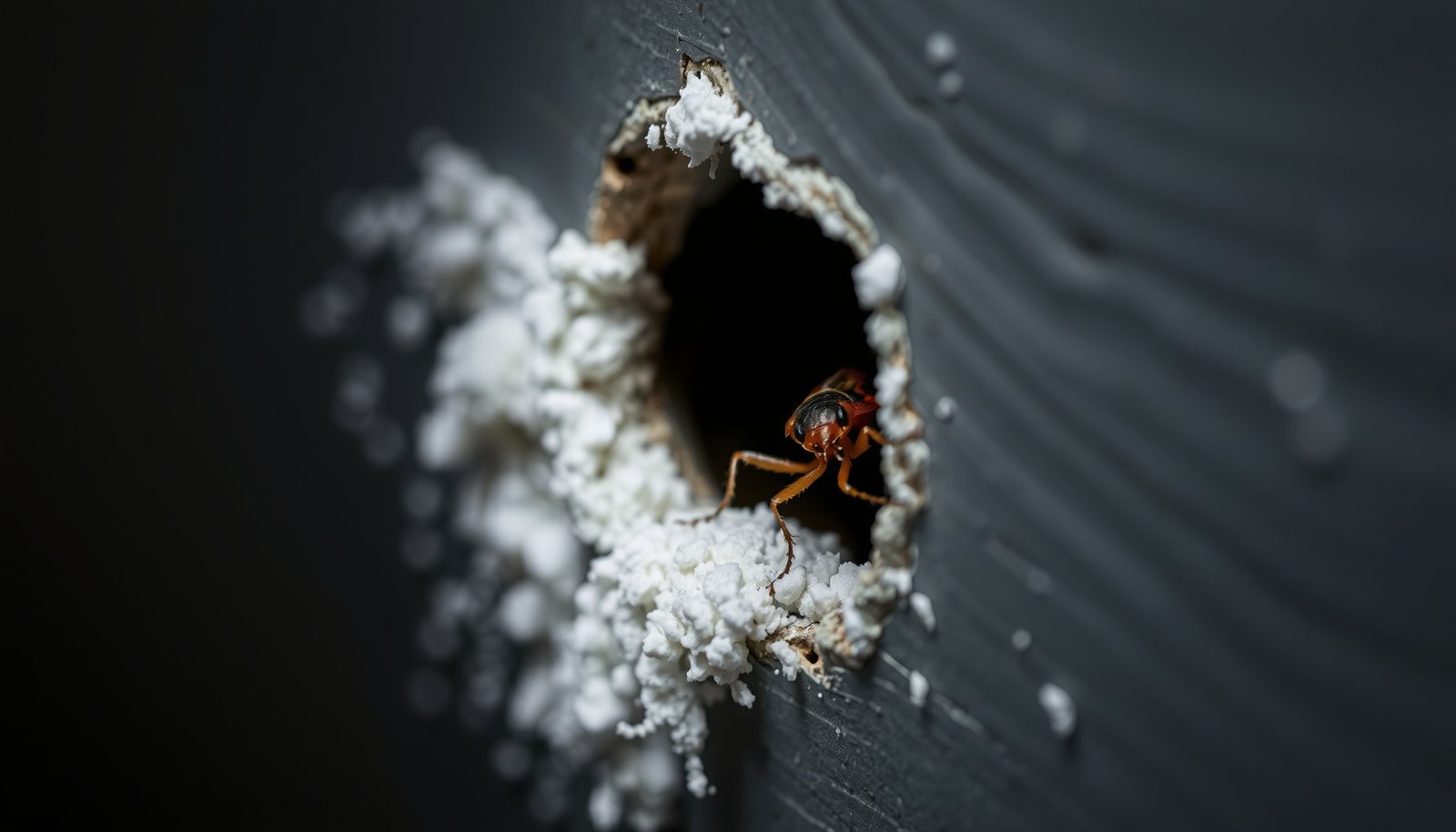
This close-up shows how cockroaches compress their bodies to fit into wall gaps as narrow as 1/16 of an inch — a reminder that even a hairline crack around a pipe sleeve is wide enough for them to disappear completely.
How Do You Know the Infestation Is Actually Inside the Wall?
Picture this: you’ve treated your kitchen cabinets, wiped down every surface, and placed gel bait under the stove — but three weeks later, roaches keep appearing from the same corner of the room, always near the same outlet or pipe gap. That’s a wall-void infestation behaving like one. Roaches living inside walls follow scent trails back and forth through very specific entry points, usually utility penetrations, and those exit points stay consistent because the colony doesn’t move unless threatened.
There are a few reliable tells beyond the obvious. Rusty or musty odors concentrated near a specific wall section — not the whole kitchen — often indicate a large colony producing aggregation pheromones inside a void. Roach droppings or shed skins appearing around electrical outlets, switch plates, or plumbing escutcheons are strong indicators the void behind that point is active. Tapping the wall and hearing a hollow sound in an area where you’d expect solid framing is worth noting too, though older homes with balloon framing naturally have larger voids throughout.
What Actually Works When You Can’t Open the Wall
The goal with wall-void treatments isn’t to flood the space with product — it’s to introduce something the roaches will carry back to the colony or encounter repeatedly as they move through the void. Gel bait is effective only when placed directly at the entry points roaches use to exit the wall, not randomly on surfaces. A small pea-sized drop of gel bait pressed into the gap around a pipe sleeve or behind an outlet plate puts the bait exactly where foraging roaches will find it on their way out.
Boric acid dust injected into wall voids through outlet boxes or small drilled access points is one of the most underused approaches for this exact situation. Unlike sprays, dust stays active for months and coats the surfaces roaches walk across — every time a roach moves through a dusted void, the particles cling to its body and are ingested during grooming. The mechanism matters: boric acid isn’t a repellent, so roaches don’t avoid it the way they learn to avoid residual sprays over time. One caveat — this works best in dry climates or dry wall sections; humidity above 60% can cause dust to clump and lose effectiveness.
Pro-Tip: Before injecting dust into wall voids through an outlet box, always cut the circuit breaker for that outlet. Boric acid dust is non-conductive when dry, but the process of removing an outlet plate in an active infestation means potential roach debris in the box — work safely.
The Step-by-Step Method for Treating Cockroaches in Wall Voids
Treating a wall-void infestation requires a sequenced approach, not a single product. Doing these out of order — especially sealing entry points before treating — is the most common mistake, and it traps roaches in the wall where they’ll die and potentially attract secondary pests, or worse, forces them to find new exit routes deeper into your home.
- Map the entry points first. Remove outlet covers, switch plates, and plumbing escutcheons along the wall section in question. Use a flashlight to look for roach droppings, shed skins, or live roaches. Mark every gap you find — these are your treatment access points.
- Apply gel bait directly at exit points. Place pea-sized drops of high-quality cockroach gel bait (look for active ingredients like indoxacarb or abamectin) at the edge of each gap — not inside cabinets or on counters. Replace bait every 2–3 weeks while the infestation is active.
- Inject boric acid dust into the void. Using a hand duster with a flexible tip, puff boric acid dust into the wall cavity through outlet boxes or small 1/4-inch drilled holes. Aim for a light, even coat — a cloud of dust is better than a pile. Too much and roaches walk around it.
- Add an Insect Growth Regulator (IGR). Products containing hydroprene or pyriproxyfen can be injected as an aerosol into wall voids. IGRs don’t kill adults but prevent nymphs from reaching reproductive maturity, which breaks the colony’s breeding cycle over 60–90 days. This step is what most DIY treatments skip entirely.
- Seal entry points — but only after treating. Once you’ve confirmed roach activity has dropped significantly (typically 4–6 weeks), seal penetrations with fire-rated caulk or expanding foam. Use copper mesh in larger gaps before foaming — roaches can chew through cured foam given enough motivation.
The timeline matters as much as the method. Most people expect results within a week and re-treat aggressively when they still see roaches at day 10 — but bait-based treatments targeting a wall colony often take 3–6 weeks to collapse the population, because the bait has to transfer through the hierarchy of the colony. Patience and monitoring beats repeated bombing every time.
Which Products Work Best for Wall Void Cockroach Treatments?
Not all cockroach products are engineered for void application. Aerosol foggers — “bug bombs” — are specifically ineffective here because their particles don’t penetrate into wall cavities; they disperse in open air and the propellant pushes roaches deeper into the wall rather than exposing them to the active ingredient. This is a real-world failure that pest control technicians see constantly when called in after a homeowner has bombed a space and the infestation has spread.
“Wall-void cockroach infestations are the case where I see the biggest mismatch between what homeowners use and what the situation requires. Foggers don’t penetrate voids — they just redistribute the problem. Dust plus bait at the exit points is the combination that actually gets into the colony’s living space, and the IGR is what keeps the population from recovering.”
Dr. Marcus Ellroy, Board-Certified Entomologist and NPMA-Certified Pest Management Professional
Here’s a quick breakdown of the main product types and how they perform specifically for cockroaches in walls — not general cockroach control:
| Product Type | Penetrates Wall Voids? | Best Use in This Scenario |
|---|---|---|
| Gel Bait (indoxacarb/abamectin) | No — place at entry gaps | Primary kill method via transfer feeding |
| Boric Acid Dust | Yes — via duster injection | Long-term void treatment, 6–12 months residual |
| IGR Aerosol (hydroprene) | Yes — injected as aerosol | Colony suppression, prevents reproduction |
| Aerosol Fogger / Bug Bomb | No — disperses in open air | Not recommended for wall-void infestations |
One product category worth highlighting for completeness: diatomaceous earth. It works mechanically the same way as boric acid — physical damage to the roach’s exoskeleton leading to dehydration — but it clumps faster in humidity and tends to be less effective in the damp conditions common around kitchen and bathroom plumbing walls. Boric acid dust holds its effectiveness longer in those specific environments, which is why professionals reach for it first in void treatments.
It’s also worth noting that the right approach can shift depending on your building type. In older homes with plaster-and-lath construction, the void spaces are often larger and more interconnected, meaning roaches can travel farther between treatment points — which is why spacing gel bait drops 18–24 inches apart along baseboard entry points matters more than in newer drywall construction. If you’re dealing with pests in a confined space — much like the challenge of eliminating mice in an RV or camper where wall cavities are shallow and interconnected — the same principle applies: access points are everything.
When to Stop DIY and Call a Professional for Wall Cockroaches
DIY treatment is genuinely effective for wall-void cockroach infestations when the infestation is relatively localized — one wall section, one bathroom, one kitchen corner. The methods above, applied consistently, will collapse most moderate infestations within 4–8 weeks. But there are specific conditions where professional intervention isn’t just recommended, it’s the only realistic path forward.
Here’s what should make you pick up the phone instead of heading to the hardware store:
- Multiple walls across multiple rooms are active. When roaches are exiting from outlet plates in the kitchen, bathroom, and a bedroom simultaneously, the infestation has likely spread through the wall void network — meaning the colony has multiple sub-clusters that need coordinated treatment from more than one access point.
- You’ve treated for more than 6 weeks with no reduction in activity. Gel bait resistance is a real phenomenon, particularly with German cockroaches in urban apartments where the same products have been used for years. A professional can switch to active ingredients or application methods that aren’t available over the counter.
- You’re in a multi-unit building. Wall void colonies in apartments don’t respect unit boundaries — they travel through shared plumbing chases, electrical conduits, and wall gaps between units. Treating your unit alone when neighbors are untreated is like bailing water with a hole in the boat.
- The species is American or Oriental cockroach. These larger species often enter wall voids from outside and from sewer systems, not just from internal food sources. Their access points and treatment methods differ meaningfully from German cockroaches, and the entry point locations are often in crawlspaces or exterior foundation gaps that require different inspection skills.
- There are signs of infestation inside walls with insulation. Fiberglass or foam insulation inside a wall cavity is a complicating factor — dust products can’t distribute evenly through it, and bait at surface entry points may not be found if the roaches are nesting deep in insulation fill rather than in the clear void space.
Professional pest control for wall-void cockroach infestations typically involves foam-application of residual insecticides directly into voids — a technique that expands to fill irregular spaces that dust and aerosol can’t reach uniformly. Some professionals also use thermal imaging cameras to identify hot, active nesting zones inside walls before drilling access points, which is especially useful in finished basements or tiled bathroom walls where you’d rather not create unnecessary holes. Desert homeowners dealing with American cockroaches that also use exterior walls as travel corridors might find value in reading about perimeter defense strategies used for scorpions — the exterior exclusion logic translates directly.
The honest truth about wall cockroach infestations is that the problem rarely resolves in a single treatment pass, regardless of who’s doing it. What actually ends infestations is consistent pressure — bait that’s refreshed, dust that’s maintained, and entry points that are sealed after the colony collapses rather than before. Start methodically, give the treatment time to work, and track what you’re seeing at each access point over time. That kind of deliberate approach beats any single “nuclear option” product every time.
Frequently Asked Questions
How do I know if cockroaches are living inside my walls?
You’ll usually hear scratching or rustling sounds at night, especially in the hour after you turn the lights off. Other signs include greasy smear marks along baseboards, a musty oily smell near outlets or vents, and droppings that look like black pepper or tiny cylinders. If you’re seeing these signs in multiple rooms, there’s a good chance cockroaches in walls are moving through your home’s void spaces.
What can I put in my walls to kill cockroaches without tearing them open?
Boric acid dust and diatomaceous earth are two of the most effective options you can puff into wall voids through outlet covers, switch plates, or small drill holes. A bulb duster lets you push the dust 12 to 18 inches into the void, which is enough to coat the areas roaches travel through. Gel bait applied inside outlet boxes also works well since roaches treat electrical channels like highways between rooms.
Can cockroaches in walls make you sick even if you never see them?
Yes, they can. Cockroach shed skins, droppings, and saliva particles get into the air through gaps around outlets and baseboards, which can trigger asthma attacks and allergic reactions — especially in kids. The EPA considers cockroach allergens one of the leading indoor asthma triggers in urban housing. You don’t need to see a single roach for the allergen levels in your home to become a real health problem.
How long does it take to get rid of cockroaches in walls?
With consistent treatment, most infestations show noticeable reduction within 1 to 2 weeks, but full elimination typically takes 4 to 8 weeks. German cockroaches are the hardest to clear out because they reproduce fast — a single female can produce hundreds of offspring in her lifetime. If you haven’t seen a clear drop in activity after 3 weeks of treatment, it’s usually time to bring in a pest control professional.
Will cockroaches eventually leave walls on their own if I keep the kitchen clean?
No, they won’t. Cockroaches in walls aren’t just there for food — they’re using those voids as shelter, and they’ll stay as long as the conditions are right regardless of how clean your kitchen is. They can survive for weeks on almost nothing, including glue, grease residue in pipes, and even cardboard. Cleanliness helps reduce what draws them out, but it doesn’t address the infestation itself.
Disclaimer: This article is for informational purposes only and isn’t a substitute for professional pest control advice. Always read and follow the product label instructions exactly — label directions are legally binding and vary by brand and active ingredient. Keep all pesticides, baits and traps away from children and pets, ventilate treated areas as directed, and consider calling a licensed pest control professional if an infestation is large, recurring, or involves a structural pest like termites or carpenter ants.