
Scorpion repellents work — but not in the way most desert homeowners think they do. The products you put inside your home are largely fighting the wrong battle. Scorpions aren’t like roaches that breed in wall voids or ants that build colonies under your foundation. They wander in from outside, one at a time, hunting food. That distinction changes everything about which products actually matter and where you should be spending your money.
Why Most Scorpion Repellent Strategies Fail Before They Start
Here’s the part that doesn’t make it onto most product labels: scorpions can survive for up to 12 months without food and are capable of flattening themselves to squeeze through gaps as thin as a credit card — roughly 1/16 of an inch. That means the bark scorpion you found on your bathroom wall last Tuesday didn’t walk in through an open door. It found a structural gap you’ve probably never noticed, and it was drawn there by the crickets, roaches, and beetles already living in or around your home. Repellents that aren’t paired with insect control will only do half the job at best.
The other failure point is placement. Most homeowners spray baseboards and call it done. But scorpions travel vertically as easily as horizontally — bark scorpions, the most venomous species in North America, are excellent climbers and are regularly found on ceilings, behind picture frames, and inside curtain rods. Any spray-only approach that ignores upper walls, weep holes, attic entry points, and exterior block walls is leaving major corridors wide open. Understanding how scorpions actually move through a structure is the difference between products that work and a collection of half-empty bottles under the sink.
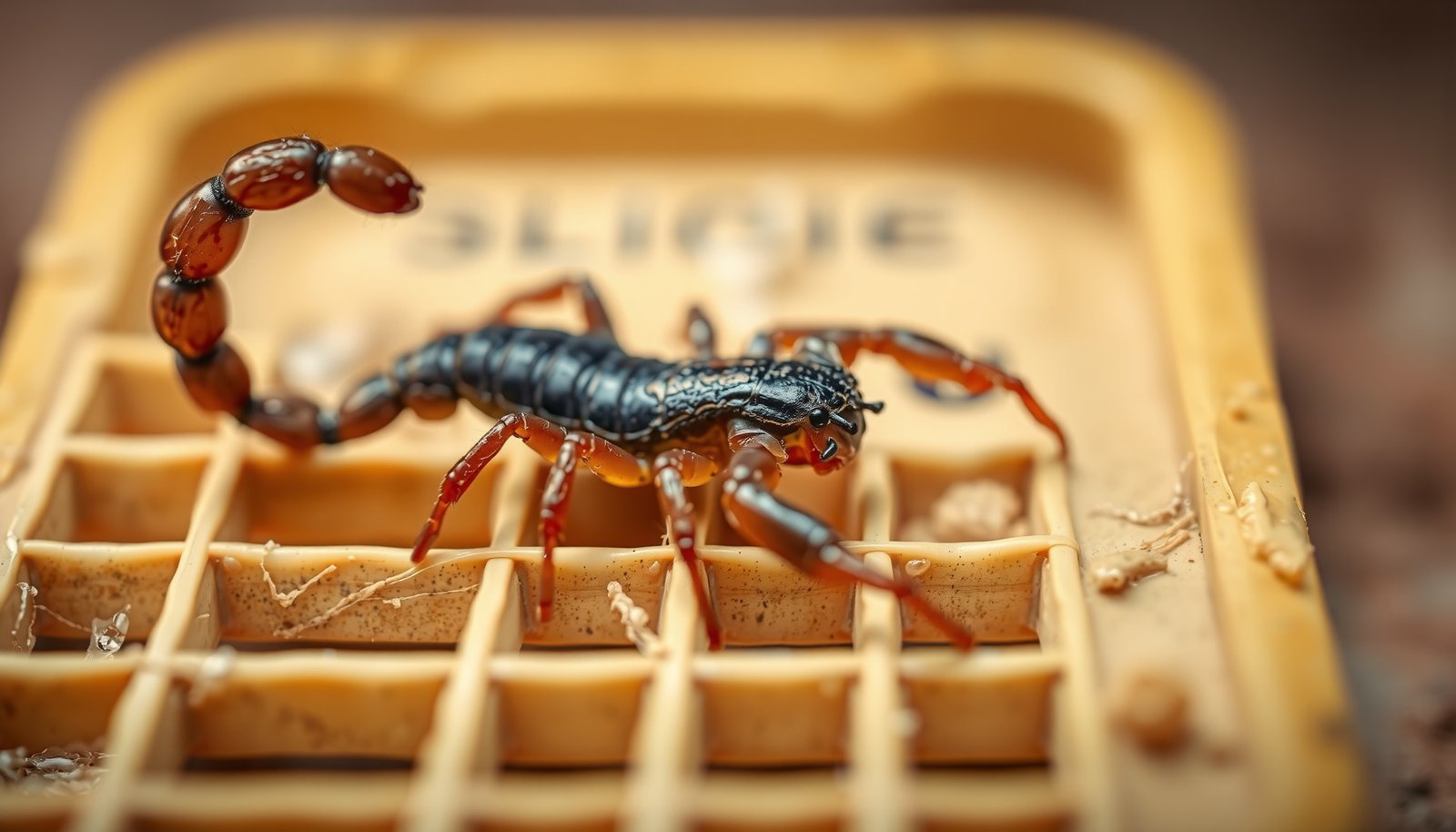
This close-up shows the application zones and trap placement points most often missed in desert homes — the exact spots where a properly layered scorpion control approach makes contact with scorpions before they reach living spaces.
Which Scorpion Repellents Actually Work — and Which Are Marketing
Cyzmic CS (lambda-cyhalothrin microencapsulated) and Talstar P (bifenthrin) are consistently the most effective chemical repellents for scorpion control in desert environments. Both are residual insecticides that bond to porous surfaces and stay active for 30–90 days depending on surface type and sun exposure. Bifenthrin is particularly well-studied against scorpions — a 2019 university extension review from the University of Arizona found that bifenthrin perimeter sprays reduced scorpion entry events by over 60% when applied to both interior and exterior surfaces simultaneously. The key word there is “perimeter” — the spray needs to hit exterior block, weep holes, window frames, door thresholds, and the first 6 inches of your interior baseboard in one continuous treatment.
Essential oil-based products — cedar oil, peppermint, cinnamon — show up constantly in online scorpion repellent lists, and the honest answer is that they don’t hold up under real-world conditions outdoors in a desert climate. UV exposure and heat break down volatile compounds within 24–48 hours, which means you’d need to reapply constantly to maintain any meaningful effect. They’re not useless for spot-treating tight indoor spaces like closets or under bathroom vanities, but relying on them as your primary outdoor barrier in Phoenix or Tucson is wishful thinking. Save the essential oils for a secondary layer indoors after your chemical perimeter treatment is established.
“Scorpions are incredibly resistant to insecticides compared to most household pests — they have a thick cuticle that limits absorption. The products that work best are those that scorpions walk through rather than absorb through contact, which is why microencapsulated formulas and wettable powders outperform emulsifiable concentrates on porous stucco and concrete surfaces.”
Dr. Carl Olson, Entomologist and Associate Curator, University of Arizona Department of Entomology
How to Choose the Right Scorpion Trap for Your Home Layout
Glue traps are the most underutilized scorpion control tool in desert homes, and not just because they catch scorpions. They’re a surveillance system. Placing glue boards in a deliberate pattern around your home tells you exactly which entry corridors are active, which lets you target your repellent applications with precision instead of guessing. A scorpion caught on a trap near the water heater closet means there’s a gap near that utility penetration. One caught along the west wall suggests exterior block cracks on that side. The trap becomes your diagnostic, not just your control method.
For trap selection, larger boards outperform smaller ones — scorpions are big enough that a standard 4-inch mouse glue board may only catch a leg. Look for boards that are at least 6×8 inches with a high-tack adhesive rated for insects rather than rodents only. Catchmaster 72MAX and Trapper MAX glue boards are both wide enough and sticky enough to hold a full-sized bark scorpion. Fold them into a tent shape rather than laying them flat — scorpions prefer to travel under edges and overhangs, so the tent configuration intercepts their natural movement pattern rather than forcing them to walk across an exposed flat surface.
Pro-Tip: Use a UV black light flashlight (365nm wavelength) to do a sweep of your trap placement zones before you set glue boards. Scorpions fluoresce bright green under UV light, making it easy to confirm where they’re actively traveling before you commit your traps. This step takes about 10 minutes and dramatically improves placement accuracy.
What Order Should You Apply Scorpion Repellents and Traps?
Sequencing matters more than most product guides let on. Spraying a repellent before you’ve eliminated the scorpion’s food supply is like mopping the floor with the faucet still running. The correct order of operations targets the prey insects first, then applies the chemical barrier, then positions traps to intercept any scorpions that make contact with treated surfaces and survive long enough to continue moving. Here’s the sequence that actually closes all three gaps:
- Eliminate prey insects first. Apply a broad-spectrum perimeter insecticide (bifenthrin or lambda-cyhalothrin) to your exterior at least 5 days before targeting scorpions. This drops the cricket, cockroach, and beetle populations that scorpions are hunting. No food source means scorpions have less reason to enter.
- Seal structural gaps. Caulk weep holes with open-cell foam inserts, replace worn door sweeps, and apply silicone around all utility penetrations. A scorpion needs a gap of only about 1/16 inch — standard silicone caulk handles gaps up to 1/2 inch cleanly.
- Apply your chemical repellent. Treat interior baseboards, behind appliances, inside closets, and along upper wall-to-ceiling joints simultaneously with an exterior spray of weep holes, window frames, and all exterior block surfaces within 3 feet of the foundation.
- Place glue traps at active corridors. Set traps 24 hours after the chemical application dries. This catches any scorpions that crossed through before the spray dried or found a treated-surface gap. Check traps every 3–5 days initially.
- Reapply the exterior spray every 30–45 days during monsoon season. Rain and heat in desert climates degrade bifenthrin faster than in cooler regions. Monsoon rains in particular can wash a perimeter barrier off stucco within a week of a heavy event.
Picture this: a homeowner in Scottsdale sprays bifenthrin on a Sunday, finds three scorpions on Monday, and assumes the product failed. What actually happened is that the spray flushed scorpions that were already inside — standard scorpion behavior after chemical contact. If the traps had been set on Monday, those three would have been caught rather than wandering. The trap step isn’t optional; it’s cleanup for the flush effect the spray creates.
Comparing the Best Scorpion Repellent Products Side by Side
Not every product category performs the same across all desert home types, and this is one of those situations where building material genuinely changes the math. Stucco and cinder block absorb liquid sprays faster than wood or vinyl, which shortens residual life. Wettable powder formulations — like Demand CS or Suspend SC — tend to hold longer on porous exterior surfaces because the carrier binds to the substrate differently than an emulsified liquid. If your home has painted stucco, you’ll get closer to 60–75 days of residual. Bare or lightly sealed cinder block may drop that to 30–45 days, meaning you’ll need to budget for more frequent applications in peak scorpion season (April through October in most of the Southwest).
| Product | Active Ingredient | Best For | Residual Life (Exterior) |
|---|---|---|---|
| Talstar P Professional | Bifenthrin 7.9% | Stucco, block, soil perimeter | 45–90 days |
| Cyzmic CS | Lambda-cyhalothrin 9.7% | Interior baseboards, wall voids | 30–60 days |
| Suspend SC | Deltamethrin 4.75% | Painted or sealed surfaces | 60–90 days |
| Catchmaster 72MAX Glue Board | N/A (mechanical) | Interior corridors, entry points | Replace every 30 days or when full |
One counterintuitive reality worth knowing: granular insecticides, which work well for ticks and other ground-level pests — the same concept behind products discussed in articles like Best Tick Yard Sprays: Granules vs Concentrate Compared — are generally not the right format for scorpion control. Scorpions don’t forage the way ants or beetles do; they don’t ingest granular bait. They only pick up insecticide through direct leg and body contact with treated surfaces, which is why liquid applications on vertical surfaces consistently outperform granular treatments for this pest specifically.
When to Stop DIY and What That Decision Actually Looks Like
DIY scorpion control works well for most desert homeowners who are dealing with occasional encounters — say, one or two scorpions per month during peak season. At that frequency, a bifenthrin perimeter spray combined with glue traps and a solid exclusion effort will produce a noticeable drop within 4–6 weeks. The situation changes when you’re finding scorpions daily, discovering them in children’s rooms or beds, or when your property borders undeveloped desert land where scorpion populations are dense enough that pressure is constant regardless of barrier quality. At that point, the question isn’t whether DIY products work — it’s whether they can keep up with the volume.
There’s also a structural angle that DIY can’t solve. Some desert homes, particularly older block construction built in the 1960s through 1980s, have so many internal voids and unreachable wall gaps that scorpions are essentially living inside the structure year-round. You can treat entry points, but if the interior wall system is a scorpion habitat, surface sprays won’t reach them. This is similar to the challenge of dealing with pest intrusions in any enclosed structure with limited access — anyone who’s ever tried to fully seal a vehicle or small space against pests, like in the situation described in our guide on How to Get Rid of Mice in a Camper or RV, understands how quickly “just seal the gaps” becomes more complicated than it sounds. When the structure itself is the problem, professional injection treatments or a full exclusion assessment is the more honest next step.
Here’s what the decision looks like in practice:
- 1–3 scorpions per month: Standard DIY perimeter spray plus glue traps is sufficient — expect results within one full treatment cycle.
- 4–10 scorpions per month: DIY still viable, but requires the full sequenced approach (prey reduction, exclusion, spray, traps) rather than spray alone.
- Daily sightings or scorpions in beds/children’s areas: Call a licensed pest control operator who specializes in scorpions — this frequency typically indicates harborage inside the structure, not just entry from outside.
- Property borders undeveloped desert: Professional quarterly treatments are cost-effective compared to the chemical and labor cost of monthly DIY applications under sustained pressure.
- Older block construction with unknown wall voids: Get a structural assessment before investing heavily in surface-level products — you may be treating the wrong surfaces entirely.
The long game with scorpion control in desert homes is always about reducing what attracts them — eliminating prey insects, removing exterior harborage like rock piles and wood stacks within 6 feet of the foundation, and cutting off ground-level entry points before scorpion season peaks. Products help, but they’re backing up a habitat management strategy. The homes that go from frequent scorpion encounters to rare ones usually didn’t find a better spray — they changed the conditions that were making their property attractive in the first place.
Frequently Asked Questions
do scorpion repellents actually work?
Some do, but results vary a lot by product type. Cedarwood oil and diatomaceous earth have solid evidence behind them for deterring scorpions, while many sprays marketed as repellents just kill on contact rather than keeping scorpions away long-term. Your best results come from combining a repellent with physical exclusion — sealing gaps wider than 1/16 of an inch around doors, pipes, and windows.
what is the best trap for catching scorpions in the house?
Glue board traps are the most effective option for indoor scorpion capture — place them flat against walls and in corners, since scorpions hug surfaces when they move. Brands like Catchmaster and Trapper Max work well, and you should check them every 3 to 5 days. Don’t put them in the middle of a room; scorpions won’t cross open floor space to reach them.
does cinnamon keep scorpions away?
Cinnamon oil does have some repellent properties, and scorpions don’t like the scent, but it’s not a reliable standalone solution for a real infestation. You’d need to reapply it very frequently — daily in hot, dry conditions — and it won’t stop a determined scorpion from crossing a treated area. It’s better used as a supplemental deterrent along with proven methods like diatomaceous earth or professional perimeter sprays.
how do I keep scorpions out of my bed at night?
Move your bed at least 6 inches away from the wall and tuck all bedding so it doesn’t touch the floor, since scorpions climb fabric easily. Placing glass jars or smooth plastic furniture leg covers under each bed leg works well because scorpions can’t grip smooth surfaces. Also shake out sheets and pillows before getting in — this is especially important if you live in Arizona, New Mexico, or other high-scorpion states.
how often should I spray for scorpions around my house?
Most pest control professionals recommend treating the perimeter of your home every 60 to 90 days with a residual insecticide like bifenthrin or cypermethrin. In peak season — typically late spring through early fall — monthly applications give better protection. Always spray a 3-foot band along the foundation and up the exterior wall, and reapply after heavy rain since water breaks down most residual sprays quickly.