
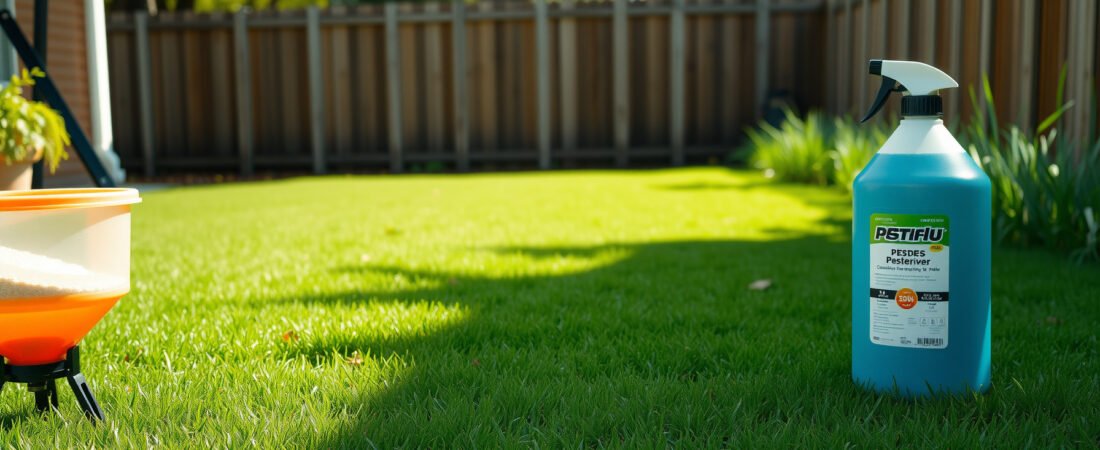
Granules kill ticks just as well as concentrates — except when they don’t, and that gap is where most yard treatments quietly fail. The format you choose matters far less than where and when you apply it, and nearly every tick spray guide skips that part entirely. Here’s the truth: a perfectly timed concentrate application will outperform granules by a wide margin in certain yard conditions, while granules will beat out a spray in others. Knowing which situation you’re in before you buy anything is the actual skill most homeowners never develop.
Why Your Yard’s Microhabitats Determine Which Format Actually Works
Ticks don’t patrol your whole yard — they concentrate in extremely specific zones. We’re talking about the 3-foot transition band between your lawn and any wooded edge, along fence lines with leaf debris, and in shaded areas where humidity stays above 80%. In those spots, a single white-tailed deer mouse can deposit hundreds of larval ticks in one visit, and a white-footed mouse carries Borrelia burgdorferi — the bacteria behind Lyme disease — in roughly 90% of field populations according to entomological studies.
Concentrate sprays (mixed with water and applied through a hose-end sprayer or pump sprayer) penetrate leaf litter, reach the soil surface, and coat low vegetation where questing ticks — ticks waiting with their legs outstretched to grab a passing host — actually sit. Granules, on the other hand, need both moisture and time to activate, and they don’t coat vertical surfaces like grass blades, shrub stems, or fence boards at all. If your tick zone is a brushy border or a shaded leaf pile, concentrate wins. If your problem is in an open lawn area that gets regular rainfall, granules hold up surprisingly well.
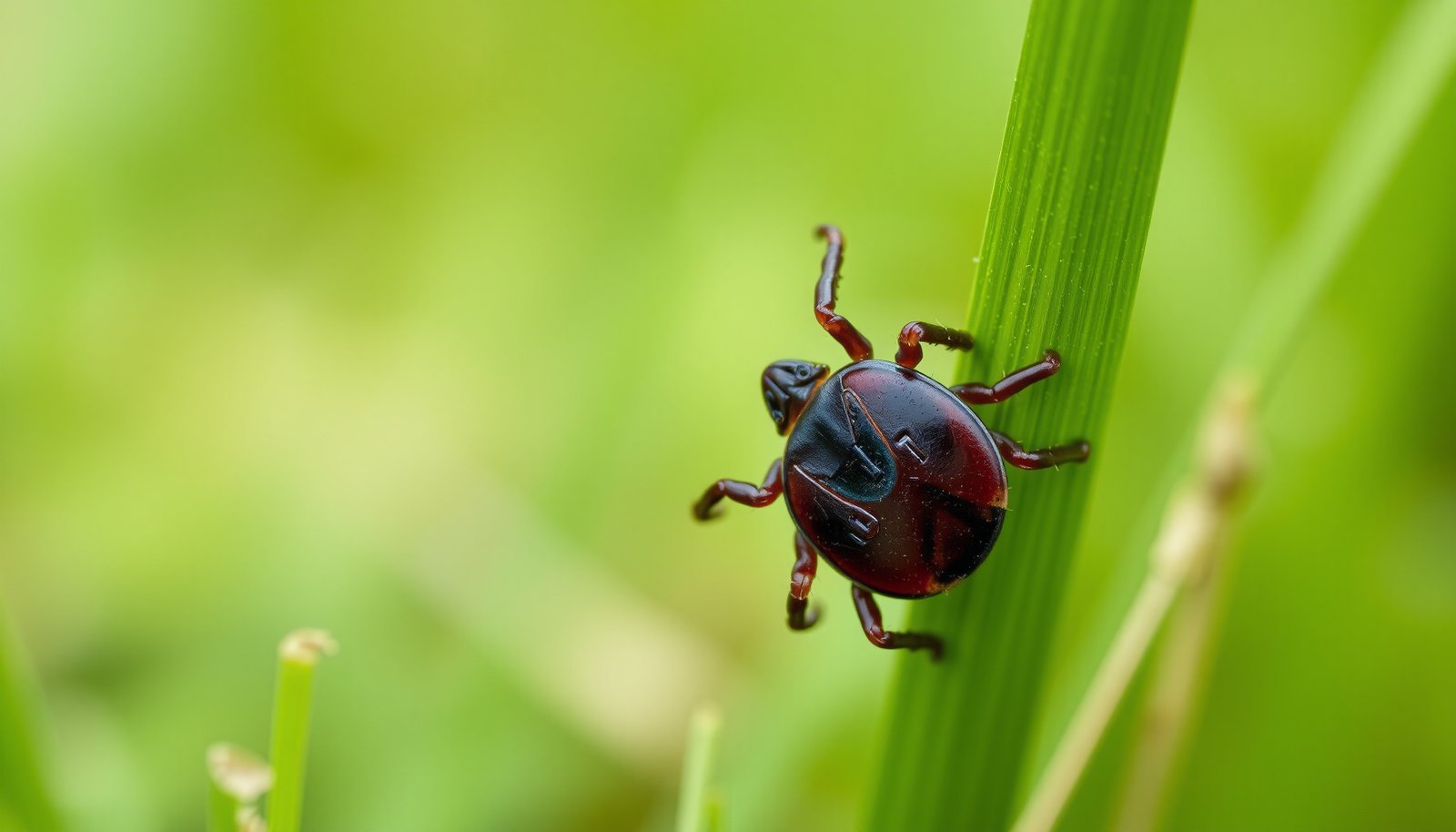
This image shows a close-up comparison of granule pellets versus wet concentrate application on turf grass — it illustrates exactly why surface contact coverage differs so dramatically between the two formats in a real yard setting.
What Are the Best Tick Yard Spray Concentrates Right Now?
Bifenthrin and permethrin are the two active ingredients that consistently show up in university extension field trials as the most effective for residential tick control. Bifenthrin (the active in products like Bifen IT and Talstar P) binds tightly to soil organic matter, which gives it a residual of 30–90 days depending on rainfall and UV exposure. Permethrin breaks down faster in sunlight but has a strong knockdown effect within 15–30 minutes of contact — and it’s lethal to ticks even at low concentrations.
Cyfluthrin and lambda-cyhalothrin concentrates are also worth considering in heavier infestation scenarios. Picture this: you let your backyard go unsprayed through a wet spring, your dog brings in 4–5 ticks per walk, and you’ve already pulled a deer tick from your kid’s scalp once this season. That’s a level of pressure where a bifenthrin concentrate at 0.06% dilution, applied with a 2-gallon pump sprayer hitting the perimeter vegetation thoroughly, will outperform any granule product available at retail. The mechanism is direct contact — bifenthrin disrupts the sodium channels in tick nerve cells, causing paralysis within minutes of exposure.
“Homeowners consistently underestimate how narrow tick harborage zones actually are. Treating the entire lawn is wasteful — the real target is that 9-to-12-foot transitional band between the maintained turf and any tall grass, brush, or wooded edge. Concentrate applications in those specific zones, timed to coincide with nymphal tick emergence in late spring, reduce tick encounters by 68 to 90 percent in controlled trials. Granules need consistent soil moisture to activate their active ingredient — in dry summers, they can sit inert for weeks.”
Dr. Karen Solberg, Ph.D., Board-Certified Entomologist and Vector Ecology Specialist, University Cooperative Extension Program
How Do Tick Granules Actually Work — and Where Do They Fall Short?
Granule products — think Ortho BugClear Lawn Insect Killer or Spectracide Triazicide Granules — work by releasing their active ingredient as granules absorb moisture. That activation step is the double-edged sword. After you spread them with a broadcast spreader, you’re supposed to water the lawn within 24 hours to get the chemical into the soil surface layer. That moisture-activated release works well for grubs and surface-feeding soil insects. For ticks, it’s a mixed bag.
Here’s the counterintuitive part most guides leave out: granules are actually better suited to preventing tick re-establishment than eliminating an active infestation. Once rain or irrigation activates the bifenthrin or deltamethrin in the granules and it binds to soil particles, you get a surprisingly long residual window — sometimes 60–120 days in shaded, cooler zones. Granules are also far easier to apply safely around vegetable gardens, which is a real consideration for homeowners dealing with pests in multiple areas at once. Just keep in mind that granules do essentially nothing on leaf piles, mulch beds, or vertical plant surfaces where ticks actually quest for hosts.
| Feature | Concentrate Spray | Granules |
|---|---|---|
| Contact kill speed | Fast (15–30 min) | Slow (requires moisture activation) |
| Residual window | 30–90 days (rainfall dependent) | 60–120 days (in cool, shaded areas) |
| Leaf litter / vegetation coverage | Excellent | Poor to none |
| Lawn / open turf | Good | Good (once activated) |
How to Apply Tick Yard Sprays the Right Way — Timing and Coverage That Most Guides Ignore
Timing is where most DIY tick control programs fall apart. Spraying in mid-summer when adult ticks are on the decline gives you the feeling of doing something without much actual impact. The two windows that matter most are early spring — targeting nymphal black-legged ticks, which are the size of a poppy seed and responsible for roughly 80% of Lyme disease transmissions — and late summer into early fall, when a new generation of adult ticks becomes active. Hitting both windows with at least one treatment each is far more effective than a single heavy summer application.
Application technique matters as much as product choice. With a concentrate, use a fan or flat-stream nozzle rather than a cone nozzle — you want horizontal coverage across the base of shrubs, grass blades, and mulch, not a fine mist that evaporates before it hits the ground. Walk deliberately and slowly, overlapping your spray pattern by about 6 inches on each pass. Treating the same vegetative zones where you’d also address other crawling pests — some homeowners notice tick hotspots overlap with ant trails, which relates to the kind of ecosystem-level pest pressure described in articles on How to Get Rid of Ants in the Garden Without Killing Plants — reinforces why perimeter focus is almost always more effective than full-yard saturation.
Pro-Tip: Never apply concentrate tick spray when wind exceeds 10 mph or rain is expected within 4 hours. Bifenthrin needs at least 4–6 hours of dry contact time on vegetation to bind properly and begin providing residual protection. A rained-out application wastes product and exposes your property to unnecessary chemical runoff.
Here’s the full application sequence that makes the biggest difference in coverage quality:
- Mow and clear debris first. Mow to 3 inches or lower, rake up leaf litter, and clear any brush piles before spraying. Ticks hide in debris, and spray can’t penetrate a 4-inch leaf pile effectively.
- Mix concentrate at the correct dilution. Most bifenthrin concentrates call for 0.5–1 oz per gallon for tick control. Don’t go stronger — it won’t kill faster and it degrades more quickly on plant surfaces at higher concentrations.
- Start at the back perimeter and work inward. Treat the 9–12 foot border zone first, hitting the base of every shrub, fence line, and wood edge. Then treat the transition zone between mulch beds and lawn.
- Spray leaf litter and mulch thoroughly but not to runoff. You want the surface saturated but not pooling — runoff carries active ingredient away from target zones and into drainage areas.
- Re-enter after the spray has dried completely. That typically takes 1–2 hours in warm weather. Keep pets off treated areas until dry to prevent paw-licking exposure.
Which Specific Products Are Actually Worth Buying — and What to Skip
There’s a real difference between products that are widely marketed and products that work consistently in real residential conditions. For concentrate sprays, Bifen IT (bifenthrin 7.9%) is the most reliable option available to homeowners without a pesticide applicator license — it’s a professional-grade product in a consumer container. Talstar P is chemically identical but sometimes priced higher under that label. For permethrin, Martins Permethrin 10% is widely available online and genuinely effective when diluted to 0.5% for yard use, though it has a shorter residual than bifenthrin outdoors.
For granules, Spectracide Triazicide Insect Killer Granules (gamma-cyhalothrin) and Ortho BugClear Lawn Insect Killer (bifenthrin) are the two most consistent performers for tick pressure specifically. Skip anything labeled as a “natural” or cedar-oil-based granule product for high tick pressure — those formulations break down within days and have no meaningful residual in outdoor conditions. Natural options aren’t useless, but they’re best used as a secondary tool in a low-pressure situation, not as a primary treatment when you’ve already had tick bites. Product reliability also extends to application tools — an unreliable trapping method can let monitored pests go unchecked, much like how Best Spider Traps and Glue Boards for Indoor Use demonstrates that tool quality directly affects outcome regardless of good technique.
Here’s a quick breakdown of what the different product types do and don’t do well:
- Bifen IT / Talstar P (bifenthrin concentrate): Best all-around for tick perimeter control; 30–90 day residual; works on over 75 pest species so it multitasks during application.
- Martins Permethrin 10% (concentrate): Strong knockdown, shorter outdoor residual (14–28 days), good choice for a second application mid-season.
- Spectracide Triazicide Granules (gamma-cyhalothrin): Solid for open lawn maintenance; easy broadcast spreader application; activates reliably in humid climates.
- Ortho BugClear Lawn Granules (bifenthrin): Good option if you already own a spreader; combines well with a concentrate perimeter spray rather than replacing it.
- Cedar oil / natural botanical granules: Low residual, appropriate for low-pressure maintenance only; don’t rely on these if you’re pulling ticks off family members regularly.
One honest nuance worth naming: in a densely wooded suburban lot with deer traffic — the kind of yard where you’re seeing 10 or more ticks per week during peak season — no consumer product, granule or concentrate, will fully eliminate tick pressure. At that level of wildlife-driven reinfestation, the biology is working against even good chemistry. Rotating between a bifenthrin perimeter concentrate in spring and a granule maintenance application in summer is the most a homeowner can realistically achieve without hiring a licensed applicator with equipment capable of treating deer entry corridors and wooded buffer zones at scale.
The biggest takeaway here isn’t which product name to buy — it’s that format selection based on your actual yard conditions and application timing based on the tick life cycle will do more for your results than any label comparison. Get those two variables right, and a $30 bottle of bifenthrin concentrate will outperform a $90 professional-looking “tick kit” that treats your whole lawn with granules and leaves the brushy perimeter untouched. Your tick pressure lives in that perimeter. That’s where your treatment needs to go.
Frequently Asked Questions
how long do tick yard sprays last before you need to reapply?
Concentrate sprays typically last 4–6 weeks depending on rainfall and sun exposure, while granules can hold up for 6–8 weeks since they break down more slowly. Heavy rain over an inch can cut either product’s effectiveness shorter, so check your yard after big storms and spot-treat if needed.
are granules or liquid concentrate better for tick control in the yard?
Liquid concentrates are faster-acting and penetrate dense brush and leaf litter more effectively, making them the better choice if you have a heavy tick infestation. Granules work well for ongoing prevention and are easier to apply without a sprayer, but they depend on moisture to activate, so dry spells can slow their performance.
is it safe to let pets back in the yard after spraying for ticks?
Most tick yard sprays require you to keep pets out until the product dries completely, which is usually 30 minutes to 2 hours for liquid concentrates. Always read the specific label since some pyrethrin-based sprays are toxic to cats even after drying, and certain products have longer reentry windows of up to 24 hours.
what active ingredients should I look for in tick yard sprays?
Bifenthrin, permethrin, and lambda-cyhalothrin are the most effective active ingredients for killing ticks on contact and providing residual control. For a less toxic option, look for products with cedar oil or clove oil as active ingredients, though these typically need more frequent reapplication every 2–3 weeks.
how much yard spray do I need to treat a quarter-acre lot for ticks?
A quarter-acre lot is about 10,890 square feet, and most liquid concentrates cover between 5,000 and 10,000 square feet per quart when mixed at label rates. You’ll likely need 1–2 quarts of concentrate, but focus your application on the perimeter, wooded edges, and shaded areas since ticks rarely survive in open sunny lawn.