
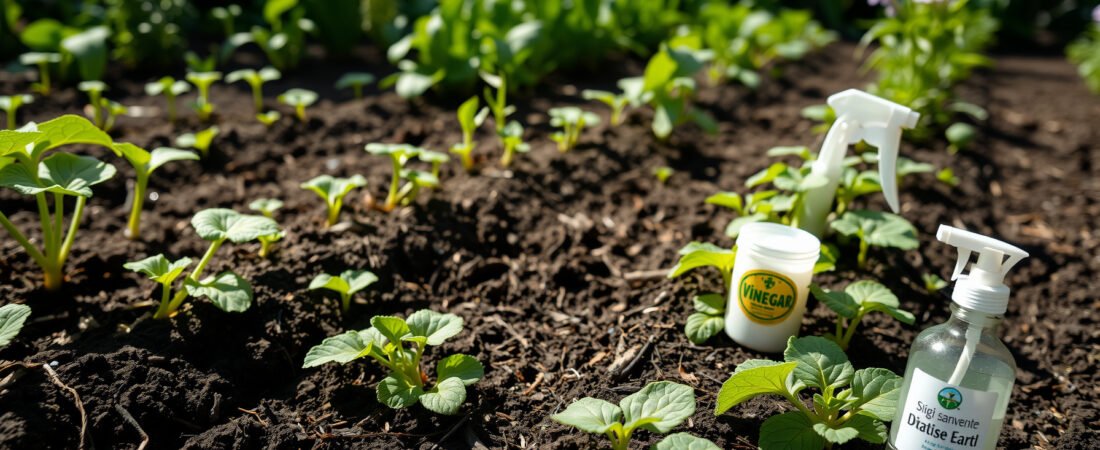
Ants in the garden are almost never the real problem — the aphids, mealybugs, or scale insects they’re farming are. That distinction matters more than any treatment you choose, because if you kill the ants without addressing the honeydew-producing insects they’re protecting, new ant colonies will move in within days to reclaim the resource. Most garden ant advice skips this entirely and jumps straight to “sprinkle diatomaceous earth around your plants,” which treats the symptom and misses the root cause completely.
The good news: you can absolutely clear ants from your garden beds, raised boxes, and vegetable rows without harming a single plant — but the method you choose depends on whether you’re dealing with foraging scouts, an established colony with a mound nearby, or a full ant-aphid farming operation running across your stems. Each situation calls for a different approach, and using the wrong one wastes your time.
Why Are Ants Taking Over Your Garden in the First Place?
Picture this: you’ve hand-watered your tomato beds every morning, kept the soil loose, and pulled weeds diligently — and ants are still colonizing the raised bed you built from scratch. It feels unfair. What you probably don’t know is that a colony of 100,000 ants can establish a satellite nest in undisturbed garden soil within 72 hours of a scout locating suitable conditions. They’re not there because your garden is dirty or neglected. They’re there because it’s warm, sheltered, and — critically — because something in your garden is producing food for them.
That food source is almost always honeydew: a sticky, sugar-rich liquid secreted by soft-bodied insects like aphids, scale, whiteflies, and mealybugs. Ants actively herd these insects, protect them from predators like ladybugs and lacewings, and even relocate them to fresh plant growth. Remove the honeydew producers and the ants lose 60–80% of their incentive to maintain that location. That’s the starting point — not the spray bottle.
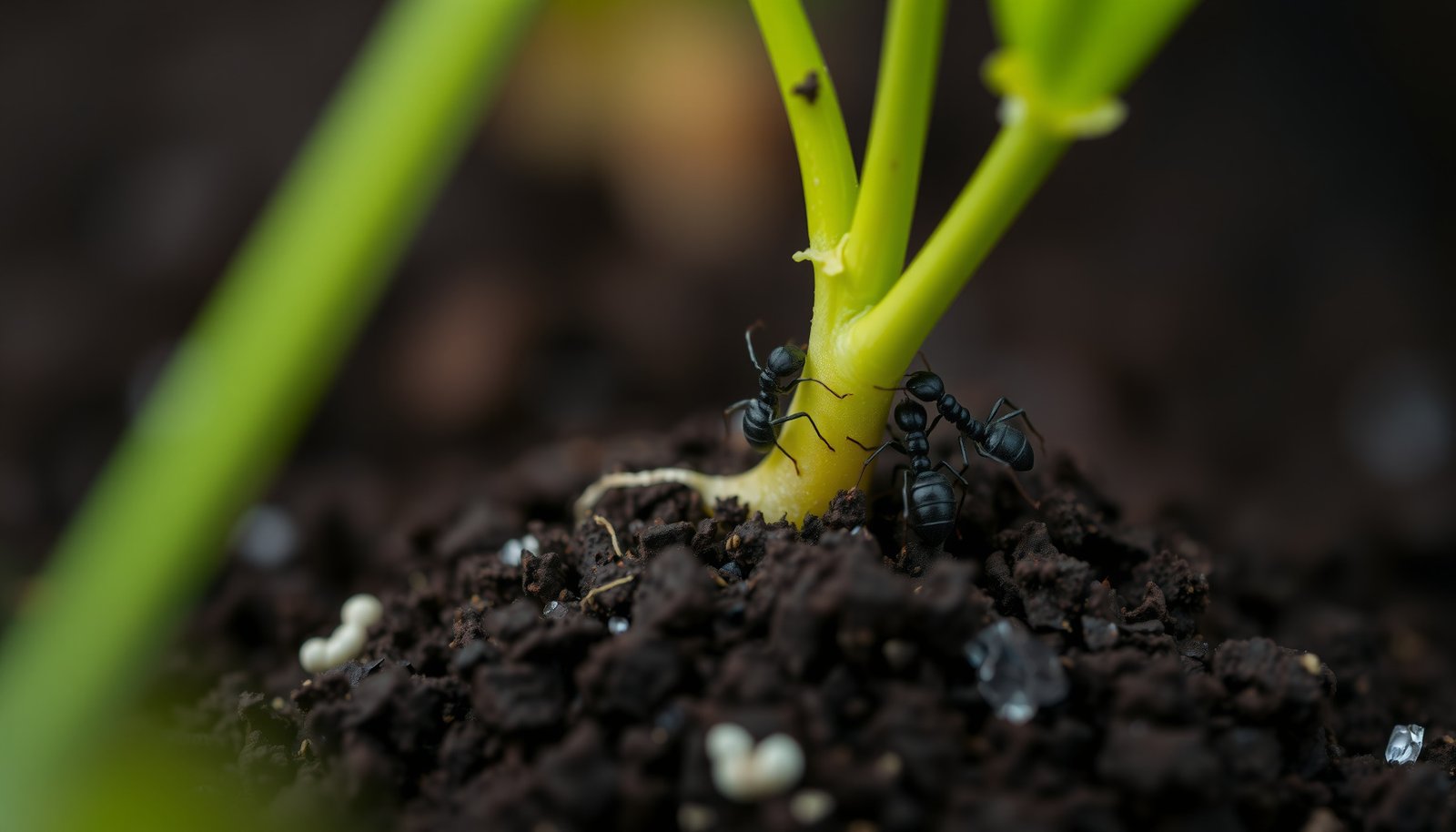
This close-up shows ants actively tending aphid clusters on a plant stem — the farming behavior that keeps ant colonies anchored to your garden long after surface treatments have worn off.
Which Ants Are Actually Damaging Your Garden (and Which Aren’t)?
Not every ant you see in the garden is a threat to your plants, and treating them all the same way is a mistake that wastes effort and risks disrupting beneficial activity. Pavement ants and odorous house ants are mostly nuisance foragers — they’re opportunistic and will nest in loose soil, but they’re not chewing your roots or protecting insect herds at any meaningful scale. Fire ants are a different category: they’ll sting you, damage seedlings, and build mounds that disrupt root systems, but they’re primarily a warm-climate problem concentrated in the Southeast and Southwest.
The ants most likely to cause real, compounding plant damage are aphid-tending species like the cornfield ant and the small honey ant, both of which aggressively guard aphid colonies on stems and underside of leaves. You can identify the farming relationship by looking for ants moving in single-file lines up and down plant stems — they’re not exploring randomly, they’re running a supply route. If that’s what you’re seeing, your ant problem is actually an aphid problem wearing an ant costume.
“Homeowners consistently underestimate the ant-aphid mutualism in garden settings. In trials I’ve reviewed, plots with active ant tending showed aphid populations recover 3 to 4 times faster after treatment compared to plots where both the ants and the aphids were addressed simultaneously. You genuinely cannot solve one without the other.”
Dr. Renata Villanueva, Urban Entomology Extension Specialist, Texas A&M AgriLife Research
How to Get Rid of Ants in the Garden Without Killing Plants — Step by Step
The safest, most effective approach works in layers. You start by disrupting the ants’ food access, then make the immediate area inhospitable to nesting, and finally apply a plant-safe deterrent or bait if the colony is established enough to need direct treatment. Doing these steps in reverse order — spraying first, asking questions later — is why most garden ant treatments fail within two weeks.
- Knock out the aphid or scale infestation first. Use a firm stream of water to dislodge aphids from stems, or apply insecticidal soap (1–2% concentration) directly to affected foliage. Insecticidal soap breaks down within hours and leaves no harmful residue in your soil. Without their honeydew source, ants will begin relocating the colony within 3–5 days.
- Apply a physical sticky barrier on plant stems. Wrap a band of horticultural tape around the lower stems of larger plants and coat it with a product like Tanglefoot. Ants can’t cross it, which cuts off their access to the canopy without any chemical contact with leaves or roots.
- Drench mound sites with a plant-safe solution. A mixture of orange oil (d-limonene) and water — roughly 1.5 ounces of orange oil per gallon — poured directly into the mound entrance kills ants on contact and disrupts the nest without leaving persistent chemical residue in the soil. Repeat after rain.
- Deploy slow-acting bait stations near (not in) the bed. Borax-based gel baits placed within 6–12 inches of the mound allow worker ants to carry the bait back to the colony. The borax interferes with the ants’ digestive system slowly enough that foragers return to the nest before dying, delivering the lethal dose to the queen. This takes 5–10 days but wipes out the colony rather than just the surface workers.
- Spread food-grade diatomaceous earth as a perimeter barrier. Apply a dry ring around the bed perimeter — not directly on soil near roots. DE dehydrates ants through contact with their exoskeleton. It’s harmless to plants and earthworms when used at surface level, but loses effectiveness when wet, so reapply after watering or rain.
- Replant deterrent herbs at bed edges. Tansy, mint (contained in pots to prevent spreading), peppermint, and catnip all produce volatile compounds that ants actively avoid. This isn’t a myth — these plants emit terpenes like pulegone and thymol that interfere with ant pheromone trails, and you’ll notice reduced foraging activity within a week of establishing them.
Pro-Tip: Don’t pour boiling water into garden beds as a “natural” treatment — it’s a common recommendation online, but soil temperatures above 130°F kill beneficial nematodes, mycorrhizal fungi, and earthworm populations that your plants depend on. Orange oil solution does the same disruption job with far less collateral damage to the soil ecosystem.
What Garden-Safe Products Actually Work — and What’s Just Marketing?
The garden pest control market is full of products labeled “natural” or “organic” that range from genuinely effective to basically scented water. Knowing the mechanism behind each one helps you pick what’s worth your money and what isn’t. The table below compares the most commonly used plant-safe options based on effectiveness against established colonies, plant safety, and how weather-resistant they are in an outdoor garden setting.
| Treatment | Kills Colony or Repels Only? | Safe Around Edibles? | Loses Effectiveness When Wet? |
|---|---|---|---|
| Borax gel bait (slow-acting) | Kills colony (queen included) | Yes — keep bait away from direct plant contact | No — bait stations protect from rain |
| Food-grade diatomaceous earth | Repels / kills foragers only | Yes — OMRI listed | Yes — must reapply after rain or watering |
| Orange oil (d-limonene) drench | Kills on contact, disrupts nest | Yes — degrades rapidly in soil | Partially — reapply within 48 hours of heavy rain |
| Insecticidal soap spray | Kills soft-bodied insects (aphids), not ants | Yes — breaks down within hours | Yes — reapply every 5–7 days |
One counterintuitive finding from university extension research: neem oil, despite its reputation as a catch-all garden solution, has minimal effectiveness against ants specifically. It works on soft-bodied insects that ingest it through leaf tissue — it doesn’t affect ants at all because ants don’t feed on plant sap. Using neem oil as your primary ant control isn’t wrong, it’s just solving the wrong problem. Use it to eliminate the aphids the ants are farming; don’t expect it to touch the colony itself.
Are Any Garden Ants Actually Worth Keeping Around?
This is the question almost no pest control article asks, and it’s worth sitting with for a minute. Ants are among the most effective natural aerators in garden soil — a single colony of pavement ants can turn over as much soil as several earthworms, improving drainage and nutrient distribution in the root zone. They also predate on a range of harmful larvae including caterpillar eggs and beetle grubs. The honest answer is that ants near your garden, rather than in it, are net beneficial. The problem is specifically ants nesting in raised beds or actively protecting plant-damaging insects on your vegetation.
This matters for how aggressively you treat. If you’re seeing ant trails across a garden path or along a fence line without any active mounds in your beds, the most sensible move is to do nothing. If there’s no aphid infestation visible on your plants, those ants may actually be consuming fungal spores, pest eggs, and organic debris that would otherwise cause problems. Reserve your intervention for situations with either confirmed mounds in the bed itself, visible aphid colonies being tended, or root disturbance around seedlings — which is a sign of fire ants specifically. For comparison, dealing with underground nesting pests in the yard is something worth thinking through carefully; the same logic that applies when you get rid of yellow jackets in the ground — targeting the nest entrance rather than broadcasting chemicals broadly — applies just as well to ant mounds in your garden beds.
Here’s what to look for before deciding to treat at all:
- Ants moving in purposeful single-file lines up and down plant stems (confirms active aphid tending, not just foraging)
- Visible mound structures inside or immediately adjacent to raised beds (within 6 inches of plant roots)
- Sticky residue on leaves combined with a sooty black coating — this is honeydew plus sooty mold, and ants are almost certainly involved
- Seedling stems collapsing at soil level with no visible insect damage above ground — this can indicate fire ant root disruption
- Wilting that doesn’t respond to watering in a specific section of the bed — root disruption from a large colony tunneling underneath
Incidentally, if you’re dealing with pests on multiple fronts — ants in the garden, other insects making their way indoors — it can help to have reliable trapping options staged near entry points. Resources like best spider traps and glue boards for indoor use cover how to monitor and intercept pest activity inside the house without affecting what you’re doing in the garden.
Treating a garden ant problem well isn’t about eradication — it’s about restoring a balance that your plants can thrive in. Once you’ve broken the ant-aphid farming relationship and dealt with any established mounds inside the bed, maintain perimeter deterrents through the growing season and stay consistent about checking stems and leaf undersides every couple of weeks. The colonies that keep coming back are almost always ones with an untouched food source still drawing them in. Take that away, and most ant populations will move on to easier territory on their own.
Frequently Asked Questions
how do I get rid of ants in the garden without killing plants?
The safest methods are diatomaceous earth, cinnamon, and diluted dish soap sprays — none of these will harm your plants when used correctly. Sprinkle food-grade diatomaceous earth directly around ant trails and nest openings, reapplying after rain. For soap spray, mix 1 tablespoon of liquid dish soap with 1 quart of water and apply to the soil around the colony, not directly on plant leaves.
what kills ant hills in garden beds naturally?
Pouring boiling water directly into the ant hill is one of the fastest natural options — it kills ants on contact without leaving chemical residue in your soil. You may need to repeat this 2 or 3 times over several days to fully destroy a large colony. Boric acid mixed with sugar water is another option; place it near the mound rather than pouring it in, so worker ants carry it back to the queen.
are ants in garden soil bad for plants?
Most ants aren’t directly harmful to plants, but certain species like fire ants can damage roots and injure you while you’re gardening. The bigger problem is when ants farm aphids — they protect aphids from predators in exchange for honeydew, which leads to aphid populations exploding and causing real plant damage. If you spot ants clustering on stems near sticky residue, that’s a sign you’ve got an aphid problem worth addressing alongside the ants.
does cinnamon really keep ants out of the garden?
Cinnamon works as a short-term ant deterrent because the strong scent disrupts their pheromone trails, but it doesn’t kill ants or destroy a colony. Sprinkle ground cinnamon in a continuous line around garden beds or directly across ant trails — gaps in the barrier let ants through. You’ll need to reapply it every few days or after any rain, so it’s best used as part of a broader strategy rather than a standalone fix.
what can I put around vegetable garden to keep ants away?
Creating a barrier of diatomaceous earth or used coffee grounds around the perimeter of your vegetable garden is a safe, plant-friendly option. Coffee grounds are slightly acidic, so don’t pile them too thickly — a thin layer about a quarter inch deep is enough to deter ants without affecting soil pH significantly. You can also plant ant-repelling herbs like mint, lavender, or tansy as a living border, though mint spreads aggressively and should be kept in containers.
Disclaimer: This article is for informational purposes only and isn’t a substitute for professional pest control advice. Always read and follow the product label instructions exactly — label directions are legally binding and vary by brand and active ingredient. Keep all pesticides, baits and traps away from children and pets, ventilate treated areas as directed, and consider calling a licensed pest control professional if an infestation is large, recurring, or involves a structural pest like termites or carpenter ants.