
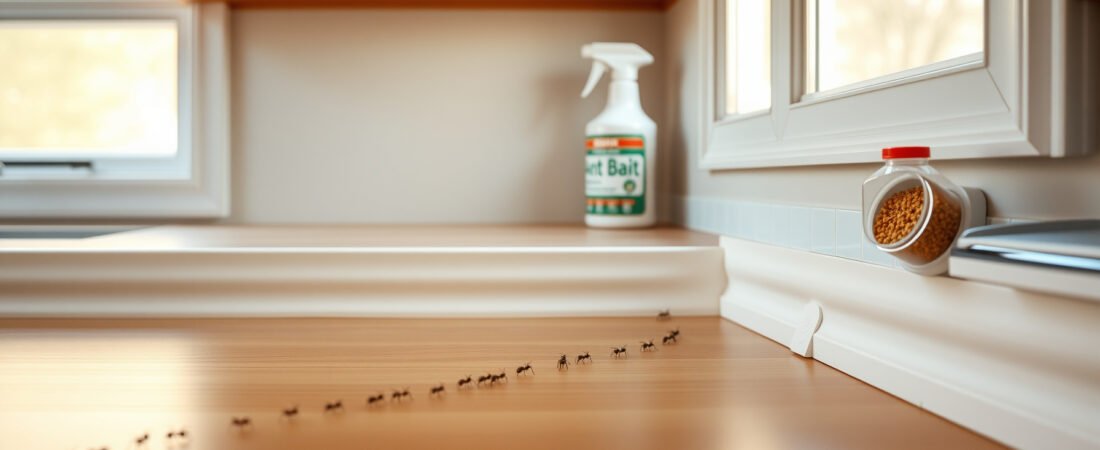
Spraying ants directly kills the ones you see — and does almost nothing to solve your actual problem. That’s the core mistake people make with indoor ant infestations, and it explains why the same trails reappear three days after you’ve gone through half a can of raid. The workers you’re killing represent maybe 5-10% of the colony. The queen, deep in a nest you’ll never find, keeps laying up to 800 eggs per day without skipping a beat.
The best ant killers for indoor use aren’t the ones that kill fastest — they’re the ones that reach the colony. That distinction changes everything about how you shop, what you buy, and how you use it. This article cuts through the noise and tells you exactly what works, why it works, and when to use each type.
Why Killing the Ants You See Is the Wrong Goal
An ant colony isn’t a group of insects — it’s a superorganism with a division of labor so precise it almost looks designed. The foragers you see on your counter are scouts sent out to find food and bring back chemical signals for the rest to follow. They’re expendable. A mature carpenter ant colony, for example, can contain 10,000 to 20,000 workers, and losing a few hundred to a spray bottle doesn’t register as a threat.
Here’s the counterintuitive part most people never hear: spraying a trail of ants with a contact killer can actually make your problem worse. When workers are suddenly killed mid-trail, it disrupts the pheromone signal in a way that causes the colony to split or re-route — spreading activity to new areas of your home. Pest control professionals call this “budding,” and it’s especially common with pavement ants and odorous house ants. You spray the kitchen, and a week later they’re in the bathroom.
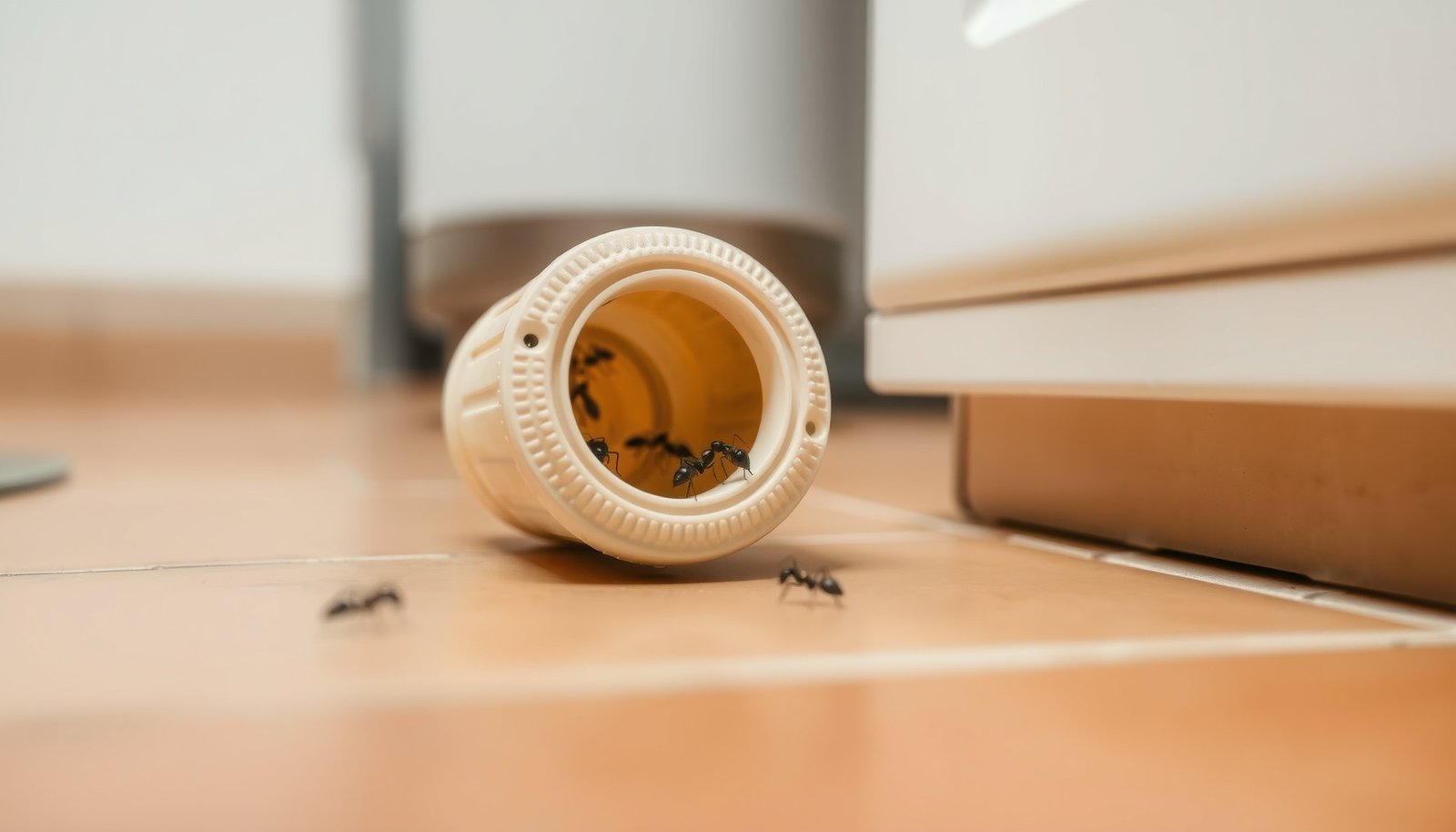
This close-up shows the visible difference between bait-based ant control products and contact sprays — understanding which tool does what is the first step to actually eliminating a colony rather than just thinning it out temporarily.
Ant Baits: The Only Product Type That Eliminates Colonies Indoors
Slow-acting bait is the backbone of effective indoor ant control — full stop. The mechanism is elegant and ruthless: worker ants carry the bait back to the nest as food, share it with larvae and the queen through a process called trophallaxis (mouth-to-mouth food transfer), and the entire colony gets dosed over 24 to 72 hours. By the time you notice dead ants, the queen is already affected. No queen, no colony.
The two active ingredients that dominate effective indoor ant baits are borax (sodium tetraborate) and fipronil. Borax-based gels like Terro Liquid Ant Bait work by interfering with the ant’s digestive system slowly enough that workers survive long enough to return to the nest and share the bait before dying — this is intentional, not a flaw. Fipronil-based baits like Amdro Ant Block work similarly but act on the nervous system. Borax baits tend to work better for sugar-feeding ants like odorous house ants; protein-based baits (containing hydramethylnon) are better for grease-loving species like fire ants or carpenter ants.
Pro-Tip: Don’t spray any contact killer near your bait stations. Residual sprays leave chemical traces that repel foragers — they’ll avoid the bait entirely and you’ll wonder why it isn’t working. Keep a 2-3 foot perimeter around bait placements completely spray-free.
How to Choose the Right Bait for Your Ant Species
Not all ants want the same thing, and the species in your home largely determines which bait will actually be taken. Sugar-based liquid baits (like Terro) will be ignored by carpenter ants, which prefer protein. Odorous house ants — the tiny dark ones that smell like coconut when crushed — go wild for sweet liquid baits and are usually eliminated within 1 to 2 weeks with consistent bait placement. Getting the bait type wrong is the single most common reason people say “bait doesn’t work” when the real issue is a mismatch between the product and the ant.
Picture this: you’ve been placing sweet gel bait stations along your baseboards for two weeks and nothing’s happening. You check the stations — they haven’t been touched. That’s not a product failure, that’s a diagnostic clue. Carpenter ants found nesting in wall voids near moisture sources need a protein bait, often combined with a dust application into the void itself. Identifying your ant species before you buy anything saves you money and weeks of frustration.
| Ant Species | Preferred Bait Type | Recommended Product |
|---|---|---|
| Odorous House Ant | Sweet / Sugar Liquid | Terro Liquid Ant Bait |
| Carpenter Ant | Protein / Grease | Advance Carpenter Ant Bait |
| Pavement Ant | Sweet or Protein (alternating) | Syngenta Optigard Ant Gel |
| Fire Ant (indoor) | Protein / Oil-based | Amdro Ant Killer Bait |
“One of the most frequent mistakes I see is homeowners buying the wrong bait type for their species and then concluding that bait ‘doesn’t work.’ Ant bait is species-sensitive — a protein bait won’t attract a sugar ant any more than a candy bar would attract a lion. Spend five minutes identifying what you have before you spend twenty dollars on a product that the ants will ignore.”
Dr. Patricia Henley, Board-Certified Entomologist and Urban Pest Management Specialist, University Extension Service
Where Do Sprays and Granules Actually Fit In?
Contact sprays aren’t useless — they’re just misused. Residual sprays containing bifenthrin or deltamethrin serve a legitimate role as a perimeter treatment: applied along entry points like door frames, window sills, and wall gaps, they create a chemical barrier that prevents new foragers from coming inside. The key word is “perimeter.” Using them inside, directly on ant trails, destroys any chance your bait has of working and triggers the budding problem described earlier. Think of sprays as the fence, not the trap.
Granules are primarily an outdoor tool but can serve a supporting role for indoor infestations that originate from exterior colonies — which is most of them. Broadcast granules like Advion Ant Granule around the foundation and landscaping reduce the forager population before they get inside, lightening the load on your indoor bait stations. They’re also useful in garages, crawl spaces, and unfinished basements where you can’t easily place gel bait. One honest caveat: granules are less effective in dry conditions because they rely on moisture to dissolve the active ingredient and make it palatable to ants, so in arid climates or during dry seasons, liquid baits will outperform them consistently.
How to Rank and Use Ant Killers for Maximum Indoor Effectiveness
Here’s the reality of what’s available and how each format stacks up for actual indoor colony elimination — ranked not by marketing claims but by mechanism and real-world results. Just like some pest problems seem manageable until they’re not — the way termite infestations can quietly progress inside wall structures before you notice surface damage — ant infestations that go untreated long enough can cause serious structural and sanitation issues, especially carpenter ant species nesting in wood.
Using the right products in the right sequence matters as much as which product you choose. A treatment protocol that layers bait, perimeter spray, and targeted dust produces results that no single product can match alone. Here’s how to build that protocol step by step:
- Identify your ant species first. Note whether trails appear near food (sugar ants), near wood or moisture (carpenter ants), or come up through foundation cracks (pavement ants). Species ID determines everything that follows.
- Place bait stations on active trails — don’t clean trails first. That pheromone trail is your delivery system. Ants following a fresh trail are already primed to investigate new food sources placed along it.
- Use multiple bait placements simultaneously. A single station limits uptake. Place stations every 2 to 3 feet along active trails and refresh them every 3 to 5 days until forager activity drops.
- Add a perimeter spray to entry points only after baiting is underway. Wait at least 5 to 7 days into the bait cycle before applying any spray, and apply it only to exterior entry points — never to interior trails.
- For carpenter ants or wall voids, add an insecticidal dust. Products containing diatomaceous earth or deltamethrin dust injected into wall voids through small drill holes reach areas no bait or spray can touch. This is often the step that ends a persistent infestation.
- Monitor for 2 full weeks before declaring success. Colony elimination isn’t always visible. Forager activity may drop significantly in 3 to 5 days but resume briefly as remaining workers seek the now-depleted food source. Give the process time before switching strategies.
There’s also a category of product that gets disproportionate shelf space — the gel bait syringes sold for “precision application.” Products like Syngenta Optigard Ant Gel and Dupont Advion Ant Gel are genuinely the most effective consumer-available ant killers when used correctly because the gel consistency stays workable longer than liquid stations and allows placement in cracks, behind appliances, and inside cabinet hinges where liquid bait can’t go. A pea-sized dot of gel lasts 3 to 5 days before drying out, so reapplication is key. Just like identifying whether you’re dealing with mice versus rats changes your entire trapping strategy, knowing your ant species before you open your wallet changes which gel, which granule, and which spray you actually need.
What to Look for on the Label Before You Buy Any Indoor Ant Killer
The active ingredient tells you almost everything you need to know about how a product works and whether it’s appropriate for indoor use. Borax and fipronil are the two most effective active ingredients in slow-acting baits — look for borax at 5.4% concentration (Terro’s formulation) or fipronil at 0.001% (the concentration used in most gel baits). Higher isn’t better here; a bait that kills too quickly never gets shared back to the colony, which defeats the entire purpose.
For sprays used on perimeter points, bifenthrin (at 0.05% for indoor formulas) and deltamethrin provide 30 to 90 days of residual activity depending on surface type and exposure. Here’s what many homeowners overlook: the label will specify whether a product is approved for indoor use versus outdoors only — this matters both for effectiveness and safety. An outdoor-only granule used indoors won’t just underperform; it may exceed legal indoor concentration limits. Always check for the EPA registration number on the label and look for “For Use Indoors” explicitly before application.
- Active ingredient concentration matters more than brand name — a store-brand bait with 5.4% borax performs identically to name-brand equivalents
- Look for “child and pet safety” language — bait stations should be enclosed, not open-face gels accessible to curious kids or dogs
- Check the “target pest” list — many generic ant killers exclude carpenter ants, which require specific protein-based formulations
- Avoid products with strong scents or repellent compounds — anything labeled “repels ants” will drive them away from bait and push them to new areas
- For wall void treatments, only use products labeled for “void injection” — standard dusts aren’t formulated for the humidity levels inside wall cavities and can clump, losing effectiveness within days
One last thing worth knowing: the “natural” products marketed as safe indoor ant killers — peppermint oil, citrus spray, cinnamon — are repellents, not killers. They move ants, they don’t eliminate colonies. They have a place as a short-term deterrent around food prep surfaces where you genuinely can’t place chemical bait, but using them as your primary strategy will keep you in a loop of temporary suppression indefinitely. If you’re committed to a lower-toxicity approach, food-grade diatomaceous earth applied in thin layers along trails and entry points is the only non-synthetic option with a real kill mechanism — it physically damages the ant’s exoskeleton and causes dehydration. It takes longer (7 to 14 days to see significant reduction), but it works.
Ant control that actually ends an infestation almost always looks like patience more than action — a few bait stations left alone to do their job beats a weekend of aggressive spraying every single time. Set your bait, stay out of the way, and give the colony two weeks to collapse from the inside out. That’s not inaction. That’s the strategy.
Frequently Asked Questions
what is the best ant killer for indoors that actually works?
Slow-acting bait stations are consistently the most effective option for indoor ant control because workers carry the poison back to the colony and kill the queen. Products using borax or fipronil as the active ingredient tend to outperform fast-kill sprays, which only eliminate the ants you see. For most household infestations, you’ll start seeing a significant reduction within 3 to 7 days of placing baits near ant trails.
is it safe to use ant killer spray inside the house around kids and pets?
Most indoor ant sprays are safe once they’ve fully dried, which typically takes 30 minutes to 2 hours depending on the product. Look for sprays with peppermint oil or diatomaceous earth if you want a lower-toxicity option, especially in homes with toddlers or cats. Always keep kids and pets out of the treated area until it’s completely dry, and never spray directly on food prep surfaces.
how long does it take for ant bait to kill a colony?
Most ant bait products take anywhere from 3 days to 2 weeks to eliminate a colony, and that’s intentional — the slow kill gives workers time to share the bait with the queen and larvae. If you’re not seeing any reduction after 2 weeks, try switching to a different active ingredient since ants can sometimes avoid certain attractants. Don’t use contact-kill sprays near your bait stations, because it’ll repel ants before they can pick up the bait.
what kills ants permanently inside the house?
There’s no single treatment that guarantees ants never come back, but killing the queen is what comes closest to a permanent fix. Bait-based products with borax, indoxacarb, or fipronil are your best bet for reaching the queen through the worker ants. Combining bait with caulking entry points around windows, pipes, and baseboards gives you the best shot at keeping them gone long-term.
what is the difference between ant bait, ant spray, and ant granules for indoor use?
Ant bait works by attracting ants to a slow-acting poison they carry back to the nest, making it the only method that can kill the whole colony. Sprays kill on contact and create a residual barrier, but they don’t address the source and can actually scatter colonies into multiple satellite nests. Granules are mostly used outdoors near the foundation and aren’t typically the right choice for treating active ant problems inside your home.