
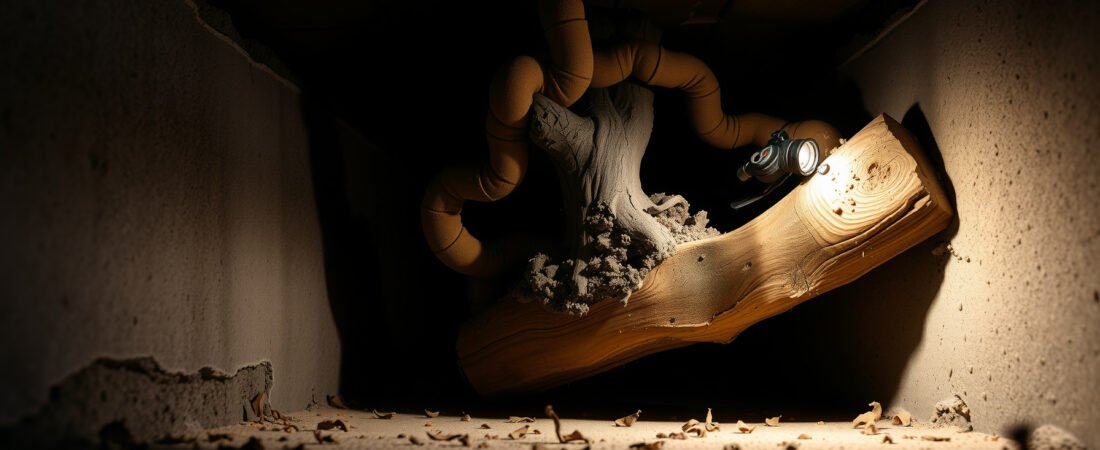
Tenting is overkill for most termite problems — and pest control companies know it. The majority of termite infestations in US homes are subterranean or localized drywood colonies that can be treated effectively without wrapping your house in a circus tent, evacuating for three days, and spending $2,500 to $4,500. The real problem isn’t that no-tent options exist. It’s that homeowners don’t know which treatment matches which termite type — and using the wrong one is exactly why DIY termite control fails.
This article is built around that gap. Not “here are six alternatives to tenting” — but rather, which termite species you have, why that determines everything, and how to match the right no-tent treatment to your specific situation so you’re not wasting money on a method that was never going to work for your infestation in the first place.
Why the Type of Termite You Have Changes Everything
There are three termite types that cause the overwhelming majority of US home damage: subterranean termites, drywood termites, and dampwood termites. Each one behaves differently, nests differently, and responds to entirely different treatments. Treating a subterranean colony the same way you’d treat a drywood infestation is like putting out a grease fire with water — you’re not just failing, you’re making it worse.
Subterranean termites live underground and travel to wood through mud tubes. Drywood termites nest inside the wood they eat and don’t need soil contact at all. Dampwood termites are mostly a Pacific Coast and Florida problem, attracted to wood with high moisture content. Tenting was designed specifically for drywood termites — it’s fumigation that penetrates sealed wood. For subterranean termites, which account for roughly 80% of US termite damage according to the USDA Forest Service, tenting does almost nothing because the colony lives in the soil, not in your walls.
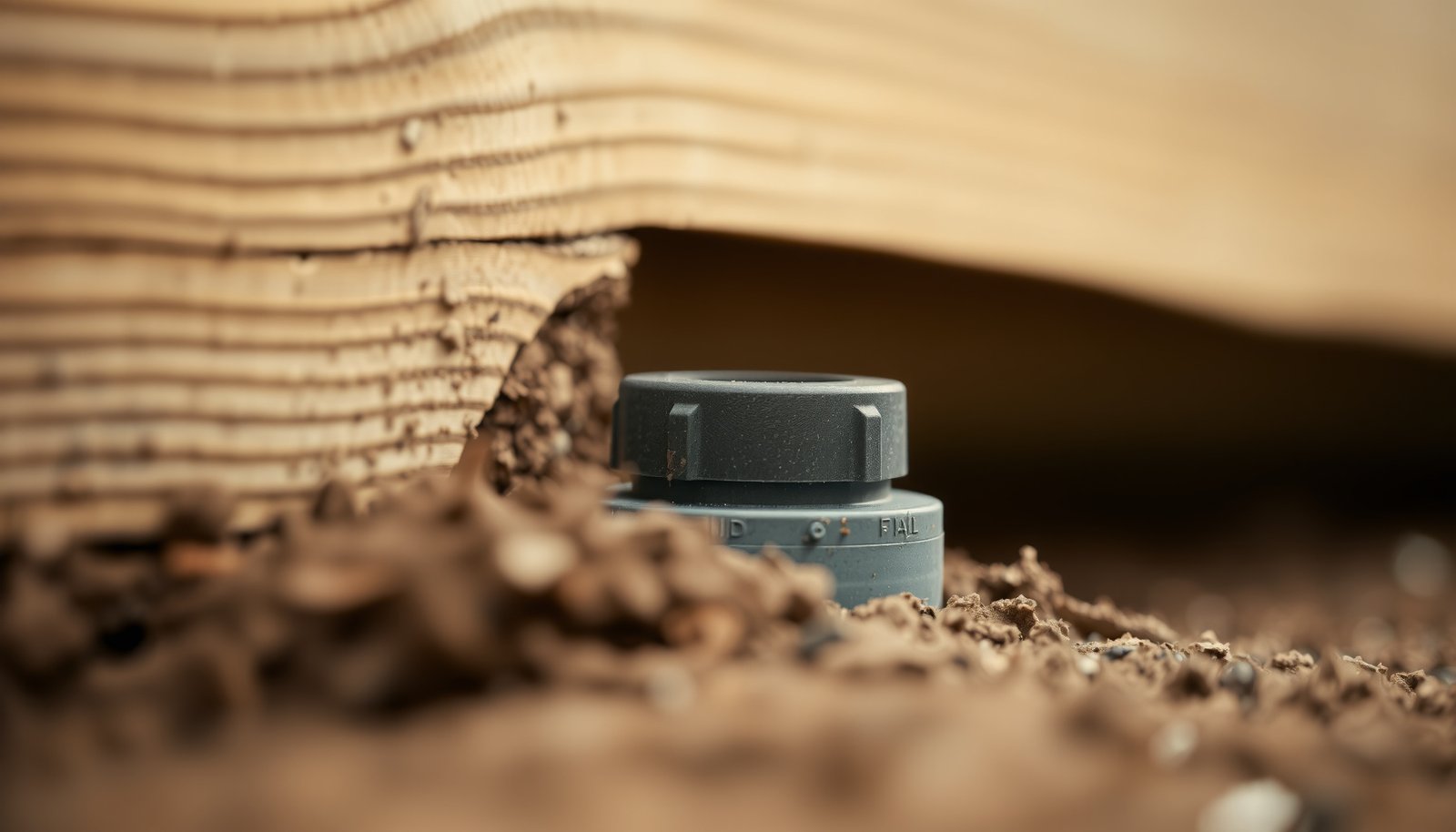
This close-up shows the key visual difference between subterranean mud tubes running along a foundation wall versus the clean, smooth gallery tunnels drywood termites carve directly inside wood — recognizing which you’re looking at is the first and most important step before choosing any treatment.
How to Identify Which Termite Is Actually in Your Home
Picture this: you’re pulling back a baseboard during a bathroom renovation and find what looks like hollow, papery wood with sand-colored pellets scattered around it. Those pellets — called frass — are a drywood termite signature. They push their fecal matter out of tiny kick-out holes, and each pellet is about 1mm long with six flattened sides. Subterranean termites, by contrast, use their frass to build mud tubes, so you won’t find loose pellets from them.
Here’s a quick identification table to help you match what you’re seeing to the right species before you buy a single product:
| Sign You’re Seeing | Most Likely Termite Type | Where They Nest |
|---|---|---|
| Mud tubes on foundation or walls | Subterranean | Underground / soil |
| Frass (tiny 6-sided pellets) near wood | Drywood | Inside the wood itself |
| Damaged wood near chronic moisture source | Dampwood | Inside wet or decaying wood |
| Swarming winged insects in spring near lights | Any type — needs further ID | Varies by species |
One thing worth knowing: termite swarmers — the winged reproductives that emerge in spring — are commonly mistaken for flying ants, but they’re actually very different insects. If you’re not sure what you’re dealing with, the site already has a detailed breakdown of the physical differences that’ll help you sort it out fast.
No-Tent Methods That Actually Work for Subterranean Termites
Subterranean termites are the species most homeowners are dealing with, and they’re also the easiest to treat without tenting — because the most effective treatments target the soil and colony structure directly. A single subterranean colony can contain over 1 million individual termites with multiple queens, so you can’t just kill the ones in your wall. You have to eliminate the colony, or at minimum break the connection between the nest and your structure.
These are the no-tent methods with real evidence behind them for subterranean infestations:
- Liquid termiticide barrier (trenching): A liquid like imidacloprid or fipronil is injected into a trench dug around the foundation, creating a chemical barrier termites can’t cross. Products like Termidor SC or Taurus SC are professional-grade but available to homeowners. This method works best on homes with accessible soil around the perimeter.
- Termite bait stations: Stakes containing a slow-acting toxicant (usually noviflumuron or diflubenzuron) are installed in the soil around the house. Foraging workers feed on the bait and carry it back to the colony, killing it from within over 3–6 months. The Sentricon system and DIY options like Spectracide Terminate use this mechanism.
- Foam termiticide injection: For termites already inside wall voids or structural wood, foam formulations of bifenthrin or fipronil can be injected directly through small drilled holes. The foam expands to fill cavities that liquid can’t reach.
- Borate wood treatments (preventive/early stage): Borate compounds like disodium octaborate tetrahydrate (sold as Bora-Care or Tim-bor) penetrate bare wood and are toxic to termites that eat treated wood. Effective for exposed structural wood in crawlspaces and attics, but won’t kill a colony that’s already established elsewhere.
- Spot treatment with direct-contact termiticide: For small, accessible infestations in isolated structural members, drilling and injecting a residual liquid termiticide directly into the wood can eliminate a localized group — though this doesn’t address the main colony.
Pro-Tip: If you’re using bait stations, placement matters more than most people realize. Install them every 10 feet around the perimeter and within 3 feet of any area where you’ve already spotted mud tubes or active damage. Termites forage in defined patterns — putting bait too far from existing activity means it may never be found.
No-Tent Methods That Work for Drywood Termites (And When to Reconsider)
Drywood termites are harder to treat without tenting specifically because their colonies are isolated inside wood — you can’t reach them through soil treatments. That said, tenting is only truly necessary when the infestation has spread to multiple inaccessible areas throughout the structure. A localized drywood colony in one section of framing, a window frame, or a piece of furniture is absolutely treatable without fumigation.
Here’s what actually works for drywood termites when the infestation is accessible:
- Spot wood injection: Drill into infested wood every 10 inches and inject a termiticide foam or liquid directly into the galleries. This is the most targeted no-tent option and works well for early-stage or localized drywood infestations.
- Electro-Gun / microwave treatment: These devices deliver heat or electrical current through the wood to kill termites in localized zones. Effective for single structural members or trim pieces, but impractical for large areas.
- Borate surface treatments and injections: Applied to bare or exposed wood, borates are absorbed into the wood grain and kill termites that feed on it. Particularly useful in attic framing and crawlspaces where wood is unfinished.
- Heat treatment of isolated areas: Heating a room or section of the house to at least 120°F for 35 minutes kills termites without chemicals. This requires professional equipment and is expensive, but it’s genuinely effective for contained drywood infestations.
- Wood replacement: For small, heavily infested sections — a single rafter, a door frame, a piece of trim — physically removing and replacing the wood eliminates that colony entirely. Low-tech, but completely effective when the infestation is truly isolated.
Here’s the honest nuance that most articles won’t tell you: if you have a drywood infestation in a home with lots of vaulted ceilings, closed wall cavities, or inaccessible attic framing — and you’re in a high-pressure drywood zone like Southern California, Hawaii, or Florida — tenting may genuinely be the better long-term value. Not because no-tent options don’t work, but because an infestation that’s spread into areas you simply cannot physically reach will keep going no matter how well you treat the accessible spots. Get a full inspection before committing either way.
“The biggest mistake I see homeowners make is treating for the termite they think they have rather than the one they actually have. A liquid soil barrier is excellent against subterranean termites — but if you have drywood termites nesting in your roof framing, that treatment is completely irrelevant. Species identification before treatment isn’t a nice-to-have, it’s the whole ballgame.”
Dr. Michael Scharf, Board-Certified Entomologist and Termite Research Specialist, Purdue University Department of Entomology
What Termite Damage Looks Like Before You’ve Found the Colony
One of the underappreciated problems with termite control is that most homeowners find the damage long before they find the colony — and the damage alone doesn’t tell you how far the infestation has spread. Termites work from the inside out. By the time you notice hollow-sounding wood, bubbling paint that looks like water damage, or tiny pinholes in drywall, the colony has typically been active in that location for 12 to 24 months already.
Subterranean termites are particularly deceptive because they often enter through foundation cracks, expansion joints, or places where wood contacts soil — entry points that aren’t visible without a deliberate inspection. This is why the standard advice to “look for mud tubes” only catches a fraction of active infestations. A trained inspector will probe wood with a screwdriver, use a moisture meter to find suspect areas, and check the crawlspace or basement perimeter systematically. Before spending anything on treatment products, spend 45 minutes doing a thorough walk-around inspection — flashlight, screwdriver, and access to the crawlspace if you have one. You’ll either confirm where the infestation is centered, or rule out termites and save yourself a lot of money chasing the wrong problem. It’s worth noting that other pests can cause wood-adjacent damage that gets misread as termite activity — just as pest identification before treatment applies to all infestations, not just insects in the walls.
A specific thing most articles miss entirely: subterranean termites almost always leave a moisture signature before visible damage appears. If you run a moisture meter across your baseboards and find readings above 19% in wood that has no plumbing nearby, that’s a red flag worth investigating further even before you see a single mud tube or piece of frass.
Understanding the difference between what termites actually look like versus what people assume they look like matters here too — just as homeowners often confuse different pest species when trying to diagnose a problem (the same way rodent identification comes down to specific physical clues rather than assumptions), termite damage signatures vary enough by species that misreading them leads directly to buying the wrong treatment.
The most counterintuitive fact about termite colonies: they don’t necessarily stay in one place. Subterranean colonies forage through tunnel networks that can extend 300 feet or more from the main nest. A mud tube you find on your east foundation wall might be connected to a colony that’s primarily nesting under your neighbor’s yard. This is why colony elimination through bait systems — rather than just killing foragers in your walls — is often the most durable long-term solution.
Getting rid of termites without tenting is genuinely possible for most homeowners — but only if you start by identifying your species correctly, inspect thoroughly before buying anything, and choose a treatment method designed for the biology of what you actually have. The next step is a proper inspection: either DIY with a flashlight and screwdriver, or a free inspection from a licensed pest control company (most offer them). Once you know what you’re dealing with, the treatment decision practically makes itself.
Frequently Asked Questions
can you get rid of termites without tenting your house?
Yes, you can get rid of termites without tenting, but it depends on the type and size of the infestation. Subterranean termites respond well to liquid termiticides and bait stations, while small, localized drywood termite colonies can be treated with spot treatments like foam or orange oil. Tenting is usually only necessary when drywood termites have spread to multiple areas throughout the structure.
how long does it take for termite bait stations to work?
Termite bait stations typically take 3 to 6 months to eliminate a colony, though some infestations can take up to a year. The bait works slowly by design — worker termites carry it back to the colony and spread it to others, including the queen. You’ll need to check and reload the stations every 3 months to keep them effective.
does orange oil really kill termites?
Orange oil can kill drywood termites on direct contact, but it’s only effective for spot treatments in areas you can actually reach. Studies show it has about a 77% success rate for localized treatments, which means it’s not reliable for widespread or hidden infestations. It’s best used as a no-tent option for small, accessible colonies rather than a whole-house solution.
what is the best liquid termiticide to use around the foundation?
Termidor (fipronil) is widely considered the most effective liquid termiticide for treating the soil around your foundation. It works as a transfer agent, meaning termites that pass through the treated zone carry it back to the colony. A properly applied barrier treatment can protect your home for up to 10 years, but application typically requires a licensed pest control professional.
how do I know if termite treatment without tenting actually worked?
After no-tent treatment, you should stop seeing new termite swarmers, frass (tiny pellet-like droppings), or fresh mud tubes within 90 days. A pest control professional can do a follow-up inspection using a moisture meter or acoustic detection tool to check for remaining activity inside wood. If signs continue past the 3-month mark, the infestation may be larger than the initial treatment covered.
Disclaimer: This article is for informational purposes only and isn’t a substitute for professional pest control advice. Always read and follow the product label instructions exactly — label directions are legally binding and vary by brand and active ingredient. Keep all pesticides, baits and traps away from children and pets, ventilate treated areas as directed, and consider calling a licensed pest control professional if an infestation is large, recurring, or involves a structural pest like termites or carpenter ants.