
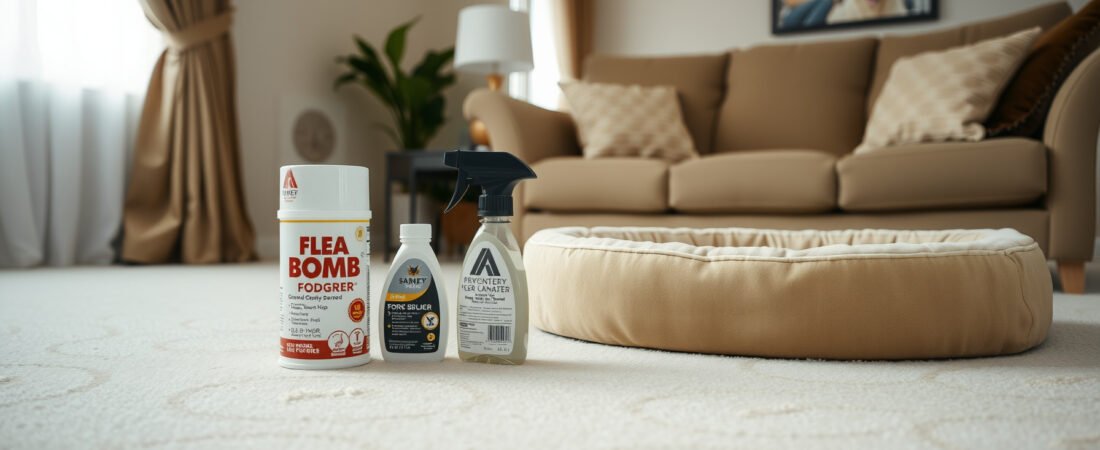
One flea treatment almost never works — and that’s not a caveat buried in fine print, it’s the single most important thing to understand before you spend a dollar. Most homeowners spray the carpet, feel like they’ve handled it, and then get bitten again three weeks later. That’s not bad luck. That’s biology working exactly as designed against a one-and-done approach.
The real problem isn’t finding a product that kills fleas. Dozens of sprays, foggers, and powders do that just fine. The problem is that roughly 95% of a flea infestation exists in stages — eggs, larvae, and pupae — that most products can’t touch. The adult fleas biting you and your pets are the visible 5%. Treat only for adults, and you’ve guaranteed a reinfestation in about 2–3 weeks when the next batch hatches. Understanding that cycle is the actual foundation of any effective flea treatment plan for your home.
Why Do Flea Treatments Keep Failing? The Life Cycle Problem Nobody Explains
A female flea can lay up to 50 eggs per day — and she starts laying within 24 to 48 hours of her first blood meal. Those eggs aren’t sticky, so they fall off your pet and scatter into carpet fibers, floor cracks, upholstery seams, and bedding. In warm, humid conditions typical of most US homes, eggs hatch into larvae within 2–10 days, larvae spin into pupae, and pupae can remain dormant inside their protective cocoons for up to 5 months. That cocoon is chemically resistant to nearly every insecticide on the market.
This is exactly why you’ll sometimes see flea activity spike 2–3 weeks after treatment — it’s not that the product failed, it’s that a new generation just emerged from pupal cases that nothing killed. The pupae respond to heat, vibration, and carbon dioxide (signals that a warm-blooded host is nearby), which is why vacuuming before and after any treatment is non-negotiable. Vibration physically accelerates the hatch, forcing pupae out of their protective cocoons and into contact with whatever insecticide you’ve applied.
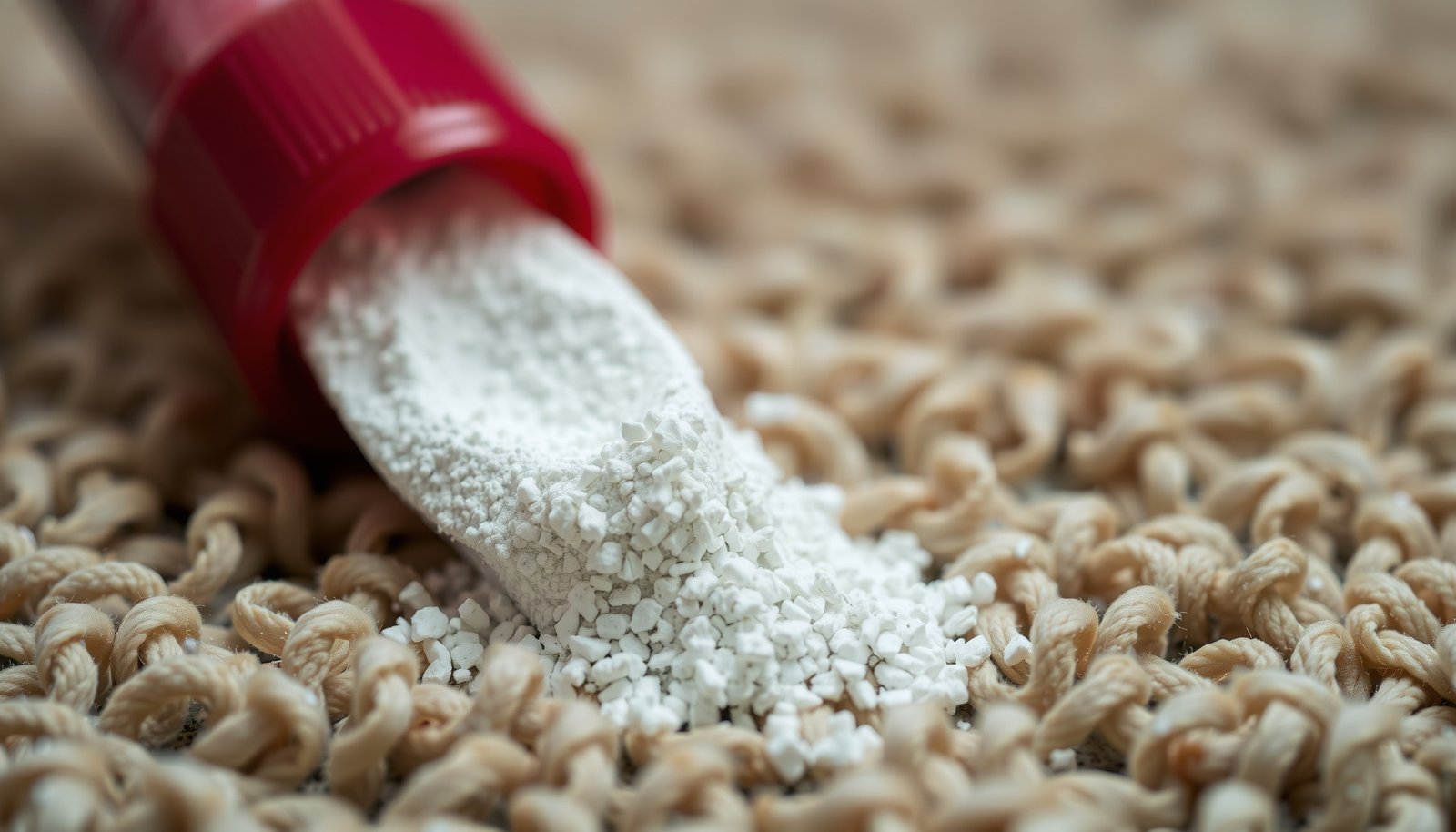
This close-up shows the scale difference between flea life stages — adults are the only visible ones, while eggs and larvae hiding in carpet pile are what keep an infestation cycling regardless of how many times you spray.
What Does Each Flea Product Type Actually Do — and What Can’t It Do?
Sprays, foggers, and powders each have a specific job in a flea treatment plan, and treating them as interchangeable is the source of most failures. They differ not just in application method but in what life stages they target, how long residual activity lasts, and which areas of your home they can actually reach. Choosing one and skipping the others is like patching two-thirds of a leaky roof.
Here’s how each format breaks down in plain terms:
| Product Type | Best Use Case | Reaches Pupal Stage? | Residual Activity |
|---|---|---|---|
| IGR Spray (e.g., Precor 2000+) | Carpets, upholstery, baseboards | No (disrupts development before) | Up to 7 months |
| Adulticide Spray (e.g., Vet’s Best, Wondercide) | Direct contact kill on adults | No | Days to 2 weeks |
| Fogger / Bomb | Open floor areas, large spaces | No | 2–4 weeks |
| Diatomaceous Earth / Boric Acid Powder | Cracks, under furniture, void spaces | Partial (kills emerging adults) | Months (if dry) |
The counterintuitive piece most articles skip: foggers are actually the weakest single-product option in most home infestations. They deposit insecticide on horizontal surfaces and can’t penetrate under furniture, into carpet pile, or behind baseboards — exactly where 80–90% of flea larvae are living. A targeted IGR spray applied by hand will outperform a fogger in almost every real-world scenario.
Which Flea Sprays Are Actually Worth Buying?
The single most important label detail to look for in a flea spray isn’t the active insecticide — it’s whether the product contains an IGR (insect growth regulator). Pyrethrins and permethrin kill adult fleas on contact, but IGRs like methoprene or pyriproxyfen are what prevent eggs and larvae from developing into biting adults. A spray with both is the closest thing to a complete solution in a single bottle.
Picture this: you’ve vacuumed the entire downstairs, you’ve treated your dog, and you spray every room with a permethrin-only product. Within a week the adults are gone. Three weeks later you’re getting bitten again near the couch. The eggs that were already in the carpet? They hatched on schedule and developed uninterrupted because nothing disrupted the cycle. That’s the exact scenario an IGR prevents. Products like Precor 2000+ (permethrin + methoprene) or Martin’s IGR Concentrate address both the immediate adult kill and the long-term cycle interruption — and that combination is why pest professionals use them almost exclusively over consumer-grade foggers.
Pro-Tip: When applying any flea spray to carpet, use slow, overlapping passes and allow the product to air-dry completely before vacuuming again — rushing the dry time by opening windows immediately can reduce residual effectiveness by cutting contact time short. Wait at least 2 hours, ideally longer in humid climates.
Should You Use a Flea Fogger or Bomb at All?
Foggers get a lot of marketing attention and they’re not useless — but they’re widely misused as a standalone solution. A fogger works by releasing an aerosol cloud that settles on exposed surfaces. That sounds thorough until you realize fleas don’t live on top of your carpet. They live in the base of the carpet pile, under the carpet edges, in the gap between your baseboards and floor, and in the deep creases of your upholstered furniture. A settling fog doesn’t reach any of those places reliably.
Where foggers do earn their place is in combination treatments — specifically for treating large open spaces like finished basements or spare bedrooms simultaneously while you manually spray the primary living areas. One honest nuance worth knowing: if your infestation is moderate to heavy, or concentrated under heavy furniture and in wall-to-wall carpet, a fogger alone will give you a false sense of success for about two weeks before the next generation hatches. Severity matters. For a mild infestation caught early, a fogger plus vacuum protocol can work. For anything heavier, you need the targeted spray approach.
“The mistake I see repeatedly is homeowners treating the pet and bombing the house and calling it done. The pupal cocoon is chemically impervious to nearly everything available at retail — your only real leverage against it is mechanical disruption through aggressive vacuuming and denying the newly-hatched adults a blood meal while residual IGRs are still active. It’s a two-to-three week commitment, not a one-afternoon fix.”
Dr. Karen Voss, Board-Certified Entomologist and Urban Pest Management Consultant, University Extension Specialist
How to Use Flea Powders and Diatomaceous Earth Without Wasting Them
Diatomaceous earth (DE) and boric acid powders are genuinely effective — but only when applied correctly, and that part is where most people go wrong. DE works by physically damaging the waxy outer cuticle of insects, causing them to dehydrate. It’s not a chemical toxin, which means fleas don’t develop resistance to it, and it continues working as long as it stays dry. The moment it gets wet or compressed, it loses effectiveness almost entirely.
Applied lightly and worked into carpet fibers with a brush or broom, food-grade DE can provide weeks of residual kill against adults emerging from pupal cases — making it an excellent complement to an IGR spray rather than a standalone treatment. Just like identifying what do termite droppings look like requires knowing where to look in low-traffic structural areas, effective DE application targets the exact spots fleas spend most of their life cycle: carpet edges, under furniture, along baseboards, and in pet resting areas. Applying it heavily in the middle of a traffic lane where it gets ground flat and vacuumed up does almost nothing.
Here’s a practical sequence for using powders as part of a full treatment plan:
- Vacuum thoroughly first — hit all carpet edges, under sofa cushions, and along baseboards before applying anything. This removes eggs and larvae and triggers pupal hatching through vibration.
- Apply DE or boric acid lightly — use a duster or shaker applicator to get fine coverage in carpet fibers, not a visible coating. Heavy application wastes product and can irritate airways.
- Work powder into carpet — use a stiff brush or the back of a broom to push the powder into the pile where flea larvae actually live.
- Leave undisturbed for 24–72 hours — avoid vacuuming or heavy foot traffic over treated areas during this window. The longer the contact time, the better.
- Vacuum again and reapply IGR spray — removing dead insects and debris, then re-treating with a residual IGR maintains pressure on the next generation.
- Repeat the full cycle at day 14 — this catches the second wave of adults emerging from any pupae that survived the first treatment round.
One thing worth mentioning: food-grade DE is safe around pets and people once settled, but the dust itself is a respiratory irritant during application. Wear a basic dust mask when applying it to large areas — this matters more in smaller rooms with poor ventilation. Pest-control-grade DE (sometimes labeled “pool grade” or amorphous silica) is far more hazardous to inhale and should never be used indoors. Read the label. The distinction matters.
What’s the Right Order of Operations for Treating Your Entire Home?
Sequence matters as much as product selection. Treating your pet the same day you treat the house is non-negotiable — if your dog is still carrying adult fleas while you’re spraying the carpet, they’re reseeding treated areas immediately. Talk to your vet before treatment day about a fast-acting oral flea product like nitenpyram (Capstar), which kills adults on the pet within 30 minutes and eliminates that re-infestation pathway while your home treatments are setting up residual activity.
Managing a flea problem shares something with dealing with other persistent household pests — the insects themselves are rarely the whole story. Just like how to get rid of fruit flies fast depends on eliminating the breeding source rather than just swatting adults, flea control depends on interrupting the environment that sustains every life stage, not just killing the adults you can see. Wash all pet bedding in hot water, seal it in plastic bags before carrying it to the wash to avoid dropping eggs through the house, and clear clutter from floors to maximize the contact area your spray and powder treatments can reach.
Here’s what a complete treatment setup looks like broken into the actual areas of your home:
- Carpeted rooms: Vacuum, apply IGR + adulticide spray, work DE into edges and under furniture. Repeat at day 14.
- Hard floors: Mop with a mild detergent solution to kill surface larvae, apply spray along baseboards and in floor cracks where eggs accumulate.
- Upholstered furniture: Vacuum all crevices and under cushions, apply IGR spray to seams and undersides — this is one of the most overlooked reservoirs in any home infestation.
- Pet sleeping areas: Remove and wash all bedding before treating the area. Apply DE to the floor underneath where the bed sits.
- Basement and crawl spaces: Fleas can establish in these areas if pets have access. Treat with a residual IGR spray and DE along the perimeter, even if you don’t see activity there.
The two-week repeat treatment isn’t optional — it’s the mechanism that actually breaks the infestation cycle. The first round kills adults and halts larval development. The second round catches the wave of adults that hatch from pupae that were already too developed to be affected by the IGR the first time around. Skip that second round and you’ll be back to square one within a month, wondering why nothing you tried worked.
Getting through a flea infestation isn’t about finding the one miracle product — it’s about understanding that you’re fighting a multi-stage organism with different vulnerabilities at each stage, and systematically removing every foothold it has. Once you see it that way, the product choices almost make themselves. And the next time you see a flea, you’ll know exactly which 5% of the problem you’re actually looking at.
Frequently Asked Questions
What is the most effective flea treatment for home use?
IGR sprays that combine an adulticide with an insect growth regulator — like permethrin plus methoprene or pyriproxyfen — are the most effective flea treatments for home infestations. They kill adult fleas on contact and stop eggs and larvae from developing, which breaks the flea life cycle. A single application can protect treated surfaces for up to 7 months.
How long do I have to stay out of the house after flea fogger?
Most flea foggers require you to stay out of the house for 2 to 4 hours after setting them off. Always check the specific product label since some formulas need up to 4 hours of vacancy time. When you return, open windows and doors to ventilate for at least 30 minutes before spending extended time inside.
How many flea bombs do I need for my house?
Most flea foggers are designed to cover 2,000 cubic feet, so you’ll need to calculate your room’s square footage multiplied by ceiling height to get the right number. As a rough guide, one fogger typically covers a medium-sized room of about 16×16 feet with 8-foot ceilings. Don’t over-fog — using too many in a small space increases chemical exposure without improving results.
Does flea powder actually work on carpets?
Yes, flea powder works well on carpets when applied correctly — you need to work it deep into the carpet fibers with a broom and leave it for at least 24 hours before vacuuming. Products containing diatomaceous earth or boric acid are especially effective because they damage the flea’s exoskeleton over time. Keep pets and kids off treated carpet until it’s fully vacuumed up.
How do I get rid of fleas in my house fast without a pet?
Even without pets, fleas can survive indoors for months by feeding on humans or hiding in carpet fibers, so you’ll still need to treat the whole house. Vacuum every floor surface thoroughly, then apply an IGR-based spray to carpets, baseboards, and upholstered furniture. Washing all bedding and fabric items on high heat above 95°F kills fleas at every life stage and should be done at the same time as any spray treatment.