
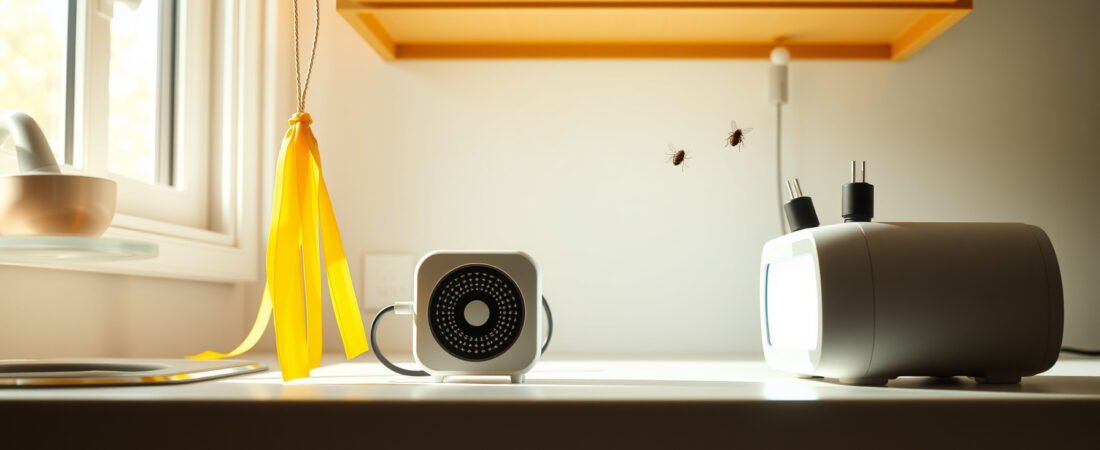
Fly traps work — but most people buy the wrong type for where flies actually breed in their home, and that’s why the problem never fully goes away. A UV bug zapper hanging in your kitchen looks impressive and sounds satisfying, but it won’t do much against the fungus gnats multiplying in your potted plants or the drain flies hatching in your bathroom P-trap. Matching trap type to fly species is the single most important decision you’ll make, and almost no buyer’s guide actually explains how to do it.
The bottom line: sticky ribbon traps handle general house flies and fruit flies at low cost, UV electric traps work best in larger open spaces where biting insects are a concern, and pheromone-baited window traps outperform both for targeted fruit fly and fungus gnat control. This article ranks all three categories honestly, explains the science behind each, and tells you exactly which scenario each trap is — and isn’t — built for.
Why Does Your Fly Trap Work in One Room But Not Another?
Flies don’t behave like a uniform pest. House flies (Musca domestica) navigate by smell and thermal cues, tracking odors from food, garbage, and animal waste over distances of up to a mile. Fungus gnats are weak fliers that almost never leave the immediate area of their breeding soil. Drain flies stay within about 20 feet of the drain they hatched from. Each species responds to a completely different set of attractants, which is why a single trap solution almost never clears an entire home.
The room where you place a trap also matters more than most people realize. UV light traps draw flies that are already navigating by light — a behavior much more pronounced in large, open, brightly lit spaces than in a dim hallway or under-cabinet area. Putting a plug-in UV trap in a cluttered utility room and expecting it to pull flies from the kitchen 30 feet away is setting yourself up for disappointment. Airflow patterns, competing light sources, and breeding proximity all change what works.
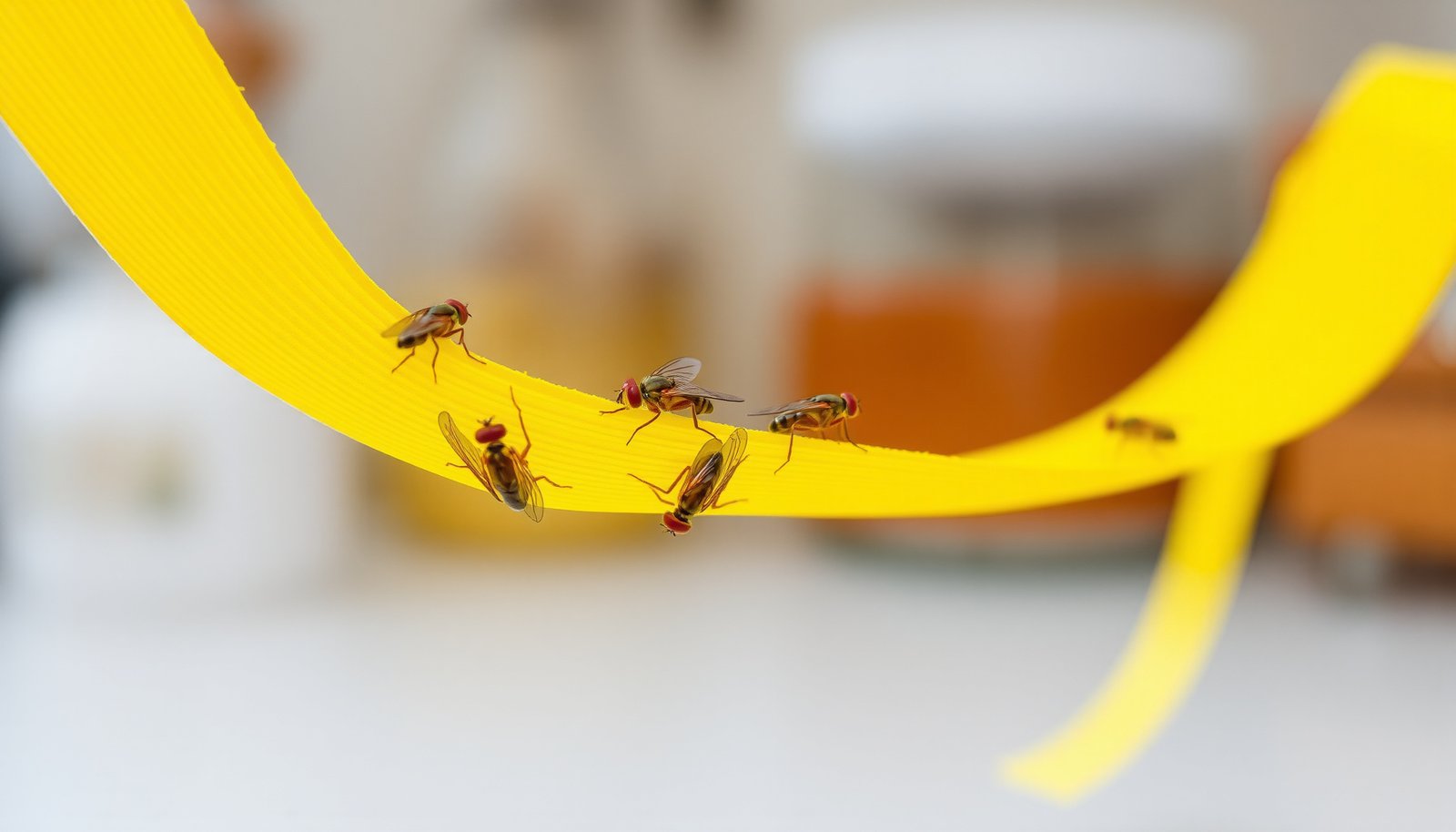
This close-up shows how different trap designs physically capture flies — the sticky coating thickness, glue board layout, and UV tube proximity all affect catch rates in ways that specs on a product page rarely communicate.
Sticky Fly Traps: Which Designs Actually Catch More Than Ribbon Traps?
Classic yellow sticky ribbons — the kind you unroll from a cardboard tube and hang from the ceiling — catch house flies reliably, cost almost nothing, and require zero electricity. A single ribbon can trap 40 to 60 flies over a week in an active kitchen. The problem isn’t effectiveness, it’s that they’re indiscriminate and unsightly, and they stop working the moment the exposed glue surface fills up, which in a serious infestation can happen in 48 to 72 hours.
Flat sticky glue board traps designed to hang in a window or stand on a counter have a meaningful advantage: many incorporate yellow or UV-reflective coloring that attracts flies visually, and some add pheromone or food-based lure tabs. Products like Catchmaster Gold Stick and Rescue! Disposable Window Fly Traps use sunlight through glass to enhance the visual signal, which makes window placement genuinely important rather than decorative. For fruit flies specifically, sticky traps with apple cider vinegar or fermentation-scent lures consistently outperform plain glue boards — in side-by-side tests, scented traps catch 3 to 5 times more fruit flies in the first 24 hours.
UV Electric Fly Traps: What the Wattage Numbers Don’t Tell You
UV fly traps — also called bug zappers or light traps — work by emitting ultraviolet light in the 350–370 nanometer range, which is the spectrum flies and many other insects see best. Insects navigate toward the light, make contact with either a high-voltage grid (zappers) or a sticky glue board (light traps), and are killed or captured. The zappers with glue boards rather than electric grids are strongly preferable for indoor use because they don’t scatter fly body fragments, which is a genuine food contamination risk in kitchens — something many product descriptions quietly skip over.
Wattage is often marketed aggressively, but coverage area matters more than raw power. A 15-watt UV glue board trap like the Aspectek or Flowtron BF-150 handles up to about 600 square feet of open space effectively. Beyond that, you need multiple units or a higher-output commercial-grade unit. One honest nuance worth knowing: UV tube output degrades significantly after about 8,000 hours of use — roughly 11 months of continuous operation — even when the light still appears to glow. The bulb looks fine but the UV output has dropped below the wavelength flies respond to. Most people never replace the bulbs and wonder why the trap stopped working.
Pro-Tip: Place UV glue board traps at fly-entry height (4 to 6 feet off the floor) and away from competing light sources like windows or overhead fluorescents. Flies are drawn to the brightest UV source in their visual field — if your overhead lighting is brighter, it wins, and the trap becomes decoration.
Pheromone and Bait Traps: The Underrated Option Most People Skip Entirely
Picture this: you’ve had a sticky ribbon hanging in your kitchen for two weeks, caught a dozen house flies, and still see fruit flies swarming around the compost bin every evening. That’s because the ribbon isn’t targeting the right species with the right attractant. Pheromone and food-based bait traps use species-specific chemical signals — fermentation compounds for fruit flies, protein bait for blow flies, fungal volatiles for fungus gnats — that work independently of light. This makes them effective in dark spaces, inside cabinets, under sinks, and in areas where UV or visual traps have no line of sight to flying insects.
TERRO Fruit Fly Traps use apple cider vinegar-scented liquid bait in a non-toxic apple-shaped vessel and consistently rank as one of the highest-performing over-the-counter options for fruit fly control. Fungus gnat-specific yellow sticky stakes placed directly in potted plant soil are non-negotiable if your fly problem originates from houseplants — UV traps placed across the room will catch essentially zero fungus gnats because they rarely fly more than 3 to 4 feet from their breeding site. Matching the bait chemistry to the actual species present isn’t a nice-to-have; it’s the entire mechanism that makes these traps work.
“The biggest mistake I see homeowners make is treating all small flies as the same pest. Fruit flies, fungus gnats, and drain flies are entirely different species with different breeding sites, different attractants, and different control strategies. A trap that eliminates one can have zero effect on another. Correct species identification before purchasing any trap should be the first step — not an afterthought.”
Dr. Renata Solís, Board-Certified Entomologist and Urban Pest Management Specialist, University Extension Program
How to Choose the Right Indoor Fly Trap Based on Where Flies Are Coming From
Traps reduce adult fly populations, but they don’t eliminate breeding sources — and that distinction is the difference between controlling a fly problem and slowly losing to it. A home with 50 flies caught per week on sticky boards but an untreated drain full of organic buildup will continue producing 50 new flies per week indefinitely. Traps are a monitoring and reduction tool, not a standalone fix. The most effective approach combines the right trap type with source elimination.
Here’s a ranked breakdown of which trap type performs best for each common indoor fly scenario, based on fly species, breeding location, and trap mechanism:
| Fly Type | Best Trap Type | Placement |
|---|---|---|
| House flies | UV glue board trap or sticky ribbon | Near entry points, 4–6 ft high |
| Fruit flies | Pheromone/bait trap (e.g., TERRO) | On counter near fruit, sink, or compost |
| Fungus gnats | Yellow sticky stakes in soil | Directly in potted plant soil |
| Drain flies | Sticky glue board near drain | On wall above affected drain |
One counterintuitive fact most pest control articles skip: a high fly count on your indoor trap doesn’t necessarily mean you have a fly infestation inside your home. It may mean you have an excellent entry point — a gap around a pipe, a torn window screen, or a door that doesn’t seal — and flies are entering faster than the trap can capture them. If your trap fills up within 24 to 48 hours repeatedly, the priority is sealing entry points, not buying a larger trap. Interestingly, the same logic applies to other small pests navigating your home’s envelope — clover mites on windows and walls are another example of insects where entry-point sealing matters more than any trap or spray.
Top Fly Traps for Indoor Use Ranked: Our Honest Picks by Category
Across sticky, UV, and bait categories, a handful of products consistently outperform the rest in real-home conditions rather than just controlled lab settings. These aren’t ranked by Amazon star rating — they’re ranked by mechanism quality, ease of use, replacement cost, and whether they actually solve the problem they claim to solve.
- TERRO Fruit Fly Trap — Best overall for fruit flies. Non-toxic liquid bait, works within 24 hours, discreet apple design doesn’t look like pest control equipment. Replace bait every 30 days.
- Catchmaster Gold Stick Fly Trap — Best sticky trap for house flies. High-capacity glue surface, no odor, works well near trash cans, garage entries, and utility rooms. Can catch up to 150 flies per unit.
- Aspectek 20W UV Electronic Fly Trap — Best UV glue board trap for open kitchen or living areas. UV glue board design (no electric grid) eliminates fragment scatter. Covers up to 6,000 square feet in open commercial settings, roughly 600 square feet in a typical home room with competing light.
- Gideal Dual-Sided Yellow Sticky Traps — Best for fungus gnats. Twist-stake design goes directly into plant soil. Yellow color is the specific wavelength fungus gnats respond to; UV adds nothing for this species.
- RESCUE! Disposable Window Fly Trap — Best passive trap for entryway windows. Uses reflected sunlight to amplify attractiveness; no electricity, no lure tabs needed. Most effective April through September when fly pressure is highest.
- Black Flag Window Fly Trap — Best budget sticky window option. Simple, inexpensive, and surprisingly effective for house flies entering through glass-adjacent gaps. Not species-specific but reliable for general-purpose use.
A few honest caveats about this list: UV zappers with electric grids — the type that makes the loud snap sound — are not recommended for food prep areas under any circumstances. The fragmentation issue is real, and the FDA has flagged this in food service guidelines. For a garage, workshop, or sunroom, they’re fine. For the kitchen where you’re cooking, stick to glue board UV traps or bait traps. Also, if you’re trying to track down a rodent problem alongside an unexplained indoor pest increase, knowing what species you’re dealing with helps — the same careful species-first approach that applies here applies to mammals, too, like distinguishing a deer mouse from a house mouse before deciding on control methods.
What to Do When Indoor Fly Traps Aren’t Solving the Problem
If you’ve had traps deployed for two or more weeks and the fly population isn’t visibly declining, the breeding source hasn’t been found or eliminated. Traps intercept adults — they don’t kill larvae, they don’t treat organic buildup in drains, and they don’t address standing water under a refrigerator or a forgotten bag of potatoes decomposing at the back of a cabinet. The trap count itself is actually useful data here: if you’re catching mostly small dark flies, you likely have a drain fly or fungus gnat issue; if they’re larger with red eyes, fruit flies; if they’re large and slow, house flies entering from outside.
For persistent drain fly problems specifically, enzyme drain treatments combined with a mechanical drain brush are far more effective than any trap — because you’re eliminating the biofilm where larvae develop rather than just catching the adults that emerge. For fungus gnats, letting houseplant soil dry out completely between waterings disrupts the breeding cycle faster than any sticky trap. The traps still help, but they’re most effective as a follow-up confirmation tool: when the count drops to near zero, you’ve addressed the source.
Here’s what to check before buying another trap:
- All drains in the home — kitchen, bathroom, utility sink — for gelatinous organic buildup (drain flies breed in the slime layer, not the water itself)
- Houseplant soil moisture — fungus gnat larvae need consistently moist soil to survive; letting soil dry to at least 2 inches depth breaks the cycle
- Recycling bins and compost containers — even rinsed containers hold enough fermentation residue to sustain a fruit fly population indefinitely
- Under and behind appliances — refrigerators, dishwashers, and under-sink cabinets can accumulate standing water or food debris without any visible sign
- Window and door seals — a gap as small as 1/16 inch around a window frame is sufficient entry for house flies and fruit flies attracted from outside
There’s a version of this problem that depends heavily on climate and season. In warm, humid climates — the Gulf Coast, Florida, the Pacific Northwest — fly breeding can continue year-round indoors, and a trap that controls the population adequately in January may be completely overwhelmed by July. In that case, the right answer isn’t a better trap — it’s a seasonal escalation plan that includes enzyme drain treatments, source sanitation, and mechanical exclusion before peak season starts, with traps playing a maintenance role rather than a primary control role.
Start with the right trap for the right fly, treat the source, and use trap counts as your progress meter — that sequence works. Buying a bigger, louder, more expensive trap and skipping the source investigation is the move that keeps fly problems going for months longer than they need to.
Frequently Asked Questions
what is the best fly trap for indoor use?
The best fly trap for indoor use depends on where you’re placing it and how bad the infestation is. UV light traps with a glue board — like the Aspectek or Flowtron indoor models — are consistently top-rated because they work 24/7 without any spray or scent. For kitchens and dining areas, a discreet plug-in UV trap is usually the most practical pick.
are sticky fly traps safe to use indoors around pets and kids?
Most sticky fly traps are non-toxic and don’t use chemicals, which makes them generally safe around kids and pets. That said, the adhesive can be a real mess if a curious cat or toddler gets into it, so placement matters — keep them out of reach, at least 5 feet off the ground or inside a covered bait station style unit. Always check the label for any added attractants that might not be pet-safe.
do UV fly traps actually work indoors?
Yes, UV fly traps do work indoors, especially for common house flies, fruit flies, and gnats. They’re most effective in low-light areas since flies are drawn to the UV light more easily without competing light sources — placing them in a dim corner 4 to 6 feet off the floor gives you the best results. Coverage ratings on most units range from 300 to 1,500 square feet, so match the trap size to your room.
what’s the difference between electric fly traps and UV fly traps?
Electric fly traps zap insects with a high-voltage grid when they touch it, while UV traps lure flies onto a sticky glue board using ultraviolet light — no zapping involved. Electric zappers are louder and better suited for garages or basements since they can scatter bug fragments, which isn’t ideal near food prep areas. UV glue board traps are quieter and cleaner, making them the better choice for kitchens, offices, or bedrooms.
how often do you need to replace the glue boards on indoor fly traps?
Most glue board fly traps need the sticky pad replaced every 30 to 60 days, though it depends on how many flies you’re catching and how dusty your space is. Once the board looks covered or stops being tacky, it’s time to swap it out — a full board won’t catch anything new. Replacement boards usually cost between $5 and $15 for a pack of 2 to 4, and most major brands sell them separately.