
Clover mites don’t come inside because your home is dirty or damaged — they come inside because your lawn is too healthy. That’s the part most pest control advice skips entirely. A thick, lush, well-fertilized lawn right up against your foundation is practically a welcome mat for these things, and no amount of window spraying will stop them until you deal with what’s drawing them in from outside.
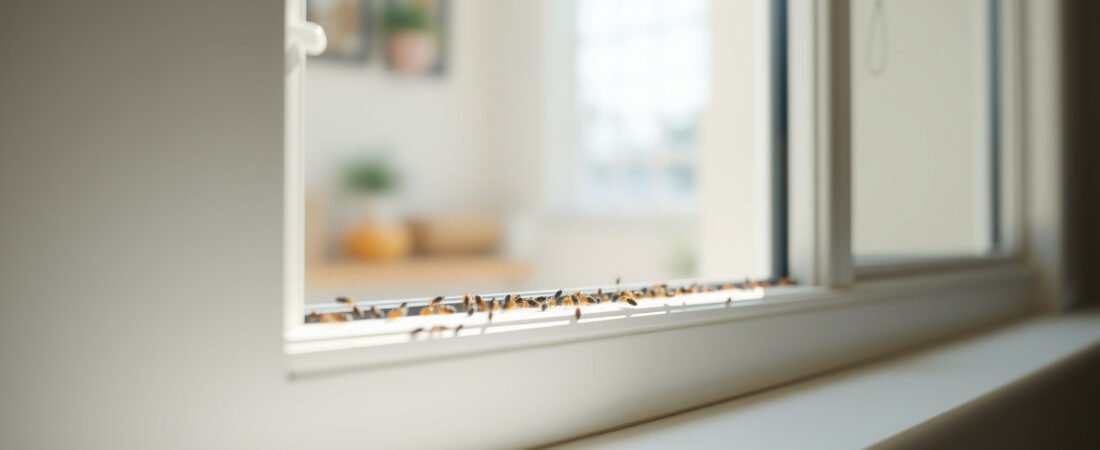
If you’re seeing thousands of tiny red dots crawling on your windows, sills, and walls — especially on the sunny south or west-facing sides of your home — you’ve got clover mites. They’re not dangerous, they don’t bite, and they won’t damage your structure. But crush one on a white wall or curtain, and you’ll have a rust-red stain that doesn’t come out easily. That’s where most of the frustration comes from.
The fix isn’t a single spray. It’s a sequence: stop them at the source, seal the entry points, then eliminate the ones already inside. Here’s how to do all three without making the most common mistake homeowners make — which is starting indoors instead of out.
Why Are Clover Mites Suddenly Covering My Windows and Walls?
Clover mites (Bryobia praetiosa) are plant feeders, not home invaders in the traditional sense. They live on grass, clover, dandelions, and other vegetation, feeding on plant sap. The problem starts when populations explode — a single female can lay up to 70 eggs without mating — and the mites begin migrating in search of new feeding territory. Your warm, sun-baked exterior walls happen to be directly in their path.
They’re most active in early spring and again in late fall, when temperatures are mild and grass is growing or still green. Once temperatures hit about 85°F or drop below freezing, they stop moving and either die off or go dormant. That’s why infestations feel sudden — you get a narrow window of maybe two to four weeks where conditions are perfect for them to swarm, and they do it all at once, sometimes in the tens of thousands on a single wall.
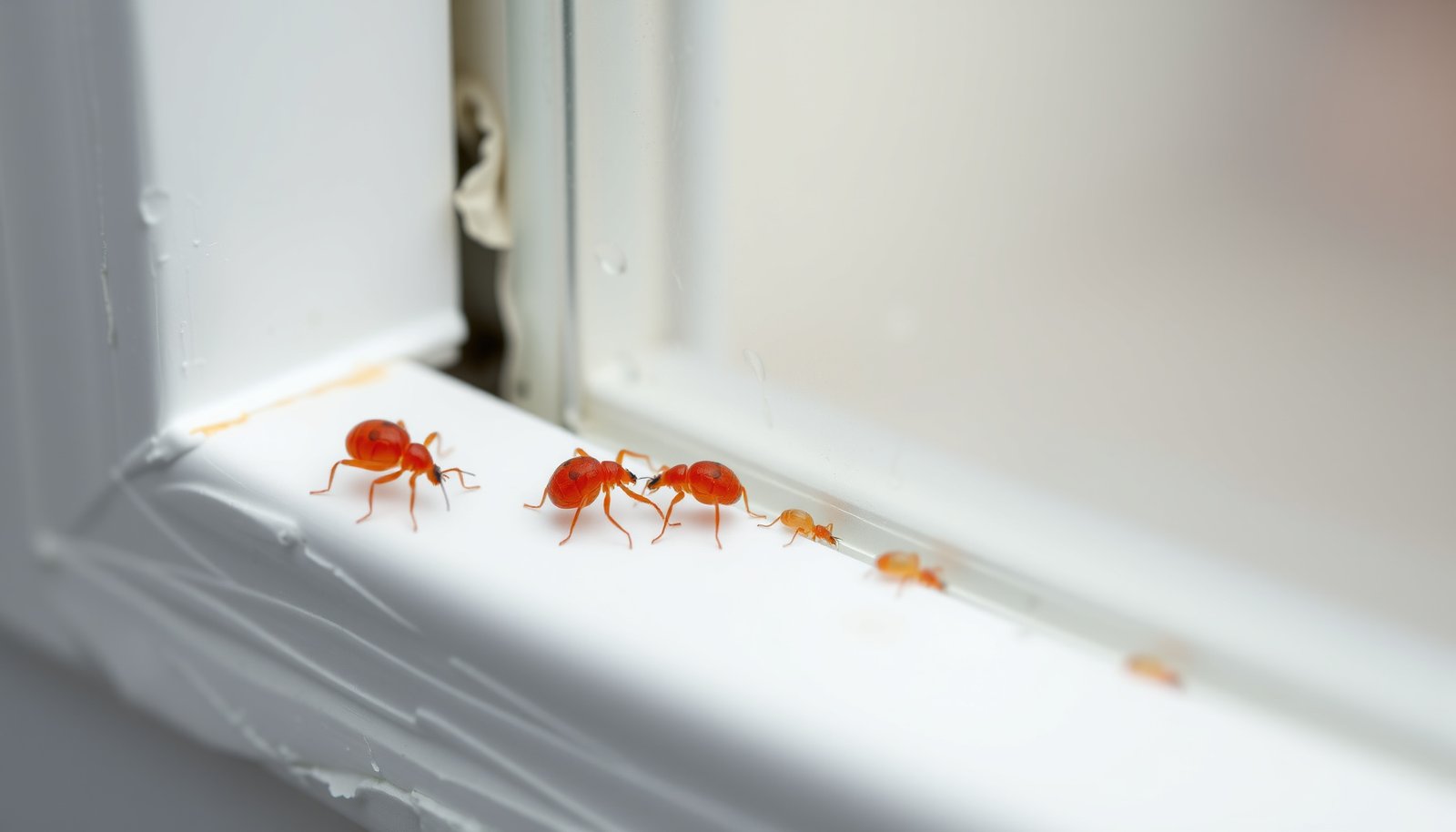
This close-up shows just how small clover mites are relative to a window frame — about the size of a pinhead — which is why they can slip through gaps you’d never think twice about sealing.
The Real Reason They’re Getting Inside (And It’s Not Your Windows)
Here’s the counterintuitive part: clover mites don’t seek out your home specifically. They’re on your walls because the wall is warm and sunlit — they’re essentially basking. The ones that make it inside usually stumble in through gaps that most homeowners never think to seal, including weep holes in brick, gaps around utility lines, cracks in caulking around window frames, and even the space under exterior-facing door thresholds.
The underlying driver is your landscaping. Dense turf grass or heavy clover growth pressed right against your foundation gives the mites both a food source and a launching pad. A fertilized lawn also supports higher mite populations than a sparse one — nitrogen-rich grass is more nutritious for plant-feeders. Cutting a bare zone of at least 18 to 24 inches between your foundation and any lawn or garden is one of the most effective long-term controls available, and most pest control articles mention it as an afterthought rather than the primary fix it actually is.
How to Stop Clover Mites Before They Reach Your Windows
Outdoor treatment is where you need to spend most of your effort. The goal is to create a barrier between your lawn and your foundation that mites either can’t cross or won’t survive crossing. Done right, this cuts off the invasion at its source rather than playing defense at your window sills indefinitely.
Work through this sequence in order — skipping steps is why most DIY attempts only partially work:
- Create a dry barrier zone. Rake back any mulch, grass, or ground cover within 18–24 inches of your foundation. Fill this strip with coarse gravel or dried wood chips — clover mites avoid hot, dry, loose materials because they lose moisture rapidly crossing them.
- Apply a perimeter insecticide spray. Use a bifenthrin or permethrin-based concentrate mixed to label rates and spray a 3-foot band around the entire foundation, including up the wall to about 2 feet. Repeat every 30 days during active season.
- Treat your lawn near the foundation separately. A granular miticide or a lawn-safe acaricide applied to the 10 feet of turf closest to your home kills the source population, not just the ones already migrating.
- Seal every gap on the exterior. Use silicone caulk around window frames, door frames, utility penetrations, and any visible cracks in your siding or foundation. Cover weep holes in brick with fine mesh — don’t block them completely or you’ll trap moisture.
- Adjust your lawn care. Reduce nitrogen fertilizer applications near the foundation during spring and fall. A thinner, less lush lawn edge immediately around the house reduces mite populations significantly over one season.
Pro-Tip: Diatomaceous earth applied as a dry dust along the base of your exterior walls works as a non-chemical supplement to liquid perimeter sprays. It doesn’t wash away as fast as spray in dry conditions, and it damages the mites’ exoskeletons without requiring additional pesticide applications. Reapply after any rain.
How to Get Rid of Clover Mites Already Inside Your Home
Once they’re inside, the approach changes completely. You do not want to spray liquid insecticides on interior walls if you can help it — the dead mites and the spray residue both leave stains, and the chemical smell lingers. More importantly, a clover mite indoors is essentially lost. It can’t feed on your walls or flooring, so it’ll die on its own within a day or two without a plant food source. Your main job is to remove them without crushing them.
Picture this: you wake up on a cool April morning and find what looks like a moving rust-red stripe along your south-facing window sill — maybe a hundred mites, maybe more. The instinct is to wipe them. Don’t. A dry vacuum with a hose attachment picks them up without rupturing their bodies, which is what causes the staining. Seal the vacuum bag immediately and dispose of it outside. For stubborn clusters on walls, a piece of tape pressed lightly and peeled away works better than any cloth. For confirmed interior entry points, apply a thin line of food-grade diatomaceous earth along the sill or baseboard — it kills stragglers without any staining risk.
“Most people treating clover mites are solving the wrong problem. They’re focused on the mites they can see on their windows, but those mites are just the tip of the population. The real colony is in the lawn within five to ten feet of the foundation. Until that source population is addressed, you’ll be dealing with repeat invasions every spring and fall, sometimes for years.”
Dr. Marcus Elley, Urban Entomologist and Certified Pest Control Consultant, Colorado State University Extension
Here’s what to actually use indoors, in order of preference:
- Handheld vacuum with hose attachment — best for live mites on windows, sills, and walls; zero staining risk
- Tape (packing or masking) — effective for small clusters on walls or glass without crushing
- Food-grade diatomaceous earth — apply dry along interior sills and entry point edges; kills without staining
- Rubbing alcohol on a cotton ball — for stains left by already-crushed mites; test on paint first
- Pyrethrin aerosol spray — last resort for heavy indoor concentrations; keep away from painted surfaces and fabrics
What Actually Works Long-Term vs. What’s Just Temporary Relief
The honest answer here is that what works depends heavily on your home’s situation — a ground-floor apartment in a complex with shared landscaping is a completely different problem than a single-family home where you control the lawn. In a rental setting, the landscaping fix may not be within your control at all, which means you’re limited to sealing entry points and treating the perimeter as close to your unit as possible. (If your landlord’s property management choices are contributing to a pest problem that affects your unit, that’s worth understanding from a legal standpoint — Can a New Tenant Be Blamed for a Pre-Existing Pest Infestation? covers how responsibility is typically assessed in those situations.)
For homeowners, here’s a direct comparison of what delivers lasting results versus what’s just putting a bandage on the situation:
| Treatment | Effect | Duration |
|---|---|---|
| Landscape barrier zone (gravel strip) | Prevents migration to foundation | Permanent if maintained |
| Perimeter bifenthrin spray | Kills active migrating mites | 30–45 days per application |
| Lawn acaricide treatment | Reduces source population | One season; may need repeat |
| Interior vacuuming only | Removes individuals present | Hours — more will follow until exterior is addressed |
One thing almost no pest control guide mentions: clover mites are one of the few structural pests where the physical landscape modification outperforms chemical treatment in head-to-head results. Studies from university extension programs consistently show that homes with a maintained 18-inch bare zone around the foundation see 70–90% fewer mite incursions than neighboring homes without one, even without any pesticide use. That’s a bigger reduction than most residual sprays achieve on their own.
The chemical component still matters during an active invasion — you need to knock down the population that’s already mobilized. But if you spray and never change the landscaping, you’ll be spraying again in six months. The two approaches aren’t interchangeable; they address different parts of the problem. Just like how identifying the exact pest species correctly changes what treatment actually works, understanding what’s driving the mites to your home in the first place determines whether your fix holds or fails.
Clover mites are genuinely one of the more fixable home pest problems out there — not because they’re easy to kill, but because their behavior is predictable and their entry routes are consistent. A well-sealed foundation with a maintained bare zone will stop the vast majority of invasions without a single pesticide application. Get that right once, and next spring’s mite season should be your last real problem with them.
Frequently Asked Questions
why are there tiny red bugs on my windows?
Those tiny red bugs are almost certainly clover mites, which are about 1/30 of an inch long — smaller than a pinhead. They show up on windows and walls in early spring and fall when temperatures drop, moving inside to escape the cold. They don’t bite and they’re not harmful to humans or pets, but they’ll leave a reddish stain if you crush them.
how do I get rid of clover mites on windows and walls without staining?
Don’t squish them — their red pigment leaves permanent stains on walls, window sills, and curtains. Instead, use a vacuum with a hose attachment to suck them up, then immediately seal and dispose of the bag. You can also use tape to lift them off surfaces without crushing them.
what home remedy kills clover mites?
A dish soap and water solution works well as a contact spray — mix about 1 tablespoon of liquid dish soap per quart of water and spray it directly on the mites. Diatomaceous earth dusted along window sills and entry points also kills them by damaging their exoskeleton. Neither method is a long-term fix on its own, but both are safe to use indoors around kids and pets.
how do I keep clover mites from coming back?
Seal any cracks around window frames, door frames, and siding where they’re getting in, since clover mites can squeeze through gaps as small as 1/16 of an inch. Creating a 18- to 24-inch plant-free gravel or mulch barrier around your home’s foundation also removes the vegetation they feed on and reduces populations dramatically. Applying a perimeter insecticide like bifenthrin around the outside of your home in early spring helps too.
are clover mites dangerous to humans or pets?
No — clover mites don’t bite, sting, or transmit any diseases, and they’re not parasites on humans or animals. They feed on grass, clover, and plant matter, so they’re basically harmless as pests go. The only real damage they cause is those red stains they leave behind if crushed, which can be tough to remove from light-colored walls or fabrics.
Disclaimer: This article is for informational purposes only and isn’t a substitute for professional pest control advice. Always read and follow the product label instructions exactly — label directions are legally binding and vary by brand and active ingredient. Keep all pesticides, baits and traps away from children and pets, ventilate treated areas as directed, and consider calling a licensed pest control professional if an infestation is large, recurring, or involves a structural pest like termites or carpenter ants.