
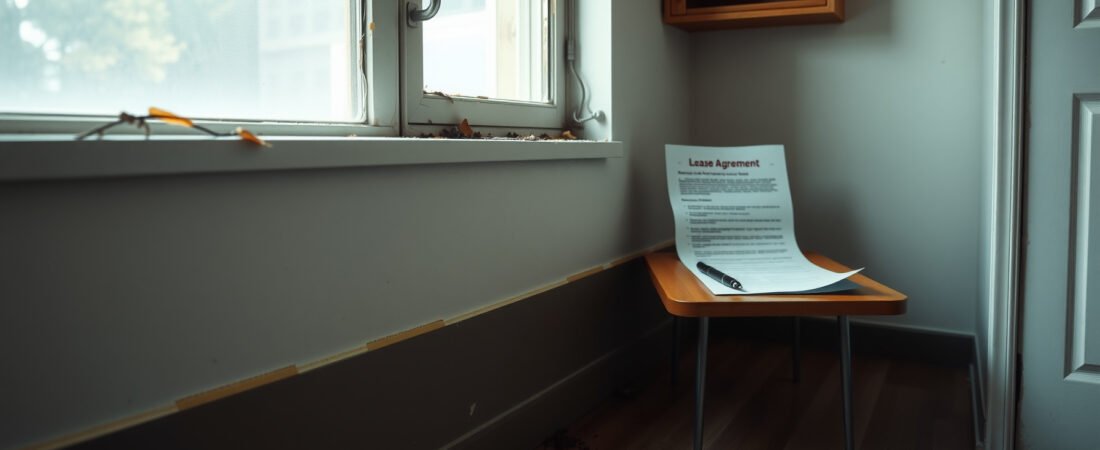
You moved in on a Saturday. By Tuesday, you found cockroach droppings behind the stove. Now your landlord is claiming you brought them in — and wants to charge you for extermination. Here’s the short answer: no, a new tenant almost never bears legal responsibility for a pre-existing pest infestation, but the burden of proving it was pre-existing falls almost entirely on you. That’s the part nobody warns you about.
Most articles about this topic focus on what landlords are legally required to do. That’s useful, but it misses the more pressing problem: a landlord can claim you caused the infestation without any real evidence, and if you don’t have documentation from day one, you may lose a security deposit dispute even when you’re completely in the right. The legal protection exists — but it only protects you if you know how to activate it.
Why Landlords Blame New Tenants Even When the Pests Were Already There
Pest infestations don’t appear overnight, but they can become visible overnight. A German cockroach population that was quietly living inside wall voids and behind appliances for months can suddenly seem to “explode” the moment you start cooking and generating food odors in a previously vacant unit. Your landlord sees the timeline — you moved in, then cockroaches appeared — and draws the obvious but wrong conclusion.
This is one of the most frustrating realities of renting: visibility lag. A female German cockroach produces 30–40 eggs per capsule and can generate hundreds of offspring in a few months, all hidden inside wall voids. By the time you see your first cockroach, the colony could be 60 to 90 days old or older. The infestation wasn’t yours — it just waited until you arrived to make itself known.

This photo shows cockroach egg casings (oothecae) and frass buildup inside a cabinet hinge recess — the kind of evidence that confirms an infestation was established long before a new tenant arrived, not something that develops in a matter of days.
What Actually Proves a Pest Infestation Was Pre-Existing?
Physical evidence of an established infestation is your strongest asset. Fresh cockroach activity looks different from old activity — dried, crusted frass, shed exoskeletons in multiple growth stages, and egg casings that are already hatched all indicate a population that’s been present for weeks or months. Rodent burrows don’t appear in 72 hours, and mice create grease rub marks on baseboards only after repeated trips along the same path. These things take time, and that timeline works in your favor.
The most convincing evidence categories, in rough order of legal weight, are listed below. Document all of these the moment you find them — ideally within your first 24–48 hours in the unit, and no later than your first week:
- Dated photographs and video — taken inside the unit on or before your move-in date, with your phone’s metadata intact showing the timestamp and GPS location.
- Written move-in inspection report — a signed walkthrough document that specifically notes pest evidence. If your landlord doesn’t provide one, create your own and send it to them via email so there’s a timestamped record of their receipt.
- Pest evidence age indicators — old egg casings, multiple-stage shed skins, and dried frass (as opposed to fresh, moist droppings) tell a professional that the infestation predates your tenancy.
- Prior tenant complaints — if you can reach the previous tenant and they’re willing to confirm they reported pests, that’s credible third-party testimony. Online reviews of the property sometimes contain this information too.
- Maintenance request records — many property management companies keep internal logs of service requests. In a dispute, you can request these through small claims discovery or a formal records request to a housing authority.
- Professional pest inspection report — a licensed inspector can often estimate infestation age based on population density, damage patterns, and evidence accumulation. Their written opinion carries real weight in disputes.
Does Your State’s Habitability Law Actually Protect You Here?
Every U.S. state has an implied warranty of habitability — a legal baseline that requires landlords to provide a livable space. In most states, a pest infestation serious enough to threaten health (cockroaches, rodents, bed bugs, termites) qualifies as a habitability violation. That means your landlord had an obligation to deliver a pest-free unit at move-in, regardless of what the lease says. A lease clause that tries to shift pest responsibility entirely to the tenant is often unenforceable on its face.
The honest nuance here: habitability law varies a lot by state, and the threshold for what counts as a “serious” infestation isn’t always defined in statute. A single mouse in a large apartment building might not trigger the same legal weight as a full German cockroach infestation in a studio. Bed bug laws are handled differently in many states — some have specific bed bug disclosure requirements that landlords must meet before a new tenant signs a lease. The strength of your position depends on the pest involved, the severity, and your state’s specific tenant protections.
| Pest Type | Typical Legal Classification | Who Bears Default Responsibility |
|---|---|---|
| Cockroaches (German or American) | Habitability violation in most states | Landlord, unless tenant caused conditions |
| Rodents (mice or rats) | Habitability violation in most states | Landlord for structural entry points (gaps under 1/4 inch wide can admit a mouse) |
| Bed bugs | Varies — many states have specific disclosure laws | Depends on state; landlord typically responsible for pre-existing cases |
| Fleas (no pet) | Usually treated as pre-existing if no pets | Landlord, especially if prior tenant had pets |
Pro-Tip: Before you sign a lease, ask your landlord in writing whether the unit has had any pest treatment in the past 12 months and whether there are any known current infestations. Their written answer — or their refusal to answer — becomes part of your documentation record before you ever set foot inside.
Can Your Landlord Deduct Extermination Costs from Your Security Deposit?
Picture this: you move out after a one-year lease, the landlord does a walkthrough, and two weeks later you get a deposit statement with a $400 line item for “pest control services.” No explanation, no photos, no inspection report — just a charge. This happens constantly, and many tenants pay it simply because they don’t know it’s contestable. In most states, a landlord can only deduct for pest damage or extermination costs if they can prove the infestation was caused by the tenant’s behavior — not merely that pests were present when you left.
The counterintuitive part that most tenants don’t realize: the burden of proof for a security deposit deduction legally belongs to the landlord, not to you. They have to show cause. If they can’t prove you created the conditions that led to the infestation — excessive food waste, deliberate neglect, unauthorized pets that brought in fleas — the deduction may be invalid. Disputing it in writing within the timeframe your state requires (often 15–30 days after receiving the itemized statement) puts the landlord on the defensive, where they legally should be.
“New tenants are routinely blamed for infestations that were biologically impossible to have developed in their tenancy period. A mature rodent burrow system, or a cockroach population with multiple developmental stages present, simply doesn’t establish itself in two or three weeks. When I inspect a unit in a dispute, I’m looking at evidence age — and that evidence almost always tells a clear story about when the infestation actually started.”
Dr. Marcus Ellery, Board-Certified Entomologist and Forensic Pest Consultant, licensed in six U.S. states
What to Do Right Now If You’re Being Blamed for a Pre-Existing Infestation
Stop responding verbally. Every conversation you have with your landlord about this issue should move to email or text — written communication creates a record that a phone call never does. Your first written message should formally notify the landlord of the infestation, request written confirmation of any prior pest treatments, and ask them to provide documentation showing the unit was pest-free at your move-in. This isn’t aggressive — it’s the kind of communication that protects both parties, and most reasonable landlords will respond in good faith.
From there, your action steps depend on whether the landlord is responsive or stonewalling. Here’s what to do either way:
- If the landlord is cooperative: Get the treatment scheduled in writing, confirm who pays, and request a copy of the pest control company’s service report after treatment is complete — it often contains information about infestation severity that supports your case.
- If the landlord delays or refuses to treat: File a formal written complaint via certified mail citing the habitability violation, and give a reasonable cure period (typically 7–14 days depending on your state). Keep the certified mail receipt.
- If the landlord claims you caused it: Respond in writing only, provide your documented evidence, and do not agree to pay for extermination voluntarily — doing so can be interpreted as accepting liability.
- If the dispute escalates: Contact your local housing authority or code enforcement office. A formal complaint triggers an inspection that creates an official record, which carries far more weight than either party’s word alone.
- For serious infestations or security deposit theft: Small claims court is accessible, inexpensive, and handles exactly these disputes. In many states, a landlord who wrongfully withholds a deposit owes you the original amount plus penalties — sometimes two or three times the deducted amount.
One thing worth knowing before you go the DIY treatment route: if you treat the infestation yourself before getting it documented and inspected, you may inadvertently erase the evidence that would prove it was pre-existing. That frass behind the stove, those egg casings under the refrigerator — photograph everything before you clean or treat anything. Some natural pest control sprays like EcoSmart, Wondercide, and MDXconcepts can be useful for managing an active problem while a landlord dispute plays out, since they’re less likely to scatter a roach population in a way that obscures evidence compared to aerosol bombs.
Also worth considering: if your building offers or requires a pest control warranty or service contract through a professional company, understanding exactly what that agreement covers — and who it legally protects — matters more than most tenants realize. A pest control warranty that covers the building may actually shift liability away from you entirely, since the management company would have an ongoing treatment obligation that they failed to fulfill.
The landlord-tenant relationship around pest infestations is messier than it should be, but the law is generally on your side when the infestation preceded you — as long as you can show it. Document early, respond in writing, don’t pay charges you don’t owe, and don’t let a landlord’s confident accusation substitute for actual evidence. The paper trail you build in your first week in a new unit is what determines whether you’re protected or vulnerable two years later when you move out.
Frequently Asked Questions
can a landlord charge a new tenant for pest control if the infestation was already there?
In most U.S. states, landlords can’t legally charge you for a pre-existing pest infestation tenant responsibility doesn’t start until you take possession of the unit. If pests were present before your move-in date, that cost falls on the landlord under the implied warranty of habitability. Your strongest protection is a documented move-in inspection report signed by both parties within the first 24 to 72 hours of moving in.
how do I prove a pest infestation existed before I moved in?
Take timestamped photos and videos of any pest evidence — droppings, nesting material, live insects — on your actual move-in day. Ask neighbors if they’ve had pest issues, request pest control service records from the landlord, and check for old bait stations or traps left behind. A written move-in checklist that notes the infestation, countersigned by your landlord or property manager, is the strongest legal evidence you can have.
what pests are landlords legally responsible for in a rental?
Landlords are generally responsible for rodents, cockroaches, bed bugs, and termites when they’re present before or at the start of a tenancy, since these indicate a structural or sanitation problem that predates the renter. Most state habitability laws require a pest-free unit at lease signing, though the specific pest types covered vary by state. Bed bug laws in particular are strict in states like New York, California, and Florida, where landlords must disclose known infestations before a new tenant moves in.
how long does it take to know if a pest problem is pre-existing or caused by the tenant?
Pest control professionals can often tell within one inspection whether an infestation is recent or long-standing based on clues like fecal buildup, cast skins, egg casings, and structural damage. A cockroach infestation large enough to be visible typically takes 3 to 6 months to develop, so if you’re seeing heavy activity within your first few weeks, that’s a strong sign it was pre-existing. Rodent burrows, gnaw marks on baseboards, and grease trails along walls are other indicators of an infestation that’s been there far longer than your tenancy.
what should I do if my landlord is blaming me for a pest infestation I didn’t cause?
Send your landlord a written notice — email or certified letter — disputing responsibility and referencing your move-in inspection report and any photos you took. If they’re threatening to withhold your security deposit, most states require landlords to provide itemized deduction documentation within 14 to 30 days after move-out, and pest charges without proof of tenant fault are commonly challenged successfully. If the dispute escalates, file a complaint with your local housing authority or take the matter to small claims court, where move-in documentation almost always works in the tenant’s favor.
Disclaimer: This article is for general informational purposes only and does not constitute legal advice. Landlord-tenant laws and pest-related disclosure or habitability requirements vary significantly by state and even by city, and they change over time. Before withholding rent, breaking a lease, or taking other legal action over a pest infestation, consult a licensed attorney or your local tenant rights organization familiar with the laws in your area.