
Pest control warranties sound reassuring — until you actually need one. The real problem isn’t whether a warranty exists on paper. It’s that most homeowners have no idea what voids one, and they find out the hard way after a reinfestation that should have been covered.
Here’s the bottom line: a pest control warranty is worth paying extra for in specific situations, but only if you understand exactly what the fine print excludes. The warranty itself isn’t the value — the conditions under which it pays out are. Getting that wrong costs you real money and leaves you with pests.
What Does a Pest Control Warranty Actually Cover?
A pest control warranty — sometimes marketed as a “service guarantee” or “protection plan” — is a written promise that the company will return and retreat your home at no additional charge if the targeted pest comes back within a defined period. That period can be anywhere from 30 days on a one-time treatment to 12 months or more on a recurring service contract. The gap between those two scenarios is enormous in practical terms.
What the warranty covers is almost always narrower than the marketing language suggests. A typical agreement covers the specific pest species listed in your original treatment plan — not every bug that walks through your door. If you paid for a German cockroach treatment and you’re now seeing American cockroaches coming in from outside, that reinfestation may not qualify for a free follow-up. Read the species language in your contract before signing anything.
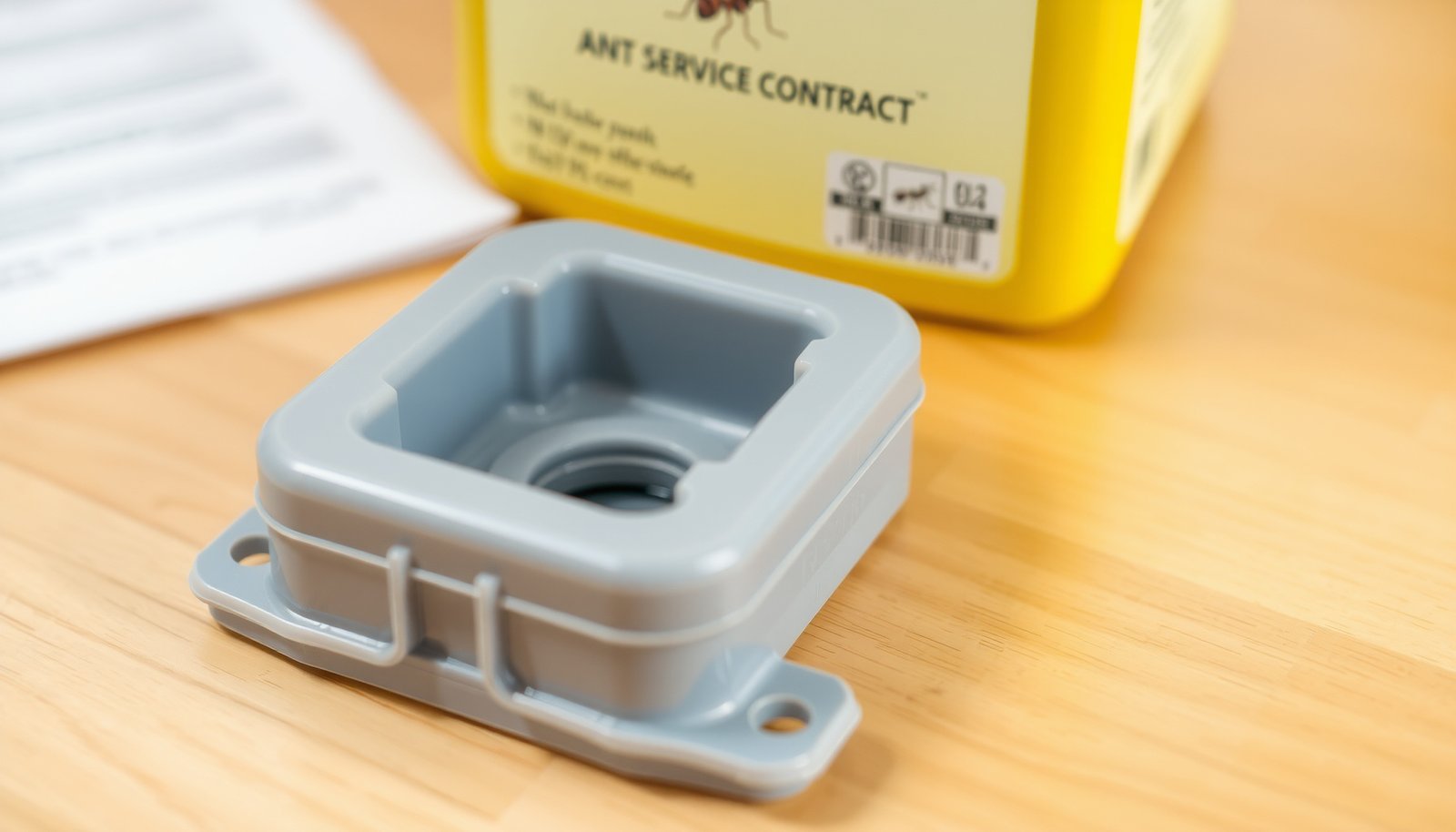
This close-up of a pest control service agreement highlights the species-specific and condition-based language that determines whether a retreatment claim will actually be honored — the section most homeowners skip before signing.
What Actually Voids a Pest Control Warranty (Most Companies Won’t Tell You This Up Front)
Picture this: you paid a premium for a termite warranty on a new treatment, followed all the post-treatment instructions, and six months later you spot mud tubes reappearing near your foundation. You call the company, and they send an inspector. He walks around for 20 minutes and tells you the warranty is void because you stacked firewood against the exterior wall — a condition in the fine print you never saw flagged during the original sales visit. This is not an unusual scenario. It’s one of the most common complaints filed with state pest control licensing boards.
Warranties are voided regularly by things that are entirely within the homeowner’s control — and by a few things that aren’t. Here are the most common void conditions pest control companies include in their contracts:
- Structural changes or new construction — Adding an addition, finishing a basement, or doing any excavation near a treated zone can disrupt chemical barriers or bait placements and will void most termite warranties outright.
- Moisture or water intrusion events — Flooding, plumbing leaks, or standing water that develops after treatment can destroy soil-applied termiticides, which require continuous chemical barriers to remain effective. Some warranties require you to notify the company within 72 hours of any water intrusion event.
- Failure to maintain the perimeter — This includes wood-to-soil contact, stored firewood against the house, dense vegetation touching the foundation, or mulch piled more than 2 inches deep near structural wood. These conditions invite reinfestation and are specifically excluded in most contracts.
- Using other pest control products between visits — Spraying DIY repellents or store-bought pesticides between professional treatments can scatter insect populations in ways that disrupt baiting systems and void warranty coverage. This is especially true for cockroach and ant baiting programs.
- Missing a scheduled inspection or service visit — On annual renewal warranties, failure to schedule or allow the required inspection within a specified window — sometimes as short as 30 days before expiration — voids the entire warranty period without refund.
- Selling the property without a formal warranty transfer — Termite warranties are often transferable for a fee, but only if done through the company’s official process before the sale closes. Missing that step forfeits the coverage entirely.
Is the Warranty Price Markup Actually Justified by the Retreatment Cost?
This is where honest math matters more than marketing language. A pest control company charging you $150 more per year for a warranty is betting that retreatment won’t cost them more than that in labor and materials. You’re betting the opposite. Whether it’s a good deal depends entirely on which pest you’re dealing with and how likely a reinfestation is given your specific home conditions.
Here’s a rough breakdown of where the warranty math tends to work in your favor versus where it doesn’t:
| Pest / Service Type | Typical Retreatment Cost Without Warranty | Warranty Worth Paying For? |
|---|---|---|
| Subterranean termites (liquid barrier) | $800–$2,500 | Yes — strong case for warranty |
| German cockroach infestation | $150–$400 per retreat | Yes, if infestation was severe |
| General pest (ants, spiders, occasional invaders) | $75–$150 per visit | Only if included in a recurring plan |
| Bed bugs (heat treatment) | $1,000–$3,000 | Yes — retreatment warranty is significant value |
The warranty calculus flips hard when you’re dealing with insects that reproduce fast. A single German cockroach female produces 30–40 eggs per egg capsule and can generate up to 8 capsules in her lifetime — meaning a missed pocket of activity six weeks after treatment can produce hundreds of new insects before your first scheduled follow-up. In that context, a warranty that covers re-treatment isn’t just nice to have — it changes the entire risk profile of the job.
Pro-Tip: Before agreeing to a warranty add-on, ask the company to itemize exactly what a single retreatment service costs without warranty coverage. If the annual warranty premium is more than 60% of a single retreatment cost, the math usually doesn’t favor you unless you’re in a high-risk reinfestation situation like a multi-unit building or a home with chronic moisture issues.
Which Pest Problems Justify a Warranty and Which Ones Don’t?
Not all pest problems carry the same reinfestation risk, and a warranty should only be worth paying for when the odds of needing it are meaningfully higher than average. Termites are the clearest case for warranty coverage — subterranean termite colonies can contain over 1 million individuals, and even a thorough liquid barrier treatment can be compromised by soil settling, root growth, or the natural degradation of termiticides over 5–8 years. The warranty on a termite bond specifically exists because single-treatment guarantees are unrealistic at that scale.
On the other end of the spectrum, some pest situations are genuinely one-and-done. A cluster fly problem in an older farmhouse, a wasp nest under the eaves, or a one-time mouse entry sealed at the point of ingress — these don’t have the reinfestation dynamics that make warranties valuable. Even something as persistent-feeling as camel crickets in a basement often responds to moisture correction and exclusion work that holds long-term without needing repeated chemical visits. For pests tied tightly to environmental conditions rather than active colonies, a warranty may be a revenue add-on more than a genuine protection. That said, if your moisture or entry-point problem isn’t fully solved, all bets are off — reinfestation is a near-certainty regardless of what’s on paper.
“Homeowners tend to evaluate warranty value based on the pest they had last year, not the conditions driving their infestation right now. A warranty on a cockroach treatment in an apartment building with shared walls is a completely different risk calculation than the same warranty in a detached single-family home. The reinfestation pressure in a shared-wall environment is continuous — you’re not protecting against a failure of the treatment, you’re protecting against your neighbor’s unit.”
Marcus J. Tilden, BCE — Board Certified Entomologist, licensed pest management consultant
How to Evaluate a Pest Control Warranty Before You Pay for It
Most people treat a pest control warranty like they treat an extended warranty on a refrigerator — they decide in 30 seconds based on a gut feeling about whether they’re an unlucky person. That’s not a strategy. A warranty on pest control is a contractual document with specific trigger conditions, exclusions, and obligations that are worth spending 10 minutes reading before you hand over money.
Here’s what to look for and ask before agreeing to warranty coverage:
- Exact pest species covered — The warranty should list the specific pest by common name and ideally by genus/species. “General pests” is vague and often excludes the pest you’re most concerned about.
- Response time commitment — How quickly will they send someone if you report activity? A warranty that promises re-service but gives the company 14 business days to show up isn’t worth much for fast-breeding insects.
- Definition of “reinfestation” vs. “new infestation” — Some contracts require you to prove that any new activity is from the original pest population, not a separate introduction. This is essentially impossible to prove and allows companies to deny valid claims.
- What happens if the company goes out of business — This is especially relevant for small regional companies offering long-term termite warranties. Ask whether the warranty is backed by a third-party insurance policy or bond, not just the company’s word.
- Annual inspection requirements — If keeping the warranty active requires annual paid inspections, factor that cost into the total price. A “free” warranty that costs $125/year in mandatory inspections isn’t free.
One thing most homeowners genuinely don’t think to ask: whether the warranty is tied to a specific technician’s treatment record. Some companies’ warranties are voided if the original treating technician no longer works there and the original application maps aren’t available for the follow-up inspector. It sounds absurdly bureaucratic — it is — but it’s a real clause in some contracts.
If you’re also considering whether natural or botanical-based treatments make sense for your situation, keep in mind that most standard pest control warranties do not cover treatments applied between professional visits — and that includes natural pest control sprays like EcoSmart, Wondercide, and MDXconcepts, which can disrupt bait station programs if applied near placement zones. If you want to use any supplemental products, ask your pest control company explicitly whether doing so affects your warranty coverage before you apply anything.
The same principle applies if you’re dealing with an unusual or seasonal pest. Some basement invaders — like the camel cricket, which responds well to targeted moisture and exclusion strategies — don’t necessarily need an ongoing service contract with a warranty at all. If you’re curious whether a DIY approach might handle the situation without needing professional coverage, it’s worth reading up on how to get rid of camel crickets in your basement before committing to a warranty-backed service plan that may be more than you need.
The honest nuance here is that warranty value is genuinely situational — it depends on your pest, your home type, your local company’s track record, and how likely your specific environment is to produce reinfestation pressure. A homeowner in a slab-on-grade home in a high-termite region with neighboring untreated lots has a completely different risk profile from someone in a second-floor apartment dealing with a one-time ant trail. The same warranty product that’s a smart buy for one person is money burned for the other.
Before renewing or signing any warranty, spend five minutes asking one specific question: “Under what conditions would this warranty NOT cover a follow-up visit?” If the company’s representative can’t answer that without checking the contract, that tells you something important about whether they’ll be easy to work with when you actually need to file a claim.
Frequently Asked Questions
What does a pest control warranty actually cover?
Most pest control warranties cover re-treatments at no extra charge if the same pest problem returns between scheduled visits. Some plans also cover new infestations of listed pests, but read the fine print carefully — many warranties exclude pests like bed bugs, termites, or wildlife unless you pay for a separate plan.
How much extra does a pest control warranty cost?
A warranty or service guarantee typically adds $10–$30 per month on top of a standard quarterly treatment plan, which usually runs $40–$70 per visit. Some companies bundle it into an annual contract, so you’re paying $150–$300 more per year compared to one-time treatments with no coverage.
Is a pest control warranty worth it for renters?
It depends on your lease — if your landlord is legally responsible for pest control, paying for a warranty yourself is probably a waste of money. But if you’re in a ground-floor unit, live near wooded areas, or your landlord is slow to respond, having your own service agreement gives you faster access to re-treatments without waiting weeks for a fix.
What should I look for in a pest control guarantee before signing?
Check whether the guarantee requires you to stay on a recurring treatment schedule to stay valid — most do, and missing one visit can void your coverage. Also confirm the response time for re-treatment requests; a good warranty should get a technician back out within 24–72 hours at no charge.
When is a pest control warranty NOT worth it?
If you’re dealing with a one-time seasonal issue — like stink bugs in the fall or ants after heavy rain — a single treatment is usually enough and a warranty won’t pay for itself. Warranties make the most sense for homes with ongoing pest pressure, like properties near moisture, heavy tree cover, or in regions with year-round termite or cockroach activity.
Disclaimer: This article is for informational purposes only. Pest control costs, timelines, and outcomes vary widely depending on the pest, the severity of the infestation, your location, and the company you hire. Always get multiple quotes and ask for a written inspection report before agreeing to a treatment plan.