
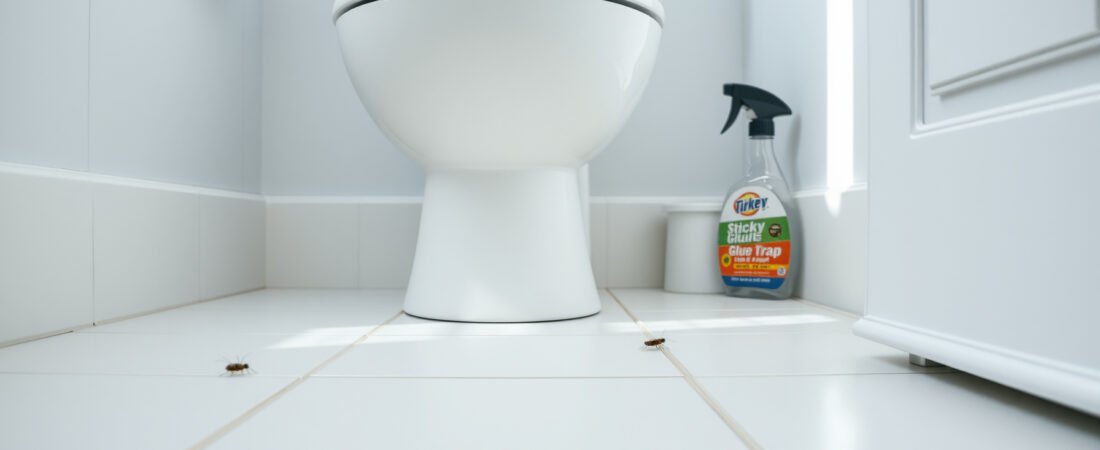
Traps and sprays work fine — but most people are deploying them in the wrong spots, and that’s why the silverfish keep coming back. The bathroom isn’t just where you see them; it’s where they’re thriving because of specific conditions most products aren’t designed to address on their own. This article cuts through the noise on what actually performs in high-humidity, tight-quarter bathroom environments, and why the placement matters just as much as the product.
Why Do Silverfish Keep Appearing in Bathrooms Even After You Treat?
Here’s the thing most people miss: silverfish aren’t just passing through your bathroom — they’re breeding there. A single female silverfish can lay up to 20 eggs at a time, and under ideal conditions (think 70–80% relative humidity and temperatures between 72–81°F), those eggs hatch in 19 to 43 days. Your bathroom, with its steam, damp towels, and unsealed grout lines, is essentially a silverfish nursery. Spraying a perimeter once and calling it done treats the adults you can see while the eggs sit undisturbed behind the baseboard.
The second reason treatments fail is product selection. Many people grab a general indoor bug spray, apply it to tile surfaces where it wipes off fast, and wonder why it didn’t hold. Silverfish are flat, fast, and largely nocturnal — you’ll almost never see them during the day. They’re tucked behind the toilet tank, inside cabinet gaps, or under the sink where residual sprays don’t reach and sticky traps aren’t placed. The fix isn’t spraying more; it’s understanding exactly where these insects live and which product format actually makes contact with them in those spots.
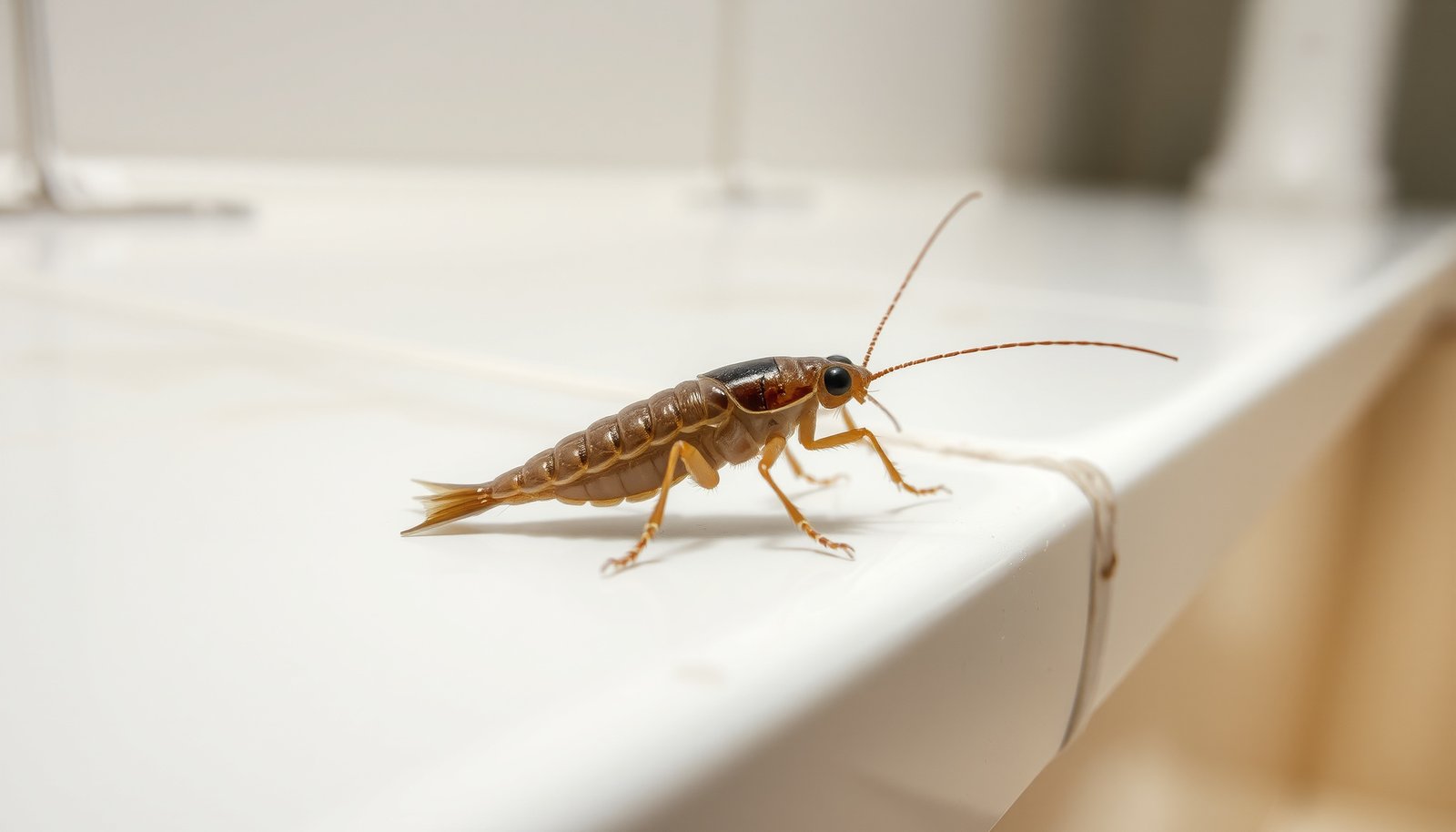
This close-up shows a silverfish trap positioned correctly along a baseboard near a bathroom cabinet — exactly the kind of placement gap zone where sticky traps intercept activity before silverfish reach open floor space.
Which Silverfish Traps Actually Work in Humid Bathroom Conditions?
Standard flat sticky traps lose their adhesive grip in high-humidity rooms surprisingly fast — sometimes within 3 to 5 days in a steamy bathroom. The traps that hold up are enclosed cardboard or plastic box-style traps, which protect the sticky interior from moisture while still luring silverfish in through the entry slits. Catchmaster’s Baited Silverfish Traps and Dekko Silverfish Paks are two formats that outperform open-surface glue boards in bathroom settings specifically because they use a food-based lure inside a protected chamber instead of relying on exposed adhesive alone.
Picture this: you place three open glue boards under your bathroom sink on a Monday, and by Wednesday, the edges are lifting and the center has gone cloudy with moisture absorption. Now compare that to a Dekko pak — a small sachet containing a borate-based bait — tucked into the same corner. Silverfish eat the bait, carry it back to harborage areas, and die within a few days. The borate mechanism is slow but thorough: it disrupts the insect’s digestive system over 72 to 96 hours rather than killing on contact, which means more insects in the colony are affected before they become trap-shy. For getting rid of silverfish in your bathroom and bedroom, combining both trap types in a rotation every two weeks gives you the most reliable coverage.
What Are the Best Silverfish Sprays for Bathrooms Without Damaging Surfaces?
Not all pesticide sprays are safe on grout, caulk, or the plastic fittings around your toilet and vanity. Oil-based formulations can degrade caulk over time, and some aerosol carriers leave a residue that looks fine on tile but quietly damages plastic over months. The safest effective option for bathroom surfaces is a water-based residual spray containing either bifenthrin or deltamethrin — both synthetic pyrethroids that bond to porous surfaces and remain active for 30 to 90 days without the oil-based carrier problem.
Bayer’s BioAdvanced Home Pest Control and Ortho Home Defense Max are two widely available options that use bifenthrin in a water-based carrier. Apply them specifically to the cracks around baseboards, under cabinet frames, and along the back wall behind the toilet — not to open floor tile where foot traffic will degrade them within days. One counterintuitive fact worth knowing: silverfish rarely cross open floor space if they can travel along a wall edge. They’re thigmotactic, meaning they actively prefer tight contact with surfaces on both sides of their body. This is exactly why spraying along baseboards and inside cabinet edges is dramatically more effective than spraying the center of a floor or open wall panels.
Pro-Tip: Before spraying any residual product in a bathroom, dry the target surfaces completely and wait at least 30 minutes after the last shower or bath. Moisture on the surface dilutes the active ingredient and reduces residual bonding — a dry surface can extend effectiveness by 2 to 3 weeks compared to applying to a damp baseboard.
How Do You Place Silverfish Traps and Sprays for Maximum Coverage?
Placement is where most DIY treatments fall apart, and it’s also the part no product label explains clearly enough. Silverfish operate in what entomologists call “gap zones” — the 1 to 2 inch spaces between furniture and walls, inside hollow baseboard corners, behind toilet cisterns, and under sink drain pipes. These zones are where the insects travel, hide during the day, and lay eggs. Treating anywhere outside of these zones is essentially treating empty space.
Here’s a practical placement sequence that covers a standard bathroom effectively:
- Under the sink cabinet, back corners: Place one enclosed bait trap flush against each rear corner where the cabinet meets the wall — silverfish enter cabinets from wall penetrations around drain pipes.
- Behind the toilet tank: Slide one flat sticky trap or Dekko pak into the 2–3 inch gap between the tank and the wall — this is one of the highest-activity zones in any bathroom and the most consistently overlooked.
- Baseboard corners near the door frame: Apply a 2-inch band of residual spray along the baseboard on both sides of the door — silverfish use door frame gaps as entry routes from adjacent rooms.
- Inside vanity drawers (bottom edge only): A small Dekko pak tucked at the back of each lower drawer intercepts silverfish that travel up the vanity interior using the cabinet back as a highway.
- Along the grout line at floor-wall junction: A thin line of residual spray along the grout joint where the floor tile meets the baseboard creates a contact barrier along their primary travel corridor.
“Silverfish are highly sensitive to surface chemistry, which is why residual sprays applied to porous surfaces like grout and raw wood outperform treatments on smooth tile or painted walls by a significant margin. The pesticide molecule needs something to bond to. Most homeowners apply products where they’re easiest to reach, not where the insect actually spends its time — and that’s the gap that keeps infestations cycling.”
Dr. Marcus Elwood, Board-Certified Entomologist and Structural Pest Control Consultant, University Extension Program
Does Humidity Control Actually Outperform Chemical Treatments for Silverfish?
This is the honest nuance most product reviews skip entirely: in a bathroom with sustained relative humidity above 75%, even the best chemical treatments are fighting a losing battle long-term. Silverfish can survive in environments that would kill most other household insects because their biology is adapted to extreme conditions — they’ve existed largely unchanged for over 400 million years, and they don’t need much to thrive. A spray that kills adults does nothing to address the moisture conditions that made the bathroom viable habitat in the first place.
That said, the answer isn’t to pick between humidity control and chemical treatment — it’s to run both simultaneously. Running a bathroom exhaust fan for 20 minutes after every shower, fixing even minor drips under the sink, and resealing cracked grout can reduce bathroom humidity from the 80%+ range down to 50–60%, which makes the environment significantly less hospitable to egg development and survival. Chemical treatments then get to do their job against the adult population rather than fighting a constant reinfestation from a wet, protected harborage zone. The combination approach is especially important in older homes with poor ventilation, apartments where you can’t control shared plumbing walls, and climates with high year-round ambient humidity. You can learn more about the full elimination strategy — beyond just products — in our guide on how to get rid of silverfish in the bathroom and bedroom.
Silverfish Traps vs. Sprays: Which Format Should You Use First?
The honest answer depends on what phase of the problem you’re in. If you’ve spotted multiple silverfish on consecutive nights, you’re looking at an established population — in that case, bait traps alone won’t knock it down fast enough because they require the insects to find and consume the lure before dying. A residual spray applied to confirmed harborage zones will reduce adult numbers faster in the first 1 to 2 weeks. Once the immediate population is suppressed, switching to an ongoing bait trap rotation maintains control without the need for repeated spray applications.
Here’s a quick comparison of the main product formats and where each performs best:
| Product Format | Best Use Case | Humidity Performance | Time to Effect |
|---|---|---|---|
| Enclosed bait traps (e.g., Dekko Paks) | Ongoing monitoring and colony reduction | Excellent — protected interior | 72–96 hours per individual |
| Residual spray (bifenthrin/deltamethrin) | Active infestation, gap zone treatment | Good on dry porous surfaces | Contact kill within hours, residual 30–90 days |
| Open glue board traps | Monitoring only, low-humidity zones | Poor — adhesive degrades in steam | Immediate capture, no kill mechanism |
| Borate powder (e.g., CimeXa, Borid) | Wall voids, under cabinets, dry cracks | Moderate — moisture reduces effectiveness | 48–72 hours after contact |
One thing worth flagging on borate powder: it’s genuinely underused for silverfish control despite being one of the more effective options for treating inside wall voids and underneath cabinetry. Applied correctly with a hand duster into the gap between the cabinet base and the floor, a light dusting of borate powder remains active for months and affects silverfish through both contact and ingestion. It’s not a spray, it’s not a trap, but in the right location it outperforms both — and that’s a nuance most bathroom pest product guides completely ignore.
It’s also worth knowing that silverfish don’t just come from inside your bathroom. They’re often entering from adjacent spaces — wall voids shared with a linen closet, gaps behind the bathroom mirror cabinet, or through the crawlspace if your home has one. If you’re seeing what might be winged insects in the same areas, it’s worth double-checking: silverfish are sometimes confused with very small winged insects that have lost their wings. Our guide on what termite swarmers look like after they land can help you rule out a more serious structural pest if you’re seeing discarded wings near the same damp zones.
Here’s a summary of when to use each product type based on your specific situation:
- First-time sighting (1–2 silverfish): Enclosed bait traps placed in gap zones, plus a grout-line spray application — no need for aggressive treatment yet.
- Regular sightings (3+ per week): Residual spray in all confirmed harborage zones first, then introduce bait traps for ongoing suppression after week two.
- Large bathroom with multiple fixtures: Layer spray along baseboards, borate dust inside cabinet voids, and enclosed bait traps behind toilet and under sink simultaneously.
- Apartment bathroom with shared walls: Focus on interior crack and crevice treatment with residual spray; bait traps near pipe penetrations; humidity reduction is especially important here since you can’t treat adjacent units.
- Ongoing prevention after a cleared infestation: Two to three Dekko paks rotated every 4 to 6 weeks, plus a quarterly baseboard spray — that’s a maintenance routine that takes about 10 minutes.
The right product for your bathroom isn’t the one with the best marketing — it’s the one that matches the specific conditions and phase of infestation you’re actually dealing with. Start with accurate placement, match the format to the environment, and address the humidity question honestly. Do those three things and you’ll get more out of a $10 pack of Dekko paks than most people get from a $60 multi-product haul applied in the wrong spots.
Frequently Asked Questions
do silverfish traps actually work in bathrooms?
Yes, sticky glue traps work well for catching silverfish in bathrooms because silverfish follow the same paths along walls and under cabinets every night. Traps with attractants like a food-based lure outperform plain glue boards — look for ones that mention a starch or protein bait. Place them flat against the wall in corners, under the sink, or behind the toilet for the best catch rate.
what spray kills silverfish in bathrooms without damaging surfaces?
Sprays containing deltamethrin or bifenthrin are effective against silverfish and are generally safe on tile, grout, and cabinet bases once dry. Avoid spraying directly on wood finishes or painted surfaces without testing a small area first, since some residual sprays can cause discoloration. For tight bathroom spaces, a crack-and-crevice aerosol tip gives you better control than a wide-spray bottle.
how long does it take silverfish traps to work?
Most people start seeing catches within 3 to 7 days if traps are placed correctly. If a trap hasn’t caught anything after two weeks, move it — location matters more than the trap brand. A heavy infestation might require 4 to 6 weeks of consistent trapping to bring numbers down noticeably.
are silverfish traps safe to use in bathrooms with pets or kids?
Sticky glue traps are the safest option in bathrooms shared with pets and kids because they contain no pesticides. Keep them tucked behind the toilet or inside cabinet doors where curious hands and paws can’t reach them easily. If you’re using a spray, keep everyone out of the bathroom until it’s fully dry, which is typically 30 to 60 minutes depending on ventilation.
why do I keep getting silverfish in my bathroom even after treating it?
Silverfish keep coming back when the moisture problem isn’t fixed — they need humidity above 75% to survive and thrive, so a bathroom with poor ventilation or a slow leak will keep attracting them. Treatment alone won’t solve it; you need to run an exhaust fan during and after showers and fix any dripping pipes. Check for gaps around plumbing under the sink too, since that’s a common entry point that lets them move in from walls or crawl spaces.