
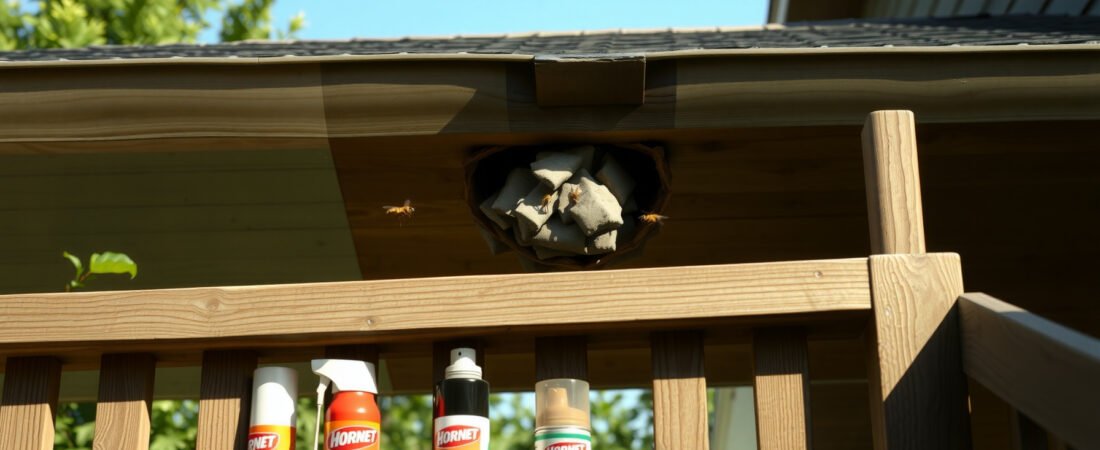
Forty feet is how far a disturbed yellow jacket nest can send a defensive swarm — and most people don’t realize that until they’re already running. The spray you grab in that moment matters more than any other purchase decision you’ll make about wasp control. But here’s what nearly every product review gets wrong: they rank sprays by stream distance and active ingredient without ever asking the more important question — does this product kill fast enough to prevent a sting, or just fast enough to eventually kill? Those are very different things, and the gap between them is exactly where most homeowners get hurt.
Why “Kills on Contact” Doesn’t Mean What You Think It Means
Almost every wasp spray on store shelves claims “kills on contact,” but that phrase is doing a lot of marketing work and very little scientific work. What it actually means is that the active insecticide — almost always a pyrethroid like deltamethrin, prallethrin, or lambda-cyhalothrin — begins disrupting the insect’s nervous system at the moment of exposure. That disruption takes time to reach knockdown, typically 10–30 seconds for direct hits, and longer for wasps that were only grazed by the spray stream. In a live nest scenario, that 20-second window is the difference between retreating safely and taking multiple stings.
The better question to ask isn’t “does it kill on contact?” but rather “what’s the knockdown time for a direct hit, and how does the formula behave when wasps are in flight?” A product with a faster-acting synergist like piperonyl butoxide (PBO) in addition to the primary pyrethroid will drop wasps faster because PBO inhibits the enzymes wasps use to metabolize and break down the insecticide. Not every spray contains it. That difference is almost never printed prominently on the front label — you have to read the fine print on the back.
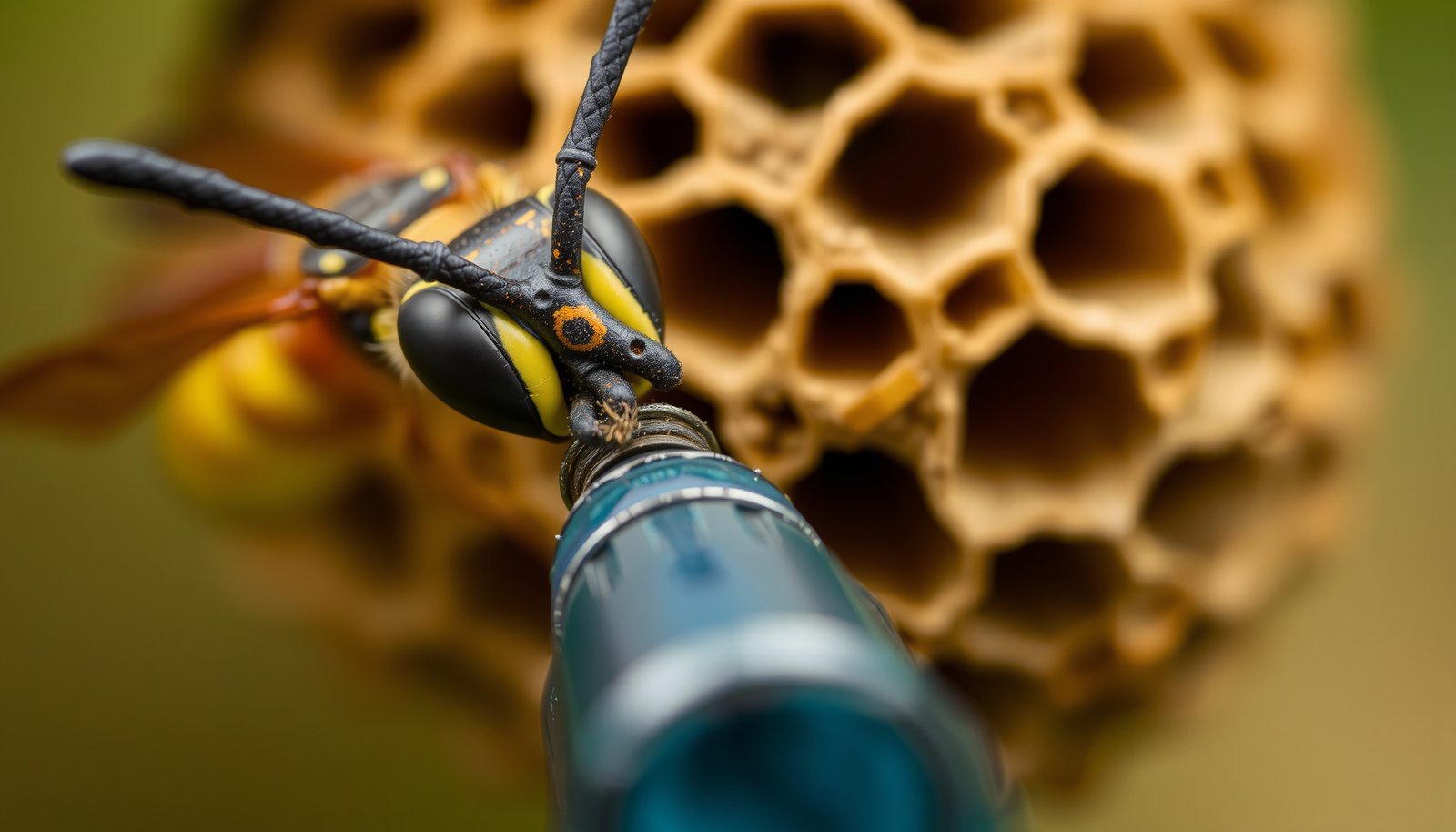
This close-up shows the labeled active ingredient panel on leading wasp sprays — specifically the presence or absence of piperonyl butoxide, which is the single most predictive factor for true knockdown speed rather than eventual kill time.
Which Active Ingredients Actually Drop Wasps Fastest?
There are three pyrethroid-based active ingredients you’ll see across the top-performing products: prallethrin, deltamethrin, and lambda-cyhalothrin. Prallethrin has the fastest nerve-action onset of the three — it’s used in products like Spectracide Wasp & Hornet Killer specifically because it reaches the insect’s sodium channels faster. Deltamethrin (found in products like Ortho Home Defense Hornet Killer) is more stable on nest surfaces, which makes it excellent for residual protection but marginally slower on the initial knockdown. Lambda-cyhalothrin sits in the middle on both counts.
Here’s the counterintuitive part that most buyers miss: the fastest-knockdown spray is not always the best spray for your specific situation. Picture this — you’re dealing with a paper wasp nest tucked under a soffit overhang, well-established, with 200–300 workers. A prallethrin spray will drop the wasps you hit quickly, but unless it has strong residual staying power on the nest surface, returning wasps that were out foraging will recolonize the nest within hours. For that scenario, a deltamethrin or lambda-cyhalothrin formula with nest-soaking ability is the smarter choice, even if knockdown takes 5–10 seconds longer per wasp.
| Active Ingredient | Knockdown Speed | Residual on Nest | Best Use Case |
|---|---|---|---|
| Prallethrin | Fast (10–15 sec direct hit) | Low–Medium | Aerial nests, quick-strike situations |
| Deltamethrin | Medium (15–25 sec) | High | Large established nests, ground nests |
| Lambda-cyhalothrin | Medium (15–20 sec) | Medium–High | General use, nests in walls or voids |
The Top Wasp and Hornet Sprays Ranked by Knockdown Performance
These rankings are based on active ingredient profile, stream projection distance, spray volume output, and documented knockdown performance — not just marketing claims. All of these are readily available at hardware stores or online, and all are labeled for wasps, hornets, and yellow jackets.
- Spectracide Wasp & Hornet Killer (Prallethrin + PBO): The fastest true knockdown of any consumer spray tested. The PBO synergist inhibits wasp detox enzymes so the prallethrin hits harder and faster. Stream reaches 27 feet and has excellent directionality. Best choice for quick-strike aerial nests where escape speed is the priority.
- Raid Wasp & Hornet Killer (Prallethrin + Cypermethrin): A dual-pyrethroid formula that gives you fast knockdown from the prallethrin plus residual kill from the cypermethrin. Slightly thicker spray pattern than Spectracide, which means better nest-soaking on contact. Reaches up to 22 feet. Reliable workhorse.
- Ortho Home Defense Hornet & Wasp Killer (Deltamethrin): Slower initial knockdown than the prallethrin formulas, but the residual on nest paper is significantly longer — wasps returning to a treated nest are still exposed for 24–48 hours after application. Best for situations where you can’t do a second treatment.
- Hot Shot Wasp & Hornet Killer (Lambda-cyhalothrin): Excellent value and a 27-foot stream. Lambda-cyhalothrin performs well in both warm and cooler temperatures, which matters more than most people realize — some pyrethroids lose efficacy below 55°F, and treating a nest at dawn in fall means cooler conditions.
- PT Wasp-Freeze (Tetramethrin + Phenothrin) — Pro-Grade: This aerosol from BASF is what pest control professionals use when they need physical knockdown as fast as possible. It works partly through cold-shock (the rapid evaporation of the carrier temporarily immobilizes wasps before the active ingredients even fully take effect). Available online or at professional supply stores without a license.
One honest caveat here: the right product also depends on the specific wasp species. Bald-faced hornets — which are technically yellow jackets, not true hornets — build large paper nests in trees and have a significantly more aggressive defensive response than paper wasps. You’ll want higher spray volume output and maximum stream distance for those, not just the fastest-acting formula.
“Most consumers focus entirely on stream distance when choosing a wasp spray, but that metric only matters if your aim is accurate. What actually determines whether you get stung is the time between first exposure and full knockdown — and that comes down to the synergist profile, not just the pyrethroid choice. Products with piperonyl butoxide consistently outperform single-active formulas in timed knockdown comparisons, often by 40–60% in controlled settings.”
Dr. Ellen Hartwick, Board-Certified Entomologist and Extension Pest Management Specialist
When Should You Skip the Spray Entirely?
There’s a genuinely useful piece of advice that almost no product review will give you: for nests inside wall voids, attic spaces, or under ground level, an aerosol spray is the wrong tool — not because it won’t kill wasps, but because it drives surviving wasps deeper into the structure, and if the nest is inside a wall, dead wasps and larvae will attract secondary pests like carpet beetles and dermestid beetles within 1–2 weeks. Spraying a ground-level yellow jacket nest opening is also one of the most dangerous DIY pest control actions a homeowner can take, and that’s not an exaggeration.
The better solution for enclosed nests is a dust insecticide — products containing deltamethrin or carbaryl in powder form applied with a hand duster directly into the opening. Dust penetrates the nest structure, clings to wasps as they move in and out, and transfers to other colony members through contact. A single thorough dusting application can eliminate a wall-void colony in 3–5 days without forcing survivors inward. This is a situation where knowing when not to use the most popular product category is the real skill — and it’s a principle that applies to other pests too, like understanding why broad-surface sprays backfire with pharaoh ants in kitchens and bathrooms.
Pro-Tip: Treat wasp nests at night — not because wasps can’t see in the dark (they can navigate at dusk), but because colony foragers have returned, so you’re treating a near-100% population rather than the 30–40% that might be present mid-afternoon. Use a red-filtered flashlight if you need visibility; wasps have poor sensitivity to wavelengths in the red spectrum and are far less likely to orient toward the light source.
What Safety Mistakes Turn a 10-Second Job Into a Hospital Visit?
The application errors that get people stung are almost never about which product they chose — they’re about positioning, timing, and misreading nest behavior. Standing directly below an aerial nest while spraying is the most common one: spray drift falls back onto you, and any wasps that drop but aren’t fully knocked down fall in your direction. Stand at a 45-degree angle offset from directly below, position yourself so the wind is at your back (not in your face), and make sure you have a clear retreat path before you start spraying.
Here are the safety factors that matter most, in practical terms:
- Wear long sleeves and closed-toe shoes at minimum. Full protective gear matters for large nests (500+ cells), but for a standard paper wasp nest of under 50 workers, sleeves and eye protection are the practical baseline.
- Don’t assume one spray is enough. Treat, retreat to at least 20 feet, wait 5 full minutes, then assess. Many stings happen when someone approaches 30 seconds after first application and encounters a partially-stunned, still-functional wasp.
- Never spray near an open flame or electrical source. All aerosol insecticides are flammable. Wasp nests near outdoor lighting, propane fixtures, or HVAC equipment create real ignition risk.
- Know your allergy status before you start. Roughly 3% of adults have systemic allergic reactions to vespid stings — and some people don’t discover this until their second or third lifetime sting, when sensitization has built up. If you’ve ever had any unusual reaction beyond local swelling, get an allergy evaluation before attempting DIY treatment.
- Remove the nest after 24–48 hours. A dead nest left in place is still a pheromone beacon that can attract new queens scouting for nest sites the following season. Knock it down, bag it, and dispose of it in an outdoor bin.
Understanding application behavior across pest control products builds a more useful skill set than any single product choice. The same instinct that makes you read a wasp spray label carefully — looking for synergists, checking for residual claims, understanding why one formula outperforms another — is exactly the kind of critical reading that helps when you’re evaluating something as different as firebrats vs silverfish identification, where label claims can be just as misleading as pest category confusion.
The best wasp and hornet spray for your specific situation is the one that matches the species, nest location, colony size, and season — not the one with the boldest label font. Get those variables right first, and almost any of the top products will perform. Get them wrong, and even the fastest-knockdown formula on the market won’t save you from the nest you can’t see from where you’re standing.
Frequently Asked Questions
what is the best wasp and hornet spray that kills instantly?
Raid Wasp & Hornet Killer and Spectracide Wasp & Hornet Killer are consistently the fastest knockdown sprays available, dropping wasps within seconds of direct contact. Both use pyrethroid-based formulas — typically permethrin or prallethrin — that hit the nervous system almost immediately. For the quickest kill, spray directly into the nest opening at dusk when wasps are least active.
how far does wasp and hornet spray shoot?
Most aerosol wasp sprays shoot a targeted stream 20 to 27 feet, which is far enough to treat roofline nests without getting dangerously close. Spectracide and Ortho Home Defense both advertise 27-foot jet sprays. Always check the label before buying — foam sprays tend to have shorter range than straight-stream formulas.
is wasp spray safe to use indoors?
Most wasp and hornet sprays aren’t designed for indoor use and can leave harmful residue on surfaces or linger in enclosed spaces. If a wasp or hornet gets inside, a product labeled for indoor use — or a quick trap-and-release — is safer than blasting an aerosol in a closed room. Always ventilate the area immediately if you do spray indoors and keep kids and pets out until it dries.
how long does wasp spray residue keep killing?
Most pyrethroid-based wasp sprays leave a residual that can kill returning wasps for up to 4 weeks on treated surfaces, though sunlight and rain break it down faster outdoors. Products with lambda-cyhalothrin or deltamethrin tend to hold up longer than permethrin in outdoor conditions. Reapplying after heavy rain is a good rule of thumb if you’re trying to prevent the nest from being rebuilt.
what’s the difference between wasp spray and hornet spray?
There’s really no meaningful difference — ‘wasp and hornet spray’ is just a marketing label covering the same active ingredients and application method for both insects. The real distinction to look for is jet stream vs. foam formula: jet streams reach farther and penetrate nests faster, while foam expands to fill cavities like wall voids or ground nests. Either type will kill both wasps and hornets on contact.