
Firebrats and silverfish are not the same pest — and treating them the same way is exactly why so many people spend months chasing a problem that never goes away. The insect you’re seeing determines where you should be looking, what conditions are feeding the infestation, and which control method will actually work. Get the ID wrong, and you’re treating the wrong room with the wrong product while the real population keeps growing somewhere you haven’t checked.
Here’s the bottom line: if the bug is gray and uniform in color, you have silverfish. If it has dark mottled bands or spots across a tan body, it’s a firebrat. Both are wingless, torpedo-shaped insects in the order Zygentoma, and both can be found in older homes — but their preferred environments are almost completely opposite. That single fact changes everything about how you find them and how you eliminate them.
Why Most People Misidentify These Two Insects (And What That Costs Them)
The most common mistake isn’t confusing firebrats with silverfish — it’s assuming both insects thrive in the same damp, cool conditions. Dozens of pest control guides lump them together under “moisture pests,” which is only half true. Silverfish do prefer cool, humid environments between 70–80°F and humidity above 75%. Firebrats, on the other hand, actively seek out heat — they’re most comfortable in temperatures between 90–106°F, which means they’re drawn to furnace rooms, boiler areas, bakeries, and the space directly behind ovens or water heaters.
Picture this: a homeowner spends three weeks applying silverfish traps and desiccant dust throughout their bathroom and basement, sees zero activity, and concludes the infestation is gone. Then the bugs reappear — because the actual source is the hot utility closet on the opposite end of the house, behind the gas furnace, where a firebrat colony has been thriving at 95°F the entire time. It’s a scenario that plays out constantly, and it’s entirely preventable once you understand that these two insects live in separate thermal worlds inside the same home.
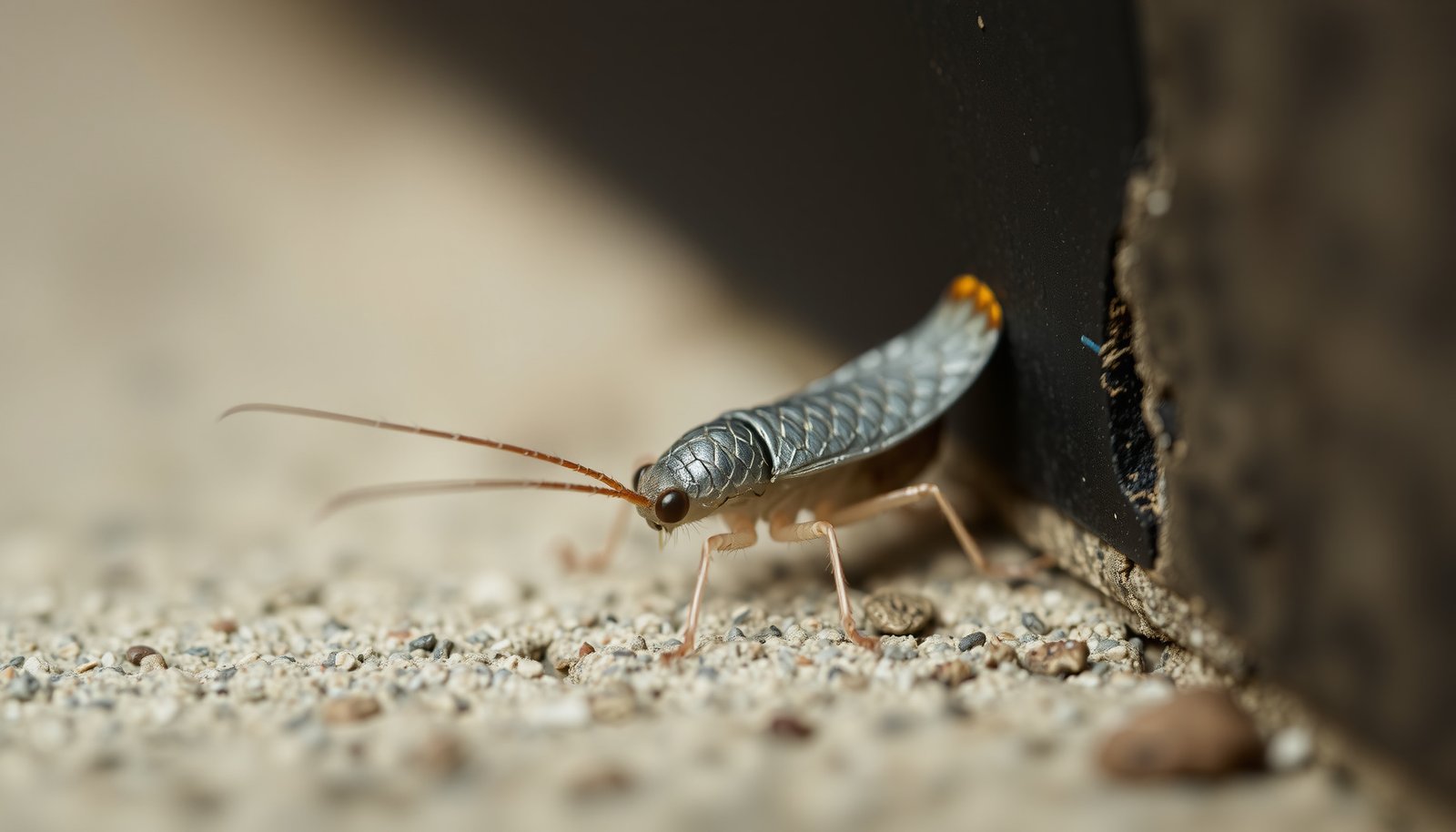
This close-up comparison shows the key physical differences between a silverfish (uniform silver-gray scales) and a firebrat (mottled tan and gray banding) — details that are easy to miss under dim bathroom lighting but are the fastest way to confirm which pest you’re actually dealing with.
What Do Firebrats and Silverfish Actually Look Like Side by Side?
Both insects share the same basic body plan: a flattened, carrot-shaped body roughly 1/2 to 3/4 of an inch long, six legs, two long antennae at the front, and three slender tail-like appendages (called cerci) at the rear. They move in a quick, wriggling motion that looks almost like a fish darting through water — which is where the “silverfish” name comes from. At a glance, they’re easy to confuse, especially in low light.
Look closer and the differences become obvious. Silverfish are covered in smooth, uniform silvery-blue or pearl-gray scales that catch the light. Their bodies look almost metallic. Firebrats are dull by comparison — their scales form a mottled brown-gray pattern with darker spots or bands across the abdomen, giving them a dusty, freckled appearance. A firebrat next to a silverfish looks like the same body type wearing a completely different outfit. If you can get the insect into a jar or under a flashlight, color and pattern alone will confirm the ID in under ten seconds.
| Feature | Silverfish | Firebrat |
|---|---|---|
| Body color | Uniform silver-gray, metallic sheen | Mottled tan/gray with dark spots or bands |
| Preferred temperature | 70–80°F (cool areas) | 90–106°F (hot areas) |
| Preferred humidity | Above 75% relative humidity | Low to moderate humidity tolerated |
| Common locations | Bathrooms, basements, closets, attics | Furnace rooms, behind ovens, boiler areas |
Where You Find Them Tells You More Than the Bug Itself
Location is arguably the fastest diagnostic tool you have — faster than squinting at scale patterns. Silverfish gravitate toward bathrooms, basements, laundry rooms, and interior closets where humidity lingers. They’re also commonly found in attic spaces with cellulose insulation, in stacks of old books or newspapers, and inside cardboard storage boxes. Any environment that stays above 75% relative humidity and below 80°F is essentially ideal habitat for them.
Firebrats follow heat, not moisture. They show up near furnaces, water heaters, fireplace hearths, and in commercial buildings near industrial ovens or steam pipes. In residential homes, the kitchen is the most likely room — not because of food (though that matters too), but because the area behind a stove, beside a dishwasher, or near a gas oven vent can hit temperatures well above 85°F. Firebrats can complete their entire life cycle — egg to adult — in as little as 45 days under ideal heat conditions, which means an infestation near a furnace can scale up faster than most homeowners expect.
Pro-Tip: Lay sticky insect monitoring traps in two separate zones: one near your main bathroom or basement (silverfish territory) and one near your furnace, water heater, or behind your stove (firebrat territory). Check both after 48 hours. Where you catch activity tells you exactly which pest you have and where the population center is — before you spend a dollar on treatment.
What Are They Eating — and What Damage Should You Look For?
Both insects are starchy omnivores with a taste for cellulose, proteins, and sugars, but their feeding damage looks almost identical — which makes this a poor identification method on its own. They chew irregular holes and surface scraping marks into paper, cardboard, book bindings, wallpaper paste, fabric (especially linen and cotton), and dried food like flour, oats, and sugar. Silverfish can survive over 300 days without food as long as water is available, which is a genuinely unsettling fact that explains why they can maintain a low-level presence in a room you rarely use.
One thing most articles don’t mention: firebrats have a slightly broader protein tolerance and are more likely to be found damaging synthetic fabrics treated with sizing agents or starch — the kind of finishing found on new clothing. They’ve been documented feeding on rayon and nylon far more readily than silverfish tend to. If you’re finding irregular feeding damage on stored clothing in a hot, dry area like a room near a furnace vent, that’s a stronger indicator of firebrats than silverfish. The honest nuance here is that in older homes with both a damp basement and a gas heating system, you can have both species present simultaneously in entirely different zones of the same building.
“Most homeowners focus entirely on moisture when they see these insects — and that’s the right instinct for silverfish. But firebrats are a heat-dependent species, and no amount of dehumidification is going to touch a firebrat colony living next to a 130-degree furnace plenum. The ID really does need to come before the treatment plan, because the interventions are almost entirely different.”
Dr. Karen Vail, Extension Entomologist, University of Tennessee Institute of Agriculture
How Do You Confirm the ID and Start Fixing the Right Problem?
Once you’ve narrowed down location and done a visual check, here’s a practical step-by-step process for confirming which insect you have and beginning to address it correctly. This isn’t about throwing products at the wall — it’s about using what you know about each species’ biology to work smarter.
- Capture a specimen. Trap one insect in a clear jar or seal it in a zipper bag. Examine it under a bright light or magnifying glass and look for body color and pattern. Silver-gray and uniform = silverfish. Mottled tan with dark patches = firebrat.
- Map where you’re finding them. Write down the exact locations — bathroom tile, behind the furnace, under the stove. More than two sightings in a heat-adjacent area almost always points to firebrats.
- Deploy zone-specific monitoring traps. Use sticky glue traps in both suspected zones for 48–72 hours. The zone with higher trap catches is your infestation center.
- Address the environmental condition, not just the insect. For silverfish: reduce humidity below 50% with a dehumidifier. For firebrats: eliminate or seal off harborage spots near heat sources — gaps around furnace pipes, cracks near the oven, open spaces behind the water heater.
- Apply species-appropriate control. Boric acid dust works well for both, but placement matters enormously. For silverfish, dust inside wall voids near plumbing and in bathroom crawlspaces. For firebrats, apply in the cracks and crevices adjacent to heat sources — inside the furnace room baseboards, behind the stove, in utility spaces. Boric acid loses effectiveness at very high temperatures, so it should be applied in the cooler perimeter areas around heat sources, not directly on hot surfaces.
- Reduce food sources in affected zones. Move paper, cardboard boxes, and old books away from both damp and heat-adjacent areas. Store pantry dry goods in sealed glass or hard plastic containers.
One counterintuitive reality about both of these pests: the presence of silverfish or firebrats in a home is almost never an indicator of poor cleanliness. These insects are ancient — Zygentoma as an order dates back over 400 million years, predating most land vertebrates — and they are extraordinarily good at colonizing any environment that offers heat or moisture alongside some form of organic material. A spotless, newly renovated home with a leaky pipe behind the bathroom wall can sustain a silverfish population just as easily as one that’s never been touched. This is worth understanding because it changes the strategy: cleaning alone will never solve it. You have to go after the environmental conditions that make your home viable habitat for them.
If you’re renting and the infestation is persistent or widespread, the presence of either pest can become a habitability issue — especially if it’s linked to a structural moisture problem like a leaking pipe or inadequate ventilation that your landlord hasn’t addressed. Understanding how to ask for a rent reduction due to an ongoing pest problem may be relevant if you’re stuck dealing with an infestation that’s been going on for weeks and your landlord hasn’t taken action.
It’s also worth knowing that while silverfish and firebrats rarely warrant the same level of intervention as termites or structural pests, the diagnostic thinking process is similar. Just as homeowners sometimes need to decide between treatment options for different types of wood-destroying pests — like understanding whether fumigation or local termite treatment is the right call — the right approach here depends on correctly identifying what you have and where it’s concentrated before committing to a plan.
Here’s what you’ll typically find when comparing the two species’ behavioral signatures — the things you observe before you ever catch an actual insect:
- Silverfish are more likely to be found in the open on cool tile floors at night, especially in bathrooms and kitchens with poor ventilation
- Firebrats almost exclusively hide in cracks and crevices during cooler parts of the day and are most active when ambient temperatures are high
- Shed scale piles (tiny, dusty-looking flakes near their hiding spots) look almost identical for both species
- Silverfish eggs are small, white, and oval — typically laid in clusters of 2–20 in sheltered, humid crevices; firebrat eggs are similar but laid in warmer, drier locations near heat sources
- Firebrat infestations near furnaces or ovens tend to produce more visible activity during winter when heating systems run continuously
- Both insects are primarily nocturnal, so daytime sightings usually mean the population has grown large enough that competition for harborage space is pushing individuals into the open
Getting the identification right is the entire game with these insects. A dehumidifier in a bathroom will make zero difference to a firebrat colony living behind your furnace — and sealing heat sources won’t fix a silverfish problem coming from a damp crawlspace. Once you know which insect you’re dealing with and why your home is supporting it, the control steps become considerably less frustrating. The ID isn’t just an academic exercise — it’s the first and most practical thing you can do.
Frequently Asked Questions
What is the difference between firebrats and silverfish?
The biggest difference is color and habitat preference. Silverfish are solid silver or gray and like cool, damp places like bathrooms and basements, while firebrats are mottled brown or grayish with dark spots and thrive in hot spots like near furnaces, boilers, or ovens — ideally above 90°F. Both are about ¾ inch long with three tail bristles, so color and location are your best clues.
where do firebrats live in a house
Firebrats hang out near intense heat sources — think the area around your furnace, water heater, fireplace, or the back of your oven. They need temperatures between 90°F and 106°F to thrive, so if you’re finding bugs in a hot utility room or behind appliances, firebrats are more likely than silverfish. Finding them in a cool bathroom almost certainly rules firebrats out.
can firebrats and silverfish damage your home
Neither one damages the structure of your home, but both will destroy your belongings. They eat starchy and protein-rich materials — books, wallpaper glue, clothing, cardboard boxes, and even some synthetic fabrics. A large infestation can ruin stored documents, vintage clothing, or pantry items like flour and oats if they find a way in.
how do I know if I have silverfish or firebrats in my bathroom
If you’re finding fast-moving, shiny silver bugs in your bathroom, it’s almost certainly silverfish — they love humidity around 75–95% and cooler temperatures between 70°F and 80°F. Firebrats rarely show up in bathrooms unless the room is unusually warm. Check for the classic silver shimmer and a tapered, fish-shaped body to confirm it’s silverfish.
how do you get rid of firebrats vs silverfish
The treatment approach is similar for both — reduce humidity, eliminate food sources like cardboard and old paper, and use boric acid powder or diatomaceous earth along baseboards and in cracks. The key difference is targeting heat for firebrats, so seal gaps around pipes and appliances near your furnace or water heater. For heavy infestations of either pest, a professional treatment with residual insecticide is usually more effective than DIY alone.