
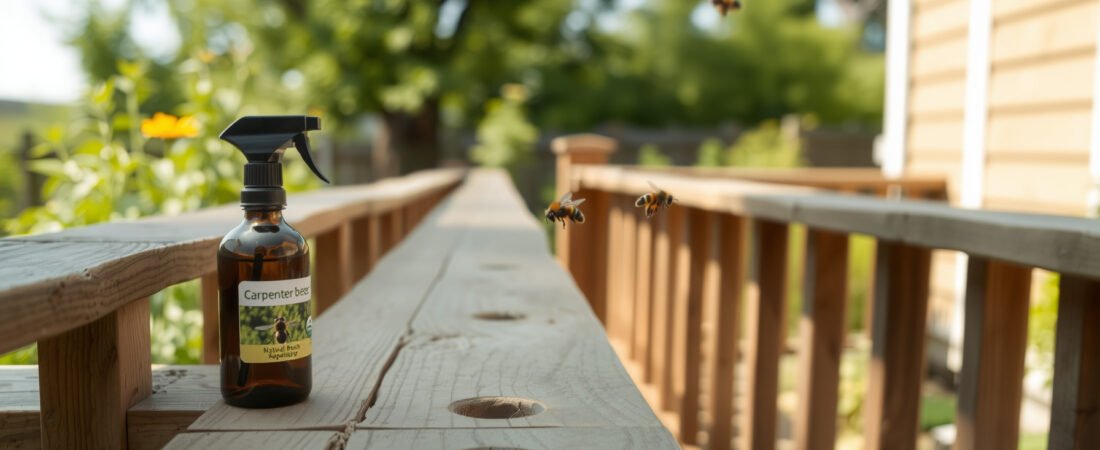
Killing carpenter bees is actually the least effective thing you can do about them. That’s not a moral argument — it’s a practical one. A dead carpenter bee leaves behind an already-drilled tunnel that’s wide open for the next bee, and the next, and the one after that. The real problem isn’t the bees themselves; it’s the unplugged real estate they’re leaving in your wood.
So if you want to get rid of carpenter bees without killing them — and keep them gone — the strategy has almost nothing to do with the bees and everything to do with making your home structurally unappealing to them. That’s the angle most guides miss completely. They focus on repellents and sprays when the actual fix is wood management, entry-point blocking, and giving these bees a better place to be. Here’s how to actually do that.
Why Carpenter Bees Keep Coming Back Even After You Chase Them Off
Female carpenter bees drill near-perfect half-inch circular holes into soft, bare wood — fascia boards, deck railings, wooden siding, eaves, porch ceilings. They don’t eat the wood; they excavate it to create brood galleries where they lay eggs and pack in pollen. One bee can drill a 6-inch tunnel in just a few days. But here’s what almost no guide mentions: carpenter bees return to the same holes year after year, and offspring often return to nest within a few feet of where they hatched.
That means if you chase away a carpenter bee today without sealing its tunnel, you haven’t solved anything. You’ve just left a furnished apartment with the front door open. The bee will come back, a new bee will move in, or the open tunnel will attract other wood-boring insects. The only way to break this cycle is to address the holes structurally and change what your wood looks like to a foraging female carpenter bee in the first place.
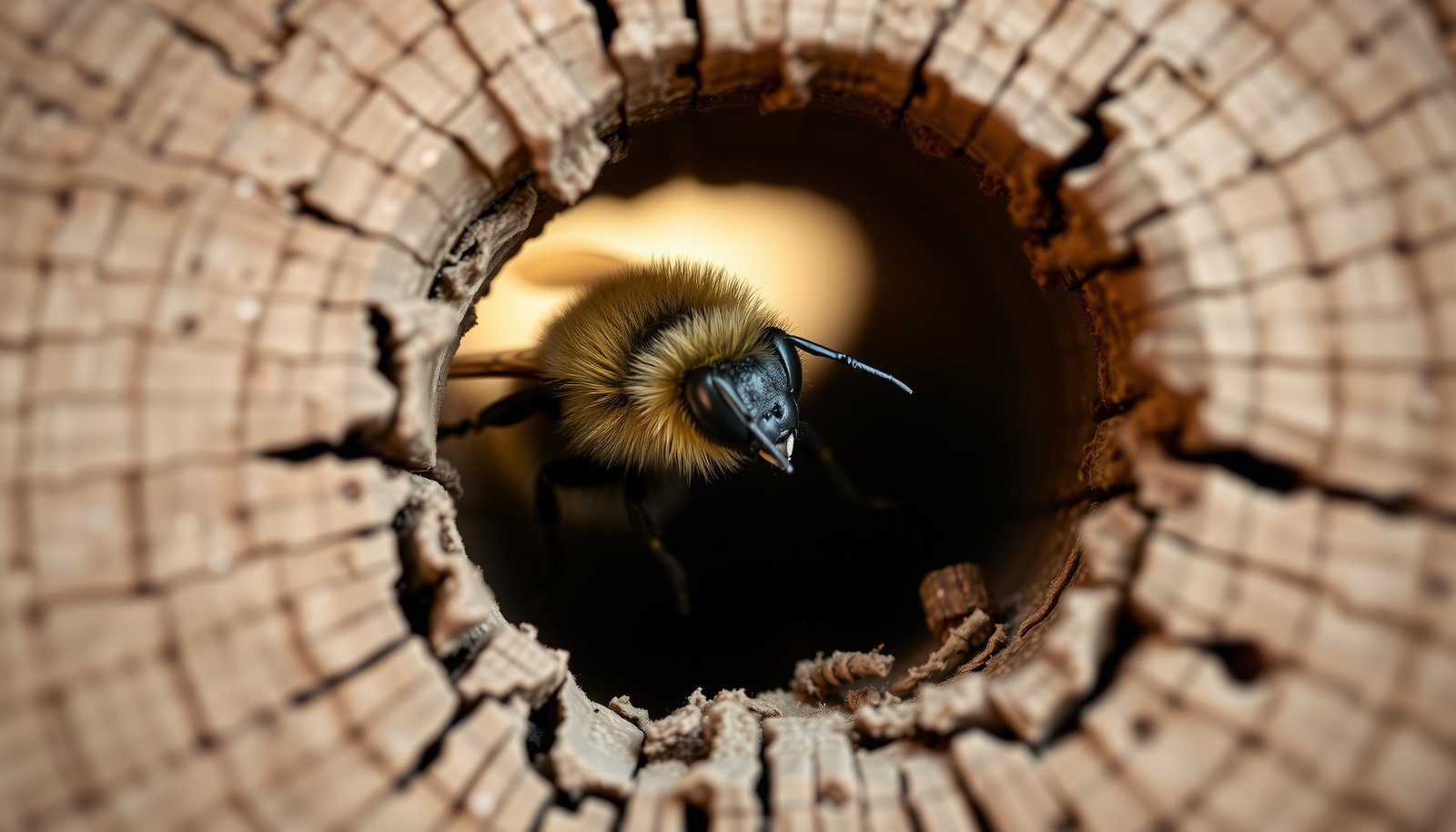
This close-up shows the clean, rounded entry hole a female carpenter bee drills — nearly perfect in shape, about the diameter of a standard pencil eraser — which helps you confirm you’re dealing with carpenter bees rather than another wood-boring pest before you decide on a removal approach.
What Actually Repels Carpenter Bees (And What Just Annoys You)
Carpenter bees have strong aversions to certain smells, and you can use that without harming them. Citrus oil, tea tree oil, and almond oil applied directly to wood surfaces have shown real deterrent effects — not because they’re toxic to the bees, but because they interfere with the chemical cues females use to assess nesting sites. Reapplication every 2–3 weeks during active season (typically April through June in most of the US) is necessary for it to hold.
Noise and vibration are underrated deterrents. Carpenter bees are highly sensitive to vibration in the wood they’re boring into, which is why they often abandon half-finished holes when there’s construction activity nearby. Wind chimes hung directly on wooden structures — particularly near known hotspots — can disrupt nesting long enough to redirect bees elsewhere. It sounds almost too simple, but the mechanism is real: vibration signals instability, and a smart bee doesn’t build a nursery in unstable wood.
How to Seal Carpenter Bee Holes the Right Way (So They Don’t Reopen)
Plugging holes is the single most important physical step in getting rid of carpenter bees without killing them — but timing and method matter more than most people realize. Seal a hole too early in the season and you may trap developing larvae inside, which causes its own problems (and isn’t exactly humane either). Seal too late and you’ve accomplished nothing because the bee has already laid eggs and moved on.
The right window is late summer to early fall, after the new generation has emerged and before the tunnels get reoccupied. Here’s a reliable process that actually holds up:
- Wait until late August or September to confirm the gallery is empty — listen for buzzing inside the hole and watch for activity over several days before assuming it’s vacant.
- Stuff the tunnel with steel wool as a first layer, pushing it in at least 2 inches. Bees can chew through soft materials like caulk or wood putty alone, but they won’t push through steel wool.
- Apply wood putty or exterior-grade caulk over the steel wool, flush with the surface. Let it cure fully before painting or staining.
- Sand and paint or stain the patched area so the surface is no longer bare wood — painted surfaces are significantly less attractive to nesting females.
- Inspect the entire structure for secondary holes within 3–4 feet of the original, since females often drill multiple galleries in the same season.
- Mark your calendar to reinspect in early spring before the next nesting season begins — one missed hole can restart the whole cycle.
Pro-Tip: Before you seal anything, shine a flashlight directly into the hole at an angle and listen with your ear close to the wood. An active gallery sounds like faint scratching or movement. A silent, cobwebbed hole is a safe candidate for sealing. When in doubt, wait another week and check again.
Do Carpenter Bee Traps Work Without Harming the Bees?
Picture this: your neighbor swears by hanging a wooden box trap from the eave, catches dozens of carpenter bees every spring, and hasn’t had a new hole drilled in three years. That’s not an accident — wooden carpenter bee traps genuinely work as a capture-and-relocate strategy when used correctly. The trap mimics a pre-drilled nesting site, bees enter and fall into a plastic bottle below, and you can release them far from your property before they have a chance to come back and mark the location as home.
The catch — literally — is placement and release timing. A trap hung in the wrong spot catches nothing. Position traps within 12–18 inches of existing or previous entry holes, facing south or southeast to catch morning sun (which is when females are most active and scouting). Release captured bees at least a quarter mile away. Bees have strong homing instincts within short ranges, so releasing them in your backyard just sends them right back to your fascia boards within a day or two.
“Carpenter bees are remarkably site-faithful. A female that successfully nested in a structure will return to within a meter of that same site the following spring — and her offspring will nest nearby as well. Relocation has to be meaningful distance, and exclusion of the existing holes has to happen simultaneously or you’ll see re-infestation regardless of how many bees you trap.”
Dr. Renata Villanueva, Urban Entomology Extension Specialist, Department of Entomology, University of Tennessee
Which Wood Types Attract Carpenter Bees and How to Replace or Protect Them
Here’s a counterintuitive fact that most pest control content never touches: carpenter bees strongly prefer softwoods — pine, cedar, redwood, and fir — but unpainted or unstained cedar is actually one of their top targets despite its natural oils. The natural oils in cedar repel many insects, but they don’t deter carpenter bees the way people assume. The real deterrent isn’t the wood species; it’s the surface finish. Painted, stained, or sealed wood is dramatically less likely to be drilled than bare wood of any species.
If you’re replacing damaged trim, fascia, or deck boards, composite materials and hardwoods like ipe or teak are genuinely unattractive to carpenter bees — they can’t drill into dense, hard material efficiently. That’s a long-term structural fix, not just a temporary patch. The honest nuance here: this approach makes the most sense for homes with extensive damage or older wood siding that needs replacement anyway. If you’ve got solid wood that’s just unpainted, a quality exterior paint job is cheaper than a full replacement and delivers most of the same protection.
| Wood Type | Carpenter Bee Risk Level | Best Protection Strategy |
|---|---|---|
| Bare pine or fir | Very High | Paint or stain immediately; replace with composite where feasible |
| Unpainted cedar or redwood | High | Exterior stain + citrus oil application during nesting season |
| Painted hardwood | Low | Maintain paint integrity annually; inspect for chips and cracks |
| Composite decking / PVC trim | Very Low | Minimal maintenance; monitor adjacent wooden structures |
Maintaining painted wood isn’t a one-time fix. Carpenter bees are relentlessly opportunistic — a single chipped section of paint on a fascia board can be all the invitation they need. Annual inspection of exterior wood surfaces, especially after a hard winter, is what actually keeps a painted house protected long-term. Think of it less like a pest control task and more like basic home maintenance that happens to solve a pest problem as a side effect.
Should You Provide an Alternate Nesting Site to Redirect Carpenter Bees?
Carpenter bee “houses” — essentially untreated wooden blocks with pre-drilled holes — are sold as a way to redirect bees away from your home and toward a designated structure you’re okay with them using. They work better than most people expect, but only under very specific conditions. The decoy structure has to be positioned close enough to your home that it registers as viable territory, but the real structure has to be simultaneously made unattractive through sealing and painting. Offer the bee a better option and remove the original one at the same time.
The biology here is actually worth understanding. Carpenter bees are native pollinators — female eastern carpenter bees (Xylocopa virginica) are among the most effective pollinators of certain plants like tomatoes, blueberries, and passionflower through a process called buzz pollination that honeybees can’t perform. Giving them a designated spot in your yard isn’t just humane; it actively supports your garden if you grow any of those crops. There’s also a parallel situation with stink bugs — some homeowners find that understanding a pest’s biology gives them more practical removal options than a spray ever would.
Here’s what a successful carpenter bee redirect setup looks like:
- Use untreated pine or cedar blocks at least 6 inches thick with pre-drilled holes approximately ½ inch in diameter and 4–6 inches deep
- Place the decoy structure in a sunny, south-facing location 10–15 feet from the structure you’re protecting
- Mount it at 6–8 feet off the ground — carpenter bees strongly prefer elevated nesting sites
- Do not paint or stain the decoy; bare wood is the attraction, so let it weather naturally
- Simultaneously seal existing holes and apply fresh paint to protected structures to make your home the less appealing option
- Check the decoy in fall — if bees are using it, that’s exactly what you want, and you can relocate the block farther from your home each season
One thing to manage expectations on: a decoy won’t work in year one if there are already established galleries in your home’s wood. Bees are loyal to proven sites. The decoy is most effective as a prevention tool or as part of a multi-step redirect after you’ve sealed and painted the original sites. It’s not an overnight fix, but it’s the most genuinely humane and durable solution available — and it doesn’t require you to touch a single bee.
If this whole situation has you thinking about what you’re actually responsible for as a renter versus a property owner — whether it’s carpenter bees drilling into the eaves or something else showing up uninvited — the legal side of pest situations is worth understanding before you start spending money. Questions like whether you can refuse to move into a place with a known pest history matter more than most people realize until they’re already in the situation.
Getting rid of carpenter bees without killing them isn’t the complicated part — it’s accepting that the fix is structural and seasonal, not instant. Seal the holes at the right time, make your wood less appealing, offer a better nesting alternative, and use traps to intercept scouts before they commit to drilling. Do all four of those things together, and you’ll see a real difference by the second season. The bees aren’t your enemy; they’re just looking for bare wood. Stop giving them any, and they’ll genuinely move on.
Frequently Asked Questions
what scents keep carpenter bees away without killing them?
Carpenter bees strongly dislike citrus, tea tree, and almond oil. You can mix about 10-15 drops of any of these essential oils with water in a spray bottle and apply it directly to wood surfaces and existing holes every 1-2 weeks. They’re sensitive enough to smell that consistent application usually discourages them from nesting or returning.
how do I get carpenter bees to leave holes they already made?
Stuff the existing holes loosely with steel wool first, then plug them with wood putty or a wooden dowel once you’re sure the bees have left — usually after dusk when they’re inactive. Don’t seal the holes while bees are still inside or you’ll trap them, which can cause them to chew new exit tunnels. Wait until late fall or winter when the holes are completely vacant before doing permanent repairs.
does painting or staining wood really stop carpenter bees?
Yes, painted and stained wood is significantly less attractive to carpenter bees because they prefer raw, untreated softwood for nesting. Applying two coats of exterior paint or a penetrating oil-based stain to all exposed wood surfaces — especially fascia boards, decks, and window trim — is one of the most effective long-term prevention strategies. Bare wood that’s left untreated for even one season can quickly become a target.
how do you relocate carpenter bees without hurting them?
You can’t exactly pick them up and move them, but you can encourage them to relocate by setting up a carpenter bee trap house filled with untreated pine or cedar about 20-30 feet away from your home. Once bees enter the trap, you can release them into a wooded area far from your property. This works best in early spring when bees are actively searching for new nesting sites.
will carpenter bees come back to the same holes every year?
They absolutely will — carpenter bees are known to return to the same nesting sites year after year, and offspring often reuse the tunnels their parents made. A single gallery can be extended up to 10 feet over multiple seasons, which causes significant structural damage over time. Sealing and repainting holes in late fall is the most reliable way to break that cycle without harming the bees.
Disclaimer: This article is for informational purposes only and isn’t a substitute for professional pest control advice. Always read and follow the product label instructions exactly — label directions are legally binding and vary by brand and active ingredient. Keep all pesticides, baits and traps away from children and pets, ventilate treated areas as directed, and consider calling a licensed pest control professional if an infestation is large, recurring, or involves a structural pest like termites or carpenter ants.