
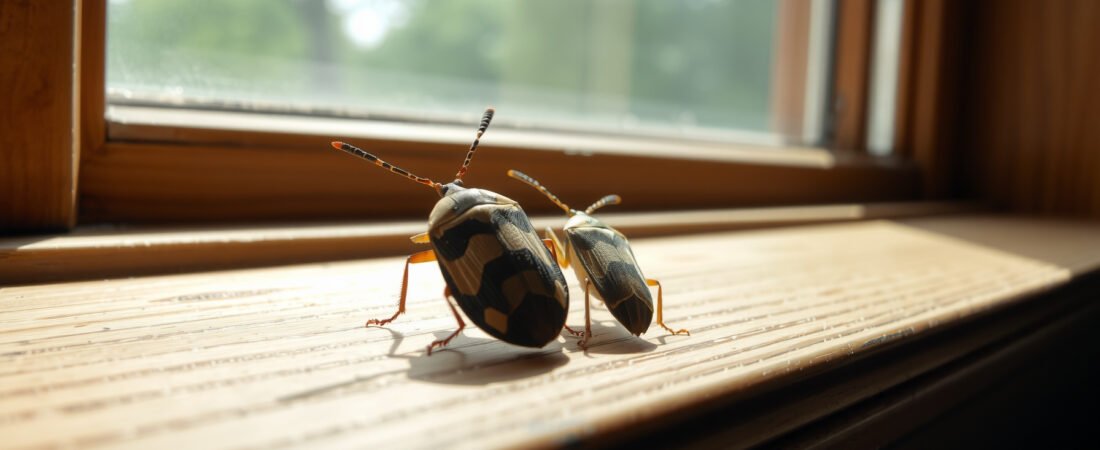
There are about 260 stink bug species in North America — and the one invading your home right now almost certainly isn’t a “regular” stink bug at all. The brown marmorated stink bug (Halyomorpha halys) gets lumped together with native species so often that most homeowners spend weeks trying the wrong treatments, sealing the wrong entry points, and wondering why nothing is working. The identification error is the problem, not the effort.
Why Misidentifying Stink Bugs Actually Costs You
Native stink bugs — like the green stink bug (Chinavia hilaris) or the kudzu bug — are primarily outdoor pests. They feed on plants, stay outside, and rarely seek shelter inside your walls. The brown marmorated stink bug, by contrast, is a mass overwintering invader that specifically targets the interior of structures to survive winter, which means it’s exploiting your home in a fundamentally different way than any native species would.
If you correctly identify the bug as a native species, your response is simple: keep them outside, protect your garden, and move on. Misidentify it as a native when it’s actually brown marmorated, and you’ll be caught off guard in late fall when literally hundreds of them start crawling through every crack around your windows and light fixtures. That number isn’t an exaggeration — a single home can harbor several hundred to over a thousand individuals during peak aggregation season.
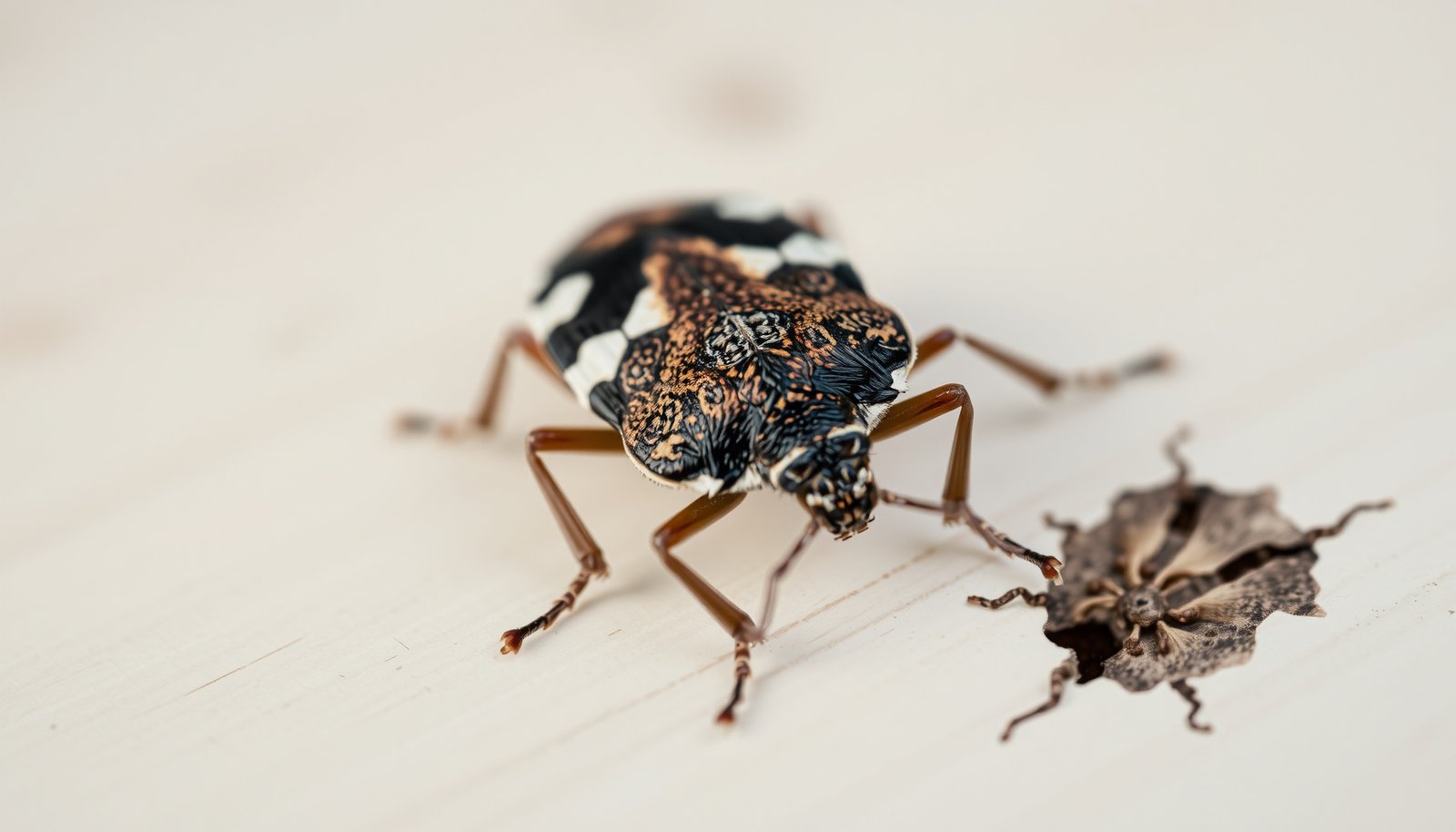
This close-up comparison shows the key physical markers — banding, shape, and coloring — that separate the brown marmorated stink bug from native species, and spotting these details early is what determines whether you take defensive action before they’re already inside your walls.
What Does a Brown Marmorated Stink Bug Actually Look Like Up Close?
The brown marmorated stink bug is about 5/8 of an inch long — roughly the size of a dime — with a shield-shaped body that’s mottled in varying shades of brown, gray, and copper. The word “marmorated” literally means “marbled,” and once you know that, the name becomes a solid field identifier: look for a marbled, inconsistent brown pattern rather than a solid or uniformly speckled surface. Its legs also show alternating light and dark banding, which is one of the clearest field markers you can spot without a magnifier.
The most reliable identifier that almost no pest control article emphasizes clearly enough is the alternating black-and-white banding on the antennae and along the outer edge of the abdomen. That checkerboard-like banding around the abdomen’s perimeter is essentially the bug’s signature. Native brown stink bugs like Euschistus servus have a similar shape and color but lack that distinct, clean banding pattern on the abdominal margin.
Side-by-Side: Brown Marmorated vs. Common Native Stink Bugs
The confusion usually happens between the brown marmorated and two native species: the brown stink bug (Euschistus servus) and the dusky stink bug (Euschistus tristigmus). All three share the same basic shield shape, similar coloring, and identical defense mechanism — that memorable chemical release from glands on the thorax. But the physical differences, once you know them, are surprisingly easy to read.
| Feature | Brown Marmorated Stink Bug | Native Brown Stink Bug (Euschistus servus) |
|---|---|---|
| Antennal banding | Distinct alternating black and white bands | No banding — antennae uniformly dark or pale |
| Abdominal edge | Clear alternating black-and-white checkered pattern | Smooth, uniform coloring along abdomen edge |
| Shoulder shape (humeri) | Pointed, angled outward like small spurs | Rounded, no prominent points |
| Winter behavior | Aggregates indoors in large numbers | Overwinters outdoors in leaf litter and debris |
Those shoulder spurs — technically called the humeri — are genuinely underrated as an ID tool. Native stink bugs have a more rounded, almost gentle shoulder profile. The brown marmorated looks slightly more aggressive in silhouette, with those angled points at the widest part of its thorax. If you see a stink bug and the shoulders come to a small but definite point, you’re almost certainly looking at Halyomorpha halys.
How Do You Tell Them Apart in Real-World Conditions (Bad Lighting, Panic, and All)?
Picture this: it’s October, you flip on a light in the spare bedroom you haven’t used in two weeks, and there are seven stink bugs on the curtains and two more crawling toward the window frame. You’re not thinking clearly, and you’re definitely not reaching for a magnifying glass. Here’s what to check in order, from fastest to most diagnostic.
- Count the bugs. A single stink bug could be anything. Multiple stink bugs clustering near windows, vents, or warm walls in fall is a near-certain sign of brown marmorated — it’s the only stink bug species that aggregates indoors in the US at scale.
- Look at the antennae first. Hold your phone flashlight behind it or beside it. Alternating light and dark bands on the antennae = brown marmorated. Solid-colored antennae = likely native species.
- Check the abdomen edge. Flip it over or get a side angle — look for that checkerboard edging. It’s subtle but consistent on brown marmorated, even on worn or damaged specimens.
- Look at the shoulders. Step back six inches and look at the shield shape. Pointed humeri suggest brown marmorated. Smooth, rounded edges suggest a native species.
- Check what time of year it is. Finding stink bugs indoors between October and March is almost always brown marmorated. Natives don’t typically enter homes en masse during cold months.
- Take a photo and zoom in. Your phone camera can be your magnifying glass. The banding on the antennae and abdomen edge is clearly visible in a zoomed photo, even one taken quickly on a dim room.
The seasonality point is genuinely the fastest filter — if it’s a brown bug with a shield shape showing up inside your home in fall or winter, the statistical probability that it’s brown marmorated is extremely high. That said, if you’re in a warmer climate like the Deep South or Southwest, the timing cues shift somewhat, so don’t rely on season alone in those regions.
Does Correct Identification Actually Change What You Do About Them?
Yes — and this is where most “stink bug articles” completely drop the ball. They treat identification as an academic exercise and then give you the same advice regardless of species. But what you do about a brown marmorated infestation is mechanically different from how you’d handle an occasional native stink bug wandering inside.
Native species rarely return in numbers, rarely aggregate, and don’t establish overwintering aggregations inside wall voids. With a native species, catching and releasing the individual bugs is a perfectly reasonable response. With brown marmorated, the aggregate pheromone changes everything. When these bugs find a suitable overwintering site, they release an aggregation pheromone that actively signals other individuals to join them — meaning the entry points they used in September will attract more bugs next October, and the October after that, unless you physically close those gaps. Sealing your home becomes the treatment, not a nice-to-have extra step.
Pro-Tip: Don’t vacuum up brown marmorated stink bugs with your household vacuum — the smell will permeate the machine and linger for weeks. Use a sealed bag or a shop vac designated for pest removal, or capture them in a jar of soapy water. The defensive chemical they release, trans-2-decenal, is potent enough to make a vacuum smell like a forest floor indefinitely.
“Most homeowners who call about stink bug ‘explosions’ in fall were dealing with brown marmorated all along — they just didn’t know it. The aggregation pheromone is the key biological mechanism people need to understand. Once you know that the bugs are chemically recruiting each other to your structure, the urgency of sealing entry points before October makes a lot more sense.”
Dr. Michelle Ramos, urban entomologist and extension specialist, Penn State Center for Integrated Pest Management
What Entry Points Do Brown Marmorated Stink Bugs Actually Use?
Native stink bugs enter homes accidentally — through open doors, torn screens, or gaps they stumble across. Brown marmorated stink bugs are deliberate about it. They’re looking for overwintering harborage and will methodically probe a structure for openings. The gaps they exploit are often as small as 1/8 of an inch, and they particularly target south and west-facing walls where afternoon sun warms the siding — that warmth draws them toward the structure before they work inward.
The entry points that get overlooked most often aren’t the obvious ones. Here’s where they’re getting in that you’re probably not checking:
- Behind window-mounted air conditioners — even when “sealed,” these units leave gaps at the corners and along the accordion side panels that stink bugs use consistently
- Where utility pipes and conduit enter through exterior walls — plumbers and electricians rarely caulk these to pest-exclusion standards
- Gaps where siding meets soffit or fascia — particularly in older homes where siding has warped or pulled away slightly over time
- Weep holes in brick veneer — these are intentional drainage openings that stink bugs use as express entry lanes into wall cavities
- Around chimney flashing and attic vents with degraded screening — attic spaces are prime overwintering sites, and fiberglass screening degrades faster than most people realize
One honest nuance worth naming: if you’re in an apartment or rental unit, your ability to seal these entry points is limited by what your landlord will permit or prioritize. A ground-floor apartment with a neighboring vacant unit is at particular risk because stink bugs that can’t access your sealed unit will try adjacent ones — and if those aren’t sealed either, they’ll eventually find a shared wall gap that connects back to you. If you’re dealing with this situation in a rental, it’s worth understanding what protections you have — a resource like Can You Refuse to Move Into an Apartment With a Known Pest History? is useful context even when the pest is stink bugs rather than roaches or rodents.
When Should You Call a Professional vs. Handle Brown Marmorated Yourself?
The honest answer: brown marmorated stink bugs are one of the more DIY-manageable fall invaders, because the primary solution — physical exclusion — doesn’t require a license or specialty chemicals. Caulking, weatherstripping, and screening are genuinely effective if done before the bugs start aggregating in late September. If you catch it early, a $40 tube of exterior silicone caulk does more than most pesticide applications would.
That said, once a large aggregation has established inside your wall voids, the calculus changes. Pesticides applied inside wall cavities can result in hundreds of dead bugs decaying inside your walls — a smell problem that can rival or exceed the original pest problem. At that point, a professional assessment becomes worthwhile, particularly because a good inspector can evaluate the scale of the aggregation before recommending a treatment approach. If you’re unsure how a professional visit actually works and what they’ll look for, What Happens During a Free Pest Control Inspection (And the Upsell)? walks through what to expect before you book anything.
The underexplored truth about brown marmorated stink bugs is that their real threat isn’t to your comfort inside the house — it’s to timing. Every week you delay sealing your home after late summer is another week of aggregation pheromone building up at your entry points, signaling more bugs to queue up. The identification question, then, isn’t just a curiosity — it’s the trigger for a specific, time-sensitive set of actions that don’t apply to any native stink bug species in the US. Get the ID right, and the rest of the response practically writes itself.
Frequently Asked Questions
How do I tell the difference between a brown marmorated stink bug vs regular stink bug?
The easiest way to tell them apart is by looking at the edges of the abdomen — brown marmorated stink bugs have alternating light and dark bands along the outer rim, while native stink bugs typically don’t. Brown marmorated stink bugs also have white bands on their antennae, which is a dead giveaway. They’re about 5/8 of an inch long and have a mottled brown, shield-shaped body that looks almost marbled.
Does the brown marmorated stink bug smell worse than other stink bugs?
Most people say yes — the brown marmorated stink bug produces a noticeably stronger, more pungent odor than most native stink bug species. The smell is often described as cilantro, skunk, or a sharp chemical stench, and it’s released when the bug feels threatened or gets crushed. Native stink bugs can smell too, but the brown marmorated variety tends to be the one homeowners complain about most.
Where did brown marmorated stink bugs come from and why are they in my house?
Brown marmorated stink bugs are native to East Asia — specifically China, Japan, and Korea — and were accidentally introduced to the US, with the first confirmed sighting in Allentown, Pennsylvania. They invade homes in the fall when temperatures drop because they’re looking for a warm place to overwinter, a behavior called diapause. They’re not there to breed or eat your food — they just want to survive the winter and will squeeze through gaps as small as a few millimeters to get inside.
Are brown marmorated stink bugs harmful to humans or pets?
They’re not dangerous — they don’t bite, sting, or transmit diseases to humans or pets. The main risks are the foul odor they release when disturbed and, for some people, a mild allergic reaction if they handle the bugs or inhale the smell in large quantities. They’re a nuisance pest, not a health threat, but large infestations inside walls can become a serious annoyance.
What’s the best way to get rid of brown marmorated stink bugs inside the house?
Don’t crush them — that releases the smell and can attract more bugs. Instead, use a vacuum to suck them up and immediately seal or dispose of the bag outside, or drop them into a container of soapy water which kills them quickly. For prevention, seal cracks around windows, doors, and utility lines with caulk before fall hits, since that’s when they start looking for a way in. If you’ve got a serious infestation in your walls or attic, a pest control professional can apply residual insecticides to entry points.