
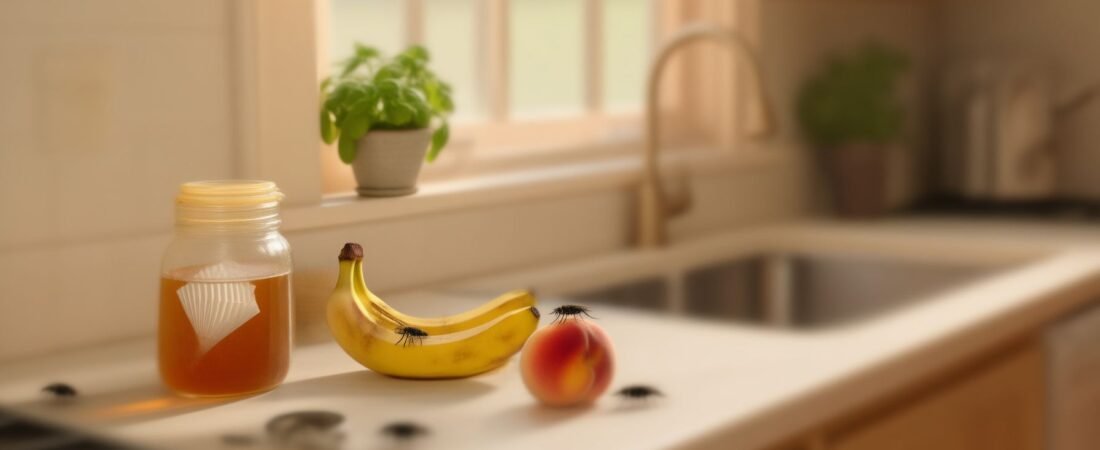
Chemical sprays are usually the last thing you need for a house fly problem — and in most cases, they’re not even the most effective option. House flies don’t just wander in randomly. They’re following invisible scent trails to specific attractants inside your home, and until you cut off those attractants, any spray you use is just treating symptoms. The chemical-free approach works better precisely because it attacks the source, not the fly you can already see.
Why Are House Flies Suddenly Appearing Inside Even When Nothing Looks Dirty?
Here’s the part that frustrates people most: they clean the kitchen, take out the trash, and flies are still showing up. The reason is that house flies detect odors from fermenting organic matter at concentrations far below what a human nose can pick up — we’re talking parts per billion. A mop bucket stored damp in a utility closet, a recycling bin with a thin film of juice residue, or a floor drain that hasn’t been flushed in weeks is enough to recruit flies from outside.
A female house fly can lay up to 500 eggs in her lifetime, in batches of 75 to 150 at a time, and those eggs hatch into larvae within 8 to 20 hours under warm conditions. That timeline is faster than most people realize, which is why a fly problem that seems to appear from nowhere can escalate to dozens of visible adults within a week. Your first job isn’t to kill the flies you see — it’s to find and eliminate whatever they’re using as a breeding site indoors.
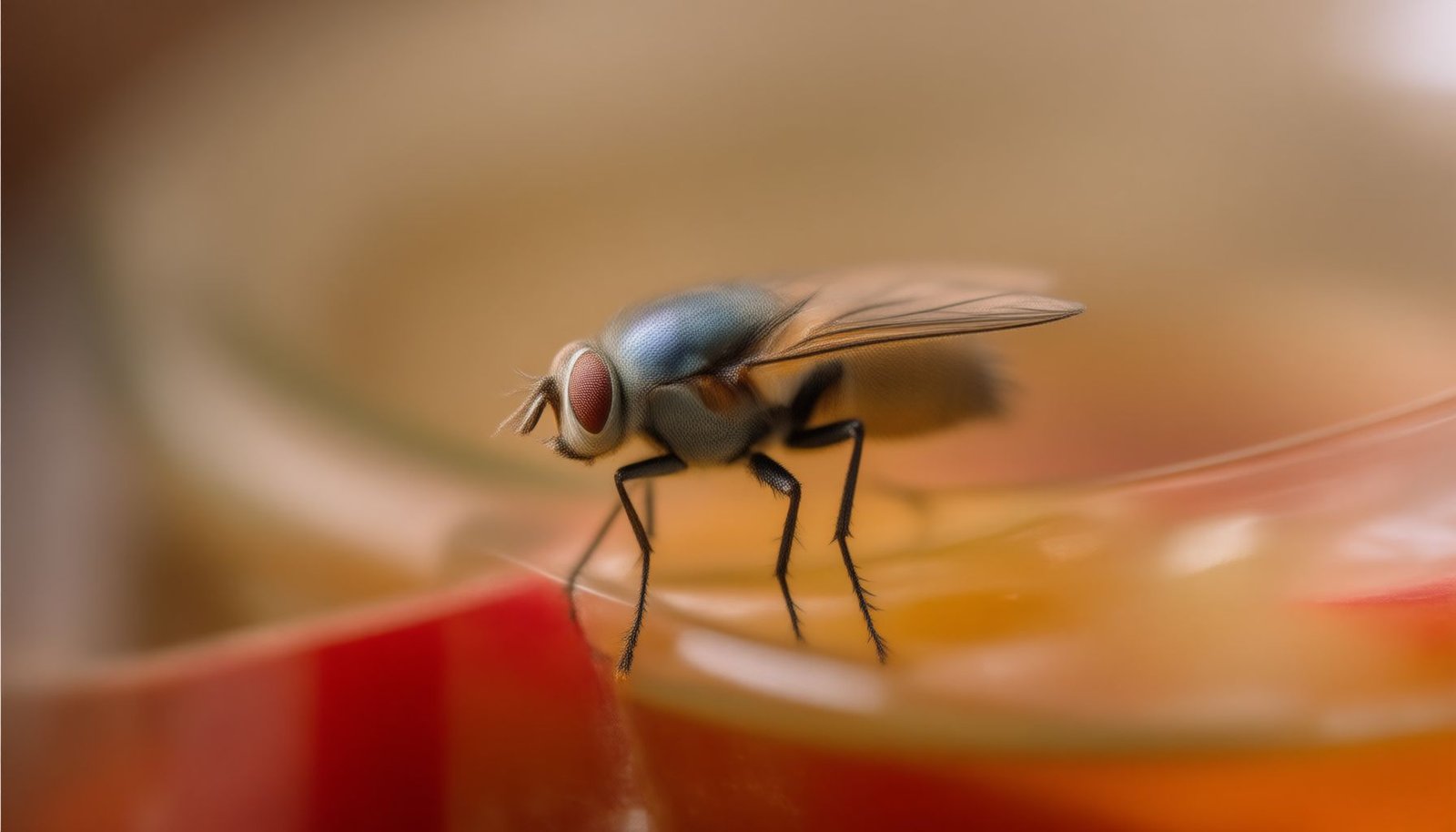
This close-up shows the kinds of household surfaces — wet organic residue, moist drain edges — that house flies zero in on as breeding spots, which is exactly why cleaning visible messes isn’t always enough.
What Actually Attracts House Flies Into Your Home in the First Place?
Most fly control advice focuses on traps and repellents, skipping over the single most important variable: what’s pulling them in. House flies are attracted primarily to volatile organic compounds released by decomposing food, animal waste, and fermentation — not just garbage in the classic sense. Pet food left out for more than a few hours, overripe fruit on the counter, and even a compost container with a loose lid can act as a beacon.
Temperature and moisture amplify everything. A piece of onion skin wedged under the lip of a trash can drawer, for example, decomposes faster in a warm kitchen and releases more odor compounds than you’d expect from something so small. Picture this: a homeowner spends a weekend deep-cleaning their kitchen only to still find six or seven flies circling by Monday morning — turns out the culprit was a damp sponge holder with old food residue packed into the drip holes. Flies don’t need much. They need warm, wet, and organic.
How Do You Find the Breeding Source Before It Gets Worse?
Locating the actual breeding site is the step that most guides skip, because it’s unglamorous and sometimes requires pulling things apart. Flies don’t breed in mid-air — they need a moist organic substrate, and indoors that usually means one of a handful of places that get overlooked during normal cleaning. Work through this list systematically, in order of likelihood, before you do anything else.
- Floor drains and sink drains: The biofilm that builds up inside drain pipes is a perfect fly breeding environment. Run hot water down every drain you rarely use, and scrub accessible surfaces with a stiff brush.
- Trash cans and recycling bins: The bottom inch of any bin that held meat packaging or sugary liquids is prime territory. Wash the interior with dish soap and let it dry fully before re-lining.
- Pet food and water bowls: Wet food residue left for more than 2 to 4 hours in warm weather is enough to attract egg-laying females. Pick up uneaten wet food promptly.
- Mop buckets, cleaning cloths, and sponges: Damp cleaning tools left in enclosed spaces are a surprisingly common source — the organic load from cleaning a kitchen floor feeds larvae effectively.
- Potting soil and indoor plants: Overwatered pots with decomposing root matter or organic compost mixed into the soil can harbor larvae. Check for small maggots near the soil surface if you suspect this.
- Dead animal or rodent carcass hidden in a wall or crawl space: If flies appear suddenly with no obvious food source and the numbers are large, a dead rodent is the most likely explanation — flies can detect a carcass through walls.
The key insight here is that you’re looking for moisture plus organic material in combination — either one alone is rarely enough. Once you’ve found and removed or sanitized the source, the adult fly population will drop noticeably within 24 to 48 hours because there’s no new generation being produced to replace the ones dying off naturally.
Which Chemical-Free Traps and Deterrents Actually Work Against House Flies?
Once the source is gone, trapping residual adults speeds things up considerably. The options that perform well without any synthetic chemicals each work through different mechanisms, and knowing why they work helps you use them correctly instead of just hoping for results.
Apple cider vinegar traps work because house flies are attracted to the acetic acid produced during fermentation — the same smell signal they associate with rotting fruit. A jar with a paper funnel insert and an inch of apple cider vinegar plus a drop of dish soap (which breaks the surface tension so flies drown instead of escaping) catches adults effectively within a few hours. UV light traps exploit the fact that house flies are strongly phototactic — attracted to UV wavelengths — and a well-placed trap near an entry point but away from competing light sources can intercept flies before they settle into the living space. Sticky fly paper, though old-fashioned, remains one of the highest-capture methods per dollar spent and requires zero maintenance.
| Method | How It Works | Best For | Limitation |
|---|---|---|---|
| Apple cider vinegar trap | Fermentation scent attracts adults; dish soap drowns them | Kitchen, indoor use near source area | Needs refreshing every 2–3 days in warm conditions |
| UV light trap | UV wavelengths attract flies to a sticky board or electric grid | Entry points, garages, utility areas | Less effective in daylight hours with competing light |
| Sticky fly paper/ribbon | Contact adhesive captures any fly that lands on it | High-traffic fly zones, ceiling-mounted | Unsightly; not suitable for food prep surfaces |
| Basil and essential oil deterrents | Volatile compounds (linalool, eugenol) disrupt fly sensory receptors | Windowsills, entry points as a repellent | Repels rather than kills; effectiveness decreases as scent fades |
Pro-Tip: Place your ACV trap within 3 to 4 feet of where you’re seeing the most fly activity, not in the middle of the room. Flies navigate by following odor gradients toward the strongest concentration, so proximity to the perceived source matters more than central placement.
How Do You Stop House Flies From Getting Inside Without Spraying the Perimeter?
Exclusion is underrated in almost every fly control conversation, possibly because it feels too simple. House flies enter through gaps around window screens with even minor damage, door frames that don’t seal flush at the bottom, and ventilation openings that lack fine mesh. A single torn patch in a screen as small as 6 to 8 millimeters — about the diameter of a pencil — is wide enough for a house fly to pass through easily, since adult house flies average 6 to 7 millimeters in body length.
Beyond physical sealing, there are plant-based deterrents with legitimate research behind them. Basil placed on windowsills deters flies through the same volatile compounds (primarily linalool and eugenol) that make the herb useful in cooking — flies find these compounds aversive at close range. Lavender sachets near entryways and cloves pressed into a halved lemon set near a door act similarly. None of these will clear an existing infestation, but as part of an integrated approach after you’ve addressed the breeding source, they help prevent re-entry. It’s worth noting that their effectiveness varies depending on air circulation and how frequently the volatile compounds dissipate — in a drafty entryway, you’ll get less deterrent effect than in a still, enclosed space. This is one of those situations where the building type genuinely changes what works best. Similar logic applies to other moisture-loving household pests: if you’ve dealt with how to get rid of millipedes after heavy rain, you already know how much entry-point management matters for preventing re-entry cycles.
“The biggest mistake I see homeowners make is treating house flies as a random nuisance rather than an indicator species. When flies are consistently appearing inside, they’re telling you something specific about conditions in your home — usually a moisture and organic matter combination that you haven’t found yet. Address that, and the flies resolve themselves within days. Skip that step and you can trap and spray indefinitely without lasting results.”
Dr. Marcus Feldt, Board-Certified Entomologist and Urban Pest Management Specialist, Extension Faculty, Midwest Land-Grant University
What Ongoing Habits Actually Keep House Flies From Coming Back?
Solving a house fly problem once is satisfying. Solving it permanently requires shifting a few habits that most households don’t think twice about. The underlying principle is straightforward: house flies complete a full generation — egg to breeding adult — in as few as 7 to 10 days under warm summer conditions. That means a single overlooked source can restart a visible infestation faster than most people expect after a successful elimination.
The habits that make the biggest practical difference aren’t complicated — they’re just consistent. Just as getting rid of firebrats near a fireplace or furnace comes down to removing the heat and moisture conditions they depend on, long-term fly prevention is really about removing the environmental conditions that make your home hospitable to them in the first place.
- Empty and rinse your kitchen trash can at least once a week, not just swap the liner — the can itself accumulates residue that ferments and produces odor compounds.
- Store all fruit either refrigerated or under a sealed cover during warm months — overripe fruit on a counter is one of the top three indoor fly attractants in residential settings.
- Flush floor drains with boiling water or a baking soda and vinegar flush monthly to break down biofilm accumulation before it becomes a breeding habitat.
- Replace or repair window and door screens at the first sign of damage — a small tear expands quickly and a season with a compromised screen can mean hundreds of additional fly entries.
- Don’t leave outdoor compost bins directly against the house — keep them at least 20 feet away, because fly populations around a compost bin will actively seek entry points on the adjacent structure.
One counterintuitive thing worth knowing: air conditioning doesn’t just make you comfortable — it actively suppresses house fly activity. Flies are cold-blooded and their metabolism, flight capacity, and reproduction slow significantly below 55°F (13°C). Keeping indoor temperatures consistently cool during peak fly season reduces both adult activity and larval development speed if any undetected breeding site exists. It’s not a solution on its own, but it buys you time and reduces the visible annoyance while you address root causes.
The real takeaway here isn’t which trap to buy or which herb to put on your windowsill — it’s that house flies are telling you something every time they appear inside your home. Treat them as feedback rather than bad luck, track down what they’re responding to, and you’ll find that a chemical-free approach doesn’t just work — it often outperforms spray-and-hope methods because it solves the problem at the level that actually matters.
Frequently Asked Questions
what smells do house flies hate the most?
House flies strongly dislike the smell of lavender, eucalyptus, peppermint, and cloves. Placing sachets of dried lavender near windows or dabbing peppermint oil on cotton balls around entry points can drive them away without any chemicals. These scents won’t kill flies, but they’re effective at keeping them from settling in an area.
how do you make a homemade fly trap that actually works?
Fill a jar with about an inch of apple cider vinegar, add a drop of dish soap to break the surface tension, then cover the top with plastic wrap and poke a few small holes in it. Flies are drawn to the vinegar smell, enter through the holes, and can’t get back out. You can catch dozens of flies in a single trap within 24 to 48 hours, and it costs almost nothing to make.
why do I suddenly have so many flies in my house?
A sudden spike in house flies almost always means there’s a breeding source nearby — think rotting food, an overflowing trash can, pet waste, or even a dead animal inside a wall or attic. Flies can complete their life cycle from egg to adult in as little as 7 to 10 days, so what starts as a few flies can turn into dozens fast. Check trash cans, drains, and anywhere organic matter might be decomposing.
do fly strips work and are they safe to use indoors?
Sticky fly strips do work — they’re one of the more effective non-chemical options you can hang near windows or above trash cans. They’re generally safe for indoor use since they don’t release any toxins, but keep them out of reach of kids and pets since the adhesive is extremely hard to remove from hair or fur. Replace them every 2 to 4 weeks or sooner if they fill up.
how do I keep flies from coming back after getting rid of them?
The most important step is eliminating what’s attracting them in the first place — seal trash cans, clean up pet waste daily, and don’t leave food sitting out for more than an hour or two. Make sure all your window and door screens have no tears or gaps larger than 1.6mm, which is small enough to block house flies. Consistent sanitation is what separates a one-time fix from a long-term solution.
Disclaimer: This article is for informational purposes only and isn’t a substitute for professional pest control advice. Always read and follow the product label instructions exactly — label directions are legally binding and vary by brand and active ingredient. Keep all pesticides, baits and traps away from children and pets, ventilate treated areas as directed, and consider calling a licensed pest control professional if an infestation is large, recurring, or involves a structural pest like termites or carpenter ants.