

Putting down traps in the open kitchen floor is the single biggest mistake people make with a mouse problem near appliances — and it’s why so many homeowners spend weeks catching nothing. Mice behind a refrigerator or stove aren’t just passing through. They’ve found a permanent home there, and until you understand exactly why that spot is so valuable to them, every trap you set is basically guesswork.
The real problem isn’t that you have mice — it’s that your appliances are doing half the work for them. The compressor on the back of a refrigerator runs warm and hums at a low frequency that mice actually find attractive. Stoves have grease buildup in crevices that can sustain a mouse for days without it ever needing to leave. These aren’t random hiding spots. They’re nesting destinations, and that changes everything about how you deal with them.
Why Are Mice Living Behind Appliances Instead of Elsewhere in the House?
A mouse needs three things to settle in: warmth, food debris, and a dark space with at least one escape route. Behind a refrigerator or stove, it gets all three within about 12 square inches. The compressor area of a standard refrigerator maintains a temperature of roughly 90–110°F — warm enough for a mouse to conserve body heat through winter nights without moving an inch. That’s not a coincidence; that’s prime real estate from a rodent’s perspective.
Stoves present a slightly different draw. Grease accumulates under burners, behind drawer slides, and along the back panel in quantities most people don’t realize are there until they pull the unit out. A single cooking session can deposit enough fat residue to feed a mouse multiple times over. Combine that with the warmth radiated after cooking, the dark cavity behind the unit, and the fact that stoves sit close enough to walls to create a protected corridor — and you’ve got a habitat that a mouse will actively return to even after you’ve shooed it out.
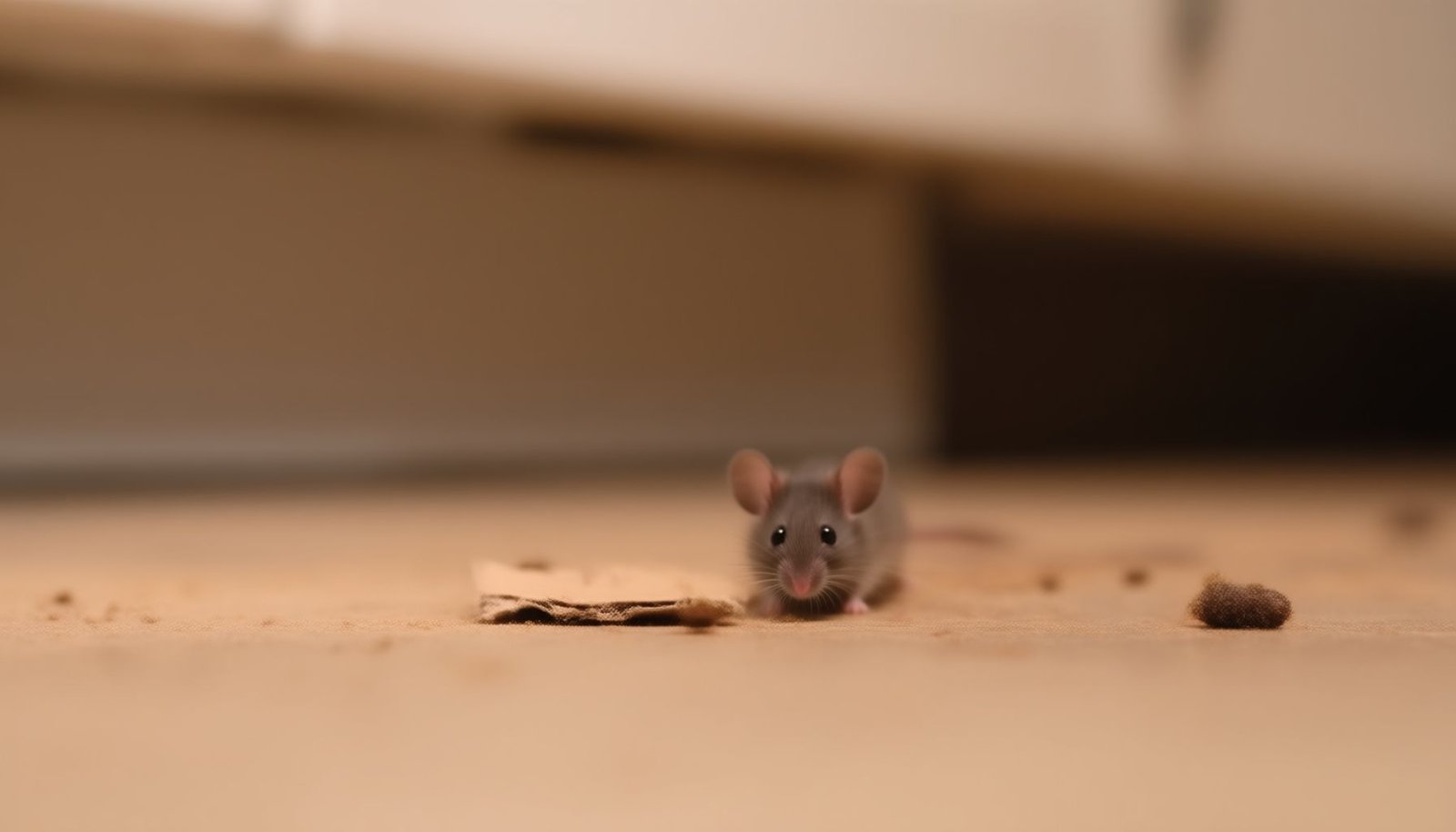
This close-up view shows the compressor area and rear wall gap behind a typical kitchen appliance — the exact warm, sheltered zone mice exploit as a nesting corridor, which is why traps placed anywhere else in the kitchen often fail entirely.
What Signs Tell You Mice Are Actually Behind Your Fridge or Stove (Not Just Nearby)?
Droppings in a drawer two feet away don’t confirm the nest is there — they just confirm travel. The signs that point specifically to behind an appliance are more subtle and more telling. Fresh droppings clustered directly underneath or around the base of the refrigerator or stove, rather than scattered in a line across the floor, indicate that a mouse is spending significant time in that one spot. Mouse droppings are roughly 1/4 inch long with pointed ends, and fresh ones are dark and moist-looking; older ones turn gray and harden.
Grease smear marks are another underrated indicator. Mice have oily fur, and as they repeatedly squeeze through the same narrow gap — say, the 1/4-inch space between the back of your refrigerator and the wall — they leave a dark, waxy smear trail. Shine a flashlight at an angle along the baseboards and behind the unit. If you see dark rubbing marks that look like someone smudged a pencil along the edge, that’s a runway. You’ll also sometimes catch a faint musky odor near the compressor area that doesn’t smell like food — that’s mouse urine, and it intensifies in enclosed warm spaces.
How Do You Actually Get Mice Out From Behind a Refrigerator or Stove?
The process has a specific sequence, and skipping steps is what leads to that frustrating cycle of catching one mouse and then seeing fresh droppings three days later. Follow this order carefully:
- Pull the appliance out completely. Unplug the refrigerator and slide both units fully away from the wall so you can see the entire space behind them. Do this in the evening — mice are nocturnal and more likely to bolt into a waiting trap than deeper into your walls if disturbed after dark.
- Clean the exposed area before setting any traps. Vacuum up droppings, wipe down grease residue from the back panel and floor, and remove any shredded nesting material. This step matters more than most guides let on — leaving the food source and scent markers in place while trapping just means another mouse will move in after you catch the current one.
- Set snap traps in the gap, not the open floor. Place two snap traps perpendicular to the wall in the space where the appliance normally sits, with the trigger pad facing the wall. Mice run along edges — they almost never cross open floor — so a trap in the middle of your kitchen is practically invisible to them.
- Use the right bait. Chocolate hazelnut spread, peanut butter mixed with a small piece of nesting material from the site, or dried fruit works better than the block cheese cliché. Use a pea-sized amount — enough to require the mouse to work at it, triggering the snap.
- Push the appliance back to within 2 inches of the wall, leaving a gap. This keeps the mouse’s runway active while the trap is inside the space. Check traps every 12–24 hours.
- Once activity stops for 5 full days, seal the entry points before pushing the units all the way back. Filling gaps without first eliminating the mice traps them inside — which creates a different, worse problem.
Picture this: a family pulls their stove out during a kitchen renovation and finds a fully built nest behind the rear leg, packed with shredded dryer lint, dog food, and three dead mice tangled in a loose electrical wire insulation strip. That’s not an edge case — it’s what an undetected behind-appliance infestation looks like after a few months. The mess is the evidence that the nest, not the trap placement, was the problem all along.
“The most common error I see is homeowners placing traps in open spaces because that’s where they’re spotting the mice. Mice behind refrigerators and stoves have usually established a defined travel path along the wall, and they won’t deviate from it for a trap in the center of the room. You need to intercept the path, not set a trap and hope they wander into it.”
Daniel Ferraro, NPMA-Certified Pest Management Professional, 18 years residential rodent control
What’s the Right Way to Seal Entry Points Near Appliances Without Making Things Worse?
Sealing first, trapping second is backwards — and it’s surprisingly common advice on home improvement forums. If you close up the gaps around a refrigerator or stove while mice are still active behind them, you’ve just locked a panicked animal into a space connected to your walls. Mice can chew through drywall, foam insulation, and soft wood in hours when motivated, so you haven’t contained the problem — you’ve redirected it deeper into your home’s structure. This is the same reason you’d want to read up on how hidden infestations spread through building cavities, which also applies to situations like how to get rid of termites in a crawl space — sealing before elimination almost always backfires.
Once trapping activity has gone quiet for at least five consecutive days, then you seal. The gaps that matter most around appliances are specific and often overlooked. The utility line pass-throughs — those holes where gas lines, water lines for ice makers, and electrical conduits enter through the wall — are almost never properly sealed at installation. A gas line connection for a stove often has a gap of 1/2 inch or more around the pipe at the wall, and that’s all a mouse needs. Mice can compress their bodies to squeeze through any opening larger than 1/4 inch, roughly the diameter of a pencil eraser.
Pro-Tip: Steel wool packed tightly into gaps around utility lines is effective short-term, but it rusts and loosens within a year. For a lasting seal near appliances, use a combination of steel wool and a DAP-brand or equivalent paintable latex caulk applied over the top. The steel wool prevents chewing through; the caulk holds it in place and prevents it from shifting.
| Gap Location | Recommended Seal Material | Notes |
|---|---|---|
| Gas/water line wall pass-through | Steel wool + caulk | Most commonly skipped during appliance installation |
| Gap between back of appliance and wall | Hardware cloth (1/4″ mesh) if permanent, or frequent trap monitoring if not | Don’t seal fully if mice may still be present |
| Floor-wall junction behind unit | Copper mesh + caulk | Copper mesh doesn’t rust like steel wool |
| Cabinet toe-kick gaps adjacent to appliance | Foam backer rod + caulk | Mice use these as secondary entry highways from behind appliances |
When Does the Problem Behind Your Appliances Require a Professional?
A single mouse that took up temporary residence behind the fridge is a DIY problem. A colony that’s been there long enough to leave behind gnawed wiring, multiple nesting sites, or grease trails running up into the wall cavity is a different category of issue. Wiring damage in particular is not something to minimize — mice chew through the plastic insulation on electrical cords to wear down their continuously growing incisors, and damaged appliance wiring is a documented fire hazard. If you pull out your stove and see shredded wire casing near the power cord, stop and call an appliance technician before you plug anything back in.
Honestly, the line between DIY and professional help depends on a few variables. A ground-level apartment in a dense urban area with shared walls has a fundamentally different infestation dynamic than a standalone house — in the apartment, eliminating mice behind your fridge doesn’t address the entry network running through the shared building structure. Similarly, older homes with more gaps in the utility penetrations and less uniform wall materials tend to have more complex exclusion needs. If you’ve been through two full trapping cycles — catching mice, seeing a break, then finding fresh droppings again within two weeks — that’s a signal the entry point is somewhere you haven’t found yet, and a professional exclusion inspection is worth the cost. Some pest problems also reveal larger structural vulnerabilities; the same logic applies to why professional inspection matters in enclosed spaces, much like the assessment process described in resources about getting rid of roaches in a dishwasher, where the appliance is just the visible part of a larger access problem.
Here’s what to watch for that signals the problem has grown past the appliance zone:
- Droppings found inside the stove drawer or inside the refrigerator’s bottom grille panel — not just behind the unit
- Gnaw marks on the power or gas supply lines at the wall connection, not just on food packaging
- A persistent ammonia-like odor near the appliance that doesn’t clear after cleaning — indicating an established urine-saturated nesting site
- Sounds of movement inside the wall directly behind the appliance, especially active sound after 11pm when the house is quiet
- Finding nesting material that includes insulation foam, which means mice have accessed wall or floor cavities and are pulling material out
The counterintuitive thing about appliance-based mouse infestations that almost no one talks about: catching mice is not the same as solving the problem. A female house mouse can produce 5–10 litters per year with 5–6 pups per litter, and she reaches reproductive maturity at just 6 weeks old. If you’ve had mice behind your refrigerator for two or three months without realizing it, the math on how many animals may have cycled through that space is uncomfortable. Catching four mice with snap traps and declaring victory while an unsealed 1/4-inch gap behind the gas line still exists means you’ll be back to square one within a month. Elimination and exclusion are a package deal — one without the other is just delay.
Get the appliance fully away from the wall, clean the space thoroughly, trap aggressively along the wall edge, and only then seal every gap you can find. Done in that order, this is a solvable problem for most homeowners. But the longer it goes unaddressed, the more embedded the infestation becomes in the building itself — and at that point, the appliance is just the symptom, not the source.
Frequently Asked Questions
how do I know if mice are living behind my refrigerator or stove?
Look for droppings along the back edges of the appliance, greasy rub marks on the wall or floor, and chewed wiring or insulation. You might also smell a musky odor or hear scratching and rustling at night — mice are most active between dusk and dawn. Finding even 5–10 droppings in the area is a strong sign you’ve got an active infestation.
what is the best way to get rid of mice behind a refrigerator or stove?
Snap traps baited with peanut butter are your most reliable option — place them perpendicular to the wall with the trigger end facing the baseboard, right next to the appliance. Set at least 2–3 traps per appliance since mice tend to travel the same path repeatedly. Check and reset traps every 24 hours for the best results.
is it safe to use poison bait near a refrigerator or stove?
It’s generally not recommended near appliances because mice can die inside walls or underneath the unit, leaving you with a decomposing odor that can last weeks. There’s also a risk that other pets or children could access the bait in tight kitchen spaces. Snap traps or electric traps are a safer and more practical choice in these areas.
how do mice get behind the refrigerator or stove in the first place?
Mice can squeeze through gaps as small as a dime — about 1/4 inch — so gaps around utility lines, gas connections, and the spaces where appliances meet the wall or floor are common entry points. They’re also attracted to the warmth that refrigerator compressors and stoves give off, especially in cooler months. Gaps under kitchen cabinets and behind baseboards are other common routes straight to your appliances.
how do I clean up mouse droppings behind my refrigerator or stove?
Don’t sweep or vacuum droppings dry — that can aerosolize hantavirus particles. Instead, put on gloves and a mask, spray the droppings with a bleach-water solution (1 part bleach to 10 parts water), let it soak for 5 minutes, then wipe everything up with paper towels and double-bag the waste. Wash your hands thoroughly afterward even if you wore gloves.
Disclaimer: This article is for informational purposes only and isn’t a substitute for professional pest control advice. Always read and follow the product label instructions exactly — label directions are legally binding and vary by brand and active ingredient. Keep all pesticides, baits and traps away from children and pets, ventilate treated areas as directed, and consider calling a licensed pest control professional if an infestation is large, recurring, or involves a structural pest like termites or carpenter ants.