
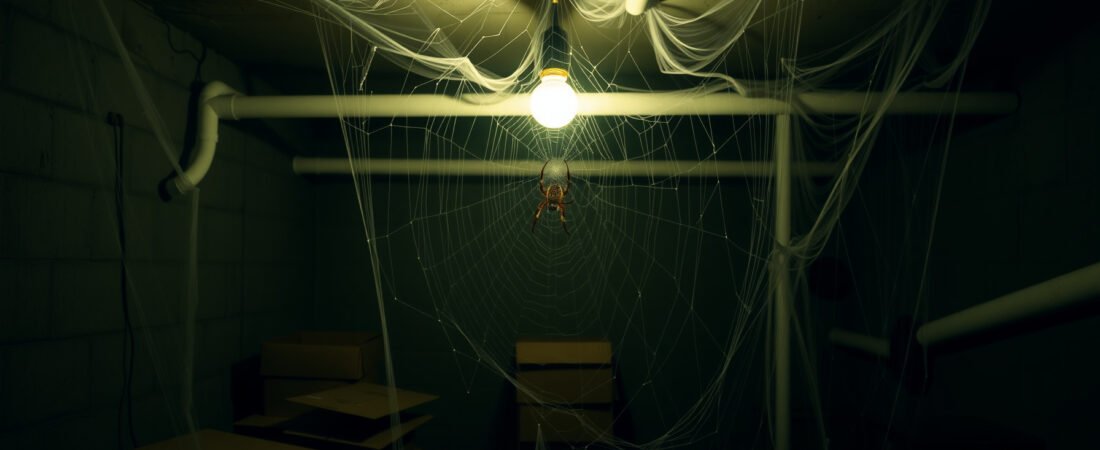
Killing the spiders you can see is the wrong place to start. That’s the mistake almost every basement spider guide makes — it hands you a can of spray and sends you on your way, when the real problem isn’t the spiders at all. Spiders don’t infest basements because they like concrete. They’re there because your basement is running a full-service buffet of smaller insects, and until you shut that buffet down, new spiders will move in within days of you clearing the old ones out.
Why Your Basement Keeps Attracting Spiders No Matter What You Do
Spiders are predators, not scavengers. They don’t wander into your basement looking for crumbs or standing water — they follow prey. If you’ve got a steady population of silverfish, fungus gnats, drain flies, or even the occasional moth, your basement is actively recruiting spiders from the surrounding environment. A single female house spider can lay up to 250 eggs per sac and produce more than a dozen sacs in her lifetime, so the math on “spray and hope” is never going to work in your favor.
The other factor most people overlook is moisture. High humidity in a basement doesn’t just make it uncomfortable — it drives up populations of the soft-bodied insects that spiders prefer to eat. Springtails, booklice, and certain midge species thrive in damp conditions, and where those insects flourish, spiders follow. Fixing the spider problem without addressing the moisture is like bailing out a boat without patching the hole.
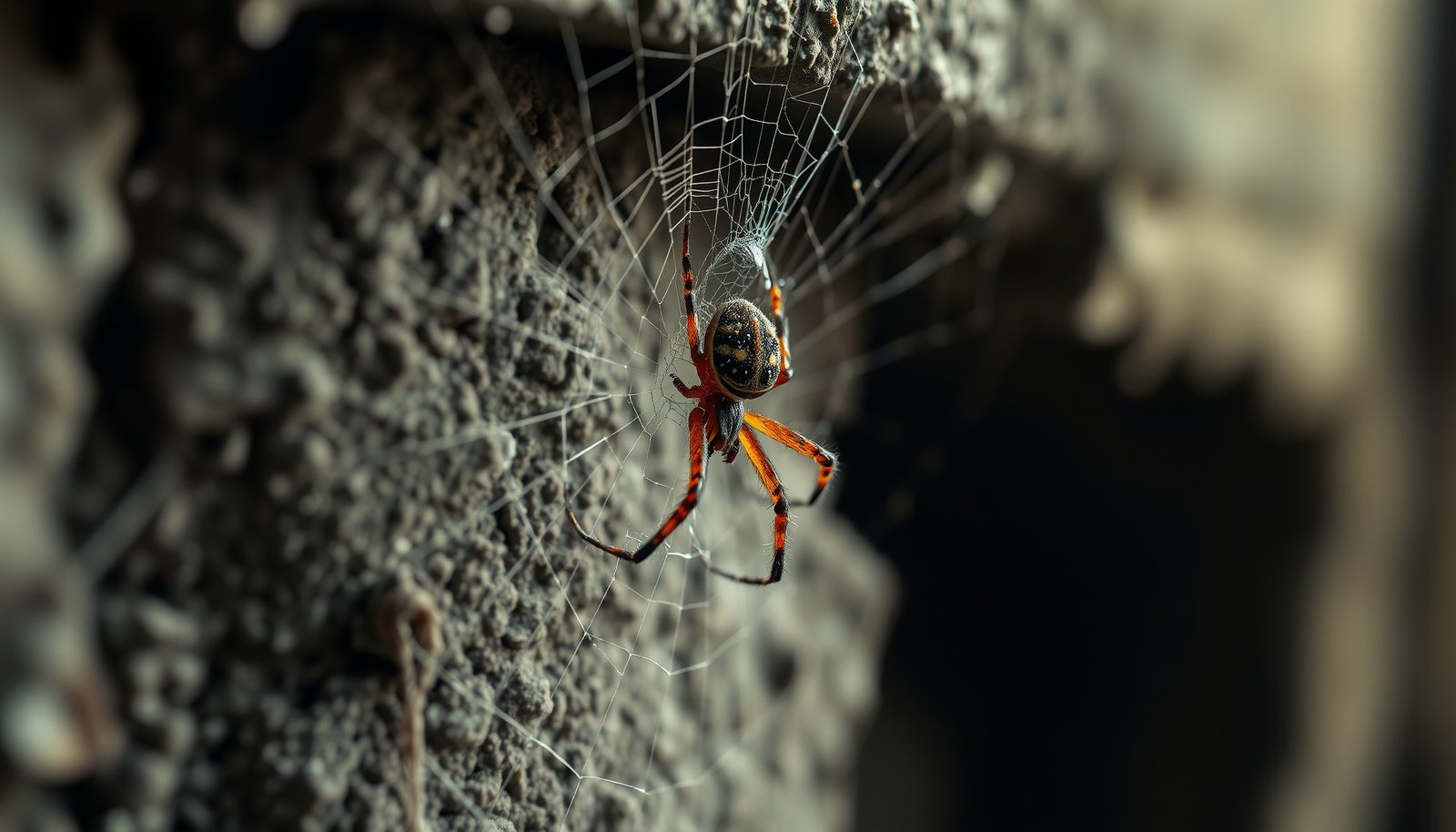
This image shows the typical web-heavy corners and cluttered storage areas where basement spiders establish their hunting territory — the exact spots most homeowners clean once and then ignore for months.
What Kind of Spiders Are Actually Living in Your Basement?
Identification matters before you treat, because different spider species behave very differently and respond to different control approaches. The three most common basement spiders in the US are the cellar spider (those long-legged, wispy ones that build messy cobwebs in every corner), the common house spider, and — depending on your region — the wolf spider. Wolf spiders are ground hunters, not web builders, which means sticky traps work well on them but aerosol sprays aimed at webs are largely useless.
The brown recluse deserves its own mention. It’s found primarily in a band running from Kansas and Nebraska down through Texas and across to Georgia, and it genuinely prefers undisturbed, dark spaces — exactly what a cluttered basement offers. Brown recluses can survive over 6 months without food or water, which means even an empty basement won’t drive them out once they’re established. If you’re in recluse territory and finding spiders with a violin-shaped marking behind their eyes, that changes the urgency of the situation significantly.
How to Eliminate the Insect Population That’s Feeding Your Spider Problem
This is the step that actually makes the difference between a temporary fix and a permanent one. Cutting off the food supply forces spiders to relocate because there’s no longer a reason to stay. Here’s how to work through it systematically:
- Identify and fix moisture sources first. Use a hygrometer to check your basement’s relative humidity — anything above 55% is actively supporting a prey insect population. A dehumidifier running continuously can drop humidity levels enough to collapse the food chain that spiders depend on within 2-3 weeks.
- Seal floor drains and check for slow leaks. Drain flies can breed in a drain with as little as a thin organic film lining the pipe — you don’t need standing water. Pour a drain gel treatment down any floor drains and check pipe connections at the water heater and washing machine hookups.
- Replace white incandescent bulbs with yellow LED bulbs. White and blue-spectrum light attracts flying insects through basement windows and gaps — yellow bulbs emit a spectrum that insects are essentially blind to, reducing the nightly insect draw by a meaningful margin.
- Clear all cardboard boxes and stored paper goods. Cardboard is a silverfish and cockroach magnet. Moving everything into sealed plastic bins eliminates both the prey insects and the hiding spots spiders use to establish webs.
- Apply a residual insecticide along the perimeter. Spraying a pyrethroid-based product (like bifenthrin or cypermethrin) along the base of basement walls creates a treated zone that kills incoming insects before spiders can hunt them. Reapply every 60-90 days.
- Place sticky insect monitors in corners and under stored items. These serve double duty — they trap ground-hunting spiders like wolf spiders directly, and they tell you which other insects are still active so you know if your other steps are working.
One honest nuance worth acknowledging: how fast this works depends heavily on your basement’s construction. A finished basement with drywall and insulation holds moisture differently than a bare concrete space with exposed block walls. Block walls are porous and can wick groundwater even without a visible leak, which means a dehumidifier alone may not be enough — you may need to apply a masonry waterproofing sealer to the interior walls before humidity control becomes effective.
How to Seal Entry Points So Spiders Can’t Return
Spiders entering from outside is a bigger factor than most people realize. A typical basement has multiple soft entry points that aren’t obvious until you look with a flashlight on a sunny day — gaps around pipe penetrations, cracks in the sill plate where wood meets concrete, and spaces around window frames that haven’t been caulked in years. Spiders can squeeze through a gap of roughly 1/16 of an inch, which means cracks you’d overlook without thinking twice are open doors for them.
Picture this: you’ve done a thorough spray treatment, pulled down all the webs, and the basement looks clean. Six weeks later, the webs are back and you’ve got just as many spiders as before. The spray didn’t fail — the entry points you never sealed simply recruited a new population from the yard. Exterior spraying along the foundation helps, but sealing gaps with silicone caulk or expanding foam is the only fix that doesn’t require constant reapplication. Pay particular attention to gaps where utilities enter the basement — these are almost always present and almost always ignored. You might also find similar entry-point vulnerabilities around your home’s exterior when inspecting for other pest issues; the same principles that apply to What Do Rat Holes Look Like Outside Your Home? are useful for training your eye to spot subtle exterior penetrations you’d otherwise walk past.
Pro-Tip: Before caulking basement window frames, check whether the windows themselves close fully — a warped basement window that doesn’t seal in the upper corner is a more significant entry point than every pipe gap combined. Press a piece of tissue against the frame on a windy day; if it moves, air (and spiders) are getting through.
Which Spider Treatments Actually Work — and Which Are a Waste of Money
The spider control market has a lot of products that are either ineffective for basements specifically or only work under conditions that don’t reflect how most people actually use them. Breaking down what’s worth your money versus what isn’t:
| Treatment Type | Effectiveness for Basement Spiders | Key Limitation |
|---|---|---|
| Residual pyrethroid spray (bifenthrin, cypermethrin) | High — especially for web-building species | Breaks down faster on porous concrete; reapply every 60 days |
| Sticky glue traps | High for ground hunters (wolf spiders) | Does nothing for web builders; needs frequent replacement |
| Aerosol contact sprays (RAID, etc.) | Low — kills on contact only, no residual effect | Doesn’t prevent reinfestation; mostly theater |
| Essential oil-based repellents (peppermint, tea tree) | Low to negligible | Evaporate within hours; no peer-reviewed data supporting efficacy in basements |
The counterintuitive finding that most pest control content skips over: spiders are actually less susceptible to insecticides than the insects they eat. A spider’s legs are long relative to its body, meaning less of its body surface contacts a treated floor compared to a crawling beetle or silverfish. Residual sprays work on spiders, but they work better as a barrier against prey insects — which is exactly why the two-part approach (treat the prey population, apply residual at the perimeter) consistently outperforms just spraying for spiders directly.
“The homeowners I see who have recurring spider problems in basements almost universally skipped the prey-reduction step. They spray, they see fewer spiders for a month, and then they’re calling me again. Spiders are the symptom — the insect population underneath them is the actual problem. Address that, and the spider pressure drops naturally within a single season.”
Dr. Marcus Tillman, Board Certified Entomologist and urban pest management consultant, formerly with the University of Kentucky Extension Service
There’s also a product category worth mentioning that often gets lumped in with legitimate treatments: ultrasonic repellers. The short version is they don’t work on spiders with any documented reliability, and the Federal Trade Commission has taken action against manufacturers making unsubstantiated claims. Save the outlet for your dehumidifier.
When to Stop DIY and Call a Professional
Most basement spider situations are completely manageable without professional help if you work through the moisture, food source, and entry point issues methodically. The calculus changes in a few specific scenarios. If you’re finding brown recluses consistently — not one or two that wandered in, but multiple spiders in multiple locations over several weeks — that warrants a professional inspection because recluse populations can establish in wall voids and insulation where DIY treatments can’t reach. Similarly, if your basement has a genuine moisture intrusion problem (water coming through walls or floor during rain, not just condensation), no pest treatment will hold until the structural issue is resolved.
There’s also a practical threshold question for renters. If you’re in a rental unit and the spider problem is tied to moisture intrusion or structural entry points that you can’t seal yourself, that’s a landlord repair issue — not a tenant DIY project. Documenting the problem with photos and written notice matters more than reaching for a can of spray. The legal dynamics around pest control and rental units can get complicated quickly; the same way renters dealing with bed bug treatments need to understand their rights (see Do You Have to Pay Rent During a Bed Bug Treatment? for how that framework works), spider infestations tied to building deficiencies are generally a landlord’s responsibility to address at the source.
Here’s what a professional brings that DIY doesn’t: access to professional-grade residual concentrates applied at labeled rates, the ability to treat wall voids and structural cavities, and — more practically — a trained eye that can spot moisture sources and structural entry points that aren’t obvious to someone who doesn’t spend every day looking at them. Whether that’s worth the cost depends entirely on how bad the infestation is and how much of the underlying work you’re able to do yourself.
The things that make basement spider control permanent are unglamorous: a dehumidifier running consistently, stored items in sealed bins, caulk in the gaps around your pipes, and a perimeter spray reapplied twice a year. None of it is a single dramatic fix — it’s a set of conditions you maintain. But get those conditions right, and you’re not fighting spiders seasonally anymore. You’ve just made your basement a place they have no reason to be.
Frequently Asked Questions
what kills spiders in basement fast?
A direct spray of WD-40, rubbing alcohol, or a store-bought insecticide like Ortho Home Defense will kill spiders on contact. For faster results across a larger area, a fogger or bug bomb can knock down heavy populations in one treatment, though you’ll still need to seal entry points afterward or they’ll come back.
how do I keep spiders out of my basement permanently?
The most permanent fix is sealing every crack, gap, and opening along your foundation, window frames, and utility penetrations using caulk or expanding foam. Spiders don’t just wander in randomly — they’re following insects, so eliminating other bugs in your basement removes their food source and makes the space far less attractive to them long-term.
how do I know if I have a dangerous spider in my basement?
In the US, the two spiders you actually need to worry about are the black widow and the brown recluse. Black widows are shiny black with a red hourglass marking on the underside, while brown recluses are tan to light brown with a violin-shaped marking on their back — if you spot either one, don’t handle them and consider calling a pest control professional.
does a dehumidifier help get rid of spiders in the basement?
Yes, it genuinely helps. Spiders are attracted to damp basements because moisture draws in the insects they feed on. Keeping your basement humidity below 50% with a dehumidifier makes the environment less hospitable for both spiders and their prey, which reduces spider activity over time.
what scent keeps spiders away in the basement?
Peppermint oil is the most commonly used natural repellent — mix 15 to 20 drops with water in a spray bottle and apply it along baseboards, corners, and entry points. It won’t eliminate an existing infestation, but it can discourage spiders from settling in treated areas, especially when used alongside other prevention methods.
Disclaimer: This article is for informational purposes only and isn’t a substitute for professional pest control advice. Always read and follow the product label instructions exactly — label directions are legally binding and vary by brand and active ingredient. Keep all pesticides, baits and traps away from children and pets, ventilate treated areas as directed, and consider calling a licensed pest control professional if an infestation is large, recurring, or involves a structural pest like termites or carpenter ants.