
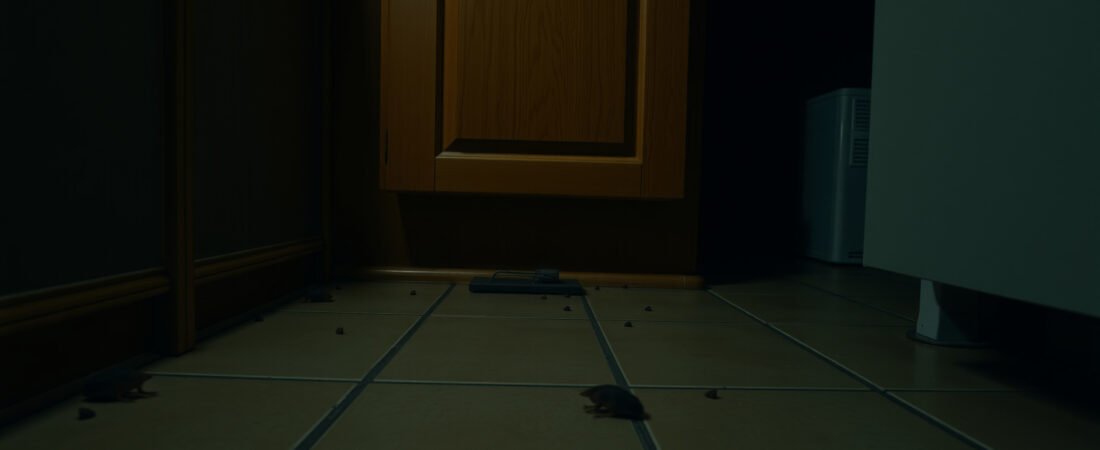
Traps and poison alone won’t get rid of rats in your house — and that’s exactly why so many people deal with the same infestation for months. The real problem isn’t catching rats. It’s that every new rat killed is immediately replaced by another one entering through the same gap you never sealed. Speed comes from cutting off access first, then eliminating what’s already inside. Do it in the wrong order and you’re just running a revolving door.
Why Are Rats in Your House in the First Place?
Rats don’t wander into homes randomly. They follow three things: food, water, and warmth — and they find all three faster than you’d expect. A Norway rat can detect food odors through walls and flooring, and once one scout finds a reliable source, it leaves a pheromone trail that guides others from the same colony to your kitchen within 24–48 hours.
Here’s what most people get wrong: rats aren’t a sign of a dirty home. Pet food left out, a compost bin too close to the foundation, a leaky pipe under the sink — these are all the invitation a rat needs. A female Norway rat can produce up to 84 offspring per year, so a small problem compounds fast if the attractants aren’t removed alongside the rodents.

This close-up shows the kind of gnawed structural damage rats leave near entry points — the frayed wood and widened gaps are exactly what to look for when you’re tracing how rats got in.
How Are Rats Getting Into Your House?
A Norway rat — the most common house rat in the US — can squeeze through a gap as small as half an inch. Roof rats, which are sleeker and more agile climbers, only need a half-inch opening too, but they tend to enter higher up: through roof vents, gaps around fascia boards, or where utility lines punch through the exterior wall. Picture this: a homeowner spends $300 on traps and bait stations, catches four rats over two weeks, and declares victory — then wonders why the scratching in the walls is back by month’s end. The entry point was a 3/4-inch gap where a dryer vent cap had cracked. It was never sealed.
Before you set a single trap, do a full perimeter inspection. Check where pipes enter the foundation, look at the bottom of garage doors, and run your hand along the roofline if it’s safe to do so. Gaps around HVAC lines, damaged soffit vents, and deteriorated door sweeps are the most commonly missed entry points. Steel wool packed into gaps and secured with caulk works as a temporary fix — but hardware cloth (1/4-inch mesh) screwed over openings is the only permanent solution, because rats will chew through foam, rubber, and wood to get back to a known food source.
What’s the Fastest Way to Eliminate Rats Already Inside?
Once entry points are sealed, you switch to elimination mode. Snap traps remain the single most effective tool for fast results — they kill instantly, they’re cheap enough to use in large numbers, and they don’t create the secondary poisoning risk that rodenticides do. The counterintuitive part: most people set too few traps and place them wrong. You need a minimum of six to eight snap traps for a moderate infestation in a standard home, placed along walls where rats travel — never out in the open, because rats are naturally neophobic and will avoid new objects in exposed areas for several days.
Here’s the sequence that actually works fast:
- Seal all entry points first — hardware cloth, steel wool with caulk, or sheet metal flashing depending on the location and gap size.
- Remove all food sources — transfer pantry items to sealed glass or metal containers, clean up pet food at night, and fix any dripping pipes or faucets.
- Set snap traps in rat runways — place them flush against walls, in dark corners, inside cabinets, and along the path between nesting areas and food. Perpendicular to the wall, trigger facing outward.
- Use the right bait — peanut butter is effective but soft bait like nesting material (cotton balls, small pieces of twine) can work even better for roof rats, which are driven partly by nesting instinct.
- Check and reset traps every 24 hours — a dead rat left in a trap will make other rats avoid that location within 12–24 hours due to alarm pheromones.
- Wear gloves for all handling — rats can carry Hantavirus and leptospirosis; never handle dead rodents or nesting material with bare hands.
Pro-Tip: Don’t bait snap traps the first night you set them. Leave them unset and baited for 2–3 nights so rats get comfortable approaching them. Rats are highly suspicious of new objects and this “pre-baiting” step alone can double your catch rate once you finally set the trigger.
Should You Use Rat Poison or Stick with Traps?
Rodenticide bait stations can feel like the easy answer — set it and forget it. But there’s a problem that most homeowners don’t find out about until it’s too late. Rats that consume anticoagulant poison don’t die at the bait station. They crawl off to die somewhere hidden — inside walls, under subflooring, in ceiling voids. The decomposition smell in a sealed wall cavity can last two to eight weeks and there’s virtually no easy way to remove the carcass without opening up the wall. If you’re dealing with rats inside the living structure (not just in a crawlspace or detached garage), snap traps let you recover and dispose of every carcass on your schedule.
That said, rodenticides have a legitimate role in certain situations. For rats in crawlspaces, attics, or outbuildings where you can access the area to monitor and remove carcasses, tamper-resistant bait stations with second-generation anticoagulants (brodifacoum, bromadiolone) are highly effective. The honest nuance here is that in homes with pets or children, the secondary poisoning risk is real — dogs and cats that eat a poisoned rat can suffer anticoagulant toxicity, and children who access bait stations improperly are at serious risk. In those environments, traps are the only responsible choice.
| Method | Best For | Main Drawback |
|---|---|---|
| Snap traps | Rats inside living spaces, kitchens, walls | Must be checked daily; requires handling carcasses |
| Rodenticide bait stations | Crawlspaces, attics, outbuildings | Rats die in hidden locations; risk to pets/children |
| Electronic traps | Low-infestation situations, trap-shy rats | Higher cost; batteries; only holds one rat per reset |
| Live traps | When you need to confirm species or avoid killing | Requires release far from home; rats return if < 1 mile away |
“The single biggest mistake homeowners make is treating a rat infestation as a trapping problem when it’s actually an exclusion problem. You can eliminate every rat currently in the building, but if entry points remain open, new individuals from the same colony will reinfest within two to three weeks. Exclusion has to come first — it’s not optional.”
Dr. Marcus Bellamy, Urban Rodentology Specialist and NPMA-Certified Pest Control Professional
How Do You Know the Infestation Is Actually Gone?
One of the most frustrating parts of a rat problem is not knowing when it’s over. Rats are nocturnal and secretive — you can go two weeks without seeing one and still have active activity happening inside the walls at 2am. The reliable way to confirm elimination is to look for fresh evidence, not absence of sightings. Fresh rat droppings are dark brown, moist, and pliable. Old droppings are dry, crumbly, and gray. If every dropping you find is old and dry, and your snap traps have been empty for 10–14 consecutive days, that’s a meaningful sign the population inside has been eliminated. Distinguishing between pest signs can be surprisingly tricky — similar logic applies when homeowners try to tell fresh rodent activity from old, especially in attics and crawlspaces where evidence accumulates over time.
Beyond droppings, watch for these indicators of active vs. resolved infestation:
- Grease marks on walls — rats have oily fur and leave dark smear marks along their regular travel paths; fresh marks look glossy, old ones are dull and faded
- Gnaw marks — fresh gnawing is pale and light-colored; old gnaw damage is dark and weathered
- Scratching sounds at night — Norway rats tend to make low, heavy sounds in walls and under floors; roof rats produce lighter, faster scratching sounds higher up in ceilings
- Nesting material disturbance — shredded insulation, chewed cardboard, or gathered fabric in attic corners that wasn’t there before
- Pet behavior — cats and dogs often detect rodent activity before humans do; unusual fixation on a wall, cabinet, or appliance gap is worth investigating
Keep in mind that if you’re in an apartment building or townhome, eliminating rats in your unit doesn’t protect you from reinfestation if adjacent units are still harboring activity. This is a harder problem — one that’s structurally similar to what happens with other pests in multi-unit buildings. What to do when pest control treats your unit but not your neighbor’s is exactly the kind of situation that turns a solved rat problem back into an active one within weeks.
When Should You Call a Professional for Rats?
DIY rat control works well in most single-family homes when you catch the problem early and follow the exclusion-first approach. But there are specific situations where professional help isn’t just convenient — it’s genuinely the faster path. If rats are nesting in wall voids between floors, inside insulated ceiling panels, or under a concrete slab, accessing the colony and confirming full elimination is genuinely difficult without inspection tools (fiber optic cameras, moisture meters to detect decomposition) that most homeowners don’t have.
A licensed pest control professional will do something a homeowner often skips: a full structural assessment to identify every potential entry point, not just the obvious ones. Rats that have been in a home for more than a few weeks often establish multiple entry and exit routes, and missing even one of them means the infestation persists. If you’ve run two full rounds of trapping over 30+ days without resolution, or if you’re finding evidence in multiple areas of the home simultaneously, that’s the threshold where professional exclusion work is worth the cost — and it will almost always be faster than continuing to DIY.
Getting rats out of your house fast is entirely doable — but “fast” means getting the sequence right, not just acting quickly. Seal the building, remove attractants, trap aggressively, and verify with evidence rather than assumption. Do those four things in order and most rat infestations in a single-family home resolve within two to three weeks. Skip the first step and you’ll still be dealing with this problem six months from now.
Frequently Asked Questions
how do you know if you have rats in your house?
The most common signs are droppings (dark, capsule-shaped pellets about 1/2 inch long), gnaw marks on food packaging or wood, and greasy rub marks along baseboards where rats travel. You might also hear scratching or scurrying sounds in the walls or ceiling at night, since rats are most active after dark.
what is the fastest way to get rid of rats in your house?
Snap traps are the fastest and most effective method — place them along walls and in corners where you’ve seen droppings, since rats stick to edges rather than open spaces. Use peanut butter or nesting material as bait, and set multiple traps at once rather than just one or two. Most homeowners see results within 2 to 3 nights when traps are placed correctly.
what smells will keep rats away?
Rats are sensitive to strong scents like peppermint oil, ammonia, and capsaicin, but these don’t work well as a standalone fix — they wear off quickly and won’t drive out an active infestation. They’re better used as a secondary deterrent after you’ve already eliminated the rats and sealed entry points.
how are rats getting into my house?
Rats can squeeze through a hole as small as 1/2 inch, so they commonly enter through gaps around pipes, cracks in the foundation, damaged roof vents, and spaces under exterior doors. Walk the outside of your home and seal any openings you find with steel wool packed tightly inside, then covered with caulk or hardware cloth — rats will chew through foam or plastic insulation.
is it safe to stay in a house with rats?
It’s not ideal, especially if you have kids or pets. Rats can carry diseases like leptospirosis and hantavirus, and their droppings become airborne when disturbed, which creates a real health risk. You don’t need to leave your home, but you should avoid handling droppings without gloves and an N95 mask, and address the infestation as quickly as possible rather than waiting it out.
Disclaimer: This article is for informational purposes only and isn’t a substitute for professional pest control advice. Always read and follow the product label instructions exactly — label directions are legally binding and vary by brand and active ingredient. Keep all pesticides, baits and traps away from children and pets, ventilate treated areas as directed, and consider calling a licensed pest control professional if an infestation is large, recurring, or involves a structural pest like termites or carpenter ants.