
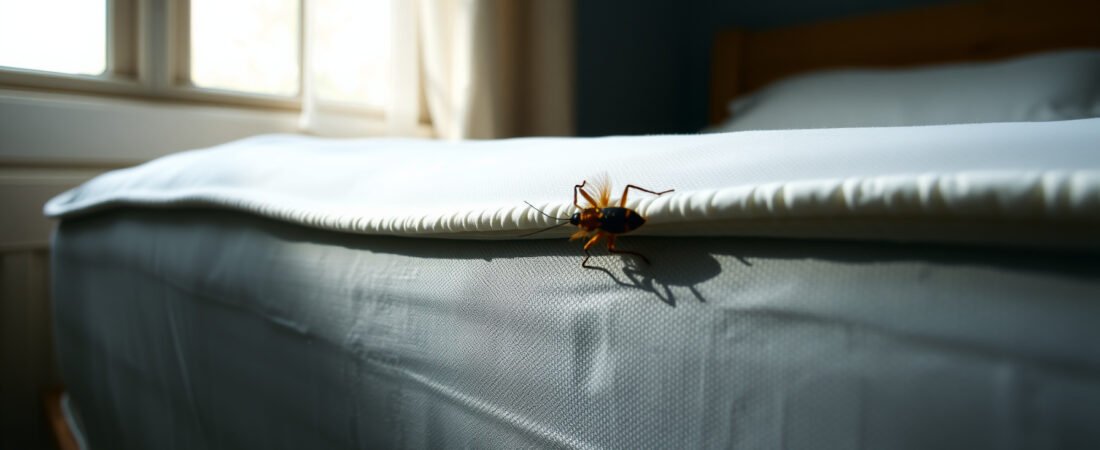
Bat bugs and bed bugs are so visually identical that even trained entomologists need a microscope to tell them apart — and that single fact explains why thousands of homeowners waste money on bed bug treatments that never work. If bats are (or were) living in your attic, crawl space, or wall voids, the insect biting you at night might not be a bed bug at all. And treating for the wrong pest is exactly as effective as doing nothing.
Why Bat Bugs and Bed Bugs Look Almost Identical (And Why That Matters)
Both insects belong to the family Cimicidae. Bat bugs (Cimex adjunctus in the eastern US, Cimex pilosellus in the west) evolved from the same ancestral line as bed bugs (Cimex lectularius), which means millions of years of parallel evolution produced two bugs that are, for all practical visual purposes, nearly the same creature. Both are flat, oval, reddish-brown, wingless, and roughly the size of an apple seed — about 4–5mm long as adults. Both have the same six-legged silhouette and the same habit of hiding in cracks and crevices during daylight hours.
The one structural difference that separates them — the length of the fringe hairs (setae) on the pronotum, which is the shield-shaped plate behind the head — is genuinely invisible without a hand lens or microscope at 10x magnification or more. Bat bugs have longer, more densely packed hairs on that plate; bed bugs have shorter, sparser ones. That’s it. That’s the entire visual distinction between two insects that will completely change how you approach treatment.
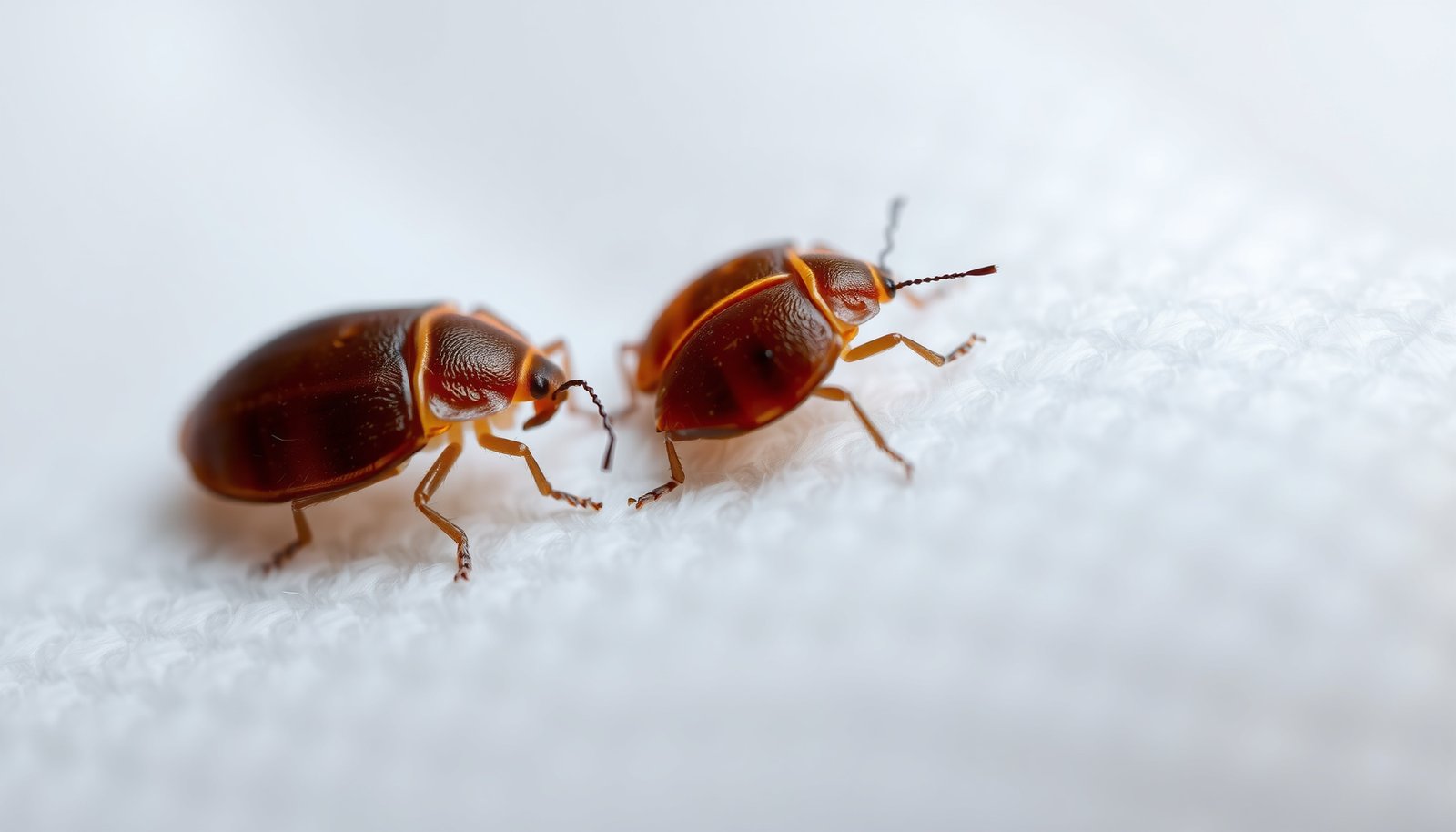
This close-up comparison shows the pronotum fringe hair length difference between a bat bug (left) and a bed bug (right) — the single microscopic detail that determines which pest you’re actually dealing with and which treatment will actually fix it.
What Physical Features Actually Tell Bat Bugs Apart From Bed Bugs?
Since you almost certainly can’t see the hair difference with the naked eye, here’s what to actually look at when you’re trying to make a field identification. Collect a specimen — use tape to lift it from a surface — and examine it under the strongest magnification you have. A cheap jeweler’s loupe (10x) from a hardware store is enough to see the pronotum hairs if you know what you’re looking for. A smartphone macro lens attachment works too.
Beyond hair length, there are a few secondary characteristics worth knowing, though none are definitive on their own:
- Pronotum fringe hairs: Bat bug hairs are noticeably longer than the width of the bug’s eye. Bed bug hairs are shorter than the eye width. This is the only reliable visual marker.
- Color: Both range from pale tan (unfed) to deep mahogany (recently fed). Color tells you nothing about species — it only tells you whether the bug has eaten recently.
- Size: Adults of both species are 4–5mm. Nymphs of both start at roughly 1.5mm. Size is not a distinguishing feature at any life stage.
- Body shape: Both are flat when unfed, swollen and elongated after a blood meal. Shape alone cannot separate them.
- Leg structure: Both have identical six-legged configurations with similar tarsal segments. Not useful for field ID.
The honest answer is that if you can’t get magnification on the pronotum, you cannot visually confirm which species you have. The most reliable path is to collect several specimens in a sealed container and take them to your county extension office or a pest management professional who can confirm the species before any treatment begins.
“The number of bat bug infestations misidentified as bed bugs is genuinely significant in regions with high bat populations. A customer spends $800 on a bed bug heat treatment, gets relief for a few weeks, and then the bugs come back — because the bat colony roosting above the bedroom ceiling was never addressed. The source host matters enormously to treatment outcome.”
Dr. Mara Vinson, Urban Entomologist and NPMA-Certified Pest Management Professional, Midwest Extension Advisory Board
Where You Find Them in Your Home Tells You More Than Looking at the Bug Itself
Here’s the counterintuitive part that almost no article about bat bugs bothers to explain: location is actually a more useful diagnostic tool than trying to visually ID the insect. Bat bugs require bat blood to reproduce successfully. They’ll bite humans opportunistically — especially when their primary host (the bat colony) has left or been excluded — but they can’t complete a full reproductive cycle on human blood alone. A female bat bug that can’t access bat blood will struggle to produce viable eggs at the same rate a bed bug would.
This means the distribution pattern inside your home is different in a way you can actually observe without a microscope. Picture this: a homeowner in an older farmhouse near a wooded area starts finding bites on her arms every morning for two weeks. She tears apart her bedroom looking for bed bugs, finds insects that match every description, treats aggressively — and the problem keeps cycling back. A pest inspector eventually finds a colony of 40–60 little brown bats in the attic directly above her bedroom. The “bed bugs” were bat bugs that had migrated down through wall voids when the colony’s population density got high enough. That’s a bat bug infestation, not a bed bug infestation, and the fix is completely different.
Pro-Tip: If you’re finding biting insects concentrated near attic access points, around chimney chases, or in rooms directly below an attic or crawl space — especially in an older home — add “bat colony present or previously present” to your mental checklist before assuming bed bugs. Bat bugs almost always enter living spaces from above, not from luggage or secondhand furniture.
How Do You Actually Treat Bat Bugs vs Bed Bugs Differently?
This is where misidentification has real financial consequences. Bed bug treatment — whether heat, chemical, or a combination — targets the insect population living in your bedroom and adjacent spaces. That works when the infestation source is hitchhiker bed bugs brought in from outside. Bat bugs require a two-part approach, and skipping either part guarantees re-infestation within weeks.
The treatment sequence for bat bugs looks like this:
- Identify and confirm the bat roost. A pest inspector or wildlife specialist needs to locate where bats are (or were) roosting. Common locations: attic spaces, wall voids near chimneys, behind soffits, in crawl spaces. There’s no point treating the bugs until you know where they’re coming from.
- Exclude the bats legally and humanely. Federal and many state laws protect bats, particularly during maternity season (roughly May through August in most of the US), when exclusion is prohibited to avoid trapping flightless pups. Exclusion involves one-way devices that let bats exit but not re-enter. This must happen outside maternity season.
- Treat the roost area directly. Once bats are excluded, the abandoned roost — with its accumulated guano, shed skins, and remaining bugs — needs to be treated with appropriate insecticides. Residual pyrethroid sprays applied to roost surfaces are commonly used here.
- Seal migration pathways into living spaces. Bat bugs travel through wall voids, around pipe penetrations, and through gaps in ceiling fixtures. Sealing these entry points prevents surviving bugs from migrating down into bedrooms and living areas.
- Treat living spaces for any bat bugs that have already migrated. Standard bed bug treatment protocols — heat treatment, insecticide application, or both — apply here for the insects already present in bedrooms and furniture.
- Follow up within 2–3 weeks. Bat bug eggs can survive initial treatments. A follow-up inspection and treatment cycle catches newly hatched nymphs before they mature and bite again.
One honest nuance worth acknowledging: in warmer climates or in homes with year-round bat activity, the timeline for steps 1 through 3 can stretch considerably. If you’re in the southeastern US where some bat species are active almost year-round, the window for legal exclusion may be narrower than in northern states. Check with your state wildlife agency before scheduling any bat work. The pest side of the problem can be addressed in the meantime, but without bat exclusion, it won’t stay fixed.
Bat Bugs vs Bed Bugs: A Direct Comparison of the Key Differences
To put everything side by side in one place, here’s what actually separates these two insects across the factors that matter most to identification and treatment. Keep in mind that the visual differences are genuinely minor — the behavioral and locational differences are far more useful in practice.
| Feature | Bat Bug (Cimex adjunctus / pilosellus) | Bed Bug (Cimex lectularius) |
|---|---|---|
| Pronotum fringe hairs | Long — longer than eye width | Short — shorter than eye width |
| Preferred host | Bats (humans only opportunistically) | Humans (primary host) |
| Reproduction on human blood | Limited — cannot sustain full life cycle | Full life cycle sustained on human blood alone |
| Typical home entry route | From attic/crawl space down through wall voids | Hitchhiked in on luggage, furniture, clothing |
| Required treatment component | Bat exclusion + insecticide + void sealing | Heat and/or insecticide to infested areas |
The reproduction difference is probably the most underappreciated fact in this whole comparison. Bat bugs won’t create a self-sustaining population in your bedroom the way bed bugs will. A bed bug female can lay 1–5 eggs per day and up to 500 eggs over her lifetime, sustaining a rapidly growing infestation purely off the humans sleeping nearby. A bat bug population without access to bat blood will gradually decline in living spaces — which is actually why bat bug infestations often seem to “fade” on their own after a few months, only to recur the following year when the bats return to their roost.
That cyclical pattern — bites in late summer or fall, quiet winter, bites return the following summer — is one of the most telling behavioral clues that you’re dealing with bat bugs, not bed bugs. Bed bug infestations don’t follow seasonal cycles. They grow continuously until treated.
What to Do Right Now If You’re Not Sure Which One You Have
Don’t treat first and ask questions later. That’s the single most expensive mistake people make with this specific problem. A heat treatment for bed bugs runs $1,000–$2,500 for a typical home. If the underlying bat colony isn’t addressed, you’ll be spending that money again — possibly more than once. Getting a correct identification before treatment isn’t being overly cautious; it’s being financially sensible.
Here’s a practical sequence for right now:
- Collect specimens carefully. Use clear tape pressed against harborage areas (seams of mattresses, wall-floor junctions near the attic, ceiling light fixtures) to lift bugs without crushing them. Transfer to a small sealed container or zip bag.
- Check your attic or crawl space for bat evidence. Bat guano looks like elongated dark pellets about 5–8mm long, often piled in cone shapes or scattered across insulation. A strong ammonia smell in an attic is also a reliable indicator of a bat roost.
- Take specimens to your county extension office. Most extension offices will identify insects for free or a nominal fee. This is faster and cheaper than paying a pest control company to guess.
- Ask your pest control company specifically about bat bugs before any treatment begins. A company that doesn’t ask about bat history in your home before treating isn’t doing a thorough job. If you’re ever reviewing what a pest control agreement actually commits you to, understanding how to read a pest control contract can save you from paying for repeat treatments that were never going to work.
- Note the timing of your bites. Keep a simple log for two weeks — which rooms, what time of night, what season. Seasonal patterns and concentration near attic-adjacent rooms strongly suggest bat bugs.
One more thing worth knowing if you’re in a multi-unit building: bat bug problems in apartments or condos can migrate between units just as bed bugs can — through shared wall voids, utility chases, and plumbing penetrations. If your building has a bat roost and a neighbor’s unit is being treated without the bat source being addressed, treating one unit while leaving adjacent ones untreated creates the exact conditions for re-infestation to cycle repeatedly through the building.
Bat bugs are genuinely one of the most misdiagnosed pest problems in the US — not because they’re rare, but because the identification barrier is almost absurdly high for a visual comparison. The good news is that once you know the bats are the source, the path forward is clear. Get the bats out legally, seal the migration routes, treat what’s already in your living space, and the problem goes away for good. That’s a much better outcome than six rounds of bed bug treatment that never quite sticks.
Frequently Asked Questions
How do I tell the difference between bat bugs vs bed bugs?
The biggest difference is the fringe hairs on the pronotum — that’s the shield-shaped segment behind the head. Bat bugs have longer fringe hairs that are about as long as the width of their eye, while bed bugs have shorter hairs. Both are about 1/4 inch long, oval, and reddish-brown, so you’ll likely need a magnifying glass to tell them apart.
Can bat bugs bite humans like bed bugs do?
Yes, bat bugs can and do bite humans, but they strongly prefer bat hosts. If bats are removed from your home, bat bugs will migrate downward through walls and ceilings looking for a new blood meal — and that’s usually you. The bites look identical to bed bug bites, so the location of the infestation in your home is often the better clue.
Where do bat bugs hide in a house compared to bed bugs?
Bat bugs are almost always found near where bats roost — think attics, wall voids, chimneys, and spaces between floors. Bed bugs cluster close to where people sleep, like mattress seams, box springs, and bed frames. If you’re finding bugs in the attic or upper walls but not near bedrooms, bat bugs are the more likely culprit.
Do bat bugs infest mattresses and spread through a house like bed bugs?
Bat bugs don’t typically establish a self-sustaining infestation in living areas because they can’t reproduce without bat blood. They’ll wander into bedrooms and bite, but without bats present, the population gradually dies off. Bed bugs, on the other hand, will happily breed in your mattress and spread room to room on their own.
Do I need a different pest control treatment for bat bugs vs bed bugs?
The chemical treatments can be similar, but the real fix for bat bugs starts with getting the bats out first. If you treat the bugs without evicting the bats, new bat bugs will keep migrating into your living space. You’ll need a wildlife removal professional to handle the bat exclusion, then a pest control treatment to eliminate any remaining bat bugs in the structure.