
Signing a pest control contract without reading the fine print is how you end up paying for 12 months of quarterly visits when you only needed two treatments. That’s the real trap most homeowners fall into — not the pest itself, but the paperwork that follows. The contract isn’t just a formality. It’s where the company defines exactly what they owe you, and it’s written by their lawyers, not yours.
Here’s the counterintuitive part: the most dangerous clauses in pest control contracts aren’t the ones that look suspicious. They’re the ones that sound completely reasonable — things like “retreatment at no additional charge” or “coverage for common household pests.” Those phrases have specific legal meanings that almost always favor the company. Understanding what to look for before you sign can be the difference between a contract that protects you and one that locks you into a cycle of fees with no real results.
What Does a Pest Control Contract Actually Cover — and What Doesn’t It?
The phrase “common household pests” shows up in almost every residential pest control contract, and most people assume it means whatever is currently living in their home. It doesn’t. Companies define that term themselves in the contract’s definitions section, usually buried on page two or three. German cockroaches might be included; American cockroaches might not. Subterranean termites almost certainly require a separate agreement entirely.
Bed bugs, wildlife, and wood-destroying organisms are nearly always excluded from general pest control plans — even if the technician sees evidence of them during a visit. If you’re dealing with a rodent problem and your contract covers “rodents,” check whether that coverage includes interior baiting or just perimeter exclusion. Those are two very different services, and only one of them solves the actual problem.

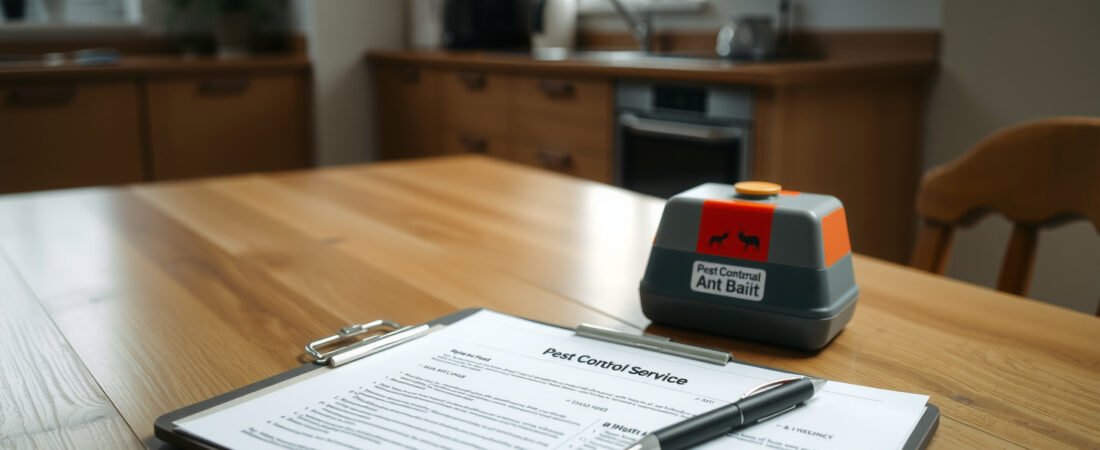
This close-up of a pest control contract highlights the definition and exclusion sections — the two areas most homeowners skip entirely before signing, and the first two places you should read carefully.
How Do Auto-Renewal Clauses Work and Why Are They So Hard to Cancel?
Picture this: you signed up for an annual pest control plan last spring, the technician came twice, the ant problem is gone, and you’ve completely forgotten about the contract. Then your credit card gets charged again in full. You call to cancel and learn you needed to provide written notice at least 30 days before the renewal date — which passed two weeks ago. That’s not an accident. Auto-renewal clauses are structured deliberately, and the cancellation window is almost always shorter than you’d expect.
Some contracts require cancellation notice in writing, delivered by certified mail — not email, not a phone call. Others charge an early termination fee equal to 50% of the remaining contract value. Before you sign anything, locate the cancellation terms and write the renewal date and cancellation deadline on your calendar the same day. That small step is worth more than reading any other clause in the contract.
Pro-Tip: After signing, immediately send the company a written confirmation of your cancellation window via email to create a timestamped record. If they only accept certified mail, send it anyway — it documents that you understood and were tracking the deadline, which strengthens your position in a billing dispute.
What Does “Guaranteed” Actually Mean in a Pest Control Agreement?
The word “guarantee” in pest control marketing means something very different from what it means in everyday conversation. A satisfaction guarantee doesn’t promise the pests will be gone. It typically promises that the company will return and retreat — not that they’ll refund you, not that they’ll escalate to a different method, and not that the problem will actually be resolved. The guarantee is a promise of effort, not outcome.
Here’s what to look for in the guarantee language specifically:
- Retreatment conditions: Most guarantees require you to notify the company within a specific window — sometimes as short as 24 to 48 hours after you notice reactivation. Miss that window and the free retreat may be void.
- What triggers the guarantee: Some contracts only honor the guarantee if you maintained the conditions specified in the service agreement (e.g., keeping food sealed, reducing moisture sources). Non-compliance can void your coverage entirely.
- Limitation of liability: Nearly every contract caps the company’s liability at the cost of the service itself — not damages caused by pest activity that continued during the treatment period.
- Arbitration clauses: A growing number of pest control contracts require disputes to go to private arbitration rather than small claims court. This limits your legal options significantly if things go wrong.
- Product substitution rights: Some contracts give the company the right to change the pesticides they use without notifying you, as long as the new product is “EPA registered.” That’s a broad category.
“The guarantee section is where consumers get the most confused because it’s written in the language of consumer protection but functions as a limitation of liability. I always tell homeowners: find the word ‘guarantee’ in the contract, then read the three paragraphs that follow it — not the marketing language before it.”
Dr. Patricia Nguyen, Board-Certified Entomologist and Consumer Pest Advocacy Consultant, NPMA Member
Which Contract Red Flags Should Make You Walk Away Before Signing?
Not all pest control contracts are predatory, but some specific clauses are clear warnings that the agreement is structured to benefit the company at almost every decision point. Knowing these before you’re sitting across from a salesperson — who is working on commission — puts you in a completely different position. You don’t need a lawyer to spot these. You just need to know what to look for.
Here are the numbered red flags to check before you sign:
- No specific pest list in the coverage section. If the contract says “general pests” without naming them, ask for a written addendum that lists exactly which species are covered. Verbal assurances mean nothing once you’re disputing a charge.
- Early termination fees over 25% of remaining value. Some companies charge 75–100% of the remaining contract balance to cancel. That’s not a penalty for breaking a commitment — it’s a lock-in designed to make cancellation economically impossible.
- Automatic price escalation clauses. Watch for language that allows the company to raise rates annually by a set percentage — sometimes 5–8% — without renegotiating or notifying you beyond a bill statement.
- No defined response time for emergency retreatments. If the contract says the company will respond “within a reasonable time,” that’s unenforceable. Get a specific timeframe in writing — 24 hours, 48 hours, whatever they promise verbally should appear in the document.
- Mandatory access requirements that exceed normal expectations. Some contracts require you to provide interior access within a 4-hour scheduling window or forfeit the scheduled visit — meaning you pay for a service that wasn’t performed.
- Blanket chemical consent language. If the contract allows the company to apply “any registered pesticide deemed appropriate,” you’ve signed away your right to approve specific products. This matters especially if you have children, pets, or household members with chemical sensitivities.
Monthly Plan vs. Annual Contract vs. One-Time Treatment: Which Agreement Type Actually Protects You?
The structure of the agreement matters just as much as the specific clauses inside it. Monthly plans, annual contracts, and one-time treatments each carry different risk profiles — and the “best” option genuinely depends on your situation, pest type, and how long you plan to stay in the property. There isn’t a universal answer, which is something most pest control companies aren’t going to tell you when they’re trying to sell you a 24-month plan.
For DIY-minded homeowners who want to handle smaller problems independently — like getting rid of spiders in the basement or dealing with occasional entry-level pests — a one-time treatment contract is almost always the smarter financial choice. For ongoing pressure pests like German cockroaches (which produce 30–40 eggs per capsule and can repopulate a treated space within weeks), a recurring plan with a clear retreatment guarantee is worth the commitment — but only if the contract terms are solid. The table below breaks down the key differences by agreement type:
| Agreement Type | Typical Commitment | Cancellation Risk | Best For |
|---|---|---|---|
| One-Time Treatment | Single visit, no renewal | Low — no ongoing obligation | Isolated infestations, renters, short-term situations |
| Monthly Plan | Month-to-month, often 30-day notice to cancel | Low-to-moderate — short exit window | High-pressure pests, active infestations requiring frequent monitoring |
| Annual Contract | 12 months with auto-renewal | High — early termination fees often apply | Homeowners with recurring seasonal pest pressure |
| Multi-Year Contract | 24–36 months | Very high — termination costs can exceed $300–$500 | Termite programs, whole-home pest management plans |
One honest nuance worth acknowledging: if your home sits in a region with year-round pest pressure — think the Gulf Coast, Florida, or the Southwest — an annual plan may actually save you money compared to reactive one-time treatments. The math changes depending on climate, building type, and whether you’re renting or own the property. A renter mid-lease has very different incentives than a homeowner who’s been in the same house for 15 years.
For homeowners dealing with multiple pests across different parts of the house — say, rodents in the attic and insects in the kitchen — it’s worth comparing what a bundled contract actually includes versus what you could address yourself with the right products. Something like best electronic mouse traps can handle rodent pressure independently, which might mean you don’t need the most expensive tier of service just to get rodent coverage added to your agreement.
The practical move before signing any multi-service contract is to separate out the line items. Ask the company to itemize what each pest coverage costs individually, then decide whether you actually need all of it or whether some components are worth handling yourself. Companies aren’t required to offer itemized quotes, but many will if you ask directly — and the ones who refuse that question outright are telling you something about how they operate.
A pest control contract is a legal document, not a handshake. The company’s sales rep is friendly and knowledgeable, and that can make it easy to treat the signing as a formality rather than a negotiation. But you can negotiate — coverage inclusions, response time commitments, even early termination terms are more flexible than companies let on. Walk in knowing what you’re looking for, and you’ll walk out with an agreement that actually works in your favor.
Frequently Asked Questions
how long are pest control contracts usually?
Most pest control contracts run 12 months, though some companies offer shorter 3- or 6-month agreements. Annual contracts typically lock you into quarterly visits, so you’re committing to at least 4 treatments over the year. Always check if the contract auto-renews — many do, and you’ll need to cancel in writing 30 days before the renewal date to get out.
can you cancel a pest control contract early?
Yes, but it’ll usually cost you. Most pest control contracts include an early termination fee, often ranging from $100 to $200 or the equivalent of one to two months of service. Some companies waive the fee if you’re moving, so check for that clause. Read the cancellation section carefully before you sign — the notice period and fee structure should be spelled out clearly.
what pests are not covered by pest control contracts?
This is one of the biggest gotchas in a pest control contract. Most standard agreements cover common insects like ants, roaches, and spiders, but exclude termites, bed bugs, wildlife, and wood-destroying organisms unless you pay for a separate plan. Always get a written list of covered pests before signing — vague language like ‘general pests’ can mean very different things depending on the company.
what does a pest control guarantee actually cover?
A pest control guarantee typically means the company will return for a free re-treatment if pests come back between scheduled visits. However, the guarantee is usually only valid if you’ve kept up with scheduled appointments and sometimes requires you to report the problem within a specific window, often 30 days. It doesn’t mean you get a refund — it just means they’ll come back and spray again.
is a yearly pest control contract worth it?
It depends on where you live and what pest pressure you’re dealing with. If you’re in a warm climate or a home that’s had repeated infestations, a yearly contract can save money compared to paying per visit, which typically runs $150 to $300 each time. But if you’ve had a one-time problem that’s been resolved, a single treatment may be all you need — don’t let a salesperson pressure you into an annual plan you don’t actually need.
Disclaimer: This article is for informational purposes only. Pest control costs, timelines, and outcomes vary widely depending on the pest, the severity of the infestation, your location, and the company you hire. Always get multiple quotes and ask for a written inspection report before agreeing to a treatment plan.