
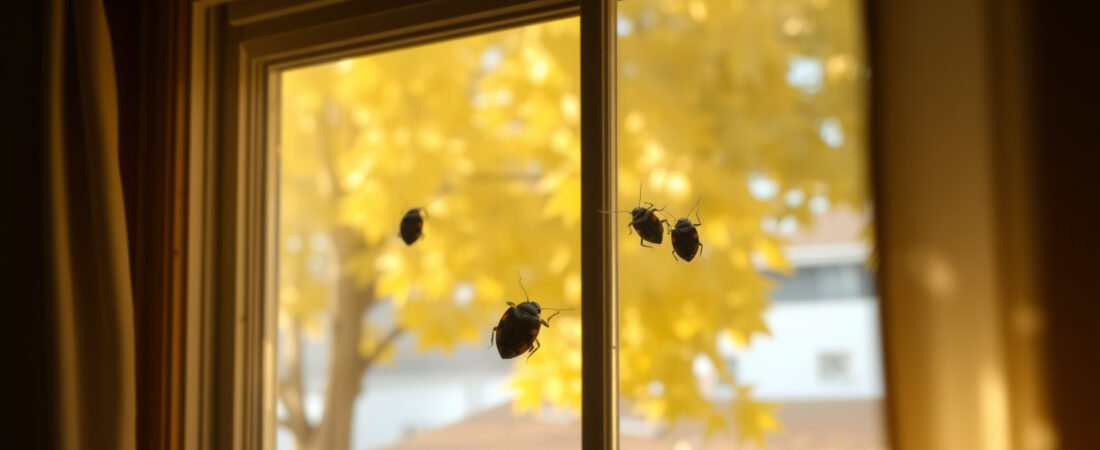
Killing the stink bugs you can see is the easy part — and it’s also mostly a waste of time. The real problem is the ones you haven’t seen yet: the dozens or hundreds already staged inside your wall voids, attic insulation, and window frames, just waiting for a warm day to wander into your living room. Most people spend the fall swatting bugs off their curtains while completely ignoring the entry points that let an entirely new wave in every 48 hours. That’s the loop most households stay stuck in all season. This article is about breaking it.
Why Are Stink Bugs Suddenly Everywhere in Your House in Fall?
Brown marmorated stink bugs — the species responsible for roughly 95% of residential complaints in the US — aren’t randomly wandering inside. They’re following a very specific biological signal called diapause, a kind of insect hibernation mode triggered by shortening daylight and dropping temperatures, typically when outdoor temps dip below 55–60°F. Your warm house radiates heat through its walls, and stink bugs can detect that gradient from outside. They’re not coming in because your home is dirty or your food is attracting them. They’re coming in because your house is warm and it’s October.
Here’s the part most articles skip: stink bugs aggregate. One bug finding a gap sends out an aggregation pheromone that actively recruits more bugs to the same entry point. A single unnoticed gap in your window trim or soffit vent isn’t just letting in a few stragglers — it’s functioning like a lit sign that says “shelter here” to every stink bug within range. This is why a home that had five visible bugs in early October can have 200 by Thanksgiving without anyone ever opening a window.
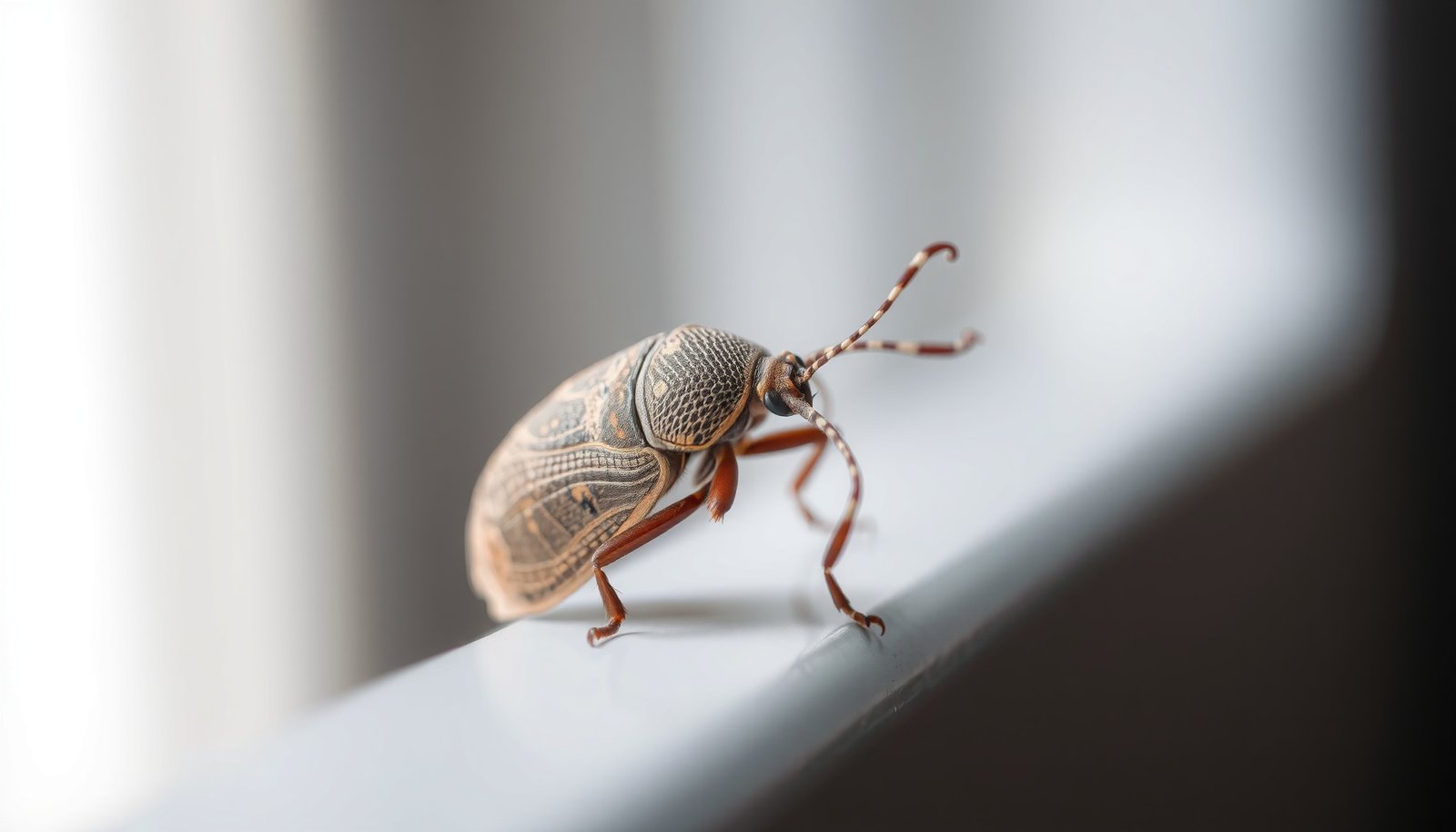
This close-up shows the distinctive shield-shaped body and mottled brown patterning of the brown marmorated stink bug — the feature that helps you confirm you’re dealing with this species and not a similar-looking native bug that won’t cause the same aggregation problem.
What Are Stink Bugs Actually Getting Into — and Where Do They Hide?
Picture this: it’s mid-November, your heat has been running for weeks, and you’re finding one or two stink bugs a day crawling across your ceiling. You assume it’s a small problem. But up in your attic, or inside the void behind your exterior brick veneer, there are potentially hundreds clustered together in a dormant pile — and every time you run the heat, a few of them warm up enough to get active and find their way through light fixtures, electrical outlets, and HVAC returns into your living space. The bugs you’re seeing on the ceiling are the ones that took a wrong turn on the way back to the cluster.
Stink bugs favor specific harborage zones that most people never check. Attic spaces are the biggest reservoir — especially near the roofline where exterior warmth and interior heat meet. Crawl spaces, behind siding, inside sealed soffit cavities, and inside the frames of double-pane windows are all common staging areas. The bugs you vacuum off your drapes are basically scouts, and the cluster they came from is somewhere in your building envelope. Understanding that distinction changes your entire approach.
Does Sealing Your Home Actually Stop Stink Bugs From Getting In?
Yes — and it’s genuinely the only method with a lasting effect. Pesticide sprays applied to exterior walls can kill bugs on contact, but the residual effect fades within 2–4 weeks and doesn’t address aggregation pheromones that are already present in your wall gaps. Physical exclusion, done correctly before mid-September, stops the problem at the source. The catch is “done correctly” — stink bugs can squeeze through a gap as small as 1/16 of an inch, which is smaller than most homeowners expect and smaller than most tube-applied caulk jobs actually seal.
The sealing process needs to be methodical and prioritized by zone. Here’s the sequence that actually works, ordered by where stink bugs are most likely to enter:
- Soffit vents and ridge vents: These are the highest-volume entry points on most homes. Replace damaged screens with 20-mesh or finer hardware cloth. Standard vent screens are often 16-mesh — not fine enough for stink bugs.
- Window and door frames: Inspect the exterior caulk bead where the frame meets siding. Any gap wider than a credit card needs to be resealed with paintable silicone or exterior polyurethane caulk, not foam backer rod alone.
- Utility penetrations: Pipe chases, cable entry points, dryer vents, and HVAC lines are almost always incompletely sealed at the exterior wall. Use a combination of foam sealant and metal flashing or escutcheon plates for a permanent fix.
- Chimney caps and attic hatches: An uncapped chimney flue or a poorly fitted attic access panel can allow stink bugs to enter the building envelope in large numbers very quickly.
- Door sweeps and weatherstripping: Bottom gaps on exterior doors are underestimated. A door with a worn sweep can have a gap large enough for a stink bug to walk through upright — replace worn sweeps before fall temperatures drop.
Pro-Tip: Do your exterior inspection on a bright, sunny fall morning when temperatures are still cool. Stink bugs that are already clustered at entry points will be sluggish and visible, which makes it easy to identify exactly which gaps are actively being used — so you seal the right spots first.
Which Stink Bug Treatments Actually Work (and Which Are Just Marketing)?
There’s a counterintuitive reality here that almost no pest control article will tell you plainly: by the time you’re finding stink bugs inside your home in November or December, most chemical treatments are operating on borrowed time. The bugs already inside your wall voids are in diapause — their metabolism has slowed dramatically, which means contact insecticides that reach them will have reduced effectiveness, and residual barrier sprays won’t reach the ones tucked 4–6 inches deep inside a wall cavity. You’re not losing because you picked the wrong product. You’re applying the right product at the wrong stage of the problem.
Here’s a honest breakdown of what actually works versus what gets marketed heavily but underdelivers in real conditions:
| Method | Effectiveness | Best Timing |
|---|---|---|
| Exterior perimeter spray (pyrethroid-based) | Moderate — kills on contact, short residual | Late August to mid-September, before aggregation begins |
| Physical exclusion (caulk, mesh, sweeps) | High — permanent when done correctly | Ideally before September; still worth doing in October |
| Vacuum removal (HEPA or dedicated) | High for visible bugs, no residual benefit | Winter management once bugs are already inside |
| Ultrasonic repellers | No credible evidence of effectiveness against stink bugs | Not recommended at any stage |
“The aggregation pheromone component is what most DIY treatments fail to account for. Even if you kill every visible bug on your exterior wall, the chemical signal left behind by earlier aggregations continues to attract new bugs to the same location. Cleaning those surfaces with soapy water or diluted detergent after treatment removes residual pheromone and meaningfully reduces re-aggregation — it’s a simple step most homeowners are never told about.”
Dr. Marcus Holt, Urban Entomologist and Extension Specialist, Penn State Extension Program
How Do You Get Rid of Stink Bugs Already Inside Your Home Without Making It Worse?
The worst thing you can do — and the thing people do reflexively — is crush a stink bug with your fingers or a paper towel. The defensive odor released contains a chemical compound called (E)-2-decenal, and crushing the bug releases it in the highest possible concentration. But there’s a second, less-discussed problem: that odor can actually function as an alarm pheromone, signaling distress to nearby bugs and in some cases accelerating their movement into visible areas. Squishing one bug can functionally stir up several more.
Here’s what you should actually do when managing stink bugs that are already inside your home:
- Use a dedicated vacuum with a stocking filter: Pull the stink bugs up into a mesh stocking stretched over the hose end. This contains the odor and lets you dispose of the bugs outside immediately without releasing smell into your vacuum bag or motor.
- Deploy a DIY light trap at night: A pan of soapy water placed under a lamp or LED strip in a darkened room catches stink bugs that are actively seeking warmth and light. It won’t eliminate a large infestation, but it reduces populations in high-activity areas without chemicals.
- Reduce interior heat gradients near known entry zones: Stink bugs navigate by heat. Temporarily closing vents or using a portable heater in a different room can redirect active bugs away from primary living areas while you locate the source gap — a useful triage move, not a fix.
- Don’t spray insecticide inside wall voids: Aerosol sprays directed into electrical outlets or wall gaps kill bugs in place — and dead stink bugs inside walls attract dermestid beetles and other secondary pests that will then become their own separate problem. It’s a trade most people regret.
- Treat the attic as a separate zone: If your attic is accessible and is clearly a harborage site, a single application of a labeled residual dust (such as a pyrethrin-based attic treatment) to joist cavities and rafter areas can reduce the population reservoir significantly without the secondary pest risk of spraying inside finished walls.
One honest nuance worth acknowledging: how effective your indoor management will be depends heavily on building type. A newer, well-insulated home with vinyl siding and sealed utility penetrations has a much smaller problem to solve than a 1950s wood-frame house with original windows, brick veneer, and an uninsulated crawl space. The older and leakier the structure, the more the solution shifts from DIY exclusion toward professional perimeter treatment — because there are simply more entry points than any single homeowner can reasonably audit and seal in one season. If you’re also dealing with other pest pressure through similar structural gaps, the guide on identifying rodent entry points covers the inspection methodology in detail and most of it transfers directly to stink bug exclusion work.
For renters specifically, interior stink bug infestations that originate from structural gaps — deteriorated caulking, missing vent screens, gaps around utility penetrations — are typically a landlord responsibility under habitability standards in most states. If you’re documenting the problem for a repair request or a formal dispute, the process outlined in this article on how to legally document a pest problem for a landlord dispute applies cleanly to stink bug situations and can help you build a record that holds up.
The stink bug problem in your home right now is solvable — but the window where intervention is most effective is earlier than most people act on it. If you’re reading this in winter with bugs already clustering indoors, focus on vacuum management and attic treatment this season, and then start the exclusion work in August before the next aggregation cycle begins. One good pre-fall sealing job, done methodically, can take a home from 200 bugs a season down to nearly zero — and you won’t have to think about this again.
Frequently Asked Questions
how to get rid of stink bugs inside the house fast
The quickest way to get rid of stink bugs inside is to vacuum them up using a shop vac or a vacuum you don’t mind smelling afterward — regular vacuums can trap the odor in the filter. After vacuuming, seal the bag and toss it outside immediately. Don’t crush them by hand; that’s what triggers the smell.
what smell do stink bugs hate
Stink bugs strongly dislike the scent of mint, neem oil, and lavender. You can mix 10 drops of peppermint essential oil with water in a spray bottle and apply it around windowsills, door frames, and entry points to deter them. It won’t kill them, but it can discourage them from settling in treated areas.
why do I suddenly have so many stink bugs in my house
Stink bugs move indoors in fall when outdoor temperatures start dropping below 50–60°F, searching for a warm place to overwinter. They release a chemical signal that actually attracts other stink bugs to the same location, which is why you can go from seeing one or two to dozens in a short time. Once they’re inside, they’ll stay dormant in walls, attics, and crawl spaces until spring.
does dish soap kill stink bugs
Yes, a mixture of hot water and dish soap kills stink bugs on contact. Fill a bucket or jar with hot, soapy water using about 1–2 tablespoons of dish soap per cup of water, and drop stink bugs directly into it. They’ll die within a minute or so, and the soapy water neutralizes the odor.
how do I keep stink bugs from coming back next year
The most effective long-term fix is sealing every gap larger than 1/8 inch around your home’s exterior — that means caulking windows, weatherstripping doors, and screening attic vents before temperatures drop in early fall. Check where utility pipes and wires enter the house, since those are common entry points homeowners miss. If you’ve had a heavy infestation, consider having a pest control professional apply a residual insecticide around the perimeter in late summer before stink bugs start looking for overwintering sites.
Disclaimer: This article is for informational purposes only and isn’t a substitute for professional pest control advice. Always read and follow the product label instructions exactly — label directions are legally binding and vary by brand and active ingredient. Keep all pesticides, baits and traps away from children and pets, ventilate treated areas as directed, and consider calling a licensed pest control professional if an infestation is large, recurring, or involves a structural pest like termites or carpenter ants.