
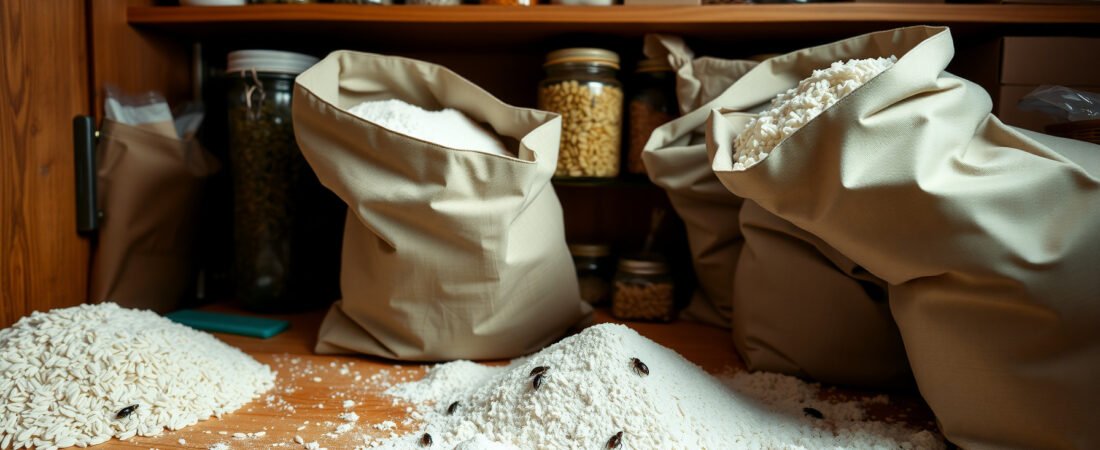
You didn’t bring weevils home. They were already in the flour when you bought it. That single fact changes everything about how you approach getting rid of them — and it’s the part almost every article on this topic skips entirely.
Weevils in flour and pantry products aren’t a sign of a dirty kitchen or a structural pest problem. They’re a supply-chain issue that landed on your shelf. A female grain weevil lays up to 254 eggs inside individual grain kernels before the flour is ever milled or packaged, and those eggs are virtually invisible to processing facilities. By the time you crack open a bag and see tiny beetles crawling around, the infestation has been quietly developing for weeks — sometimes months — since before you ever touched it.
Here’s the bottom line: to get rid of weevils permanently, you can’t just throw out the infested bag. You have to find every secondary harborage in your pantry, break the breeding cycle at the source, and change how you store dry goods going forward. This guide walks you through all of it in the right order.
Why Your “Clean” Pantry Still Has Weevils
Grain weevils — most commonly Sitophilus granarius (grain weevil) and Sitophilus oryzae (rice weevil) — don’t enter your home through gaps in baseboards or cracks around windows. They hitchhike inside sealed packaging directly from warehouses, distribution centers, and grocery store shelves. Retail storage conditions matter enormously: flour sitting in a warm stockroom for several weeks gives larvae plenty of time to hatch and begin developing before the product even hits the shelf.
Once one infested bag lands in your pantry, the adults that emerge go exploring. They can chew through cardboard boxes, thin plastic bags, and even the paper packaging most flour comes in. A single infested 5-pound bag of all-purpose flour can become the launch point for a pantry-wide infestation within 4–6 weeks if left unchecked.
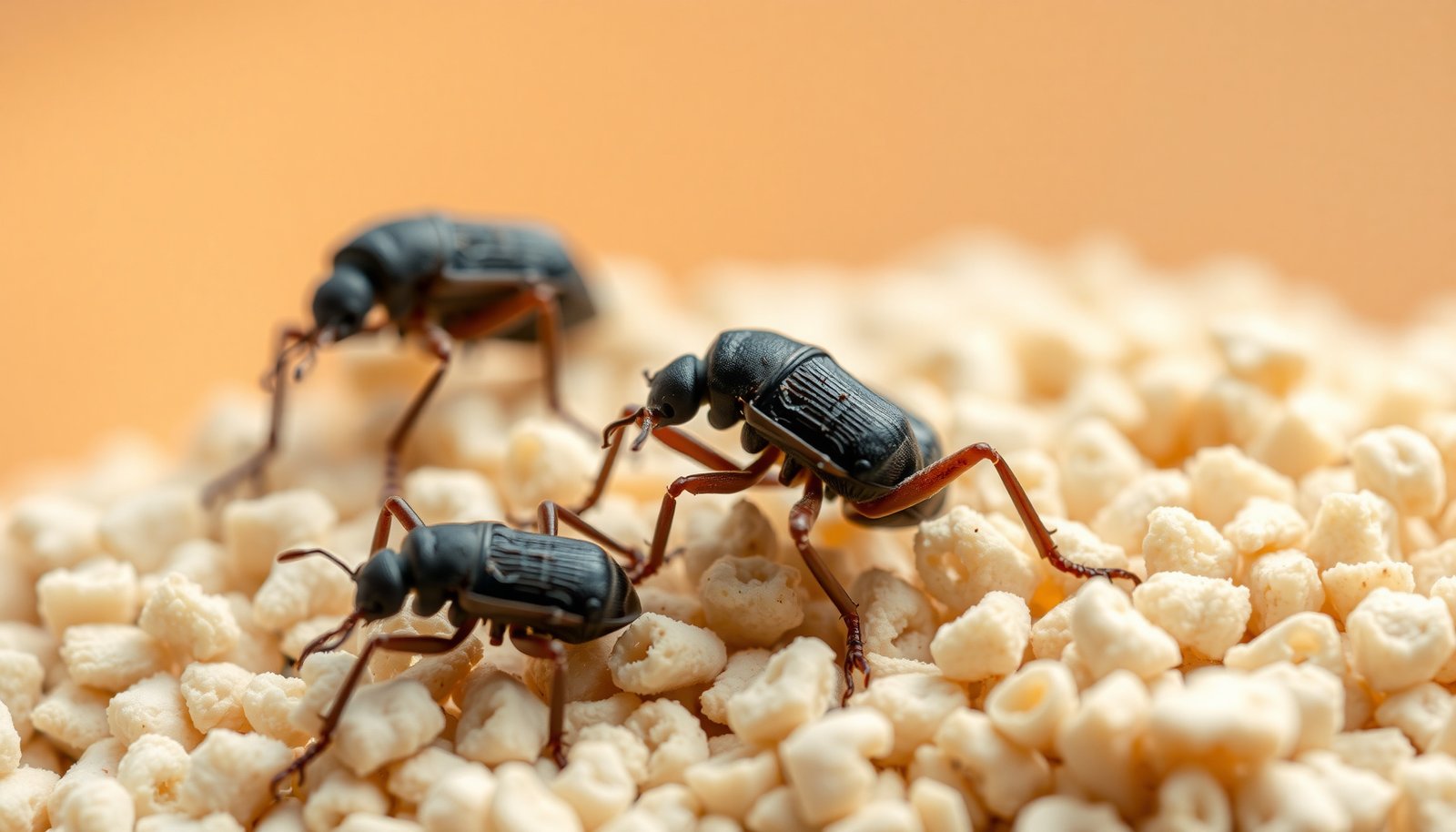
This close-up shows adult weevils in flour — notice the distinctive long snout that sets them apart from other pantry beetles, which matters when you’re deciding whether you’re dealing with a contained flour problem or a broader stored-product pest issue.
How to Actually Find Every Infested Product (Most People Miss Half of Them)
The most common mistake homeowners make is throwing out only the bag they found weevils in and calling it done. Weevils spread fast, and by the time you spot adults crawling in your flour, they’ve almost certainly moved into neighboring products. You need to audit everything — not just the obvious grain products.
Pull every single item out of your pantry and inspect it on a flat, well-lit surface. Look inside boxes, not just at them. Weevils will infest dried pasta, cornmeal, oats, rice, cereals, bread crumbs, spice blends with grain fillers, pet food, bird seed, dried beans, and even some dried flower arrangements. Anything with a starchy or grain-based component is fair game. Here’s a systematic inspection process that won’t leave you with stragglers:
- Empty the pantry completely. Don’t inspect items in place — you’ll miss products tucked in corners or stacked behind other things. Everything comes out before anything gets evaluated.
- Check each product in bright light. Shake dry goods in a clear plastic bag or onto a white paper plate. Adult weevils are 1/8 to 1/4 inch long and reddish-brown to black, with a distinctive long snout. Larvae are creamy white, legless grubs hidden inside grain kernels — you may not see them without a magnifier.
- Apply the float test to whole grains and rice. Drop a handful into cold water. Infested kernels (containing eggs or larvae inside) float because the developing insect has consumed the interior starch. Sounds odd, but it works reliably.
- Bag and seal suspect items immediately. Don’t leave anything questionable sitting out. Double-bag in plastic and take it directly to an outdoor trash bin — don’t leave it in an indoor garbage can overnight.
- Vacuum the pantry shelves thoroughly. Pay close attention to shelf liner edges, shelf bracket holes, corners, and any cracks in wooden shelving where adults or eggs can hide. Empty the vacuum canister outside immediately.
- Wipe down all surfaces with white vinegar or a diluted dish soap solution. Weevils are repelled by the acetic acid in vinegar, and wiping down shelves removes any remaining chemical food trail signals. Let shelves dry completely before restocking.
Does Freezing Kill Weevils? (Yes — Here’s How Long It Actually Takes)
Freezing is one of the most underused and most effective tools for dealing with weevils — both for killing an existing infestation and for preventing one from getting started. Most articles mention it briefly, but the timing details matter a lot more than people realize.
Exposing flour or grain products to temperatures at or below 0°F (-18°C) for a minimum of 72 hours kills all life stages of weevils — eggs, larvae, pupae, and adults. Some entomologists recommend a full 96 hours to be safe, especially with denser products like whole wheat flour or brown rice where cold penetrates more slowly to the center of the package. Some households with serious pantry pest issues make a habit of freezing all new dry-goods purchases for 4 days before transferring them to storage — this breaks the supply-chain infestation cycle at the door.
“The majority of stored-product pest infestations we trace back have a single origination point — one infested bag that arrived from retail. Freezing new purchases before pantry storage is genuinely the most effective preventive measure a homeowner can take, and it costs nothing. The problem is almost nobody does it until after they’ve had an infestation.”
Dr. Karen Vail, Extension Entomologist, University of Tennessee Institute of Agriculture
What Actually Stops Weevils From Coming Back
Long-term prevention comes down to storage, not sprays. Pesticides have almost no role in a pantry weevil situation — applying any chemical insecticide to food storage areas creates a food safety hazard that far outweighs any benefit, and weevil eggs developing inside sealed grain kernels are impervious to surface sprays anyway. The real fix is structural: how and where you store dry goods.
Airtight containers made of glass, thick plastic with gasket-sealed lids, or food-grade metal canisters are your first line of defense. Not all “airtight” containers live up to the label — thin plastic snap-top containers with simple friction lids can still be penetrated by weevils if they’re determined enough, and they often are. Here’s what actually works for long-term prevention:
- Glass jars with rubber-sealed metal lids (mason jars or flip-top bail jars) are the most reliable storage option — weevils cannot chew through glass and cannot fit through a properly sealed metal lid.
- Bay leaves placed inside containers act as a mild deterrent — the volatile compounds in dried bay leaves are a natural repellent for grain weevils. One leaf per container, replaced every 2–3 months. This won’t eliminate an existing infestation but helps keep newly purchased products clean.
- Store only what you’ll use within 2–3 months. Weevil populations grow exponentially with time. The longer a flour bag sits, the more generations of beetles can develop inside it — a bag sitting for 6 months in a warm pantry can host thousands of adults.
- Keep pantry temperatures below 65°F (18°C) where possible. Weevil reproduction slows significantly in cooler conditions — grain weevils prefer temperatures between 75–95°F for optimal breeding. A consistently cool pantry or basement is a real advantage.
- Pheromone-based pantry moth and grain weevil traps are useful as early-warning monitors, not as a primary control method. If you’re catching adults in a trap, it tells you a new product has been compromised — find it fast.
Pro-Tip: Before you transfer new flour into a sealed container, press the bag flat and look at it under direct light at a low angle. You’ll sometimes see tiny movement or small holes in the bag where adults have already begun chewing their way out. Catching it before it goes into storage is the whole game.
Weevils vs. Other Pantry Beetles: Does the Difference Matter for Treatment?
Yes — and the distinction affects what products you should prioritize discarding and where you should focus your inspection. Weevils (family Curculionidae) develop inside individual grain kernels as larvae, meaning the infestation is happening at the level of the individual wheat berry, rice grain, or corn kernel. Other common pantry beetles — like the confused flour beetle (Tribolium confusum) or the merchant grain beetle (Oryzaephilus mercator) — develop on the outside of grain products and in the flour dust itself, not inside kernels.
That distinction matters because it changes how you evaluate whether a product is salvageable. Flour that has external beetles in it is clearly compromised throughout. But a bag of rice with grain weevils might look totally clean on the surface while having larvae developing inside nearly every kernel — the float test described earlier is the only reliable way to catch this. Here’s a quick comparison of the most common pantry pests and how they differ:
| Pest | Where It Develops | Key Visual ID | Primary Affected Products |
|---|---|---|---|
| Grain Weevil (Sitophilus granarius) | Inside grain kernels | Long snout, no spots, cannot fly | Whole wheat, barley, corn, rye |
| Rice Weevil (Sitophilus oryzae) | Inside grain kernels | Long snout, 4 red spots on wing covers, can fly | Rice, pasta, cereals, whole grains |
| Confused Flour Beetle (Tribolium confusum) | On grain surfaces and flour dust | Flat, reddish-brown, no snout, 1/8 inch | Flour, cornmeal, cake mixes, spices |
| Merchant Grain Beetle (Oryzaephilus mercator) | On grain surfaces | Saw-toothed edges on thorax, very flat | Cereals, pasta, processed grain products |
One counterintuitive fact worth knowing: grain weevils that can’t fly (like Sitophilus granarius) are actually harder to eliminate from a pantry infestation than species that can fly and thus leave infested products more readily. Flightless weevils stay put inside the grain and keep breeding in place, which means infested products can look completely undisturbed on the outside while the infestation is severe inside.
If you’re renting and a pantry weevil problem gets serious enough that it damages cabinetry or you’re dealing with a landlord dispute over the source of the infestation, it’s worth knowing that supply-chain evidence can actually support your case. Just as you’d document structural damage for other pest claims, clear documentation of an infestation traceable to pre-purchased goods matters. The rules around what landlords can charge tenants for pest-related damage are more nuanced than most people realize — the Security Deposit and Pest Damage: What Landlords Can and Can’t Deduct article on this site covers those specifics in detail.
Weevil infestations are also interesting in one other way: unlike termites or carpenter ants, they don’t cause structural damage to your home at all — but they can cause real confusion when homeowners notice damage to wooden pantry shelving and wonder what’s responsible. If you’re ever unsure whether grain beetles or something more destructive caused wood damage in a storage area, it’s worth ruling out wood-boring insects. The guide on How to Identify Termite vs Ant Damage in Wood can help you make that call quickly.
Getting weevils out of your pantry is genuinely a one-time fix if you do it thoroughly — the full purge, the wipe-down, the airtight containers, and the habit of freezing new purchases before they hit the shelf. What keeps people cycling through the same problem over and over is half-measures: tossing the obvious bag, leaving five others unchecked, and restocking the same way. Do it right once and you’re done. The real pest here isn’t the weevil — it’s the grocery industry’s cold-chain gaps, and your pantry storage habits are the only control point you actually own.
Frequently Asked Questions
is flour with weevils safe to eat?
It’s not recommended. Weevils in flour aren’t toxic, but eating them means you’re also consuming their eggs, larvae, and waste, which can cause digestive upset in some people. If you see even a few weevils, it’s safer to throw the flour out — the infestation is almost always deeper than what’s visible on the surface.
how do weevils get into sealed flour bags?
Weevils can chew through thin plastic and cardboard packaging, so a ‘sealed’ bag doesn’t guarantee protection. More often, the infestation starts at the grain mill or store — weevil eggs are already inside the flour before you buy it, and they hatch once conditions are warm enough. This is why even unopened bags can end up infested.
how do I get rid of weevils in my pantry for good?
Start by removing everything from the pantry and throwing out any infested products — don’t just remove the bugs and keep the food. Vacuum all shelves thoroughly, then wipe them down with white vinegar or a mild bleach solution (1 tablespoon bleach per gallon of water). Transfer all dry goods into airtight glass or hard plastic containers to prevent reinfestation.
what are the tiny brown bugs in my flour?
They’re most likely grain weevils (Sitophilus granarius) or rice weevils (Sitophilus oryzae) — both are small, reddish-brown beetles between 1/8 and 1/4 inch long with a distinctive snout. You might also be dealing with flour beetles, which are flatter and don’t have the snout. Either way, the fix is the same: toss the infested product and deep-clean the pantry.
does freezing flour kill weevils?
Yes — freezing flour at 0°F for at least 4 days kills weevil eggs, larvae, and adults. Many people make this a standard habit when they bring flour home from the store, especially if they live in a warm climate. After freezing, transfer the flour to an airtight container and store it in a cool, dry place to keep new weevils from moving in.
Disclaimer: This article is for informational purposes only and isn’t a substitute for professional pest control advice. Always read and follow the product label instructions exactly — label directions are legally binding and vary by brand and active ingredient. Keep all pesticides, baits and traps away from children and pets, ventilate treated areas as directed, and consider calling a licensed pest control professional if an infestation is large, recurring, or involves a structural pest like termites or carpenter ants.