
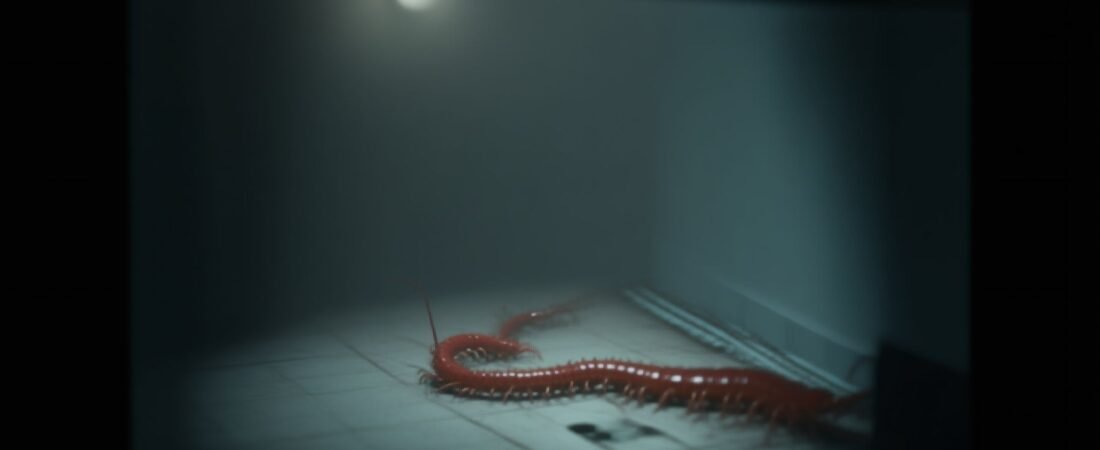
Centipede bites are almost never dangerous to a healthy adult — but the reaction you get can be completely out of proportion to that fact, and that gap between reality and experience is where most people go wrong. A house centipede bite feels alarming. The swelling, the burning, the strange spreading redness — it looks serious. So people either panic and rush to the ER unnecessarily, or they shrug it off entirely and miss the one situation where a bite actually does need medical attention. Neither extreme serves you well.
Here’s the real issue that almost no pest health article addresses: the danger from a centipede bite isn’t really about venom toxicity for most people — it’s about who got bitten and how their immune system responds. The same bite that causes mild local pain in one person can trigger a systemic allergic reaction in another. Knowing which category you’re in, and what signs to watch for in the first 30 minutes after a bite, is the knowledge that actually matters.
What Actually Happens When a Centipede Bites You?
Centipedes don’t actually bite in the traditional sense — they use modified front legs called forcipules to pierce skin and deliver venom. This distinction matters because it explains why the wound often looks like two small puncture marks close together, not a single bite point. The venom contains a mix of compounds including serotonin, histamine, and cardiotoxic proteins, and it’s designed to paralyze small prey, not harm humans.
In practice, the most common result is immediate sharp pain at the site, followed by redness, swelling, and a burning or itching sensation that can last anywhere from a few hours to about 48 hours. The pain is often described as similar to a bee sting — intense at first, then gradually fading. Larger centipedes, particularly the giant desert centipede (Scolopendra heros) found in the Southwest, can cause more pronounced swelling, but even these rarely cause effects beyond the localized area.

This close-up shows the characteristic dual puncture pattern left by centipede forcipules — recognizing this marking early helps you confirm what you’re dealing with rather than mistaking it for a spider bite or allergic skin reaction.
Which Centipede Species in the US Are Most Likely to Bite Humans?
There’s a wide range of centipede species across the US, and the one that bites you makes a real difference in terms of what you’ll experience. The house centipede (Scutigera coleoptrans) — the spindly, fast-moving one with 15 pairs of long striped legs that you’ll find darting across bathroom floors — rarely breaks human skin at all. Its forcipules often can’t penetrate thick skin on hands or feet. When it does manage to bite, the result is usually minor and short-lived.
The species that deserve more respect are the Scolopendra genus — particularly Scolopendra heros in the desert Southwest and Scolopendra polymorpha in warmer states. These can reach 6 to 8 inches in length, and their bites consistently produce more significant local reactions. Stone centipedes (Lithobius species), common in the Northeast and Midwest, fall somewhere in between — capable of a genuine bite, but with more modest venom delivery than the large Scolopendras.
| Species | Where Found in US | Bite Severity |
|---|---|---|
| House centipede (Scutigera coleoptrans) | Nationwide, indoors | Mild to negligible — rarely penetrates thick skin |
| Stone centipede (Lithobius spp.) | Northeast, Midwest, Pacific Northwest | Moderate — local pain and swelling for 12–24 hours |
| Giant desert centipede (Scolopendra heros) | Southwest, Texas, Arizona, New Mexico | Significant — pronounced swelling, potential systemic symptoms |
When Is a Centipede Bite Actually Dangerous?
Picture this: a child playing in a garage in Phoenix picks up what looks like a stick, and within minutes one finger is swelling visibly and they’re crying in a way that seems disproportionate to a simple bug encounter. That scenario — a large Scolopendra species, a small child, a bite on a sensitive area — is the one where “centipede bites are harmless” stops being useful advice. Body weight matters with venom, and a bite that’s a minor inconvenience to a 180-pound adult delivers a much higher relative venom dose to a 40-pound child.
Beyond children, the other real risk factor is individual allergy. Some people have immune systems that respond to the histamine and protein compounds in centipede venom with a response far beyond what the venom alone would warrant. Reported cases of anaphylaxis from centipede bites exist in the medical literature — they’re genuinely rare, but they do happen. Anyone with a history of severe reactions to bee or wasp stings should treat a centipede bite with the same caution they’d give a hymenoptera sting.
“Most centipede bites in healthy adults are self-limiting and resolve without medical intervention. The cases I’m concerned about are bites to young children or elderly patients, bites near the eyes or mouth, and any situation where the person has a known venom hypersensitivity. In those cases, observation isn’t enough — they need to be evaluated.”
Dr. Marcus Ellroy, Board-Certified Toxicologist and Pest Envenomation Specialist, University of Arizona Cooperative Extension
What Symptoms Tell You to Seek Medical Help Immediately?
The 30-minute window after a bite is the most telling. Local symptoms — pain, redness, swelling around the puncture site — are expected and don’t require an ER visit on their own. What you’re watching for are signs that the reaction is spreading beyond the bite area or affecting body systems beyond the skin. These are the signals that mean you should stop waiting to see what happens and get evaluated.
Seek emergency medical care immediately if you experience any of the following after a centipede bite:
- Difficulty breathing or throat tightening — This suggests anaphylaxis is beginning. Don’t wait. Call 911 or get to an ER within minutes, not hours.
- Swelling that spreads rapidly beyond the bite site — Local swelling is normal. Swelling that visibly moves up a limb toward the torso within 15–20 minutes is not.
- Dizziness, nausea, or rapid heart rate — These are signs of a systemic venom response, particularly relevant with large Scolopendra bites.
- The person bitten is a child under 5, elderly, or immunocompromised — In these cases, seek evaluation even if the initial symptoms seem manageable. Reactions in these populations can escalate faster than in healthy adults.
- The bite is on the face, near the eye, or in the mouth — Venom delivered close to sensitive tissues or mucous membranes can cause disproportionate swelling in an area where there’s no room for it.
- Symptoms don’t improve after 48 hours — Lingering or worsening pain and swelling after two days suggests secondary infection at the wound site, which needs antibiotic treatment.
Pro-Tip: Take a photo of the centipede if you can do so safely — or at minimum note its size and color before it escapes. The difference between a 2-inch house centipede and a 6-inch giant desert centipede completely changes how a doctor will assess and monitor a bite, and “it was big and brown” is much less useful than an actual image.
How to Treat a Centipede Bite at Home (and What Not to Do)
For the vast majority of centipede bites — healthy adult, house centipede or small stone centipede, bite on an extremity — home treatment is completely appropriate. The goal is to manage pain, reduce inflammation, and prevent infection at the puncture site. None of this requires anything you don’t already have in your medicine cabinet.
Here’s what actually works at home, and equally important, what to skip:
- DO wash the bite area immediately with soap and water — this cleans the wound and reduces infection risk at the puncture points.
- DO apply a cold pack (wrapped in cloth, not directly on skin) for 10 minutes at a time to reduce swelling — heat application increases blood flow and can worsen swelling early on.
- DO take an oral antihistamine like diphenhydramine (Benadryl) if itching or localized swelling is significant — the histamine component of centipede venom responds to antihistamines the same way an allergic reaction does.
- DO NOT try to squeeze or suck out venom — this is ineffective and introduces bacteria into an already open wound.
- DO NOT apply topical steroids as a first response — these are more useful for prolonged itching after 24 hours, not for immediate venom response.
- DO monitor the wound for signs of infection over the following 2–3 days: increasing redness spreading from the puncture site, warmth, pus, or red streaking, which can indicate the early stages of cellulitis.
One thing that surprises most people: over-the-counter hydrocortisone cream applied to the puncture site 24 hours after the bite can meaningfully reduce the itching phase that often follows the initial pain. The itching tends to peak around day two and can be more annoying than the original bite — planning for it ahead of time is worth it.
A note on secondary infections: centipede forcipules create small but deep puncture wounds, and those channels can harbor bacteria from the centipede’s body or from skin surface contamination. If the bite site hasn’t improved meaningfully within 48 hours or develops any of the infection signs above, a doctor visit for a short course of antibiotics is reasonable — not an overreaction. This is actually one of the more common medical outcomes from centipede bites, more common than systemic venom effects in healthy adults. If you’ve noticed unusual marks or bites in sleeping areas and aren’t certain what’s causing them, it’s worth ruling out other possibilities — this guide on tiny black bugs in beds covers several culprits that get mistaken for centipede encounters at night.
Centipedes are most active at night and tend to hide in damp, dark areas — basements, bathrooms, spaces under sinks. Finding one in your home isn’t always cause for alarm on its own, since they often enter pursuing other insects. But repeated sightings or bites, especially in areas where you’re also noticing other pest activity, can be a sign of a broader issue worth investigating. Similar to how signs of carpenter ants in walls often point to a moisture problem that’s attracting multiple pest species, consistent centipede presence indoors usually signals excess moisture, entry point issues, or a prey insect population feeding them.
The counterintuitive takeaway here is that the centipede bite itself is rarely the problem worth losing sleep over — but a home that regularly produces centipede-human contact is telling you something about conditions that deserve attention. Seal gaps around pipes and foundations, address moisture in crawl spaces and basements, and reduce the population of small insects that draw centipedes indoors in the first place. Treating the bite is a one-time event. Changing those conditions is what actually reduces your chances of a repeat encounter.
Frequently Asked Questions
are centipede bites dangerous to humans?
For most healthy adults, centipede bites aren’t dangerous — they’re painful but rarely serious. The venom causes localized symptoms like burning, swelling, and redness that typically resolve within 24 to 48 hours. The main exceptions are people with allergies to insect venom, young children, and elderly adults, who can have stronger reactions.
when should I go to the ER after a centipede bite?
Head to the ER if you experience difficulty breathing, throat tightness, dizziness, rapid heartbeat, or widespread hives after a bite — these are signs of anaphylaxis and need immediate treatment. You should also seek emergency care if the bite victim is a small child or if symptoms are spreading rapidly beyond the bite site. Don’t wait it out if anything feels systemic rather than just local pain.
how long does centipede bite pain last?
The sharp, burning pain from a centipede bite usually peaks within the first hour and starts fading after 4 to 8 hours. Swelling and tenderness around the bite can linger for 1 to 3 days in some people. If pain or swelling is getting worse after 24 hours instead of better, that’s worth a call to your doctor.
can a house centipede bite you?
House centipedes can technically bite, but they almost never do unless you’re handling them or accidentally trap one against your skin. Their fangs are small enough that they often can’t even break adult human skin. If they do manage to bite, the reaction is usually milder than a bee sting and clears up quickly.
what does a centipede bite look like?
A centipede bite typically leaves two small puncture marks close together, surrounded by red, swollen skin. The area often looks similar to a bee sting — puffy, warm to the touch, and sometimes bruised. In some cases you’ll see a red streak or track extending from the bite, which can indicate infection and means you should see a doctor.
Disclaimer: This article is for general informational purposes only and does not constitute medical advice. How a pest-related exposure, bite, or contaminant affects you can depend on age, pre-existing conditions, allergies, and the extent of exposure. If you’re experiencing symptoms you believe are linked to a pest problem in your home, please consult a licensed healthcare provider rather than relying on this article alone.