
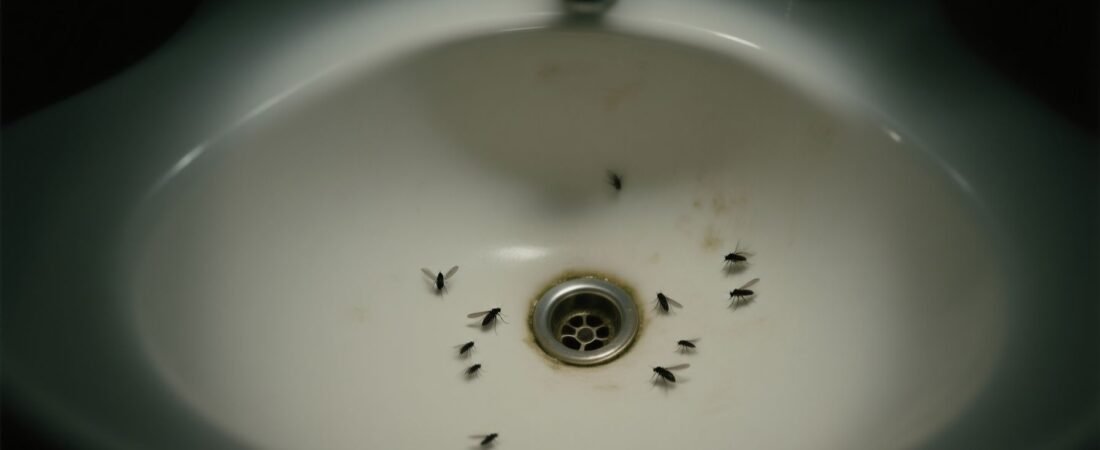
Drain flies are not going to send you to the emergency room. That’s the honest answer — and it’s also where most of the online fear-mongering about these tiny fuzzy insects stops being useful. The real danger with drain flies isn’t what they carry on their bodies. It’s what their presence quietly tells you about conditions inside your pipes, and what those conditions can do to the air quality and sanitation in your home over time. Most people treat drain flies like a nuisance and ignore the underlying problem, which is exactly backwards from what they should be doing.
Do Drain Flies Actually Carry Disease?
Drain flies — also called moth flies or sewer flies — breed exclusively in the gelatinous film of decomposing organic matter that coats the inside of slow or stagnant drains. They don’t bite, they don’t sting, and they’re not known vectors for any specific human pathogen the way mosquitoes or ticks are. Studies examining drain fly bodies have found traces of bacteria including E. coli, Listeria, and various molds — but that’s a reflection of where they’ve been, not what they’re actively spreading from host to host.
The contamination risk is real but indirect. A drain fly that lands on your toothbrush after emerging from a bathroom drain full of sewage film has deposited something on it. That’s not a dramatic scenario — that’s just basic contact transfer of whatever was coating its body and legs. The concern scales up when you have dozens or hundreds of flies active in a space at once, which happens faster than most people expect: drain fly eggs hatch within 32–48 hours under warm conditions, and a full generation can complete in as little as 8 days.
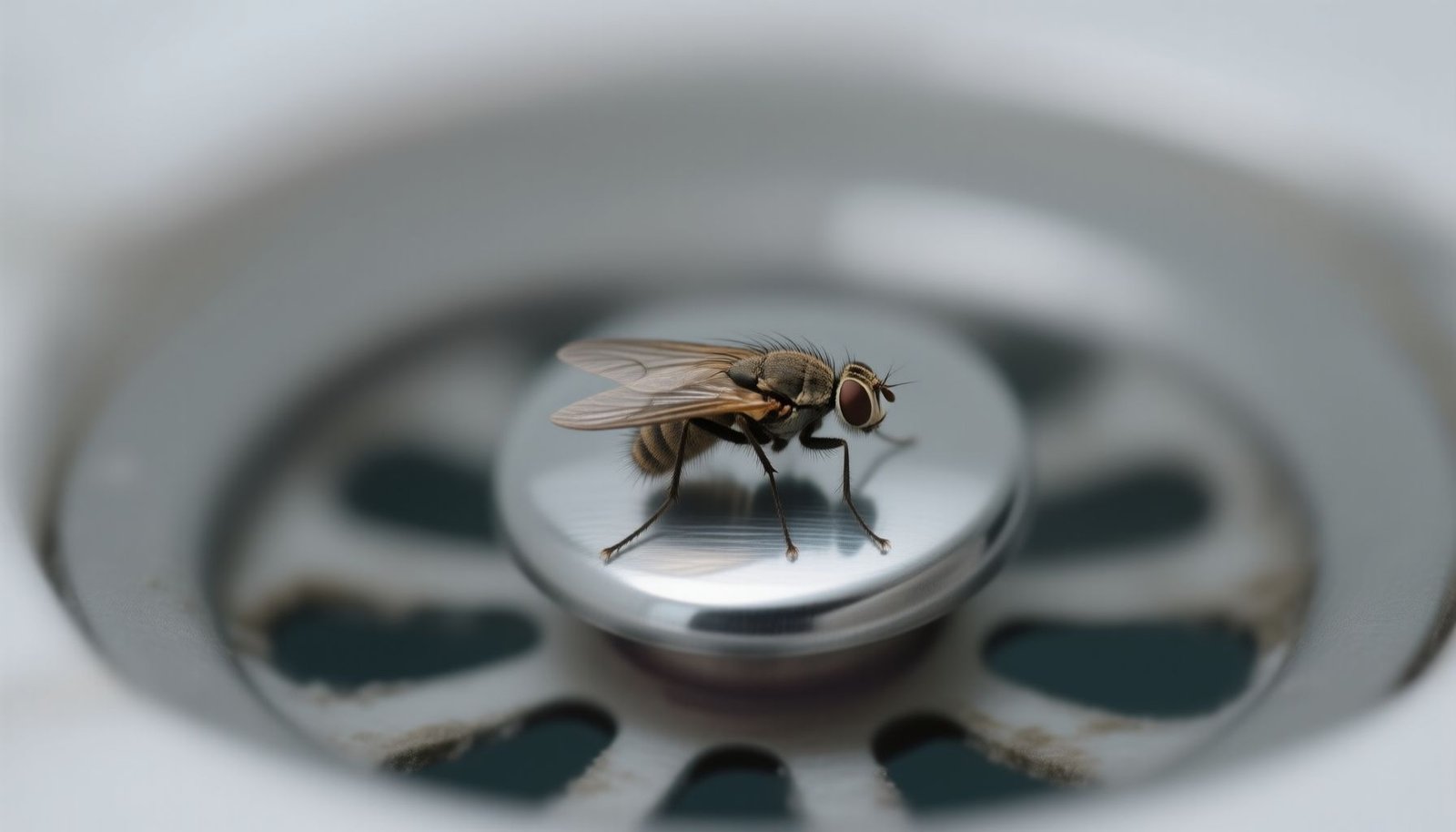
This close-up view shows the moth-like wing structure and body hair of an adult drain fly — the same surface features that allow bacteria and mold spores from drain biofilm to physically adhere to the insect before it flies into your living space.
What’s the Real Health Risk Nobody Talks About?
Here’s the angle that almost every pest control article glosses over: drain fly larvae and shed body parts can become airborne in enclosed bathrooms and kitchens, and for people with asthma or pre-existing respiratory sensitivities, inhaling these particles can trigger genuine allergic reactions and breathing difficulty. This is called enteric myiasis in its extreme clinical form, but subclinical irritation — coughing, sneezing, itchy eyes — is far more common and almost never traced back to drain flies by the person experiencing it. You chalk it up to seasonal allergies or dust, and the drain flies in your bathroom keep reproducing.
Picture this: a family in a three-story townhouse with an older plumbing stack notices their youngest child has been wheezing intermittently for weeks. The pediatrician suspects dust mites. Nobody checks the slow drains in the second-floor bathroom, where a drain fly colony has been active long enough that the walls near the drain show tiny resting adults every morning. The child’s room shares a wall with that bathroom. This isn’t a far-fetched story — it’s the kind of situation that plays out because drain flies are so easy to dismiss as cosmetically annoying rather than potentially harmful to vulnerable household members.
“Most clients I see with drain fly infestations are focused entirely on the adult flies they can see, but the real issue is the biofilm — a thick mat of bacteria, fungi, and decaying organic matter sitting inside their pipes. The flies are just the symptom. That biofilm is producing microbial volatile organic compounds that vent into your home every time you run water or the drain gurgles. In a house with poor ventilation, that’s a meaningful air quality concern, not just a pest problem.”
Dr. Marcus Elwell, BCE — Board Certified Entomologist and Environmental Health Consultant, Southeast Regional Pest Management Advisory Group
Which People Are Most at Risk From a Drain Fly Infestation?
Healthy adults with no respiratory conditions are unlikely to experience anything worse than irritation from a drain fly problem. The risk profile changes significantly for specific groups, and understanding that distinction helps you decide whether this is a “deal with it this weekend” situation or something that warrants more urgency.
The following groups face a meaningfully higher risk from the allergens, airborne larvae fragments, and bacteria that drain fly infestations introduce into a home environment:
- Children under 5 — their immune systems are still developing, and they’re closer to floor level where drain fly adults rest and die
- People with asthma or chronic bronchitis — airborne insect particles and mold spores from drain biofilm are documented respiratory irritants
- Immunocompromised individuals — anyone on chemotherapy, immune suppressants, or recovering from surgery faces elevated risk from any source of bacterial contamination in the home
- Elderly residents — reduced immune function combined with more time spent at home increases cumulative exposure
- People with known mold allergies — drain biofilm is a fungal ecosystem; the flies carry and disperse those fungal spores into living areas
Worth noting: if you’ve been trying to identify other unusual bugs appearing near your bathroom fixtures, it’s not always drain flies — this guide on small brown bugs in the bathroom can help you sort out what you’re actually dealing with before you spend time treating the wrong problem.
Can Drain Flies Contaminate Your Food or Water Supply?
Technically, yes — though the mechanism is different from what you’d expect. Drain flies aren’t attracted to food the way fruit flies are. They’re not hovering over your fruit bowl or landing on your dinner. Their primary interest is moisture and the organic slime in drains. But an active infestation in a kitchen sink drain means adults are regularly flying within a few feet of food prep surfaces, and any contact with an exposed cutting board, dish rack, or unwashed produce introduces the same bacteria they’ve been breeding in.
The water supply contamination angle is more relevant in commercial settings — drain flies have been found breeding in the overflow drains of sinks and ice machines in restaurant health inspections, which is why a drain fly sighting is taken seriously by food safety regulators. In a home, the bacterial load from a moderate drain fly population is unlikely to cause acute food poisoning in healthy adults, but it’s not zero risk either. Covering food, keeping drains covered overnight, and not leaving dishes in a drain-fly-active sink for extended periods are habits worth adopting while you address the root cause.
Pro-Tip: To confirm which drain is the active breeding source before treating, cut a piece of clear tape slightly larger than the drain opening and stick it over the drain before bed. Leave a small gap at one side for airflow. In the morning, adult drain flies emerging from below will be trapped on the tape. Do this for each suspect drain on separate nights — a single drain fly colony can support 200+ adults within two to three generations, so pinpointing the source drain saves you from treating the wrong spot.
How Bad Does an Infestation Have to Get Before It’s a Genuine Health Problem?
A handful of drain flies in a bathroom is genuinely low-risk for most people. An infestation that’s been allowed to expand over several weeks — or one centered in a drain connected to a partial sewage blockage — is a different situation. The scale matters, and so does what’s underneath the flies.
Here’s a breakdown of how infestation severity maps to health concern level, so you can calibrate your response appropriately:
| Infestation Level | Visible Signs | Health Concern Level |
|---|---|---|
| Early / Minor | 1–5 adults near one drain, occasional sighting | Low — primarily cosmetic and sanitation concern |
| Moderate | 10–30 adults across multiple rooms, larvae visible in drain film | Moderate — allergen and surface contamination risk, especially for sensitive individuals |
| Severe | 50+ adults daily, flies present in multiple rooms, possible sewer odor | Higher — indicates significant biofilm or sewage issue; professional drain inspection recommended |
One thing that genuinely surprises people: a severe drain fly infestation in a rental unit or older home can point to a cracked sewer line or broken drain trap — problems that allow sewer gas (including hydrogen sulfide and methane) to enter the living space. Drain flies can survive in the space between a broken trap and the pipe wall. At that point, you’re not dealing with a pest problem — you’re dealing with a plumbing failure that has pest symptoms. Sewer gas exposure at sufficient concentrations causes headaches, nausea, and in extreme cases, more serious neurological effects.
What Steps Actually Address the Health Risk — Not Just the Flies?
Killing adult drain flies with a spray or a fly swatter does nothing about the biofilm where the next generation is already developing. Adult drain flies live only 8–24 days, so any treatment focused purely on adults is temporary by design. The biofilm inside an active breeding drain has to be physically disrupted and removed — that’s the only intervention that actually breaks the cycle and reduces the health-related concerns along with it.
Here’s the sequence that addresses both the pest and the underlying contamination issue:
- Locate every active breeding drain using the tape-over-drain test on consecutive nights — don’t assume it’s just one drain
- Physically clean the drain pipe with a drain brush to mechanically break up the biofilm layer — this is not optional; enzymatic treatments work faster when the bulk of the film is already removed
- Apply an enzymatic drain cleaner — products containing bacterial enzymes (not bleach, which doesn’t penetrate biofilm effectively) treat the organic film at a microbial level over 7–10 days of repeated application
- Check and repair drain traps — any P-trap that has dried out (common in guest bathrooms that rarely get used) should be refilled with water or replaced if damaged; a dry trap removes the only barrier between your room and the sewer line
- Improve bathroom ventilation — drain flies thrive in humidity above 70%; running an exhaust fan during and after showers reduces the conditions they need to sustain a colony
- Follow up for 3 consecutive weeks — one round of treatment is almost never sufficient because pupae are resistant to most chemical treatments and will hatch after the first wave of adults is gone
It’s also worth remembering that drain flies aren’t the only unexpected insect that can appear in bathroom environments seemingly out of nowhere. Some homeowners dealing with what they think are drain fly-related infestations elsewhere in the house — in carpets or upholstered furniture, for example — are actually dealing with a completely different pest. If you’ve noticed small flying insects in parts of the house that have no drains or moisture sources, it may be worth ruling out something like a flea infestation, which can persist in a home even without pets and is a separate problem requiring a different approach entirely.
The honest truth about drain flies is that their danger to human health is conditional — it depends on who’s in the home, how long the infestation has been ignored, and critically, what’s causing it. A few flies in a clean drain with an intact trap are mostly a nuisance. Drain flies appearing from a drain with a broken seal to a sewer line, in a home with a young child or someone with respiratory illness, over a period of months — that’s a situation that deserves real attention. Treat it like the sanitation problem it is, not just a cosmetic annoyance, and you’ll solve it permanently instead of just scattering the adults until next week.
Frequently Asked Questions
Are drain flies dangerous to human health?
Drain flies aren’t considered a serious health threat to most people — they don’t bite, sting, or transmit diseases the way mosquitoes or flies do. That said, they can trigger allergic reactions and asthma flare-ups in sensitive individuals, especially when an infestation is large. The bigger concern is what they signal: a buildup of organic sludge in your drains that can harbor harmful bacteria.
Can drain flies make you sick?
Drain flies themselves rarely make people sick directly, but they breed in decomposing organic matter that can contain bacteria like E. coli and Salmonella. If they land on food or food prep surfaces after coming from a contaminated drain, there’s a small risk of spreading those pathogens. People with compromised immune systems should take even a minor infestation seriously.
Can drain flies cause allergies or asthma attacks?
Yes — drain fly body fragments and shed skins can become airborne and act as allergens. Inhaling these particles has been linked to bronchial asthma and allergic rhinitis, particularly in enclosed spaces with poor ventilation. If someone in your home has asthma and symptoms are getting worse, a drain fly infestation is worth ruling out.
Do drain flies bite humans?
No, drain flies don’t bite humans at all — they don’t have the mouthparts to do it. Their only real interaction with people is flying around them, which is annoying but not physically harmful. If you’re getting bitten near a sink or drain, you’re likely dealing with a different pest like gnats or no-see-ums.
Is it safe to ignore a drain fly infestation?
It’s not a great idea to ignore them, even though drain flies aren’t directly dangerous. A persistent infestation means there’s a significant buildup of organic waste in your plumbing, which can worsen over time and attract other pests. Most infestations can be cleared up within 1 to 3 weeks by thoroughly cleaning the affected drains with a gel drain cleaner or a stiff brush.
Disclaimer: This article is for general informational purposes only and does not constitute medical advice. How a pest-related exposure, bite, or contaminant affects you can depend on age, pre-existing conditions, allergies, and the extent of exposure. If you’re experiencing symptoms you believe are linked to a pest problem in your home, please consult a licensed healthcare provider rather than relying on this article alone.