
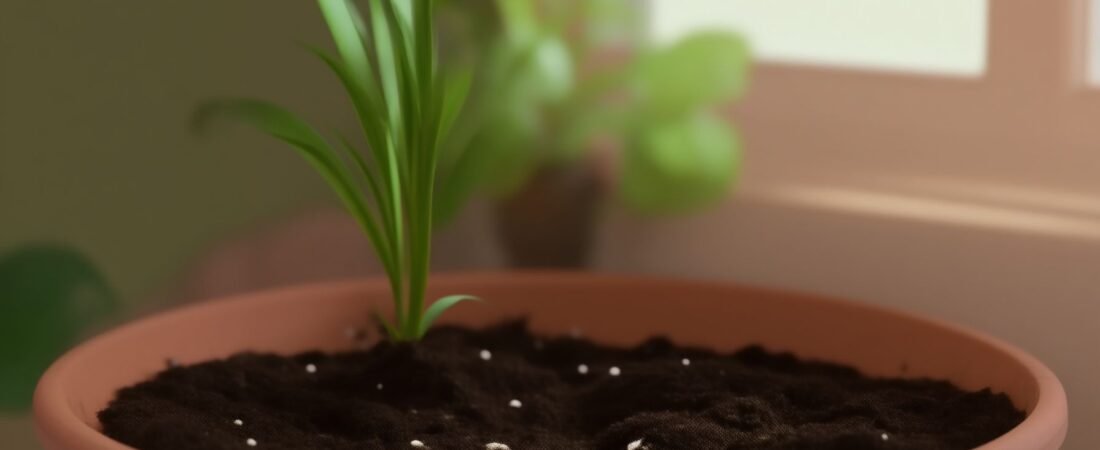
Those tiny white specks moving through your potting soil aren’t a sign that you’ve been neglecting your plants — in fact, they show up most often in soil that’s been kept consistently moist, which is exactly what attentive plant owners do. That’s the part most people get wrong: they blame themselves for a dirty pot or bad care habits, when the real culprit is usually the soil environment itself, not their housekeeping. Knowing which white bug you’re looking at changes everything about how you respond, and misidentifying them means you could spend weeks treating for the wrong pest entirely.
Which White Bugs Actually Live in Houseplant Soil?
There are four common culprits behind tiny white bugs in houseplant soil, and they look similar enough at a glance to cause real confusion. Fungus gnat larvae are translucent-white, legless, and roughly 1/4 inch long with a shiny black head capsule — they’re worm-like and tend to stay buried in the top inch or two of soil. Soil mites are much smaller (sometimes barely visible at 0.5mm), rounder, and move with that characteristic eight-legged crawl that separates them from insect larvae instantly.
Springtails are another frequent visitor — they’re white to gray, about 1–2mm long, and if you disturb the soil surface, they’ll jump. That jumping behavior is the giveaway; no other common soil pest does it. Root mealybugs round out the list, and they’re the trickiest — they coat themselves and the roots in a white waxy fuzz that looks almost like mold until you look closely and see it moving.
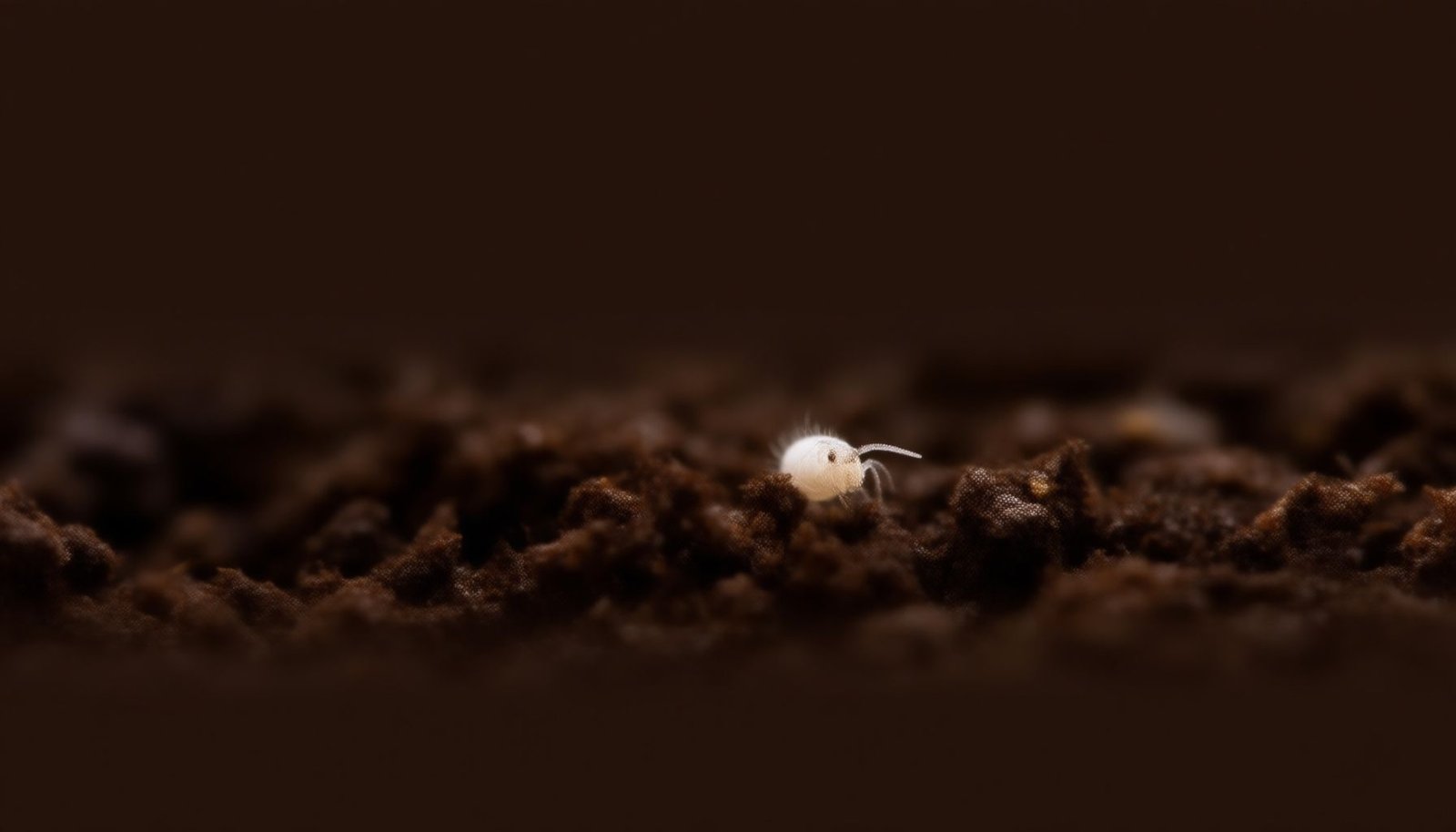
This close-up shows the size and coloration differences between common white soil pests — details that are nearly impossible to distinguish with the naked eye from above the pot, which is exactly why so many people misidentify them on first inspection.
How Do You Tell Them Apart Without a Magnifying Glass?
The fastest field test doesn’t require any equipment at all. Pour a small amount of water onto the soil surface and watch what happens in the next 30 seconds. Springtails will scatter and jump — sometimes dozens of them at once — because they’re highly sensitive to sudden moisture changes. Fungus gnat larvae won’t jump, but you might see them wriggling near the surface as waterlogged conditions push them up. Soil mites will just keep moving in slow, steady circles like they have nowhere urgent to be.
Root mealybugs are the hardest to catch this way because they live on the roots themselves, not the soil surface. The tell-tale sign is white cottony masses clinging to root tips and the inner walls of the pot when you slide the root ball out. If your plant looks mysteriously unhealthy — yellowing, wilting despite good watering — and you can’t spot anything on the soil surface, pull the whole thing out and check the roots directly. A lot of root mealybug infestations go unnoticed for months because of that above-soil bias in how we inspect our plants.
Are Any of These White Bugs Actually Harmful to Your Plant?
Here’s the honest answer: it depends on the species, and the severity matters a lot. Soil mites are almost universally harmless — they’re decomposers that break down organic matter in the potting mix, and some entomologists argue they’re a sign of a biologically active, healthy soil ecosystem. Treating them aggressively is often a waste of time and can actually damage beneficial microbial activity in the pot.
Fungus gnat larvae are a different story at high populations. The adults are just annoying, but the larvae feed on root hairs and decaying organic matter — and at densities above roughly 5 larvae per square inch of soil, they can cause measurable root damage, especially to seedlings and young plants with underdeveloped root systems. Root mealybugs are the most destructive by far: they feed on root sap directly, reproduce fast, and a moderate infestation can kill an established plant within a few weeks if untreated. Springtails, like soil mites, are essentially benign.
“The biggest mistake I see with soil pest identification is blanket treatment. Homeowners see white movement in the soil and reach for a systemic insecticide, when half the time they’re looking at beneficial oribatid mites that are actually doing the plant a favor. Accurate ID before treatment isn’t just a suggestion — it’s what determines whether you help the plant or hurt it.”
Dr. Linda Parrish, Extension Entomologist, University of Florida IFAS
Why Does Moist Potting Soil Attract White Bugs in the First Place?
The mechanism here is worth understanding because it explains why the problem keeps coming back even after you treat it once. Fungus gnat larvae and springtails need moisture to survive — their bodies desiccate rapidly in dry conditions, so consistently damp soil isn’t just attractive, it’s the only environment where they can complete their life cycle. A female fungus gnat can lay up to 200 eggs in her roughly 7-day adult lifespan, and those eggs hatch within 3–6 days in warm, moist soil. Do the math and one overlooked adult female turns into a serious larval problem in under two weeks.
Picture this: you’ve got a 6-inch pothos on a windowsill that you water twice a week because it’s been thriving. The soil never fully dries out between waterings because the pot is slightly oversized for the root ball. That’s the exact setup that creates a persistent fungus gnat nursery — not neglect, but actually good intentions applied to the wrong watering schedule for that container size. Soil mites, on the other hand, hitch rides in via the potting mix itself, which is why even brand-new bags of commercial potting soil can contain mite eggs before you open the bag.
Pro-Tip: Before buying potting soil, check the bag for small holes or tears — these are entry points for fungus gnats, which can colonize a bag right on the store shelf. Store any open bags of potting mix in a sealed plastic bin, not loosely folded closed. It takes fungus gnats less than 48 hours to find and lay eggs in exposed soil.
Step-by-Step: How to Confirm Which White Bug You Have
Getting the ID right before doing anything else saves you time, money, and the plant itself. Run through these steps in order, starting with the least invasive observation and escalating only if needed.
- Observe from above without disturbing the soil. Grab a flashlight and shine it directly at the soil surface. Look for movement. True soil mites move slowly and steadily; they don’t react dramatically to light. Springtails may already be visible hopping in short bursts at the soil edge near the pot wall.
- Apply the water test. Pour a small stream of room-temperature water onto the soil surface. Watch for 60 seconds. Jumping = springtails. Wriggling upward = fungus gnat larvae. No surface movement despite visible specks = likely soil mites staying deep.
- Check the drainage holes. Turn the pot sideways and shine a light into the drainage holes. Root mealybugs often colonize the lower root zone and the waxy deposits become visible against the dark interior of the pot. White fuzz near the holes is a strong root mealybug indicator.
- Remove the root ball if the plant shows symptoms. If the plant is yellowing, stunted, or wilting without obvious cause, slide the root ball out entirely. Rinse roots gently under a slow stream of water and look for white cottony clusters at root tips — those are root mealybugs, not soil mites or gnat larvae.
- Use a white sheet of paper. Tap a small amount of soil onto a white piece of paper and place it under direct light. Mites will keep moving; larvae will curl or stay still; springtails will be impossible to miss because they’ll jump right off the paper edge.
Once you’ve confirmed what you’re dealing with, treatment becomes obvious rather than guesswork. And it’s worth knowing: just like how people sometimes confuse harmless odors with actual health threats (the same way some folks panic about whether stink bugs can make you sick from their odor), reacting before identifying the pest is usually where the real damage starts.
What Do the Four Common White Soil Bugs Look Like Side by Side?
Visual comparison is the fastest shortcut once you know what features to compare. The table below breaks down the four most common white bugs found in houseplant soil by their most distinguishable physical traits and behaviors.
| Bug Type | Size | Legs | Defining Behavior | Harm to Plant |
|---|---|---|---|---|
| Soil Mites | 0.5–1mm | 8 (arachnid) | Slow, circular crawling on surface | None — beneficial decomposers |
| Fungus Gnat Larvae | 4–6mm | None (legless) | Wriggling, stays in top 2″ of soil | Moderate at high density; damages roots |
| Springtails | 1–2mm | 6 (insect) | Jumps when disturbed | Minimal — feeds on decaying matter |
| Root Mealybugs | 1–3mm | 6 (insect) | Clustered on roots, waxy white coating | Severe — sucks root sap directly |
One counterintuitive thing this table reveals: the two bugs that cause the least harm — soil mites and springtails — are usually the most visible and alarming-looking because they move actively on the soil surface. The one that causes the most harm (root mealybugs) is the one you’ll almost never see unless you specifically go looking for it underground.
This is actually similar to how people misidentify other insects they’ve never seen before — the visual confusion between harmless and harmful species is one of the most common pain points in pest ID across the board. Anyone who’s ever tried to sort out whether the orange-and-black bug on their siding is dangerous knows how disorienting that can be (the same way figuring out how to identify boxelder bugs requires knowing exactly which features to focus on rather than just general color).
Which White Soil Bugs Come From the Potting Mix — and Which Fly In?
This is the part that most guides skip over, and it matters because the source of the infestation determines whether treating the pot alone is enough. Soil mites and springtails typically arrive inside the potting mix itself — they’re already in the bag when you buy it, in the form of eggs or juveniles that weren’t visible at purchase. This is why you can repot a plant into “fresh” soil and still end up with mites within two weeks: the new soil was already colonized.
Fungus gnats, however, are almost always self-introduced from outside the pot — adult gnats fly in through windows, from outdoor compost, or from nearby infested plants and lay eggs in exposed moist soil. Root mealybugs spread almost exclusively through plant-to-plant contact: shared potting trays, repotting tools that weren’t cleaned between plants, or new plants purchased from a nursery that was already infested. A single infested new plant placed next to a healthy collection can transfer root mealybugs within a week through root contact in shared drainage trays.
Knowing the entry route matters for prevention. Here’s what works based on source:
- For mite/springtail prevention: Solarize potting mix before use by spreading it in a thin layer on a black tarp in direct sunlight for 4–6 hours, or microwave small batches for 90 seconds to kill eggs already in the mix.
- For fungus gnat prevention: Cover soil surface with a 1/4-inch layer of coarse horticultural sand — adult females can’t penetrate it to lay eggs, and it dries faster than organic potting mix.
- For root mealybug prevention: Quarantine all new plants for at least 3 weeks in a separate location before placing them near your existing collection, and never share drainage trays between pots.
- For springtail reduction (if you want them gone): Simply allow the soil to dry out more between waterings — springtail populations crash within 7–10 days without consistent moisture, no chemical treatment needed.
- For all species: Inspect root balls of any plant before purchase by sliding it slightly out of its nursery pot and checking root tips for white residue, webbing, or cottony deposits.
The honest nuance here: in mild climates where houseplants spend summers outdoors, the exposure window for all four of these pests is dramatically larger. A plant on a patio for three months in a humid Southern state has had daily contact with garden soil, fungus gnats from decomposing mulch, and potentially any soil organism present in the yard. Treating that plant as equivalent to a plant that’s been indoors year-round overlooks a real difference in pest load and re-infestation risk when it comes back inside.
Getting the identification right is the only lever that actually moves the needle here. Once you know you’re dealing with harmless soil mites, you can stop treating and start watching. Once you know it’s root mealybugs, you know you’re in a real fight that needs a real plan — not a quick surface spray. The white bugs in your houseplant soil almost certainly fall into one of these four categories, and now you have enough to know which one — and what that actually means for the plant sitting on your windowsill right now.
Frequently Asked Questions
what are tiny white bugs in soil of houseplants?
They’re most likely fungus gnats larvae, soil mites, or springtails. Soil mites are the most common — they’re harmless decomposers, usually less than 1mm long, and they thrive in moist, organic-rich potting mix. Springtails are slightly larger and jump when disturbed, while fungus gnat larvae are whitish with a black head and can damage roots.
are tiny white bugs in houseplant soil harmful to plants?
It depends on the type. Soil mites and springtails are essentially harmless and won’t damage your plants. Fungus gnat larvae are the ones to worry about — they feed on root hairs and organic matter, and a heavy infestation (dozens of larvae per pot) can stunt growth or cause yellowing leaves, especially in seedlings and young plants.
how do I get rid of tiny white bugs in potting soil?
Start by letting the soil dry out completely between waterings, since most of these bugs thrive in consistently moist conditions. For fungus gnats, yellow sticky traps catch adults and hydrogen peroxide drenches (1 part 3% hydrogen peroxide to 4 parts water) kill larvae in the soil. Repotting with fresh, sterile potting mix and treating with a neem oil drench also works well for persistent infestations.
how do tiny white bugs get into houseplant soil?
They usually come in through contaminated potting mix, new plants you brought home, or through open windows and doors. Bags of potting soil can already contain eggs or live mites and springtails before you even open them. Overwatering after you pot a plant is often what triggers a population explosion, since the wet conditions create the perfect environment for them to multiply fast.
tiny white bugs in houseplant soil moving fast — what are they?
Fast-moving white bugs are almost always springtails or soil mites. Springtails are about 1–2mm long, jump when touched, and prefer very wet soil — if your pot has been sitting in standing water, that’s likely your culprit. Soil mites are even tinier, under 1mm, and skitter quickly across the soil surface when you disturb them or expose the roots.