
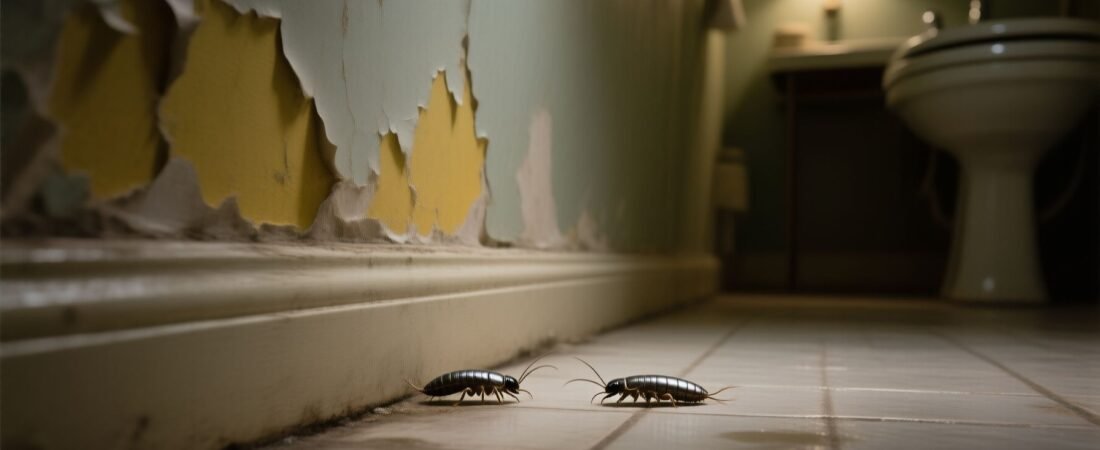
Seeing one silverfish doesn’t mean you have a problem. Seeing one silverfish every few weeks, in the same two or three spots, absolutely does — and that distinction is the thing most people get completely wrong. A silverfish infestation isn’t loud or dramatic. It doesn’t announce itself with a smell, a swarm, or a visible trail. It shows up in clues scattered across your home, and if you don’t know what to look for beyond the bug itself, you can have hundreds of them living in your walls for months before you realize it.
Why Spotting One Silverfish Tells You Less Than You Think
Silverfish are nocturnal and fast — genuinely fast, clocking speeds that would translate to roughly 30 miles per hour if they were human-sized. You flip on a bathroom light at midnight, catch a flash of silver disappearing under the vanity, and assume it was a one-off straggler that slipped in through a gap. That assumption is almost always wrong. A single visible silverfish is almost never alone; it’s the one member of a colony that broke cover at the wrong moment.
Here’s the counterintuitive part: silverfish reproduce slowly compared to most household pests. A female only lays about 1 to 3 eggs per day, and nymphs take anywhere from 3 months to 3 years to reach adulthood depending on humidity and temperature. But they also live for 2 to 8 years — far longer than cockroaches or fleas. That lifespan is exactly why a single sighting deserves more attention than people give it. One silverfish you spot today could have been living in your home for two years already, with an entire community of relatives you’ve never seen.
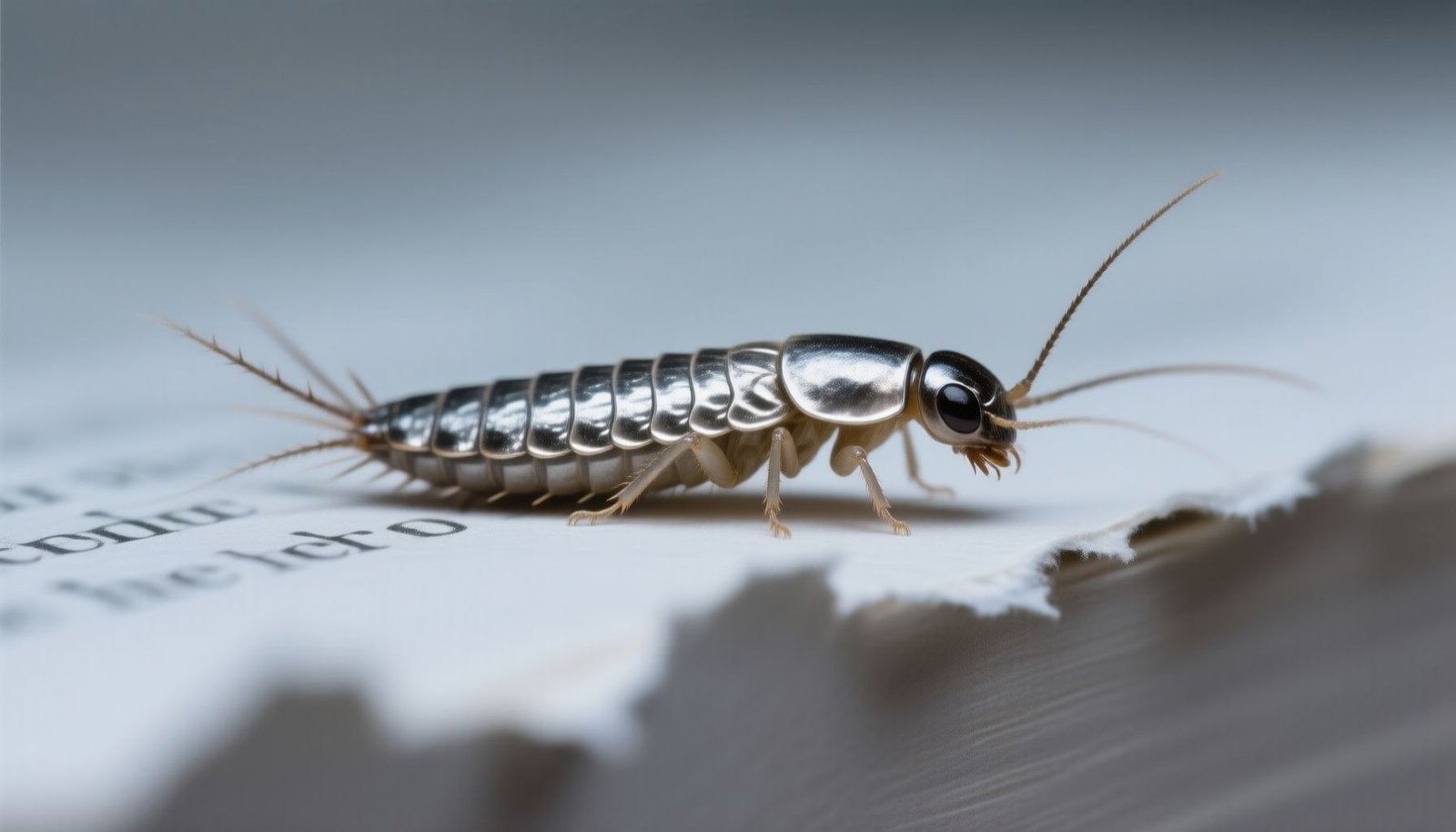
This close-up shows the distinctive teardrop shape, metallic scales, and three tail-like appendages of a silverfish — details that matter because homeowners frequently mistake them for other small, fast-moving insects, which delays identification and treatment by weeks.
What Does a Silverfish Infestation Actually Look Like (Without Seeing the Bug)?
The real diagnostic skill here isn’t identifying the insect — it’s reading what they leave behind. Silverfish feed on polysaccharides, which means starches, sugars, and proteins found in paper, glue, linen, wallpaper paste, and even dead skin cells. Their feeding damage has a specific, recognizable pattern that’s different from moth damage, carpet beetle damage, or mold.
Look for these signs in combination — one alone might be nothing, but two or more together tells a clear story:
- Irregular surface etchings on paper or cardboard — not holes, but scraped-away patches where the top layer has been grazed off. Old books, wallpaper backing, and cardboard storage boxes are the most common targets.
- Yellow staining on fabric or paper — silverfish leave a yellowish residue on light-colored materials, particularly on cotton, linen, and silk stored in dark closets or basements.
- Tiny pepper-like droppings — about 1mm in size, black, and resembling ground black pepper or poppy seeds. You’ll find them concentrated in dark corners near food sources, not spread randomly.
- Shed scales and molted skins — silverfish are one of the few insects that continue molting throughout their adult lives. Finding tiny, translucent, fish-scale fragments near baseboards or inside boxes is a strong indicator.
- Damaged book bindings and wallpaper edges — specifically the glue seams, which contain starch-based adhesive that silverfish actively seek out. A wallpaper seam that keeps lifting in the same spot near the floor may not be a humidity issue.
One thing worth noting: the yellow staining can sometimes be mistaken for water damage or aged paper, and the pepper-like droppings get dismissed as dirt. If you’re finding both, don’t brush it off as coincidence.
Which Rooms Signal a Widespread Problem vs. an Isolated One?
Location matters enormously when you’re trying to gauge severity. Silverfish are hygrothermophiles — they thrive in high humidity (70–90%) and moderate temperatures (70–80°F). Finding one in a bathroom or laundry room is meaningfully different from finding evidence in a bedroom or living room bookcase. The bathroom is their comfort zone. The bookcase is a sign they’ve moved in and expanded.
Here’s a practical breakdown of what different room locations actually tell you about the scale of the problem:
| Location Found | What It Suggests | Concern Level |
|---|---|---|
| Bathroom only (one spot) | Isolated entry from plumbing or vents; humidity-seeking behavior | Low — monitor first |
| Basement + bathroom | Active colony likely established in walls or subfloor insulation | Moderate — treat now |
| Kitchen, bedroom, or bookshelves | Population has spread beyond moisture zones into food/paper sources | High — infestation confirmed |
| Attic insulation signs | Long-established colony with satellite feeding zones throughout the home | Severe — professional assessment warranted |
Attic infestations in particular are underdiagnosed because no one goes up there regularly. Silverfish love cellulose insulation and the paper backing on fiberglass batts — a colony of several hundred can live in attic insulation for years completely undetected. If you’re seeing silverfish in multiple rooms on different floors, check the attic before assuming they came in from outside.
How Do You Know If It’s Silverfish Damage or Something Else?
This is where most homeowners go wrong, and it costs them time. Silverfish damage gets regularly misattributed to bookworms (psocids), carpet beetle larvae, or clothes moths — and treating for the wrong pest wastes money while the actual population keeps growing. The differences are specific enough that you can diagnose this yourself if you know what to look at.
A key distinction: silverfish scrape and etch surfaces rather than chewing through them. If you see small holes eaten clean through paper or fabric, that’s more consistent with psocids (booklice) or beetle larvae. Silverfish leave the material structurally intact but surface-eroded — like someone sanded the top layer off rather than punching through. On fabric, you’ll sometimes see a notched or irregular edge rather than a clean hole. Combined with the yellow staining and pepper droppings, that damage profile is silverfish, not moths.
Use this diagnostic sequence if you’re unsure:
- Check the damage texture first. Run your finger over it — silverfish damage feels scraped or abraded on the surface. Moth or beetle damage punches through entirely.
- Look for droppings nearby. Silverfish droppings are round and black, like tiny balls of pepper. Moth larvae leave a fine powdery frass mixed with silk webbing. Carpet beetle larvae leave shed skins and bristle-like hairs.
- Note the material being damaged. Silverfish specifically target starch-heavy materials — wallpaper, book glue, cardboard, starched cotton. They rarely damage pure wool or synthetic fibers (those are more likely moths or carpet beetles).
- Place a sticky trap in the area. A basic glue trap placed near the damage for 72 hours will tell you exactly which insect is active. Don’t skip this step — it’s the fastest way to confirm.
- Check for shed skins. Silverfish are unique in molting through adulthood — finding translucent, tear-drop-shaped cast skins near the damage is almost definitive. Very few household insects do this.
- Inspect during the night. Set a trap, go to bed, and check at 2am with a flashlight. If silverfish are active in that zone, you’ll see them directly. This also rules out damage happening during the day, which silverfish almost never cause.
Pro-Tip: Fold a small piece of white paper into a tent shape and place it along the baseboard in a suspect area overnight. In the morning, check the inside crease for pepper-sized droppings. It’s a low-tech but surprisingly reliable way to confirm silverfish activity without buying any equipment.
Can Silverfish Damage Be Mistaken for Something More Serious — or Vice Versa?
Picture this: you pull a box of old family photos out of storage and find the corners chewed away, some images yellowed, and a few small dark specks inside the box. Most people assume it’s moisture damage or a mouse. But mice leave gnaw marks with visible tooth grooves, and moisture damage tends to be uniform and spreading. What you’re looking at with silverfish is selective — they hit specific spots with high starch content and leave the rest largely untouched.
The more serious misidentification runs the other direction: people dismiss silverfish activity as minor cosmetic damage to old stuff, not realizing the insects are also feeding on the polysaccharide binders in drywall paper, the starch in ceiling tiles, and the backing on insulation. Over time, in a severe infestation, that’s structural material. It’s a slow process — silverfish aren’t termites — but an unaddressed colony of 200 or 300 insects feeding on drywall paper and ceiling tiles for three or four years does accumulate real damage. And because silverfish don’t bite humans and aren’t associated with immediate health emergencies, they get deprioritized in a way that allows exactly that kind of slow deterioration. It’s worth noting that while most silverfish health concerns relate to allergens rather than direct harm, some people with sensitivities do react to their shed scales — something explored in more detail in this article on bugs that cause hair loss and scalp problems, which includes insect allergen reactions that can affect the scalp.
“Silverfish are one of the most underreported infestations in residential pest control, largely because the damage accumulates slowly and the insects themselves are so rarely seen during daylight hours. By the time homeowners call us, the colony is usually well past 100 individuals — and the feeding signs have been visible for six to twelve months. The key diagnostic moment most people miss is the shed molts: if you’re finding translucent silverfish-shaped skins in closets or storage areas, you’re not dealing with a transient pest, you’re dealing with an established breeding population.”
Dr. Marcus Holloway, BCE — Board Certified Entomologist and Structural Pest Management Specialist
The honest nuance here is that severity depends heavily on your home’s construction type and regional climate. A 1960s ranch house with a damp crawl space in the Pacific Northwest is a fundamentally different environment from a newer construction condo in Phoenix — both can develop silverfish problems, but the colony sizes, the spread patterns, and the damage signatures will look different. In humid climates, silverfish can establish satellite colonies in multiple rooms within one season. In drier climates, they tend to stay tightly clustered near the one or two areas with enough moisture to support them, which actually makes those infestations easier to localize and treat.
If you’ve confirmed the signs — the pepper droppings, the surface-etched damage, the shed skins, and sightings in more than one room — don’t wait on it. Silverfish don’t disappear on their own when the weather changes the way some seasonal pests do. Their long lifespan means a colony that survives one summer is still there next summer, larger. Start with dehumidification and targeted sticky trap placement to map the hot zones, then treat those specific areas rather than fogging the entire house, which rarely reaches the crevices where silverfish actually live. If the evidence spans three or more rooms or you’re finding signs in the attic, a licensed pest control inspection will save you more time and money than another few months of monitoring.
Frequently Asked Questions
How do I know if I have a silverfish problem in my house?
The clearest signs are seeing the insects themselves, finding their pepper-like black droppings, or noticing irregular yellow stains on surfaces. If you’re spotting more than one or two silverfish per week, you likely have an infestation rather than a random stray. Check behind baseboards, under sinks, and inside cardboard boxes — those are their favorite hiding spots.
What does silverfish damage look like on books and clothes?
Silverfish feed on starch and cellulose, so they leave irregular holes, notched edges, and scraped surface areas on paper, wallpaper, and fabric. On clothing, you’ll often see small holes with yellowish staining around them, which comes from their molted skin and feces. The damage pattern looks different from moth damage — silverfish tend to scrape rather than chew clean through.
Where do silverfish hide during the day in a house?
Silverfish are nocturnal, so during the day they squeeze into tight, dark, humid spots — behind wallpaper, inside wall voids, under bathroom tiles, and in attic insulation. They’re drawn to areas with humidity levels above 75%, so basements and bathrooms are prime real estate for them. If you pull back loose wallpaper or lift a bathroom rug and see them scatter, that’s a strong sign of an active infestation.
Can silverfish infest an entire house or do they stay in one area?
They can absolutely spread throughout a house, but they typically stay concentrated near moisture and food sources. An infestation that started in a damp basement can move into wall voids and eventually reach living areas, attics, and closets. If you’re finding them in multiple rooms, the infestation is likely well-established and may have been going on for several months.
How fast do silverfish multiply and how serious is an infestation?
A single female silverfish can lay up to 100 eggs over her lifetime, and eggs hatch in 3 to 6 weeks depending on humidity and temperature. They’re not a health hazard in the way cockroaches are, but a heavy infestation causes real structural and property damage — they’ll destroy books, wallpaper, stored food, and clothing. If you’re seeing droppings, molted skins, and live insects regularly, it’s worth calling a pest control professional rather than relying on DIY traps alone.