
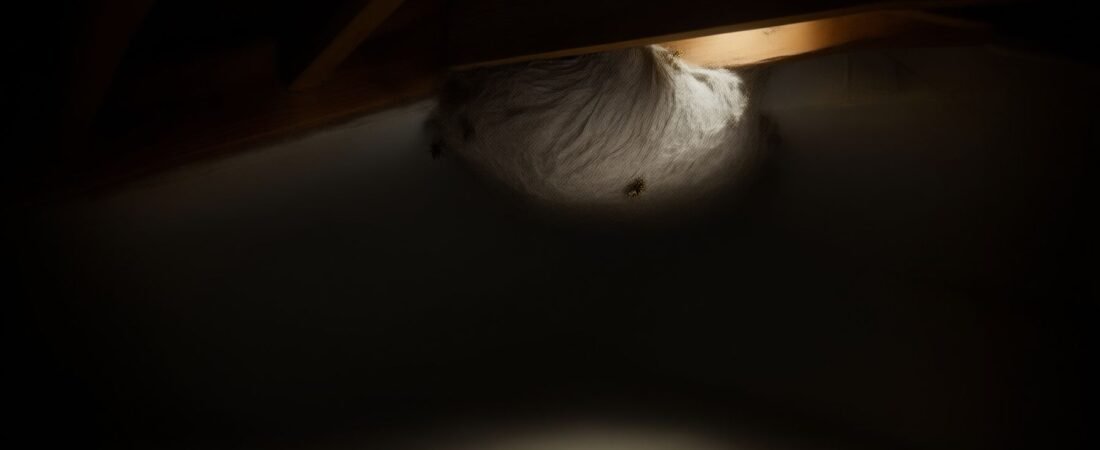
A single wasp flying around your living room in October is not a stray visitor from outside — it’s almost certainly coming from inside your house. That one detail flips everything most people assume about wasp nests in walls and attics. The common belief is that wasps always build visible, paper-globe nests hanging from eaves or tree branches. The harder truth is that some of the most dangerous wasp colonies are the ones you never see, because they’re buried inside a wall void or tucked into attic insulation, expanding quietly for months before you realize what’s happening.
Here’s the bottom line: a hidden wasp nest doesn’t announce itself the way a visible one does. Instead, it sends a specific set of secondary signals — sounds, stains, emerging insects, and structural clues — that most homeowners misread or ignore entirely until the colony has grown to 3,000–5,000 workers. This article is about learning to read those signals correctly, before the nest hits that size.
Why Do Wasps Build Nests Inside Walls and Attics in the First Place?
Yellowjackets and paper wasps don’t choose your wall void because they’re trying to cause problems — they choose it because it’s genuinely ideal real estate. Wall cavities offer exactly what a colony needs: a stable temperature, protection from wind and rain, and a small entrance hole that’s easy to defend. A gap as small as 3/8 of an inch around a utility pipe, a rotted soffit board, or a missing piece of mortar between bricks is enough for a queen to slip through in early spring and decide she’s found a home.
Attics are especially attractive because they warm up fast in spring, which accelerates brood development. A queen who starts a colony in a wall void in April can have a fully mature nest of 4,000–5,000 workers by late July. That growth happens completely out of sight, which is exactly why the external signs matter so much — they’re your only window into what’s happening inside the structure.
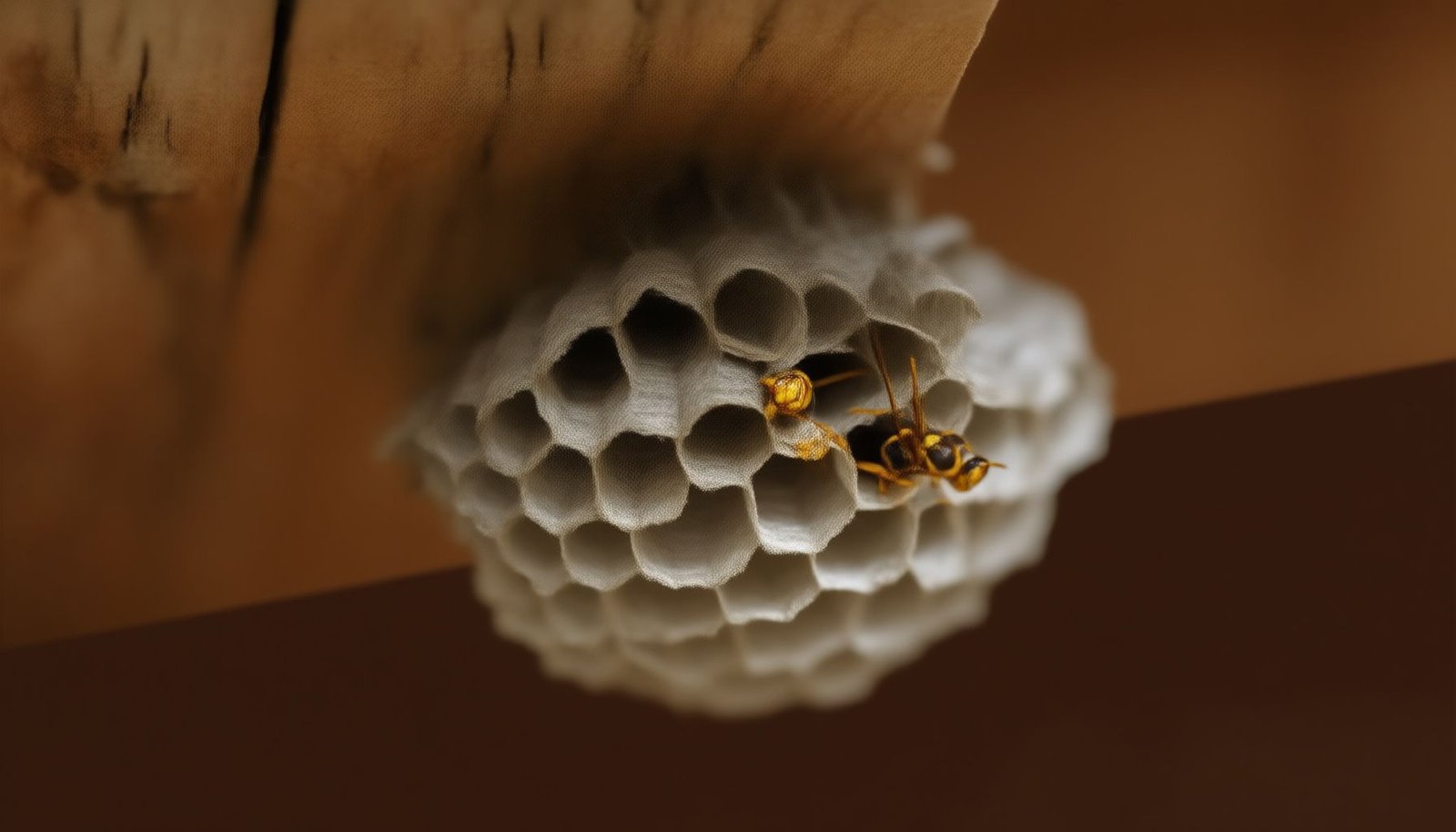
This close-up shows the papery, layered structure of a wasp nest built inside a wall void — the honeycomb-like cells and gray, wood-pulp exterior are what you’d find if you opened up drywall, and understanding what you’re dealing with structurally helps explain why this kind of nest is so hard to treat without the right approach.
What Does a Wasp Nest Sound Like Inside a Wall?
Sound is one of the most underrated diagnostic tools for a hidden wasp nest, and it’s the sign that homeowners most often dismiss as “the house settling” or “pipes.” A colony of yellowjackets inside a wall produces a persistent, low-frequency buzzing or rustling — not the sharp, intermittent buzz of a single wasp, but a continuous, almost papery vibration that you can sometimes feel with your palm flat against the drywall. The sound typically intensifies during the warmest part of the day, between late morning and mid-afternoon, when foragers are most active.
Tapping gently along the wall surface can also help localize the nest. The area directly over or adjacent to the nest will sometimes sound slightly hollow or produce a dull thud instead of the sharper knock you’d hear from an empty cavity. This isn’t a perfect diagnostic — drywall thickness and insulation affect the sound — but combined with other signs, it narrows down where the colony is centered and helps you (or a pest control professional) know exactly where to treat.
The Visual Signs Most Homeowners Completely Miss
Picture this: you’re painting the guest bedroom in late August and you notice a faint brownish stain spreading slowly across the ceiling near the corner. You think it’s a water leak, call a plumber, and they find nothing. What you’re actually looking at is wasp nest seepage — the oils and moisture from a large nest pressing against drywall will bleed through the surface as a yellowish-brown stain, often in a roughly oval pattern. It’s one of the most reliable visual signs of a mature hidden nest, and it gets misidentified as a plumbing issue almost every time.
Beyond staining, here’s a breakdown of the visual indicators to watch for, roughly in order of how often they appear:
- Repeated wasp activity near one specific entry point — a single gap, crack, or hole where you consistently see wasps flying in and out, especially with a “landing strip” behavior where they briefly hover before entering.
- Yellowish-brown staining on walls or ceilings — caused by nest oils and moisture migrating through drywall; often appears in an irregular oval shape and may feel slightly soft or damp to the touch.
- Wasps appearing inside the home with no obvious entry — when workers accidentally chew through drywall or emerge through electrical outlets, light fixtures, or recessed lights, it means the nest is directly behind that surface.
- Visible gnawing or small chewed holes in drywall — yellowjackets in particular will chew through drywall as the colony expands and runs out of space; the holes are ragged and roughly circular, about the diameter of a pencil.
- Dead wasps on windowsills in winter — in colder climates, workers die off in fall and their bodies accumulate near windows as they seek light and warmth; a cluster of dead wasps inside in November or December almost always points to a nest in the adjacent wall or attic space.
- Softened or bubbled paint near eaves or soffits — the heat and moisture generated by a large colony can cause exterior paint to blister, particularly in wood-framed soffits where the nest is packed tightly against the structure.
How to Tell the Difference Between a Wasp Nest and a Bee Colony in Your Walls
This distinction matters enormously for how you respond, and getting it wrong can be expensive. Honeybees inside a wall are a protected species in many states, and a bee removal specialist (not a pest control company) handles them differently — sometimes requiring cut-out removal of the comb, which can cost $500–$2,000 depending on nest size and wall access. Wasps don’t store honey, don’t build wax comb, and don’t require the same specialized removal. Treating a honeybee colony with wasp spray and sealing the entrance is one of the worst things you can do, because the unremoved honey will ferment, attract other pests, and cause structural damage over months.
Use this table as a quick reference when you’re trying to figure out what’s inside your wall before calling anyone:
| Characteristic | Wasp / Yellowjacket Colony | Honeybee Colony |
|---|---|---|
| Flight pattern at entry point | Fast, direct, purposeful — in and out quickly | Slower, circling, “dancing” behavior near opening |
| Visible insects | Smooth, slim-waisted, shiny | Fuzzy, rounder abdomen, often carrying pollen |
| Wall staining | Brown/yellow oil stain, no honey smell | Honey smell, sticky amber staining |
| Season of peak activity | Spring through late fall; dead in winter | Year-round activity in mild climates |
One thing worth noting: the smell test is surprisingly reliable. A honeybee colony in a wall will produce a faint but unmistakable sweet, waxy, honey-like odor that you can sometimes detect by pressing your nose close to the entry point or an adjacent electrical outlet. Wasp nests have no comparable scent.
“The single biggest mistake I see homeowners make with hidden wasp nests is sealing the entry point without treating the colony first. That forces thousands of workers to find a new exit — and they almost always chew through into the living space. You end up with a bedroom full of angry wasps instead of a contained nest outside. Always treat first, seal second.”
Dr. Patricia Calloway, Board-Certified Entomologist and Extension Pest Management Specialist
What Time of Year Are Hidden Wasp Nests Most Dangerous — and Why?
Here’s the counterintuitive part that most pest control content skips over: a hidden wasp nest in your wall is actually most dangerous in late summer and early fall, not at peak summer when it’s largest. Here’s why. Through spring and early summer, the queen’s primary focus is producing workers and expanding the colony — the wasps are busy and largely non-aggressive unless directly disturbed. By late August, the colony has shifted its purpose: it’s now producing new queens and males for mating season, the food supply inside the nest dwindles, and thousands of workers become increasingly defensive and food-driven. A colony that left you alone all summer can become genuinely aggressive in September, with almost no provocation required.
This seasonal shift is also why indoor wasp sightings spike in fall. As outdoor temperatures drop and the colony begins to die off, disoriented workers follow heat gradients toward the interior of your home. The honest nuance here is that in warmer climates — the Gulf Coast, Southern California, parts of Arizona — wasp colonies in protected wall voids sometimes survive a mild winter and restart in spring, reaching enormous sizes of 10,000–15,000 workers in year two. That scenario is rare in cold northern states but genuinely common in USDA hardiness zones 8 and above, and it completely changes the risk calculus for homeowners in those regions.
Pro-Tip: If you notice wasps entering a specific crack or gap in your exterior wall or soffit, resist the urge to caulk or foam-seal it immediately — especially during active season. Workers trapped inside with no exit will chew through drywall and emerge inside your home within 24–48 hours. Mark the entry point, observe flight patterns for one full day to confirm it’s an active nest entrance, and treat the nest with a labeled insecticide dust (such as Delta Dust or Tempo Dust applied with a hand duster) before sealing anything.
Signs that a hidden nest has reached a point requiring professional intervention rather than DIY treatment include:
- Wasps actively emerging through drywall, electrical outlets, or light fixtures inside living spaces
- Visible wall staining that has expanded over several weeks, suggesting a colony larger than 2,000–3,000 workers
- Multiple entry/exit points on the exterior, which indicates the colony has outgrown a single void and spread through connected wall cavities
- Any household member with a known bee or wasp venom allergy — a disrupted hidden nest can release 500–1,000 wasps into a living space within minutes
- Year-round activity at the entry point in a southern climate, suggesting an overwintered colony that may have doubled in size
It’s also worth mentioning that other insects can mimic some of the same wall-activity signs — if you’ve been dealing with mysterious small insect activity and you’re not fully certain what pest you’re dealing with, it helps to rule out things systematically. For example, carpet beetles are harmful in a different way entirely but can produce similar-looking minor wall staining and adult insect emergence near windows in fall. And just as with unusual insect sightings in a kitchen, quick identification beats assumptions — the same way you’d want to know if what you’re seeing is a Pharaoh ant versus a sugar ant before you reach for the wrong treatment.
The most useful thing you can do right now — before you’ve confirmed a nest, before you’ve called anyone — is spend five minutes walking the exterior perimeter of your house on a warm afternoon between 11am and 2pm, watching for sustained wasp flight traffic near any crack, gap, soffit vent, or utility penetration. That’s when foragers are most active and the entry point is easiest to identify. Find the entry point first, and every decision after that becomes much cleaner.
Frequently Asked Questions
how do I know if I have a wasp nest in my walls?
The most common signs are a constant buzzing or chewing sound coming from inside the wall, and wasps flying in and out of a small gap or crack in your siding, eaves, or trim. You might also notice a faint papery or woody smell near that area. If you’re seeing 10 or more wasps per day near one specific entry point, there’s a strong chance a nest is already established inside.
what does a wasp nest in the attic look like?
Attic wasp nests are usually made of gray or tan papery material and can range from golf ball size early in the season to basketball size or larger by late summer. They’re often attached to rafters, roof sheathing, or attic joists. Yellow jackets sometimes nest in insulation or wall voids rather than building a visible hanging nest, so you might not see the nest itself even if wasps are active up there.
can wasps in walls damage your house?
Wasps themselves don’t cause structural damage the way termites do, but a large colony can leave behind honeycomb, dead wasps, and moisture from nest material that attracts other pests and can stain drywall. If the nest is abandoned and honey or larvae are left inside the wall, it can also draw ants, beetles, and rodents. It’s worth removing the nest promptly rather than just sealing the entry point and walking away.
is it dangerous to have a wasp nest inside your walls?
Yes, it can be — especially if wasps chew through drywall and start emerging inside your living space. A colony in a wall can hold anywhere from a few hundred to over 5,000 wasps depending on the species, and disturbing the wall can trigger an aggressive defensive response. Yellow jackets in particular are known for stinging repeatedly without much provocation, so this isn’t a situation where DIY removal is usually a smart call.
what time of year do wasps nest in walls and attics?
Wasps typically start building nests in spring when queens come out of overwintering and look for sheltered spots — attics and wall voids are favorites because they’re warm and protected. Colonies grow through summer and are largest in late summer and early fall, which is also when wasps are most aggressive. By late fall, most worker wasps die off, but the nest structure and any surviving queens can remain until you deal with them.