
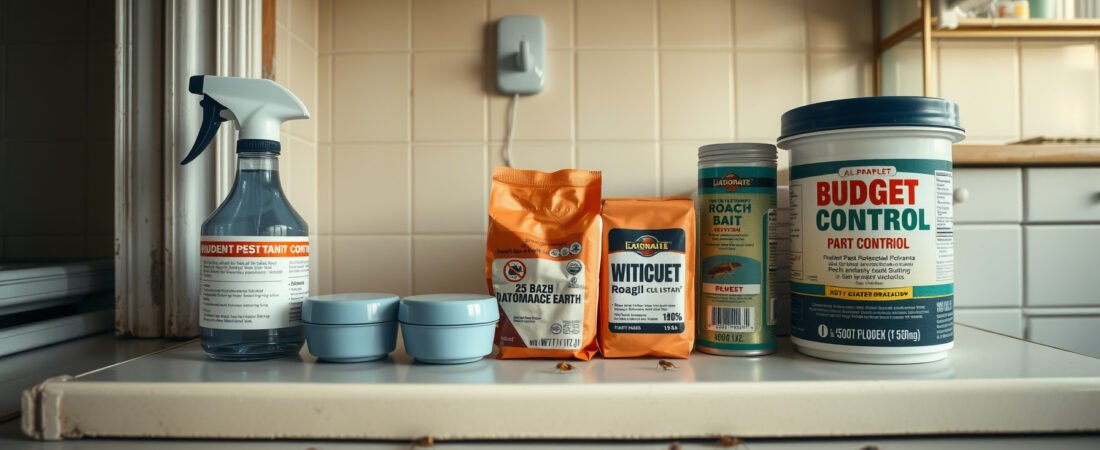
Calling a pest control company for a bed bug or roach infestation typically costs between $300 and $1,500 — and that’s before a second treatment if the first one doesn’t hold. For a lot of renters and homeowners living paycheck to paycheck, that number is just not happening. Here’s the thing most articles won’t tell you: not being able to afford an exterminator doesn’t mean you’re stuck watching the problem get worse. It means you need a smarter plan, not a more expensive one.
The real mistake people make when money is tight isn’t skipping the exterminator — it’s throwing random products at the problem and hoping something sticks. A $12 can of raid doesn’t fail because it’s cheap. It fails because it targets the wrong life stage, misses the harbourage, or creates resistance over time. What actually works when you’re doing this yourself is understanding why these pests are surviving your efforts and targeting that specific weakness. That’s what this guide is built around.
Why Most Budget DIY Attempts Make Bed Bugs and Roaches Worse
Here’s a counterintuitive one: aggressive spraying can actually scatter both bed bugs and cockroaches deeper into your walls and furniture, making a manageable infestation dramatically harder to treat later. Bed bugs detect chemical threats and retreat to new harborages. German cockroaches — the small ones most common in apartments — respond to repellent sprays by splitting into smaller sub-colonies and spreading to adjacent rooms or units. You end up trading one concentrated problem for five distributed ones.
This is the core reason why the “spray everything and hope” approach fails, and it’s also why the exterminator’s toolkit looks so different from what’s on the shelf at Home Depot. Professionals lean heavily on non-repellent chemistry — products that roaches walk through without detecting, then carry back to the nest. That same principle is completely accessible to you as a DIYer, you just have to know which products use it. Everything else in this article flows from that one idea.
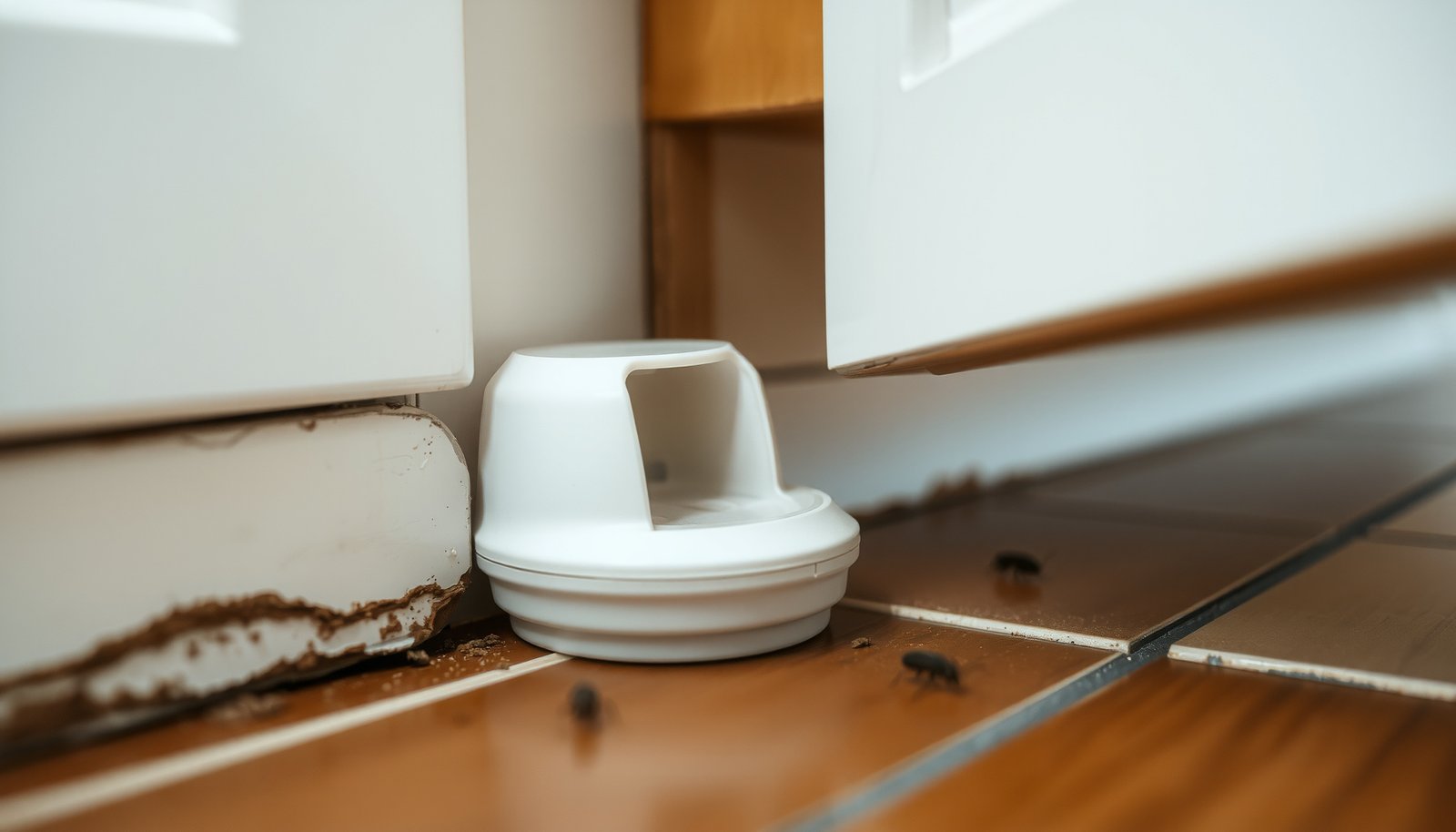
This close-up shows the kind of tight harborage spots — cabinet hinges, baseboard gaps, mattress seams — where bed bugs and roaches shelter between treatments, which is exactly why surface sprays alone almost never reach them.
What Actually Works for Roaches Without Professional Help
Gel bait is the single most effective roach tool available to consumers, and it’s what most pest companies are essentially using anyway — just in commercial-grade formulations. Brands like Advion and Vendetta use active ingredients (indoxacarb and abamectin respectively) that roaches ingest, survive long enough to return to their harborage, and then spread to other roaches through contact and fecal matter. A female German cockroach produces 30–40 eggs per capsule and can generate hundreds of offspring in her lifetime, so killing the ones you see does almost nothing. You need the bait to reach the ones you don’t see.
Placement matters more than quantity. A pea-sized dot of gel bait tucked inside a cabinet hinge, behind the refrigerator motor, or under the lip of the stove will outperform half a tube smeared across an open countertop. The goal is to put it exactly where roaches travel in the dark — tight, warm, humid spots near food or water. Picture this: someone spends $40 on gel bait, puts it in 30 targeted spots, and has near-complete control within two weeks. Someone else spends the same amount and applies it randomly across visible surfaces and sees no improvement at all. Same product, completely different results.
Pro-Tip: Never use a repellent spray in the same areas where you’ve placed gel bait. The repellent will contaminate the bait, roaches will avoid it entirely, and you’ll wonder why nothing is working. Pick one approach and commit — bait-based treatment is the right call for most apartment infestations.
Can You Realistically Treat Bed Bugs Yourself Without Heat Equipment?
Yes — but you need to be honest with yourself about what “treat” means here. Professional heat treatments work because they raise the entire room to 120–130°F for several hours, reaching bed bugs inside walls, inside electronics, and deep in furniture seams where no spray can penetrate. You can’t replicate that with a hair dryer. What you can do is dramatically reduce the population using a layered approach that targets the life stages a single product will always miss.
Adult bed bugs can survive over 300 days without feeding, which is the fact that breaks most DIY timelines. People treat for two weeks, see no activity, and assume the problem is solved — then get re-infested three months later from eggs that were never addressed. Eggs are the hardest part. They’re cemented to surfaces, resistant to many sprays, and hatch on their own schedule. Your treatment plan has to run long enough to catch nymphs emerging from eggs that were laid before you started. That means a minimum of 6–8 weeks of consistent effort, not one weekend of cleaning.
| Bed Bug Life Stage | Vulnerability | Best DIY Approach |
|---|---|---|
| Eggs | Low — most sprays don’t penetrate shell | Encasements, heat drying, repeated treatment cycles |
| Nymphs (1st–3rd instar) | High — thin cuticle absorbs contact killers well | Diatomaceous earth, silicone dust, contact spray |
| Adults | Medium — can detect and avoid some chemicals | Non-repellent residual spray + interceptor traps |
The Step-by-Step DIY Sequence That Actually Matches What Pros Do
The reason professional treatments are more reliable isn’t just the products — it’s the sequence. Exterminators follow a protocol that addresses the infestation at multiple points simultaneously, so there’s no gap where survivors can regroup. You can build that same protocol at home. It takes more patience than writing a check, but the approach is genuinely sound. Just as the same logic applies when evaluating whether to DIY termite treatment is safe and effective — the method matters as much as the product.
Here’s the sequence that mirrors professional treatment logic for a moderate infestation in a single room or apartment:
- Reduce clutter immediately. Bed bugs and roaches both thrive in clutter because it multiplies harborage. Bags, boxes, and stacked items should be inspected and removed or sealed in plastic before any treatment begins — otherwise you’re treating around the problem, not through it.
- Launder and dry everything on high heat. For bed bugs, 30 minutes in a dryer at high heat kills all life stages including eggs. Do this before you treat the room, not after — otherwise you’re re-introducing bugs into a treated space every time you pull something out of an untreated pile.
- Apply a desiccant dust to voids and baseboards. Cimexa (amorphous silica) or diatomaceous earth in wall voids, along baseboards, and behind outlet plates creates a residual kill zone that lasts months without needing reapplication. This handles the movement corridors that sprays miss.
- Use a non-repellent contact spray on surfaces. For bed bugs, products containing isopropyl alcohol at 91%+ or a pyrethroid-based spray labeled for bed bugs can be applied to mattress seams, box spring edges, and furniture joints. For roaches, use a non-repellent like Temprid SC rather than anything with a strong scent warning.
- Install interceptor cups under bed legs. Bed bug interceptors cost about $15 for a set of 4 and serve double duty — they trap bugs moving to and from the bed and give you hard evidence of whether your treatment is working. No catches after week three is a genuinely good sign.
- Repeat on a 7–10 day cycle for 6–8 weeks. Eggs hatch roughly every 6–10 days depending on temperature. Treating on that same cycle means every new nymph encounters fresh product before it can mature and reproduce. Skipping cycles is how infestations survive DIY treatment.
Free and Low-Cost Help You Probably Haven’t Tried Yet
Before you spend anything at all, exhaust the free options — because several of them are genuinely effective and most people skip them entirely. Your local cooperative extension office (run through state universities) offers free pest identification and sometimes free or subsidized treatment guidance. These aren’t just brochures; many extension programs have licensed entomologists who will walk you through a treatment plan specific to your pest and your housing type at no cost.
“One of the most underused resources for low-income renters dealing with bed bugs is the local health department. Many municipalities have housing codes that classify bed bug infestations as a habitability violation, which creates a legal obligation for landlords to remediate — regardless of who they think caused it. Filing a complaint costs nothing and often moves faster than people expect.”
Dr. Sandra Kole, Urban Entomologist and NPMA-Certified Pest Management Consultant
Beyond the health department route, here’s what else is available that most people don’t know to ask about:
- 211 helpline referrals: Dialing 211 connects you to local social services, some of which include emergency pest control assistance for low-income households — particularly for bed bugs, which are classified as a public health pest in many states.
- Housing authority programs: If you live in public or subsidized housing, the housing authority is almost always legally required to provide pest control. Document your requests in writing and keep copies.
- Community action agencies: These federally funded organizations sometimes offer emergency home repair and pest remediation assistance. They’re worth a 10-minute phone call before you spend money on products.
- Nonprofit legal aid: If your landlord is ignoring a documented infestation, a free legal aid consultation can clarify your right to withhold rent or pursue a rent reduction — which in some states is enforceable after a single written notice goes unanswered.
The same principle that makes professional-grade products worth researching — understanding the mechanism before spending money — applies equally to choosing the right bait-based products for other household pests. The label and active ingredient matter more than the brand name on the front of the package.
One honest nuance worth naming: DIY treatment works best for light-to-moderate infestations in a single unit. If you’re in a multi-unit building where bugs are coming in from adjacent units, or if the infestation has spread to multiple rooms and been active for months, your success rate with DIY drops significantly — not because the products don’t work, but because you’re treating a tributary while the source keeps feeding it. In that scenario, escalating to your landlord with documentation (photos, interceptor counts, written requests) and looping in the health department is the higher-leverage move, even if treatment itself still falls to you.
The pest control industry has a financial incentive to make DIY sound hopeless. That doesn’t mean professional treatment isn’t sometimes genuinely necessary — it absolutely is, especially for severe infestations or those involving pest species that resist consumer-grade chemistry. But for a single-unit roach problem caught early, or a bed bug infestation that hasn’t spread beyond the bedroom, a disciplined DIY approach using the right products in the right sequence is a legitimate path forward. Start with what’s free, then spend only on what targets the specific weak point in your infestation’s life cycle — and keep going long enough for it to actually work.
Frequently Asked Questions
what is the cheapest way to get rid of bed bugs without an exterminator?
Heat treatment is one of the most effective DIY options — washing infested bedding and clothing on high heat (at least 120°F) and drying on high for 30+ minutes kills bed bugs at all life stages. Diatomaceous earth sprinkled along baseboards and bed frame joints is another low-cost approach, usually under $15 a bag. For heavier infestations, a combination of mattress encasements, vacuuming daily, and a contact spray like isopropyl alcohol can slow the spread while you work toward a full solution.
does boric acid kill roaches and is it safe to use at home?
Yes, boric acid is one of the most affordable and effective roach killers available — a small container costs around $5 and can treat an entire kitchen. It works by damaging the roach’s digestive system and exoskeleton when they walk through it and groom themselves. It’s relatively low-toxicity for humans and pets when applied correctly in thin layers along baseboards, under appliances, and inside cabinet hinges, but you should keep it away from areas where kids or pets can directly contact it.
can renters make a landlord pay for bed bug or roach extermination?
In most U.S. states, landlords are legally required to maintain a habitable unit, which includes treating pest infestations — especially if the problem existed before you moved in. You should document the infestation with photos and written notice to your landlord before taking any other action, since skipping this step can weaken your case. If your landlord refuses, you may have grounds to withhold rent, break the lease, or file a complaint with your local housing authority depending on your state’s tenant protection laws.
how long does it take to get rid of roaches without professional help?
With consistent DIY treatment, most moderate roach infestations can be brought under control within 2 to 8 weeks. Gel baits like Advion or Combat are among the fastest-acting consumer options, often showing a noticeable drop in activity within 1 to 2 weeks when placed near harborage areas. Severe infestations or German cockroach problems tend to take longer and require rotating treatment methods, since roaches reproduce fast — a single female can produce hundreds of offspring in her lifetime.
do bed bug sprays from walmart or amazon actually work?
Some over-the-counter sprays do work, but they have real limitations — contact sprays like Raid Bed Bug Foaming Spray or EcoRaider kill bugs they directly touch but don’t have a lasting residual effect and won’t reach bugs hiding deep in furniture joints or wall voids. Products containing pyrethroids (like permethrin) or neem oil tend to outperform generic aerosols. For best results, don’t rely on spray alone — pair it with heat treatment, encasements, and interceptor traps under bed legs to get a more complete approach.
Disclaimer: This article is for general informational purposes only and does not constitute legal advice. Landlord-tenant laws and pest-related disclosure or habitability requirements vary significantly by state and even by city, and they change over time. Before withholding rent, breaking a lease, or taking other legal action over a pest infestation, consult a licensed attorney or your local tenant rights organization familiar with the laws in your area.