
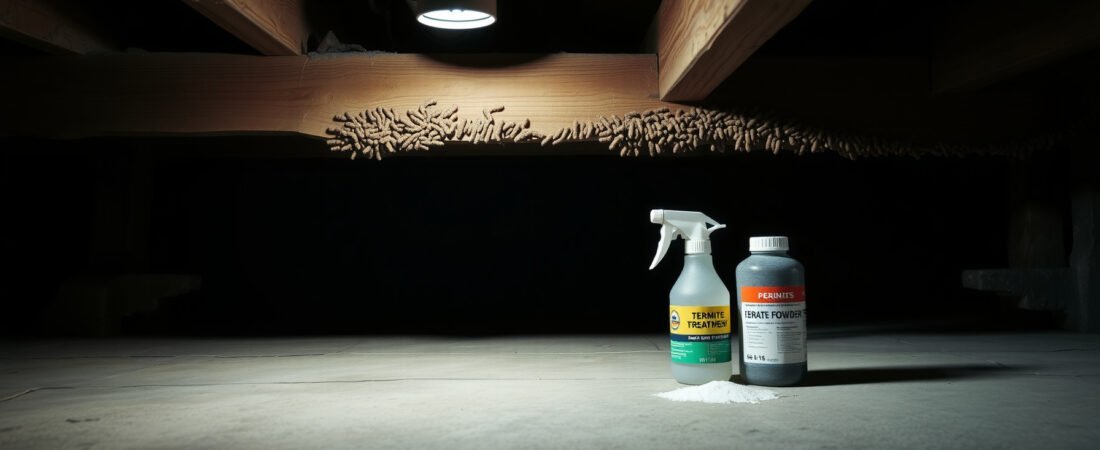
DIY termite treatment can absolutely work — but not for the reasons most people think, and it fails in ways most people never see coming. The honest problem isn’t that homeowners pick the wrong product. It’s that they treat the wrong location entirely, miss the colony by 20 feet, and declare victory while termites quietly keep eating through a floor joist three inches away from where they sprayed.
That’s the real gap in almost every article on this subject. They spend pages debating Termidor vs. borate foam vs. bait stations, and skip right over the fact that termite control is fundamentally a location problem, not a product problem. If you don’t know exactly where the colony is foraging — not just where you found damage — no product on earth will fix it reliably. This article is an honest look at when DIY termite treatment is genuinely effective, when it will quietly fail you, and what separates the homeowners who get it right from the ones who call a professional six months later with worse damage than before.
Does DIY Termite Treatment Actually Work, or Is That Just Marketing?
Yes, it works — under specific conditions. The DIY termite treatment market is large enough that manufacturers have serious incentive to make products that deliver real results, and products like fipronil-based liquid termiticides (the same active ingredient used in professional Termidor applications) are available to consumers in diluted but functional concentrations. Borate treatments like Tim-bor and BoraCare penetrate wood and kill termites on contact and through ingestion, and they’re not difficult to apply if you have access to unfinished wood surfaces. These aren’t placebo products.
The catch is that “works” means different things depending on your situation. A localized subterranean termite infestation in a crawl space, caught early, treated with a properly mixed and applied liquid barrier? A capable DIYer can handle that. A mature drywood termite infestation spread through multiple wall voids in a two-story house? That’s a different animal entirely, and DIY treatment there is more likely to delay professional intervention than replace it. Efficacy depends almost entirely on the species you’re dealing with, how far the infestation has spread, and whether you can physically access the treatment zones.
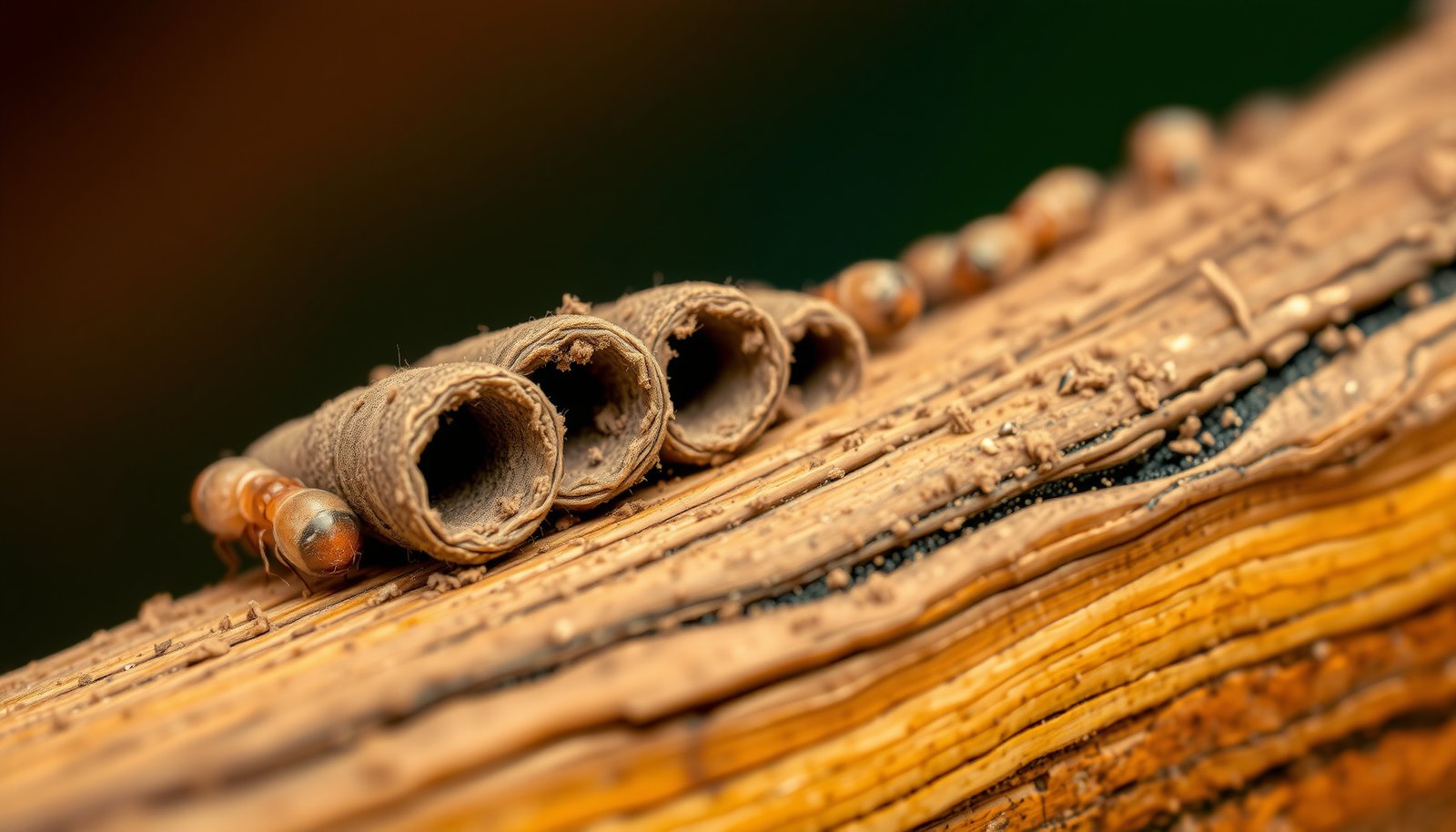
This image shows the difference between surface termite damage and active gallery tunneling beneath — understanding which one you’re looking at determines whether a topical DIY treatment will reach the colony or just coat the surface above it.
What Most DIY Termite Treatments Get Wrong Before the Product Even Opens
Picture this: a homeowner in Georgia finds soft, spongy wood along the base of a door frame, pokes it with a screwdriver, and sees the classic honeycomb gallery pattern. They order a fipronil concentrate online, mix it up, and trench and treat the soil along the exterior foundation. They feel good about it. What they don’t know is that the primary foraging trail for that colony enters the house 12 feet away, through a crack in the interior slab under the laundry room floor — a spot they never treated because they didn’t know to look there. The exterior application helps, but the colony routes around it within weeks through an untreated path. This scenario isn’t rare. It’s the default outcome when treatment starts with the damage instead of with a full inspection.
Subterranean termites — by far the most destructive species in the US, responsible for roughly 80% of termite damage claims — live underground and send foraging workers through soil and mud tubes to food sources. A single colony can contain over 1 million individuals, and their foraging tunnels can extend more than 150 feet from the nest. Treating only where you see damage is like treating a leak by mopping the floor. The entry point, the mud tube routing, and any secondary access points all need to be addressed in the same treatment window. That requires mapping, not just spraying — and it’s where DIY efforts most commonly fall short.
Which DIY Termite Products Are Actually Worth Using?
Not all DIY termite products are created equal, and the marketing on the shelf doesn’t always match the chemistry inside. Here’s a breakdown of the main categories and what each one realistically delivers:
| Product Type | Best Use Case | Realistic DIY Effectiveness |
|---|---|---|
| Liquid termiticide (fipronil/imidacloprid) | Subterranean termites, soil perimeter barrier | High — if full perimeter is treated correctly |
| Borate wood treatment (BoraCare, Tim-bor) | Exposed, unfinished wood prevention or active drywood termites | Moderate to high — requires bare wood access |
| Bait stations (Spectracide Terminate, Advance) | Monitoring and slow colony reduction | Low to moderate — slow-acting, needs consistent maintenance |
| Foam aerosols (expanding foam termiticides) | Void injection for drywood termites in accessible spots | Moderate — only effective for isolated, reachable galleries |
Liquid barrier treatments are the closest DIY analog to what professionals do. The professional-grade Termidor SC contains 9.1% fipronil; consumer products typically run lower, but the application method — trenching 6 inches deep and 6 inches wide along the foundation, treating at a rate of 4 gallons per 10 linear feet — is the same. The technique matters more than the concentration difference. Get sloppy with the trench depth or skip a section near a concrete step, and you’ve left a gap the colony will find.
Bait stations are often marketed as a set-and-forget solution, but that’s not how they function. They work on a slow-kill mechanism — termites carry bait containing insect growth regulators or chitin synthesis inhibitors back to the colony, disrupting molting and reproduction. That process takes weeks to months, requires active termite feeding at the station, and demands regular monitoring to replace consumed bait. If you want to use bait stations as your primary control method, you’re committing to a months-long maintenance schedule. For some homeowners with mild, localized activity, that’s a reasonable trade. For others dealing with active structural damage, it’s too slow.
Is DIY Termite Treatment Safe for Your Family, Pets, and the Structure?
Safety concerns fall into three separate buckets, and conflating them leads people to either over-worry or under-protect. The first is chemical exposure during application. Liquid termiticides like fipronil are generally low-toxicity to mammals when used according to label directions — fipronil’s oral LD50 in rats is around 97 mg/kg, which puts it in the same general category as table salt by weight. That said, direct skin contact with concentrate, improper dilution, or treating in an enclosed crawl space without respiratory protection are genuine risks. Read the full label, wear gloves and eye protection, and never treat interior spaces with products labeled for exterior soil use only.
The second safety issue is structural — and this one’s underappreciated. DIY treatments that involve drilling through concrete slabs, injecting foam into wall voids, or applying excessive liquid near a foundation can create moisture problems or damage vapor barriers if done carelessly. The third concern is ecological: fipronil in particular is highly toxic to bees and aquatic invertebrates, so treating near garden beds, drainage areas, or anywhere rain runoff would carry the product toward water is a real environmental consideration, not a small-print disclaimer. These aren’t reasons to avoid DIY termite treatment — they’re reasons to apply it carefully, which is the same standard professional applicators are held to.
Pro-Tip: Before you mix any liquid termiticide, check the soil moisture around your foundation. Dry, compacted soil is actually preferable — it holds the chemical barrier longer and allows slower percolation to the depth termites travel. Saturated or clay-heavy soil after recent rain can cause uneven distribution and reduce barrier integrity. Wait 48 hours after significant rainfall before treating.
When Should You Skip DIY and Call a Professional Instead?
There are specific situations where DIY termite treatment is not just less effective but actively counterproductive. Knowing where that line is will save you money in the long run, not cost more of it.
- Active structural damage to load-bearing members. If termites have compromised joists, sill plates, or support beams, you have a structural repair problem running parallel to a pest control problem. Killing the colony doesn’t fix compromised wood, and a professional inspection will scope both issues at once.
- Drywood termite infestations in finished wall cavities. Drywood termites live inside the wood they eat, not in soil, and they don’t need moisture to survive. Reaching them in finished walls requires either fumigation or targeted injection into every gallery — a job that’s technically possible but practically difficult without thermal imaging or acoustical detection tools.
- Homes built on post-tension slabs. Drilling through post-tension concrete for sub-slab injection is genuinely dangerous — it risks severing tensioned cables embedded in the slab. Professional applicators are trained to identify these slabs and use alternative techniques. This is not a DIY scenario.
- Re-treatment within 12 months of a professional barrier application. If you had a professional treatment recently and are seeing new activity, the issue may be a specific breach in the barrier rather than a new infestation. Overlaying a DIY treatment without understanding where the breach is may mask activity without addressing it.
- Formosan subterranean termites. Formosan colonies are significantly more aggressive than eastern or western subterranean species — they can contain 2 to 8 million workers and have been documented causing structural damage in as little as 3 months. If you’re in a Gulf Coast state and aren’t sure which species you have, getting a professional ID before committing to a treatment strategy is worth the cost of the visit.
One honest nuance worth naming: the “call a professional” threshold is genuinely different depending on your region, your house’s construction type, and your own skill level with the application process. A homeowner in Arizona with a crawl space foundation and a confirmed eastern subterranean termite infestation has a very different DIY viability picture than a homeowner in New Orleans with a slab foundation and potential Formosan activity. Neither answer is universal. If you’re handling a subterranean infestation and want to understand all your non-tenting options before committing to a full professional treatment, How to Get Rid of Termites Without Tenting Your House walks through the full range of targeted approaches in detail.
“The single biggest mistake I see with DIY termite control is treating the symptom — the damaged wood — rather than the foraging pathway. Subterranean termites will abandon a food source and route around a localized treatment within days. A complete soil barrier treatment, done correctly and continuously around the structure’s perimeter, is what actually interrupts colony access. Anything less is, at best, a partial solution.”
Dr. Karen Leahy, Board-Certified Entomologist and University Extension Pest Management Specialist
How to Know If Your DIY Termite Treatment Actually Worked
This is the part that trips people up most — and it’s something almost no DIY guide addresses honestly. There’s no immediate visible confirmation that a termite treatment is working. Termites don’t come stumbling out of the walls in the days following a successful application. What you’re looking for instead is an absence of new activity over a sustained period, combined with the absence of new mud tubes, new frass (for drywood termites), or new soft spots in wood. That assessment window is realistically 60 to 90 days at minimum.
Here’s what to monitor after a DIY termite treatment:
- Mud tube activity: Check all previously identified mud tubes weekly. Active tubes will have live termites inside and will be repaired quickly if you break a section. Inactive tubes dry out and crumble. No repair within 2 to 3 weeks is a good sign.
- New tube formation: Even if old tubes go inactive, check for new tubes forming at different points along the foundation, especially in areas you may have undertreated.
- Frass deposits (drywood termites only): Small piles of pellet-like frass below kick-out holes indicate ongoing activity. Disappearance of new frass over 6 to 8 weeks suggests the colony is declining.
- Swarmers: Seeing winged reproductive termites (alates) indoors during spring swarming season after treatment may indicate a surviving colony segment, or it may be a one-time event from a weakened, dying colony. Seeing them two seasons in a row after treatment is a signal to reassess.
- Bait station uptake: If you’re using bait stations as a supplementary monitor, check them monthly. Active feeding is actually a sign the colony is still present but engaging with the bait. Cessation of feeding after heavy uptake usually indicates colony decline.
One counterintuitive thing most articles won’t tell you: a brief uptick in termite activity in the days immediately following a liquid barrier application can actually indicate the treatment is working. Termites encountering the treated soil zone sometimes increase surface movement as they attempt to find alternative pathways, which can look alarming. It’s the behavior 10 to 14 days later that tells you whether the colony is being disrupted or routing around your treatment. Don’t panic at early movement — track the trend, not the snapshot. It’s similar logic to what experienced pest controllers use when evaluating bait programs for other species — if you’re curious how that principle applies elsewhere, the same monitoring-over-reaction approach is discussed in the context of Best Ant Killers for Indoor Use: Baits, Sprays and Granules Ranked.
The bottom line on DIY termite treatment isn’t a simple yes or no — it’s a conditional yes, with real requirements attached. Get the species right. Map the infestation before you treat. Apply a complete barrier, not a spot treatment. Monitor the results over weeks, not days. Do those things, and DIY termite control is a legitimate option that can save you hundreds to thousands of dollars. Skip any one of them, and you’re not saving money — you’re just deferring the cost while the damage compounds. The most expensive termite treatment is always the one you do twice.
Frequently Asked Questions
Can I do termite treatment myself or do I need a professional?
You can handle DIY termite treatment for minor, localized infestations — things like a single piece of infested wood or a small surface colony. But if termites have spread into your walls, foundation, or multiple areas of the home, a professional is the safer call. DIY methods simply can’t match the coverage or potency of commercial-grade treatments like tenting or soil injection systems.
What is the most effective DIY termite treatment product?
Borate-based products like Bora-Care and Timbor are consistently rated as the most effective DIY options because they penetrate wood and kill termites on contact while leaving a long-lasting residue. Liquid termiticides like Termidor SC (bifenthrin) are also popular for soil treatments around the foundation. That said, effectiveness drops fast if you miss entry points or don’t apply enough product — most labels recommend treating every 12 inches along the perimeter.
How do I know if my termite problem is too bad for DIY?
If you’re finding mud tubes thicker than a pencil, hollow-sounding wood in multiple rooms, or visible swarmers inside your home, the infestation has likely spread beyond what DIY can fix. A good rule of thumb: if you can’t visually identify and access the entire affected area, you’re probably dealing with more than surface damage. At that point, getting a professional inspection — many are free — is worth it before spending money on products that won’t reach the core of the problem.
Is DIY termite treatment safe to use around kids and pets?
Most DIY termite treatments carry some risk if misused, but borate-based products are considered low-toxicity and are generally safe once dry around kids and pets. Liquid termiticides like bifenthrin or imidacloprid are more potent and require you to keep people and animals out of treated areas until the product fully dries, usually 1–2 hours. Always read the label — it’s legally required to list re-entry intervals and protective equipment.
does DIY termite treatment actually work long term
It can work short-term for subterranean termites if you apply a chemical barrier correctly and seal entry points, but long-term protection is where DIY treatments tend to fall short. Professional treatments often come with warranties of 1–5 years and include follow-up inspections, while DIY products need to be reapplied regularly — typically every 1–3 years depending on the product. Without monitoring in place, a re-infestation can go undetected for months.
Disclaimer: This article is for informational purposes only. Pest control costs, timelines, and outcomes vary widely depending on the pest, the severity of the infestation, your location, and the company you hire. Always get multiple quotes and ask for a written inspection report before agreeing to a treatment plan.