
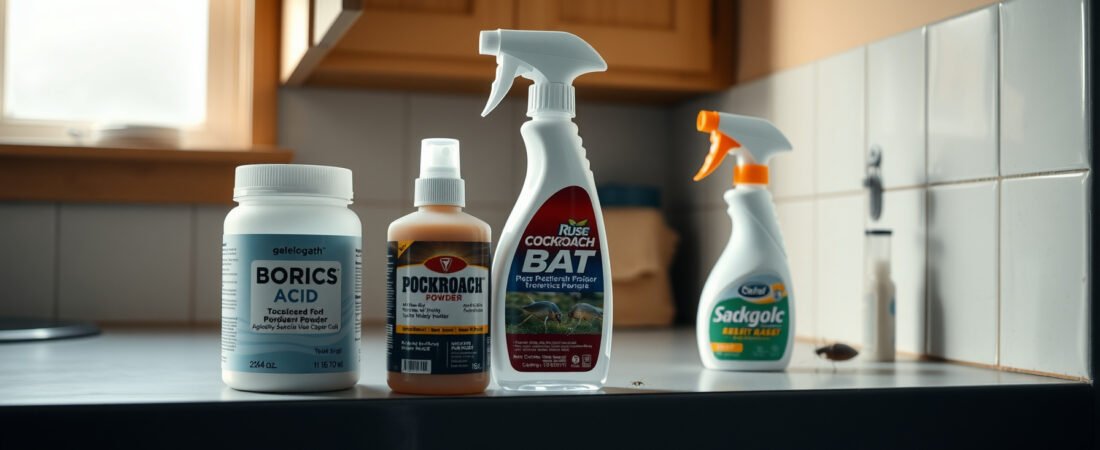
Three roach killers dominate every DIY pest control conversation — boric acid, gel bait, and IGR spray — and most people pick one, use it wrong, and wonder why the roaches keep coming back. The real problem isn’t which product you chose. It’s that these three tools aren’t competitors. They work on completely different biological mechanisms, and using just one of them is like trying to put out a fire with a single bucket while the hose sits in your garage.
Why Using Only One Roach Killer Almost Always Fails
Here’s the thing most roach control articles never tell you: a German cockroach population in your kitchen is actually three overlapping problems at once. You’ve got active adults foraging right now, eggs tucked inside oothecae (those brown capsule cases a female carries until hatching), and nymphs at various juvenile stages that aren’t sexually mature yet. A single product — no matter how strong — typically addresses only one of those groups effectively. That’s why people bomb their kitchen with a fogger, see fewer roaches for two weeks, and then watch the population rebound to full strength.
A female German cockroach produces 30–40 eggs per capsule and can generate 4–6 capsules in her lifetime, meaning one pregnant roach that survives your treatment can restore a 200-roach infestation within 60 days. That number should reset how you think about “killing roaches.” You’re not just trying to kill what you see — you’re trying to collapse the reproductive cycle entirely. That requires a layered approach, and understanding how each product works is the only way to layer them intelligently.
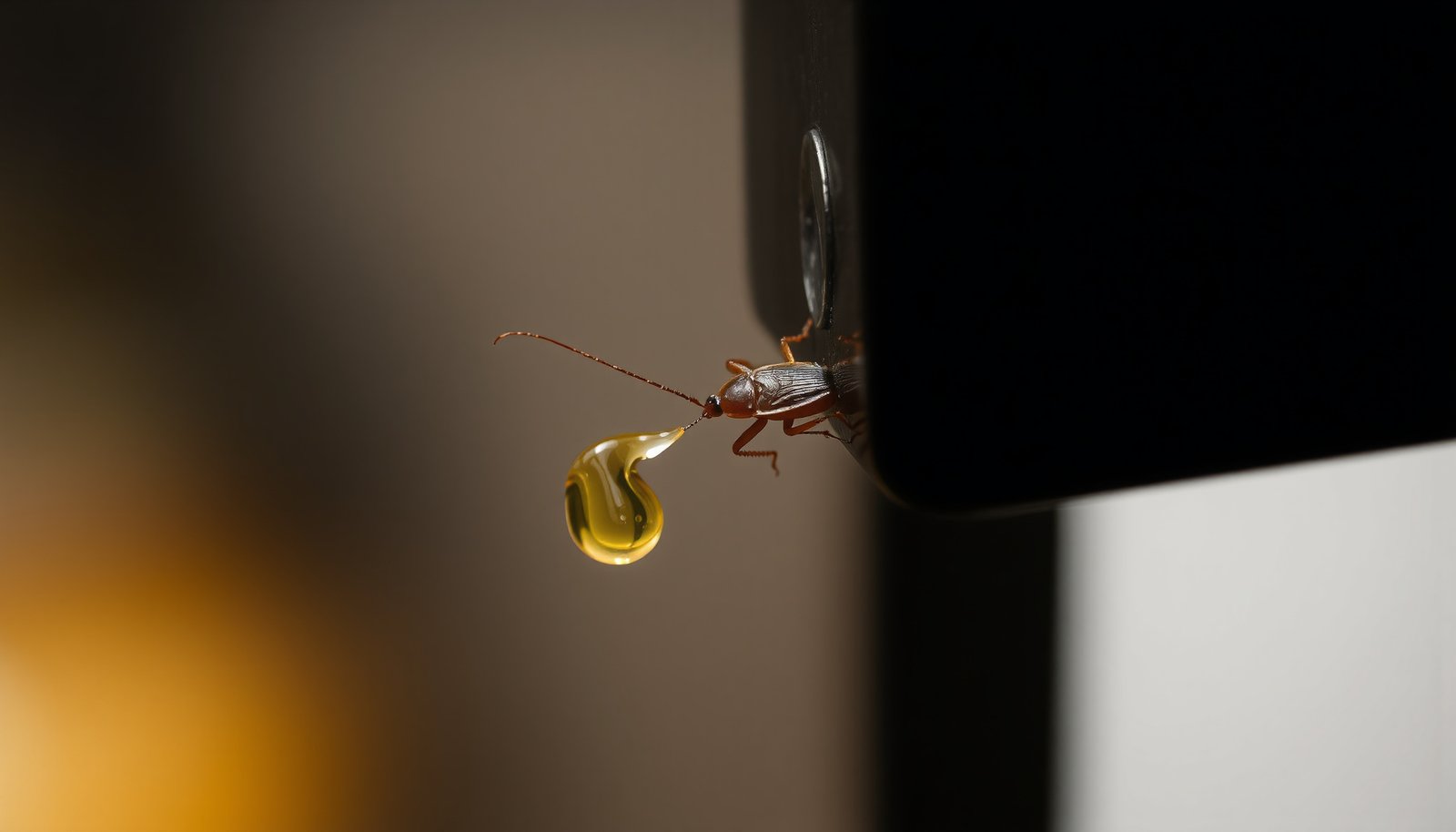
This close-up comparison of boric acid powder, gel bait, and IGR spray shows the physical differences between these three product types — a useful visual reminder that you’re dealing with fundamentally different delivery systems that target roaches at different life stages and through different mechanisms.
How Does Boric Acid Actually Kill Roaches (and When Does It Stop Working)?
Boric acid kills roaches through physical abrasion and internal poisoning — it’s not a repellent and it’s not a nerve agent. When a roach walks through a light dusting of boric acid powder, the particles cling to its waxy exoskeleton and get ingested during grooming. Once inside, the boric acid disrupts the roach’s digestive system and acts as a stomach poison, typically killing within 72 hours of sufficient exposure. The key word there is “light dusting” — a thick pile of boric acid powder is one of the most common mistakes people make, because roaches sense the disruption and walk around it.
Boric acid is most effective in dry, undisturbed harborage zones: inside cabinet hinges, behind the refrigerator motor, underneath the dishwasher, along wall voids near plumbing. It loses effectiveness immediately when it gets wet or clumped, which is why applying it under a leaky sink without fixing the leak first is a waste of time. There’s also a secondary kill mechanism people overlook — roaches that die from boric acid exposure are then consumed by other roaches, delivering a second toxic dose through cannibalism. That’s not pleasant to think about, but it does accelerate population reduction when the powder is placed correctly.
What Makes Gel Bait the Fastest-Acting Roach Killer in Most Infestations?
Gel bait works through attraction and transfer, and when it’s applied correctly, it’s the fastest path to visible population knockdown — often within 3–5 days. The active ingredient in most professional-grade gel baits is either indoxacarb or imidacloprid. Indoxacarb is a pro-insecticide, meaning the roach’s own metabolism activates it after ingestion, converting it into a more potent compound inside the insect’s body. That delay is intentional — the roach lives long enough to return to harborage areas and spread the toxin through feces and physical contact with other roaches.
Picture this: you place small pea-sized dots of gel bait in the corners of cabinet interiors and behind the stove, and within 48 hours you’re finding dead roaches in places you haven’t even treated. That’s the cascade effect that makes gel bait genuinely impressive. The catch is bait aversion — roach populations that have been heavily exposed to the same bait formulation over time can develop a glucose aversion (specifically to the sugars used as attractants), meaning they’ll detect and avoid the bait entirely. Rotating between indoxacarb-based and hydramethylnon-based formulations every few months prevents this. And critically: never apply gel bait near areas where you’ve sprayed a repellent pesticide, because the spray will either contaminate the bait or drive roaches away from it.
“The single biggest application error I see homeowners make is using gel bait and a repellent contact spray in the same zone simultaneously. The spray disrupts foraging behavior, so roaches never reach the bait — and you’ve essentially neutralized your most effective tool. If you’re going to use gel bait, commit to it as your primary knockdown method and keep residual sprays to the perimeter only.”
Dr. Marcus Eller, Board-Certified Entomologist and Urban Pest Management Consultant
What Does an IGR Spray Actually Do — and Why Can’t It Kill a Single Roach?
Insect Growth Regulators (IGRs) are the most misunderstood product in roach control, and they’re also the one that most homeowners skip entirely because they don’t produce any visible dead roaches. An IGR — typically hydroprene or pyriproxyfen for cockroaches — mimics juvenile hormones in insects, essentially locking nymphs in an immature developmental state so they never reach reproductive adulthood. Nymphs exposed to an effective IGR will molt repeatedly without maturing, and the adults that do survive exposure produce nonviable eggs. Zero immediate body count, but a collapsing population over 60–90 days.
Here’s the counterintuitive part: IGR sprays work best when the infestation already appears to be under control from bait and boric acid. Using an IGR alone on a heavy infestation is like installing a fence after a stampede — too late to stop what’s already running. But layering it in during or after the knockdown phase cuts off reinfestation at the reproductive level. Spray IGR along baseboards, inside cabinet interiors, and in void spaces where nymphs aggregate. One application of a quality hydroprene product can remain hormonally active for up to 7 months indoors, which gives you a long window of suppression without repeated treatments.
Pro-Tip: Never apply IGR spray directly on top of gel bait dots. IGRs don’t repel roaches, but saturating bait with any liquid degrades the attractant matrix. Apply IGR at least 6 inches away from any bait placement, and reapply bait fresh every 3 months regardless.
How Do You Actually Combine All Three for a Complete Roach Treatment?
The layered approach works in a specific sequence, and the order matters. Applying boric acid in the wrong phase or placing gel bait too close to a repellent spray will actively undermine the other products. Here’s the sequence that targets all three population groups — adults, nymphs, and eggs — without the methods working against each other.
- Start with gel bait for adult knockdown. Apply pea-sized dots every 6–12 inches in harborage zones — cabinet corners, behind appliances, under the sink. Use an indoxacarb-based formula (Advion is the most widely available). Do not spray anything in these zones for at least two weeks.
- Apply boric acid to deep harborage areas gel bait can’t reach. Think: inside wall voids near pipe penetrations, inside the motor housing of the refrigerator, along the underside of the dishwasher frame. Use a bulb duster to get a light, even coat — barely visible is ideal. Avoid any areas with moisture.
- Introduce IGR spray after 5–7 days. Once active foraging has been disrupted by the bait, spray hydroprene or pyriproxyfen along baseboards, inside cabinet interiors, and around entry points. Keep it 6+ inches from gel bait placements.
- Use a contact spray only at the perimeter. If you want a fast-kill option for roaches you see in open areas, a pyrethroid spray (cypermethrin or bifenthrin) applied strictly to exterior entry points and room perimeters will stop new roaches from entering without contaminating your interior bait zones.
- Monitor with sticky traps to track progress. Place glue traps near bait stations and behind appliances. Count captures every 3–4 days. A declining trap count over two weeks confirms the treatment is working. A plateau suggests the bait needs rotating or a missed harborage zone.
- Reapply gel bait at 4–6 weeks and reassess IGR at 6 months. Gel bait dries out and loses attractancy over time. Fresh bait keeps the secondary transfer mechanism active through the full reproductive cycle, which for German cockroaches is roughly 100 days from egg to reproducing adult.
One honest nuance worth acknowledging: this protocol works very well in a single-family home or ground-floor apartment where you can control all entry points. In a multi-unit building with shared walls and plumbing chases, you can execute this perfectly and still deal with reinfestation from neighboring units — because roaches travel through shared voids that no individual tenant can treat. In that scenario, the IGR layer becomes your most important long-term tool, since it suppresses any population that enters rather than just killing what’s already there. Just as you’d think carefully about getting rid of mice in the kitchen without poison in a shared-wall building where bait placement matters for safety, the same spatial thinking applies to layering roach treatments in apartments.
Which Roach Killer Works Best for Your Specific Situation?
The right product mix genuinely depends on the severity of the infestation, the roach species involved, and the physical environment you’re treating. American cockroaches (the large, reddish-brown ones) tend to enter from the exterior and are less likely to establish massive interior colonies, which means boric acid along the perimeter and a gel bait inside is often sufficient. German cockroaches — the small tan ones that thrive in kitchens and bathrooms — are prolific breeders that establish in wall voids and appliance motors, and they almost always need the full three-product approach to collapse the reproductive cycle completely.
Below is a quick-reference breakdown of the three products by situation, so you can decide where to focus your budget and effort first.
| Product | Best For | Kills Eggs? | Speed of Results |
|---|---|---|---|
| Boric Acid Powder | Deep harborage zones, wall voids, appliance motors | No | Slow (72+ hrs per individual) |
| Gel Bait (Indoxacarb) | Active adult knockdown, cascade kill via transfer | No | Fast (3–5 days visible) |
| IGR Spray (Hydroprene) | Breaking reproductive cycle, preventing reinfestation | Yes (renders nonviable) | Slow (60–90 days population drop) |
Budget is a real constraint for a lot of people, and if you can only start with one product, make it gel bait — specifically an indoxacarb or imidacloprid formulation. It produces the fastest visible reduction and the transfer effect means you’re getting secondary kills beyond your application points. Add boric acid in week two to cover harborage zones the bait can’t reach efficiently. Add IGR once you have the population on the decline. You don’t have to do everything at once, but you do have to do all of it eventually if the infestation is established. Skipping the IGR step is why so many people report “the roaches came back” three months after a successful-seeming treatment — the nymphs they didn’t account for simply matured and started reproducing.
It’s also worth understanding that roach identification actually changes your product priorities. If you’re dealing with a species you haven’t confirmed yet, the process of correctly identifying the roach type will tell you a lot about where it’s breeding and what it’s attracted to — and that shapes how you place your bait and where you concentrate your boric acid. Similarly, identifying bed bug eggs and shells on mattress seams follows the same logic: knowing what you’re actually looking at is what makes any treatment plan accurate rather than hopeful.
Here’s a useful checklist of what to rule out before you treat, because no product combination will hold if these factors are still working against you:
- Active moisture sources (leaky pipes, condensation under the sink, drip trays on refrigerators) — roaches can survive weeks without food but only days without water
- Open food sources in cabinets, including unsealed pet food bags, which are a primary roach harborage site
- Cardboard boxes stored in kitchens or utility rooms — roaches lay egg capsules in corrugated cardboard and the material provides both insulation and cover
- Gaps around pipe penetrations in cabinet bases — even a 3/16-inch gap is sufficient for a German cockroach nymph to pass through
- Previously used repellent sprays still active in treatment zones — residual pyrethroids can persist on surfaces for weeks and will drive roaches away from gel bait placements
The roaches that survive your first treatment round are disproportionately the ones with some behavioral or environmental advantage — they found a harborage zone you missed, they avoided the bait, or they’re nymphs too small to take a lethal dose yet. That’s not a failure of the products. It’s a cue to recheck your boric acid placements, rotate the gel bait formula, and let the IGR do its work on the next generation. Persistence over 90 days, not a single heavy application, is what actually clears a German cockroach infestation for good.
Frequently Asked Questions
what is the best roach killer that actually works?
Gel bait is consistently the top performer for active infestations — products with indoxacarb or fipronil as the active ingredient wipe out colonies fast because roaches carry the bait back to the nest. For long-term control, pairing gel bait with an IGR spray stops juveniles from reproducing and breaks the life cycle. Boric acid works too, but it’s slower and only effective when placed precisely in dry areas where roaches travel.
how long does boric acid take to kill roaches?
Boric acid typically kills individual roaches within 72 hours of contact, but you won’t see a noticeable drop in population for 1 to 2 weeks. It works by damaging the roach’s exoskeleton and gut when they groom themselves, so it needs to be applied as a very thin, barely visible dust — thick piles get avoided entirely. Humidity kills its effectiveness, so it’s useless under sinks or in damp basements.
is gel bait or spray better for roaches?
Gel bait is better for most indoor infestations because it targets the colony directly and doesn’t require you to find every hiding spot. IGR sprays aren’t designed to kill adults on contact — they work by preventing nymphs from maturing into breeding adults, so they’re a prevention and population-control tool, not a knockdown solution. For severe infestations, use gel bait first to knock down the population, then follow up with an IGR spray to prevent a comeback.
can I use boric acid and gel bait at the same time?
Yes, you can use both together, but keep them separated by at least a few feet. Roaches that feed on gel bait and then crawl through boric acid dust will die faster, but if the boric acid contaminates the bait itself, roaches will detect it and avoid the station entirely. Place gel bait inside cabinets and behind appliances, and apply boric acid dust along wall voids and inside cracks where roaches travel between feedings.
do IGR sprays kill roaches or just stop them from reproducing?
IGR sprays don’t kill adult roaches — they work by mimicking juvenile hormones that prevent nymphs from molting into reproductive adults, which gradually collapses the population over 4 to 8 weeks. Products containing hydroprene or pyriproxyfen are the most common active ingredients you’ll find in consumer IGR sprays. Think of IGR as a long-game tool — it won’t solve an active infestation on its own, but it’s one of the most effective ways to stop roaches from rebounding after treatment.