
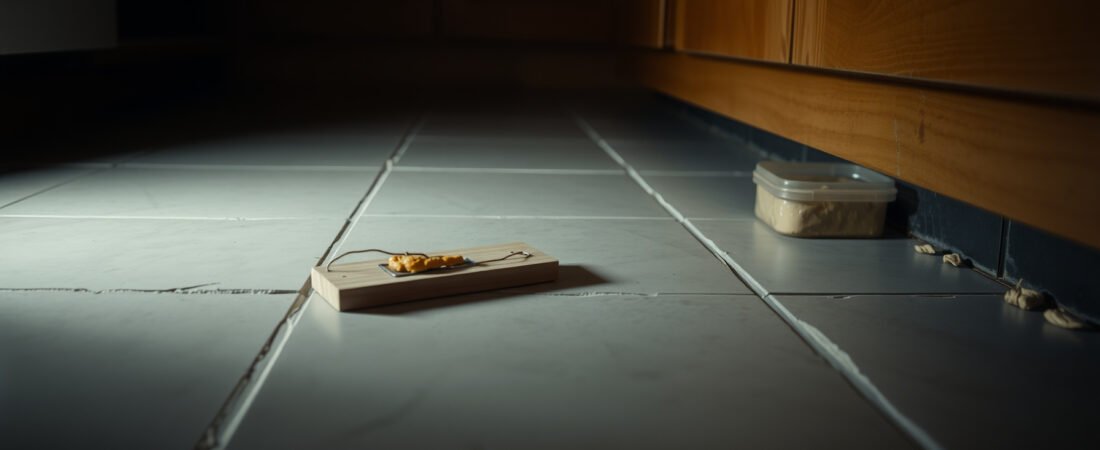
Snap traps and sealed containers will only take you so far — and that’s the part most kitchen mouse guides never admit. The real reason mice keep coming back after you’ve cleaned everything up, set traps, and stuffed steel wool into every hole you can find is that the kitchen isn’t just a food source. It’s a climate-controlled habitat. Mice aren’t raiding your pantry and leaving. They’re living there. Until you address that distinction, you’re managing a symptom, not solving the problem.
Why Poison-Free Mouse Control in the Kitchen Actually Works Better
There’s a persistent assumption that poison is the “heavy artillery” option — that if you’re not using it, you’re taking the soft route. That’s backwards. Rodenticide in a kitchen creates a secondary problem most people don’t anticipate: mice die in wall voids, under cabinets, and inside insulation, and then you’re dealing with a decomposing carcass for weeks. Non-poison methods, when applied correctly, remove mice physically and permanently, with no hidden consequences rotting inside your walls.
There’s also the cross-contamination issue. Your kitchen is where you prep food. Rodenticide bait stations placed near food prep surfaces, even “tamper-resistant” ones, introduce a neurotoxic compound into an environment that already has plenty of ways to make you sick. A correctly set snap trap or a well-placed live trap catches the mouse, you remove it, done. Nothing leaches into your countertop drawer liner or gets kicked behind the stove by a curious toddler.
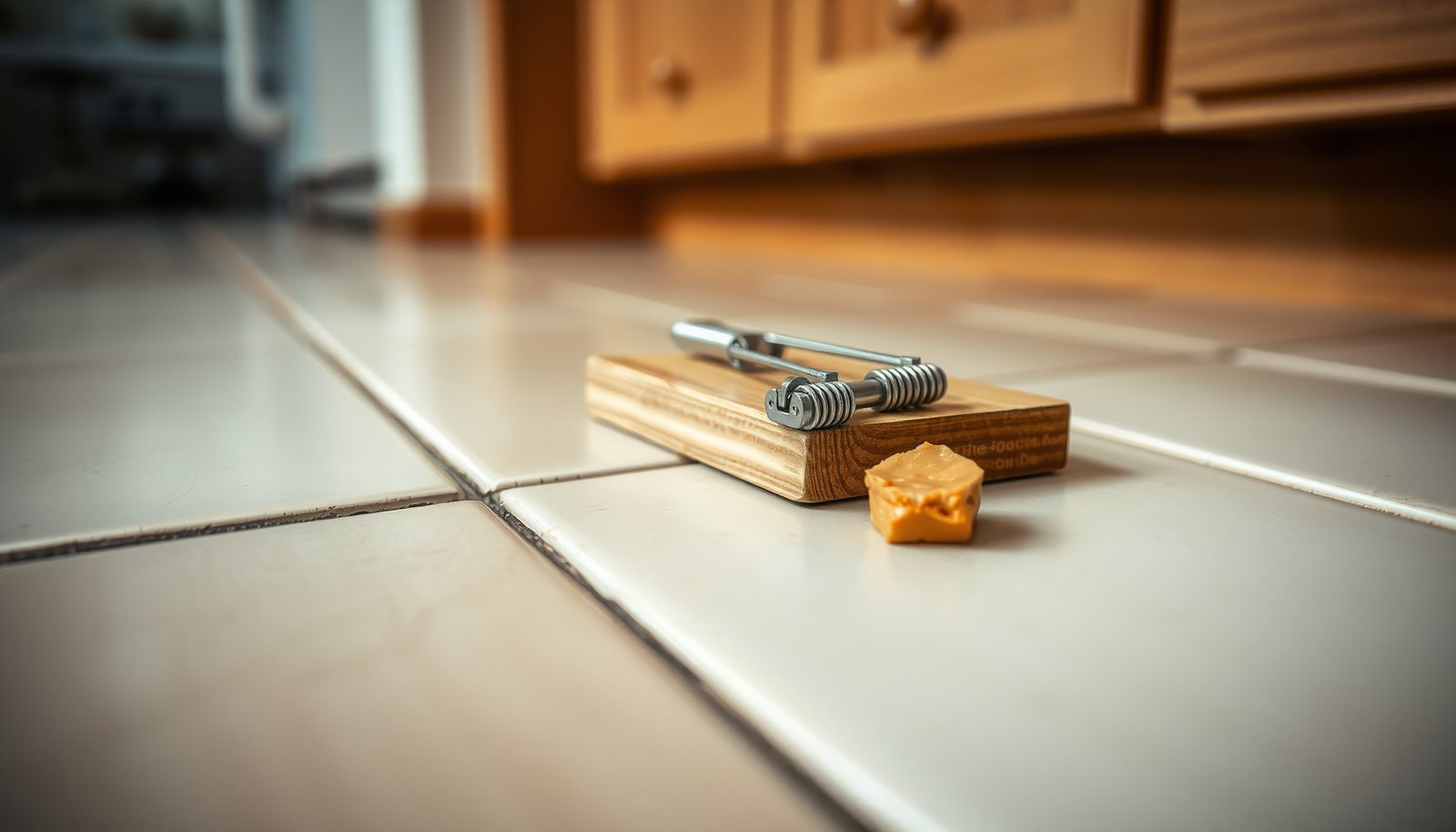
This image shows the typical run paths mice use along kitchen baseboards and behind appliances — the exact locations where poison-free traps should be positioned for maximum catch rates.
What Mice Are Actually Using Your Kitchen For (It’s Not Just the Food)
Picture this: you deep-clean your kitchen, move the refrigerator, wipe down every surface, store everything in airtight containers — and two weeks later you find droppings behind the toaster again. Frustrating, yes. Surprising? It shouldn’t be. Mice need three things to survive: food, water, and shelter with a stable temperature. Your kitchen provides all three simultaneously, which is why it’s the most attractive room in the house regardless of cleanliness.
The refrigerator compressor runs warm year-round. The space behind and beneath your stove holds residual heat. Condensation from your dishwasher and sink provide a water source even when no dishes are out. A house mouse — Mus musculus — needs as little as 1–3ml of water per day, which means a slow drain drip or water ring under a dish rack is genuinely sufficient. Eliminating food sources alone rarely solves a kitchen mouse problem because habitat and moisture are keeping them there independently.
How to Set Non-Poison Traps So They Actually Catch Mice
Most people set traps in the wrong spots and then blame the method when nothing gets caught. Mice are thigmotactic — they prefer to move along walls and edges rather than crossing open floor space. A trap placed in the center of a room or even in the middle of a cabinet will be ignored by a mouse that’s running the perimeter. Placement along a wall, perpendicular to the baseboard with the trigger end touching the wall, catches dramatically more mice than any other configuration.
Bait matters less than most tutorials suggest, but here’s what works consistently: peanut butter in tiny amounts (a pea-sized dab), nesting material like a small piece of cotton ball, or a dab of hazelnut spread. Check traps every 24 hours — a dead mouse left in a trap becomes a scent deterrent for other mice within 48 hours. Set at least 6–8 traps during an active infestation, not two or three, because mice have small home ranges (roughly 10–30 feet) and multiple traps in a concentrated area dramatically increase catch rates.
Pro-Tip: Before setting traps, leave them unset and baited for 2–3 days. Mice are neophobic — they avoid new objects in their environment. Letting them feed from an unset trap first removes that wariness and leads to significantly higher catch rates once you do set them.
Here’s a breakdown of the most effective poison-free trap types for kitchen use:
| Trap Type | Best Kitchen Use | Avg. Catch Rate |
|---|---|---|
| Classic snap trap (Victor, Tomcat) | Along baseboards, behind appliances | High — most effective per unit |
| Electronic trap (Victor M250S) | Under sink, inside cabinets | High — fast, no handling of mouse |
| Multi-catch live trap | Low-traffic areas, rental properties | Moderate — requires frequent checking |
| Glue board | Not recommended for kitchens | Low — inhumane, inconsistent, food-area risk |
How to Cut Off Mouse Access to Your Kitchen Without a Full Renovation
A house mouse can compress its body through a gap as small as 1/4 inch — roughly the diameter of a standard pencil eraser. That’s the gap under an improperly fitted cabinet kick plate, the space where your plumbing supply lines enter from the wall, the corner where your stove’s gas line passes through drywall. These aren’t dramatic holes. They’re unremarkable gaps that you’ve walked past a hundred times without registering them as entry points.
Exclusion — physically blocking these entry points — is the one step that makes every other method sustainable. Without it, trapping is an ongoing chore, not a solution. You’ll catch mice, but new ones will enter to replace them, especially in multi-unit buildings or homes near fields or wooded areas where exterior pressure is constant. Identifying exactly where mice are entering is a separate skill set worth developing, and it’s what separates homeowners who solve the problem from those who manage it indefinitely.
Here’s what to use for specific gap types in the kitchen:
- Plumbing pipe gaps: Stuff with copper mesh (not steel wool — it rusts and compresses) first, then seal over with expanding foam rated for pest exclusion
- Gap under kick plates and cabinet bases: Use aluminum flashing or sheet metal cut to fit — mice can chew through foam alone
- Door sweeps on exterior doors: Replace worn sweeps with brush-seal or solid rubber versions — gaps as small as 1/4 inch are entry points
- Space behind stove at wall: Use stainless steel wool packed tightly, sealed with caulk rated for high-heat areas
- Dishwasher recess opening: Check where plumbing and wiring enter from under the floor — often left completely open during installation
How to Sanitize Your Kitchen After Mice Without Making Yourself Sick
This section gets skipped in most mouse guides, which is a real oversight. Mouse droppings, urine, and nesting material can carry hantavirus, salmonella, and leptospirosis. Hantavirus specifically becomes airborne when disturbed — sweeping or vacuuming droppings without precaution is genuinely dangerous. The CDC recommends ventilating the affected area for at least 30 minutes before cleaning, wearing gloves and an N95 mask, and never dry-sweeping contaminated surfaces.
After trapping is complete and entry points are sealed, here’s the correct cleanup sequence to make the kitchen safe again:
- Ventilate first: Open windows and leave the kitchen for 30 minutes before beginning any cleanup — this reduces airborne particle concentration
- Mist droppings before touching them: Use a 1:10 bleach-to-water solution sprayed directly on droppings to deactivate pathogens before they’re disturbed
- Wipe, don’t sweep: Use paper towels to pick up moistened droppings and place directly in a sealed bag — never dry-sweep mouse waste
- Remove and inspect all pantry items: Discard anything in cardboard boxes or paper bags — mice urinate constantly as they travel and those surfaces can’t be adequately sanitized
- Disinfect all surfaces: Wipe down shelving, drawer interiors, and under-appliance surfaces with an EPA-registered disinfectant — let it sit for the full contact time listed on the label
- Check HVAC returns and under-sink areas: These are common nesting spots — remove any shredded material with gloved hands, bag it, and disinfect the cavity
“The exclusion step is where most DIY efforts fall apart. Homeowners will trap diligently for weeks and reduce the population significantly, but without sealing entry points, they’re just creating a vacancy. Mice from outside the structure will move into the same access routes within days. In kitchens specifically, the area around plumbing penetrations under the sink is almost always the primary entry zone — it’s worth a full inspection before anything else.”
Dr. Marcus Ellery, Board Certified Entomologist and Urban Pest Management Specialist, Virginia Cooperative Extension
One honest nuance worth acknowledging: if you’re in a row house, apartment building, or any structure that shares walls with neighboring units, exclusion alone may not completely end your mouse problem. Mice move through shared wall voids, utility chases, and between floor levels. In that situation, even a perfectly sealed kitchen can be re-entered via routes you have no access to. This is the scenario where the legal and landlord dimension of pest control becomes relevant — something many tenants don’t realize they can push back on. Understanding how landlords are legally required to respond to pest problems, and what happens when they don’t take real action (like a landlord who treats pest evidence cosmetically instead of addressing the source), can be the difference between getting the problem fixed or cycling through the same frustrating loop indefinitely.
Poison-free mouse control in the kitchen isn’t a compromise — it’s the smarter approach when you understand what you’re actually dealing with. Trap correctly, exclude completely, sanitize safely, and address the habitat conditions that made your kitchen attractive in the first place. Do all four of those things in sequence and you’re not just getting rid of mice. You’re making your kitchen structurally inhospitable to them for the long term.
Frequently Asked Questions
What is the fastest way to get rid of mice in the kitchen without poison?
Snap traps are your fastest non-poison option — they kill mice instantly and you can start catching them the first night. Place them along walls and behind appliances where mice travel, since they almost never cross open floors. Use peanut butter as bait and check traps every 24 hours so you’re not dealing with decomposition odors.
What scent keeps mice away from the kitchen?
Peppermint oil is the most commonly used scent deterrent, but it works best as a supplement, not a standalone fix. Soak cotton balls in 100% pure peppermint oil and place them inside cabinets, under the sink, and near any gaps or entry points. You’ll need to refresh them every 5 to 7 days since the scent fades quickly and mice will return once it’s gone.
How do I find where mice are getting into my kitchen?
Start by looking for gaps around pipes under the sink, gaps where the wall meets the floor, and any cracks around your stove or dishwasher connections. Mice can squeeze through a hole as small as a dime — about 1/4 inch — so even tiny openings matter. Stuff steel wool into any gaps you find and seal it with caulk, since mice can’t chew through steel wool the way they can foam or wood.
How long does it take to get rid of mice in the kitchen without poison?
With consistent trapping and entry point sealing, most homeowners see a significant drop in activity within 1 to 2 weeks. If you’re still catching mice after 3 weeks, there’s likely an unsealed entry point allowing new mice in from outside. A full infestation — more than 5 to 10 mice — can take 4 to 6 weeks to fully resolve without poison.
Are there any kitchen foods that attract mice I should be storing differently?
Yes — grains, cereal, bread, pasta, and pet food are the biggest attractants if they’re stored in cardboard boxes or thin plastic bags. Switch to airtight hard plastic or glass containers, since mice can chew through cardboard and soft packaging in minutes. Don’t forget about the crumbs behind your stove and under your refrigerator; cleaning those areas once a week removes a major food source that keeps mice coming back.
Disclaimer: This article is for informational purposes only and isn’t a substitute for professional pest control advice. Always read and follow the product label instructions exactly — label directions are legally binding and vary by brand and active ingredient. Keep all pesticides, baits and traps away from children and pets, ventilate treated areas as directed, and consider calling a licensed pest control professional if an infestation is large, recurring, or involves a structural pest like termites or carpenter ants.