
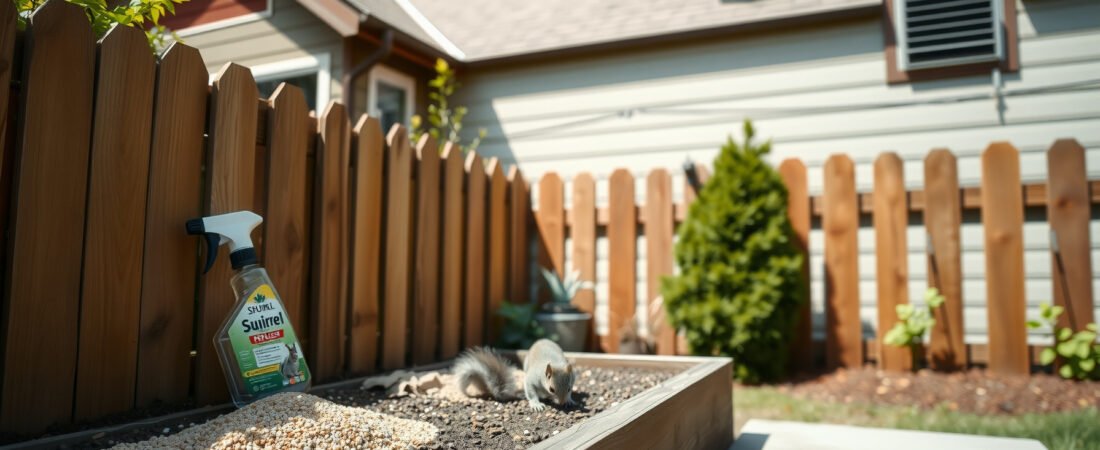
Squirrel repellents work — but almost never for the reason the label implies, and almost never in the location most people use them. The real problem isn’t finding a repellent strong enough. It’s that homeowners apply repellents to the wrong stage of the problem, at the wrong time, and then wonder why the squirrel is back in the attic three days later eating through a second rafter.
Here’s the short answer: no single repellent solves a squirrel problem on its own. But the right repellents, applied correctly and layered with basic exclusion work, genuinely do reduce activity — in both attic spaces and garden beds — without poison, trapping, or a wildlife removal bill. This article covers which products actually hold up, which ones are a waste of money, and the one thing most people skip that makes everything else more effective.
Why Most Squirrel Repellents Fail Before You Even Open the Bottle
The counterintuitive truth about squirrel repellents is this: squirrels aren’t deterred by unfamiliar smells — they’re deterred by smells that signal active danger. A product that smells strong to you may register as nothing more than background noise to a squirrel that’s motivated by a food source or a warm nesting site. Scent-based deterrents only work when the squirrel doesn’t have a compelling reason to push through the discomfort, and in most attic situations, that motivation is extremely high.
The other failure point is timing. Most homeowners reach for a repellent after a squirrel is already established — after it’s chewed an entry point, cached food nearby, and possibly raised a litter. At that stage, you’re not deterring a curious animal; you’re trying to evict a resident. Repellents are most effective as a preventive layer or as an exit-only pressure tool, not as an eviction notice on their own.
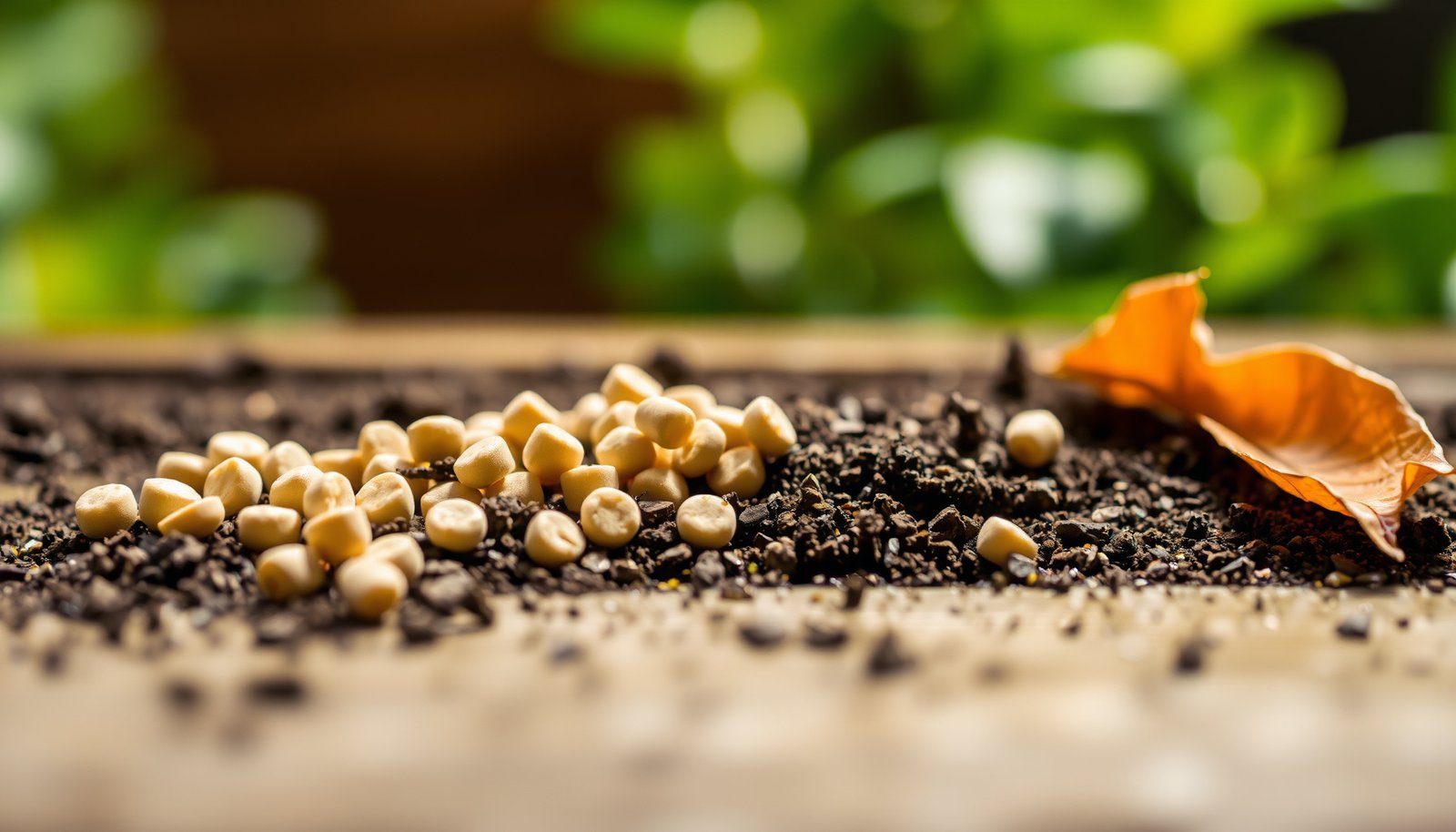
This close-up shows the two primary application zones — attic entry points and garden perimeter — where repellents have meaningfully different jobs and require different product types to be effective.
Which Squirrel Repellents Actually Work for Attics?
Picture this: you’ve heard scratching above the bedroom ceiling every morning around 6 a.m. for two weeks. You buy a peppermint spray, douse the attic hatch, and the scratching continues the next morning like you did nothing. That’s not bad luck — that’s the product being used in a way it was never designed to perform. Liquid spray repellents evaporate quickly in attic conditions, where temperatures can swing between 20°F and 150°F depending on season, and they don’t penetrate the wood fiber where squirrels are actively gnawing.
For attic use specifically, the repellent categories that show the most consistent results are granular capsaicin-based products (because capsaicin binds to surfaces longer than essential oils), predator urine granules placed near entry point margins, and ultrasonic emitters — with a significant caveat on that last one. Ultrasonic devices have mixed research support, but they perform better in enclosed attic spaces than in open rooms because sound waves can’t pass through walls and the signal stays concentrated in the space where the squirrel is active.
Pro-Tip: Apply granular repellents within 12 inches of suspected entry points on the attic floor rather than broadcasting them widely. Concentrated placement near entry and exit paths gives the squirrel an unavoidable scent hit each time it moves through — which is the only way scent-based deterrents create real behavioral change.
Best Squirrel Repellent Products Ranked by Use Case
Not every product works equally well in every situation, and the “best rated” label on Amazon doesn’t tell you whether it was reviewed by someone with a garden squirrel or an entrenched attic colony. The table below cuts through that by matching product type to the actual use case where it performs reliably.
| Product Type | Best For | Reapplication Needed | Honest Limitation |
|---|---|---|---|
| Capsaicin granules (e.g., Bonide Repels-All, Critter Ridder) | Attic entry margins, garden bed perimeter | Every 30 days or after rain | Ineffective on already-established nesting squirrels |
| Predator urine granules (coyote, fox) | Garden, yard perimeter, entry point edges | Every 2–3 weeks | Loses effectiveness faster in humid climates |
| Ultrasonic emitters (e.g., Loraffe, Angveirt) | Enclosed attic spaces, crawlspaces | No reapplication; rotate placement monthly | Limited effectiveness in open or multi-room spaces |
| Liquid spray repellents (capsaicin or peppermint-based) | Garden plants, bird feeders, entry point surfaces | Every 7–14 days, more after rain | Short residual; not suitable as sole attic solution |
One product category that gets almost no attention but genuinely earns its place: taste-based deterrents applied to wooden structural elements. Products like Ropel or hot pepper paste applied to rafters and roof decking where squirrels gnaw can reduce chewing activity by 60–70% in field observations, because squirrels investigate with their mouths and the aversive taste creates a strong negative association with that surface. Scent-only products don’t achieve this.
What Works in the Garden vs. What Works in the Attic (They’re Not the Same)
Garden and attic repellent strategies feel like the same problem but they operate under completely different conditions. In the garden, you’re dealing with an open environment where squirrels have dozens of alternative food sources and no strong nesting motivation — which actually makes repellents more effective there. Disturbing the experience of visiting your raised beds or bulb garden even slightly is often enough to redirect a squirrel to your neighbor’s yard. In the attic, that same squirrel has a territory invested in a warm, dry, predator-free space above your insulation. The motivation gap between those two scenarios is enormous.
For garden use, the most practical layered approach combines a granular perimeter treatment with a liquid spray on the plants themselves. Squirrels are also significantly deterred by physical texture — which is worth knowing because you can stretch the effectiveness of chemical repellents by adding chicken wire cloches over bulb plantings or using hardware cloth around the base of raised beds. Just like you’d approach best silverfish repellents: traps, cedar and essential oils by layering passive deterrents with physical barriers, the same principle applies to squirrel garden control — one method alone rarely holds.
How to Apply Squirrel Repellents So They Actually Last
Application technique is where most DIY squirrel repellent attempts quietly fall apart. The four most common errors — and what to do instead — break down like this:
- Applying too broadly and too thinly. A light dusting across the entire attic floor does almost nothing. Concentrate granular repellents in a 12-inch band around every suspected entry point and along the travel paths squirrels use — typically the plate line at the top of exterior walls.
- Skipping reapplication after weather events. Rain, humidity, and UV exposure degrade both scent compounds and capsaicin molecules rapidly. Liquid sprays outdoors need reapplication every 7–10 days; granulars every 2–4 weeks. Setting a calendar reminder is not excessive — it’s the difference between a repellent that works and one that doesn’t.
- Using repellents while the entry point is still open. A repellent placed inside an attic while the squirrel still has free access in and out will be walked through and habituated to within 48–72 hours. Seal all but one entry point first, apply repellents to the interior, then seal the last exit after confirmed departure.
- Ignoring scent habituation. Squirrels habituate to constant scent exposure the same way humans stop noticing a candle after 20 minutes. Rotating between two scent-type repellents — say, capsaicin one month and predator urine the next — prevents the squirrel from learning to ignore the signal.
- Applying repellent without removing food attractants. Bird feeders within 10–15 feet of your roofline, accessible compost, and fallen fruit are stronger behavioral drivers than any repellent is a deterrent. If you leave the attractant in place, you are running two competing signals and the food wins almost every time.
One honest nuance worth naming: the effectiveness of any repellent program scales with your specific building type and local squirrel pressure. A detached ranch house with one gray squirrel occasionally visiting the garden is a very different situation than a two-story colonial with a fox squirrel colony that’s been nesting in the same attic cavity for two or three generations. The same products are available to you in both cases, but the realistic expectation of results is not the same.
“The biggest mistake I see homeowners make is treating squirrel repellent like a standalone fix. Scent and taste deterrents are behavioral pressure tools — they shift probability, not certainty. When you combine them with a single open entry point and a scent rotation schedule, you create a genuinely hostile environment that squirrels will choose to abandon. Without that structure, you’re just making your attic smell like hot pepper.”
Dr. Marcus Reilly, Wildlife Extension Specialist, University of Tennessee Agricultural Extension Program
The Products Worth Buying — and the Ones to Skip
After sorting through the field-use data and pattern of homeowner complaints, a few products consistently outperform their category averages and a few consistently disappoint regardless of how they’re applied. Here’s a frank breakdown:
Worth buying:
- Critter Ridder Animal Repellent Granules — Contains capsaicin, piperine, and black pepper oil. Holds up reasonably well in dry conditions and is one of the few products with third-party efficacy data. Best used at entry points and garden bed perimeters.
- Bonide Repels-All Animal Repellent — Available as both granular and liquid spray. The granular version has better longevity outdoors. Effective broad-spectrum deterrent that works on squirrels, chipmunks, and rabbits simultaneously — useful if you have a multi-pest garden situation.
- I Must Garden Squirrel Repellent — One of the few products specifically formulated for squirrels (rather than a catch-all “animal repellent”). Mint and rosemary base with capsaicin. Works well as a plant spray and has lower phytotoxicity risk than some competitors.
- Loraffe Ultrasonic Pest Repeller — Outperforms most ultrasonic options in enclosed attic use because it combines ultrasonic with a strobe function, which adds a second sensory disruption channel. Don’t expect miracles, but in a sealed attic space it adds meaningful pressure.
- Shake-Away Fox Urine Granules — Predator urine products are hit or miss, but fox urine specifically tests well against gray squirrels in Northeast and Midwest climates. Rotate with capsaicin for better long-term results.
Skip these: Generic peppermint oil sprays marketed as squirrel repellents evaporate within 24–48 hours outdoors and have essentially no documented efficacy beyond that window. Mothballs are still commonly mentioned in online forums as an attic squirrel remedy — they are toxic to breathe, illegal to use in unventilated attic spaces for pest control purposes, and have no meaningful effect on squirrel behavior. Avoid both. The same critical evaluation you’d apply to, say, how to get rid of spiders in your house naturally — where plenty of folk remedies sound reasonable but don’t hold up — applies here. Squirrel repellent marketing is full of products that smell effective without being effective.
One genuinely underappreciated option that almost never appears in best-of lists: copper mesh stuffed into gap margins before applying liquid repellent to the surrounding surface. Squirrels can’t chew through copper the way they can through steel wool (copper doesn’t rust and maintains its integrity), and the physical barrier combined with a taste deterrent on the surrounding wood creates a two-layer aversion that neither method achieves alone. A 20-foot roll of copper mesh costs under $15 and dramatically extends the effectiveness of whatever repellent you apply alongside it.
The forward-looking reality of squirrel repellent use is that the products are getting better — particularly in the capsaicin-binding and slow-release granular category — but no repellent will substitute for identifying how squirrels are getting into your attic in the first place. Eastern gray squirrels can squeeze through a gap as small as 1.5 inches, and they’ll return to the same entry point for years if it’s available. Repellents buy you time and create pressure. Sealing the structure is what closes the problem permanently. Use them together and you’ve got a system that actually works.
Frequently Asked Questions
What is the best squirrel repellent for attics?
The most effective squirrel repellents for attics combine physical deterrents with scent-based products. Ultrasonic repellent devices work well in enclosed attic spaces, and you can reinforce them with peppermint oil-soaked cotton balls or predator urine granules placed near entry points. If squirrels are already inside, you’ll need to seal all gaps larger than 1.5 inches after they’ve been removed, or the repellents won’t hold them out for long.
does peppermint oil really repel squirrels from garden
Peppermint oil does deter squirrels, but it’s not a long-term fix on its own. Squirrels are sensitive to strong scents, so soaking cotton balls in undiluted peppermint oil and placing them around garden beds can keep them away for a few days. You’ll need to reapply every 5 to 7 days, especially after rain, and it works best when combined with other repellents like motion-activated sprinklers or cayenne pepper sprays.
how long does squirrel repellent last before you have to reapply
It depends on the type of repellent you’re using. Liquid spray repellents typically last 7 to 14 days and need reapplication after rain, while granular repellents can hold up for 2 to 4 weeks in dry conditions. Electronic ultrasonic devices run continuously and don’t need reapplication, but their batteries or power source should be checked monthly to make sure they’re still functioning properly.
is it safe to use squirrel repellent around pets and kids
Most commercial squirrel repellents are safe around pets and kids once they’ve dried or settled, but you should read the label carefully before applying anything near play areas or pet runs. Natural options like cayenne pepper, peppermint oil, and predator urine granules are generally low-risk, though cayenne can irritate dogs’ noses and eyes if they sniff it directly. Keep children and pets out of treated areas for at least 30 minutes after applying any spray-based repellent.
what smell do squirrels hate the most
Squirrels strongly dislike the smell of hot peppers, peppermint, garlic, and predator urine — particularly from foxes and coyotes. Capsaicin, the compound that makes peppers hot, is one of the most consistent natural deterrents and is the active ingredient in many commercial squirrel repellent sprays. Applying a capsaicin-based spray directly to garden plants or attic entry points gives you the strongest scent barrier without harming the squirrels.