

About 68% of American homes contain at least one spider at any given time — and the vast majority of those spiders walked in through gaps you haven’t sealed yet. That’s the part most “get rid of spiders naturally” articles skip entirely. They hand you a list of peppermint spray recipes and call it a day, but they never tell you why the spiders keep coming back two weeks later. Repelling spiders without fixing what draws them inside is like mopping the floor with the faucet still running. This article focuses on that missing piece: the source, not just the symptom.
Why Natural Repellents Keep Failing You (And What They Actually Need to Work)
Here’s the uncomfortable truth: essential oils don’t fail because they’re weak — they fail because people apply them to the wrong places. Peppermint oil on a windowsill does almost nothing if spiders are entering through a gap under the door, a crack in the foundation, or an unscreened dryer vent. Natural repellents work on contact and in confined spaces, not as a force field across a room.
Spiders are also driven indoors by one thing above all else: prey. If you have fungus gnats around your houseplants, drain flies in the kitchen, or small moths in the pantry, spiders are just following their food supply. No amount of citrus peel along the baseboards will override a spider’s hunger instinct. Fix the food source, and the repellents you do use will actually hold.
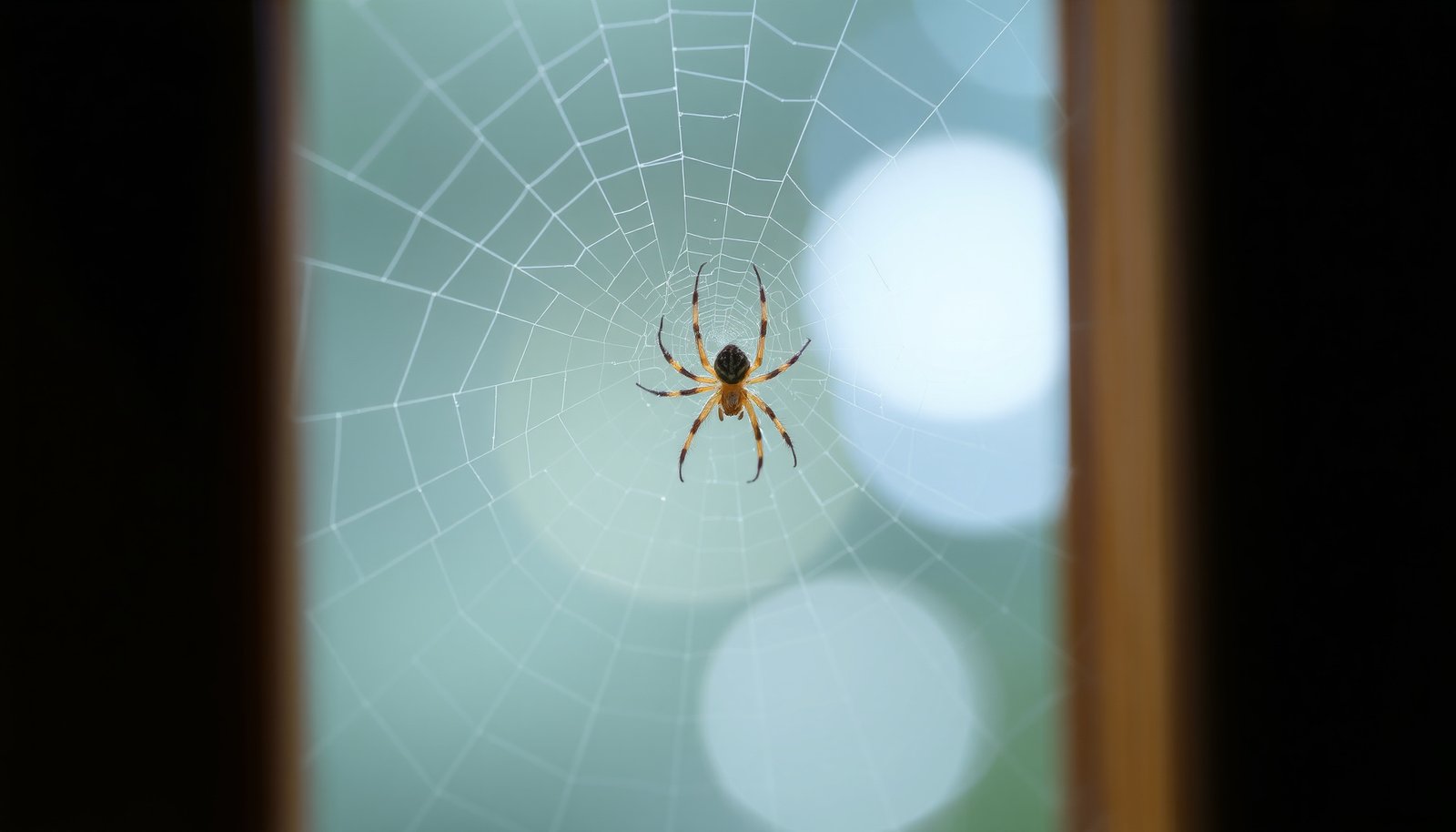
This close-up shows a common house spider near a typical entry point — a gap between a window frame and wall — exactly the kind of overlooked spot that lets spiders slip inside despite every repellent measure you’ve tried.
What’s Actually Pulling Spiders Into Your Home?
Spiders don’t want to live in your house any more than you want them there. They prefer the outdoors, where prey is abundant and there’s room to roam. They come inside for three reasons: food (other insects), shelter from extreme weather, and accidental entry during normal daily movement — through open doors, on firewood, or in cardboard boxes brought in from outside.
Picture this: it’s mid-October, temperatures drop overnight, and you notice a sudden spike in spiders appearing near your windows and in the basement. That’s not a coincidence. Spiders are cold-blooded, and as exterior temps fall below roughly 50°F, they actively seek warmer environments. Simultaneously, other insects are doing the same, which concentrates prey inside your walls and crawl spaces — essentially setting a dinner table that spiders can’t resist. Understanding this seasonal push-pull is the foundation of any natural control strategy that actually lasts.
Which Natural Repellents Actually Work (And the Right Way to Use Them)
Not all natural options are equal, and a few are genuinely backed by research. Peppermint oil does contain compounds — primarily menthol and pulegone — that irritate spiders’ chemoreceptors, which are located on their legs. A spider walks through a treated surface and gets an overwhelming chemical signal telling it to leave. The catch is that it evaporates fast, usually within 48 to 72 hours indoors, meaning you need to reapply it consistently to maintain any effect.
Diatomaceous earth is a different category entirely — it doesn’t repel, it kills, and it does so mechanically rather than chemically. The microscopic silica particles damage a spider’s exoskeleton, causing it to dehydrate and die within 24 to 48 hours of sustained contact. Apply food-grade DE in thin layers along baseboards, under appliances, and inside wall voids if accessible. It stays effective as long as it remains dry, which makes it one of the more durable natural options available. It’s also the same product that works well against a range of crawling insects, including silverfish — if you’re dealing with multiple pests, you might also want to look at our guide on the best silverfish repellents including traps, cedar, and essential oils for a broader multi-pest strategy.
Pro-Tip: Mix 15–20 drops of peppermint essential oil with 8 oz of water and a small squirt of dish soap (which helps emulsify the oil) in a spray bottle. Apply directly to door frames, windowsills, and any crack or gap you’ve identified as an entry point — not just randomly around the room. Reapply every 3 days for the first two weeks, then weekly for maintenance.
| Natural Method | How It Works | Effective Duration |
|---|---|---|
| Peppermint oil spray | Irritates chemoreceptors on contact | 48–72 hours per application |
| Diatomaceous earth (food-grade) | Damages exoskeleton, causes dehydration | Weeks to months (if kept dry) |
| Cedar (blocks, chips, or oil) | Contains cedrol, a natural arachnid deterrent | Several weeks before scent fades |
| White vinegar spray | Acetic acid disrupts chemical trails | 24–48 hours per application |
How to Cut Off Spider Entry Points Without Hiring Anyone
Exclusion is the single most underused tool in spider control, natural or otherwise. A common house spider can squeeze through a gap of roughly 1/16 of an inch — smaller than the thickness of a credit card. That means even gaps that look minor around pipe penetrations, window frames, or where the siding meets the foundation are open doors. This is the real reason repellents alone always feel like a temporary fix.
Exclusion also stacks well with natural repellents. Seal the gap first, then apply peppermint oil or DE at the sealed point — you’re blocking the route and leaving a chemical deterrent at the threshold. This same principle applies to earwigs, centipedes, and other crawling pests that enter the same way; you can read about the full entry-point approach in our article on how to get rid of earwigs in the garden and at house entry points. The overlap in methodology isn’t a coincidence — most crawling insects use the same 4 to 6 common entry routes.
- Door sweeps and weatherstripping: Check every exterior door. If you can see light under the door, spiders can get under it. Replace worn sweeps immediately.
- Window screens: Inspect for tears larger than 1mm. Even a small rip in a basement window screen can allow dozens of spiders to enter over a single season.
- Pipe and utility penetrations: Anywhere a pipe, wire, or cable enters through an exterior wall is a gap. Seal these with caulk or expanding foam rated for outdoor use.
- Foundation cracks: Hairline cracks in poured concrete or block foundations are common entry points. A polyurethane sealant handles these and holds up through freeze-thaw cycles.
- Vents and exhausts: Dryer vents, bathroom exhaust vents, and attic vents should all have intact screens or dampers. Spiders commonly nest right inside unscreened vents.
Does Removing Clutter and Outdoor Lighting Actually Make a Difference?
Yes — but not in the way most people frame it. Clutter doesn’t attract spiders by itself. What clutter does is provide harborage: undisturbed hiding spots where a spider can anchor a web, lay an egg sac, and remain invisible for weeks. A single female house spider can produce up to 9 egg sacs in her lifetime, with each sac containing between 100 and 600 eggs. One undisturbed corner of stacked cardboard in the basement isn’t just a spider’s hiding spot — it’s a nursery.
Outdoor lighting is a subtler factor that rarely gets the attention it deserves. Standard incandescent and white LED bulbs attract moths, gnats, and flying insects — which attract spiders to build webs right next to your entry points. Swapping porch lights and exterior fixtures to yellow or amber “bug lights” (which emit wavelengths less visible to most insects) reduces the flying insect congregation near your doors by a meaningful margin. Fewer insects at the door means fewer spiders hunting there, and fewer chances for any of them to drift inside when the door opens.
“Most people treat spider control as a repellent problem when it’s actually an ecology problem. Spiders are responding to conditions inside and around the home — moisture, light, other insects. Change those conditions and you change the spider population without ever picking up a spray bottle.”
Dr. Rachel Morrow, Board-Certified Entomologist and University Extension Specialist in Urban Pest Management
The honest nuance here is that results vary significantly depending on your home’s construction type and climate. A newer build with vinyl siding and tight window seals is far easier to spider-proof than a 1940s craftsman with original wood siding, gaps in the plaster, and a dirt-floor crawl space. In older homes, exclusion becomes more of an ongoing maintenance task than a one-time fix — and the natural repellents need to be applied more frequently to compensate for the harder-to-seal entry points.
What to Do Inside the House Right Now to Reduce the Spider Population Fast
Speed matters when you’re dealing with an existing spider presence. The most immediate and effective thing you can do indoors is physically remove every web you can find — not just for aesthetics, but because an intact web with an egg sac can hatch 100 to 600 new spiders within a matter of weeks. Use a vacuum with a hose attachment rather than a broom; a broom scatters eggs and can actually spread them to new areas.
After vacuuming webs, the interior action steps below address the conditions that allowed spiders to settle in and give natural methods the best possible chance to finish the job:
- Vacuum all webs and egg sacs immediately and seal the vacuum bag in a plastic bag before disposal — don’t just leave it in the indoor trash can.
- Move firewood, cardboard boxes, and stored items away from the walls — even 6 inches of clearance eliminates a significant amount of prime harborage.
- Fix moisture issues — leaky pipes, condensation on windows, and damp basements don’t attract spiders directly, but they do attract the small insects spiders feed on, especially springtails and fungus gnats.
- Apply food-grade diatomaceous earth in thin, dry layers along baseboards, behind furniture, and inside cabinets in undisturbed areas.
- Reduce indoor insect populations — deal with any active fruit fly, fungus gnat, or drain fly issues first, since these are the primary food source keeping spiders inside.
One counterintuitive reality worth knowing: most spiders you find inside your home are incidental visitors, not established residents. Studies on indoor spider populations have consistently found that the majority of spiders caught inside homes never actually intended to live there — they wandered in, couldn’t find a way back out, and eventually died. That doesn’t mean you should ignore them, but it does mean that strong exclusion and reducing entry opportunities will show results faster than most people expect.
Start with the entry points, address the insect prey inside, and layer in natural repellents at the specific spots where spiders are getting in. Do all three together and you’re not just chasing spiders around your house — you’re actually changing the conditions that brought them there. That’s the difference between a one-week fix and a long-term result.
Frequently Asked Questions
what scents do spiders hate the most?
Spiders hate peppermint, tea tree, lavender, and eucalyptus oil. Peppermint is the most effective — mix 15 to 20 drops with water in a spray bottle and apply it along windowsills, doorframes, and corners every 5 to 7 days to keep spiders away.
how do I get rid of spiders naturally without killing them?
The easiest way is to trap them under a glass, slide a piece of cardboard underneath, and release them at least 20 feet from your home. To stop them from coming back, seal gaps around windows and doors with caulk and remove any clutter where spiders like to hide.
does white vinegar kill spiders or just repel them?
White vinegar can kill spiders on direct contact because acetic acid damages their bodies, but it won’t repel them from a distance. Mix equal parts white vinegar and water in a spray bottle and apply it directly to spiders or their webs — it won’t leave lasting residue, so you’ll need to reapply regularly.
why do I suddenly have so many spiders in my house?
A sudden spike in spiders usually means there’s a large insect population in or around your home that’s attracting them, since spiders go where the food is. It can also happen when temperatures drop in fall and spiders move indoors seeking warmth — checking for gaps around utility lines, vents, and foundation cracks can help explain the entry points.
does cedar repel spiders?
Yes, cedar naturally repels spiders because it contains aromatic oils that spiders find irritating. Cedar blocks or mulch work best in enclosed spaces like closets, cabinets, and storage areas — place cedar blocks every 2 to 3 feet for consistent coverage, and sand them lightly every few months to refresh the scent.
Disclaimer: This article is for informational purposes only and isn’t a substitute for professional pest control advice. Always read and follow the product label instructions exactly — label directions are legally binding and vary by brand and active ingredient. Keep all pesticides, baits and traps away from children and pets, ventilate treated areas as directed, and consider calling a licensed pest control professional if an infestation is large, recurring, or involves a structural pest like termites or carpenter ants.