
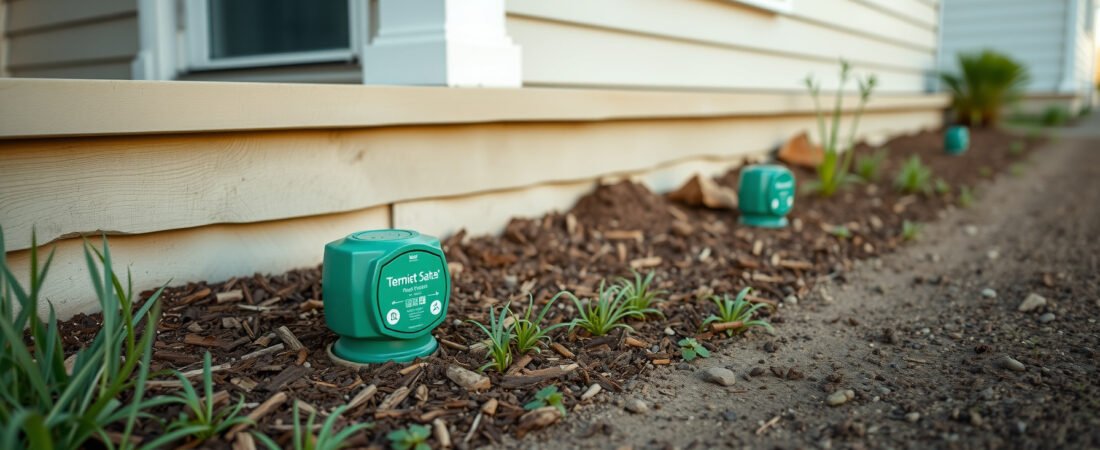
Termite bait stations work — but not the way most people think they do. The mistake almost every DIY homeowner makes is treating bait stations like traps, expecting them to catch and eliminate termites the same way a snap trap catches a mouse. They don’t. Bait stations are a slow-burn system that exploits the biology of the colony itself, using termites as unwitting couriers to carry a lethal dose back to their nest. When you understand that, you’ll shop for them completely differently — and you’ll stop making the placement errors that cause most DIY systems to fail.
Why Most DIY Termite Bait Stations Fail Before They Even Start
The failure usually happens at installation, not at the product. Homeowners buy a solid bait station kit, drive the stakes into the ground, and then wait — sometimes indefinitely — without getting any feeding activity. The reason is almost always placement. Subterranean termites don’t forage randomly across your yard; they follow existing moisture gradients and wood-to-soil contact points. If your stations aren’t near those pathways, termites may never find them.
A single subterranean termite colony can contain over 1 million individuals and maintain foraging tunnels that stretch more than 150 feet in multiple directions. That’s a lot of ground to cover, and bait stations placed 10 feet apart along the perimeter in dry soil — nowhere near a moisture source or wood debris — are essentially invisible to the colony. Spacing stations every 10 to 15 feet around the structure’s perimeter, and closer (every 5 to 8 feet) in known activity zones, dramatically improves intercept rates.
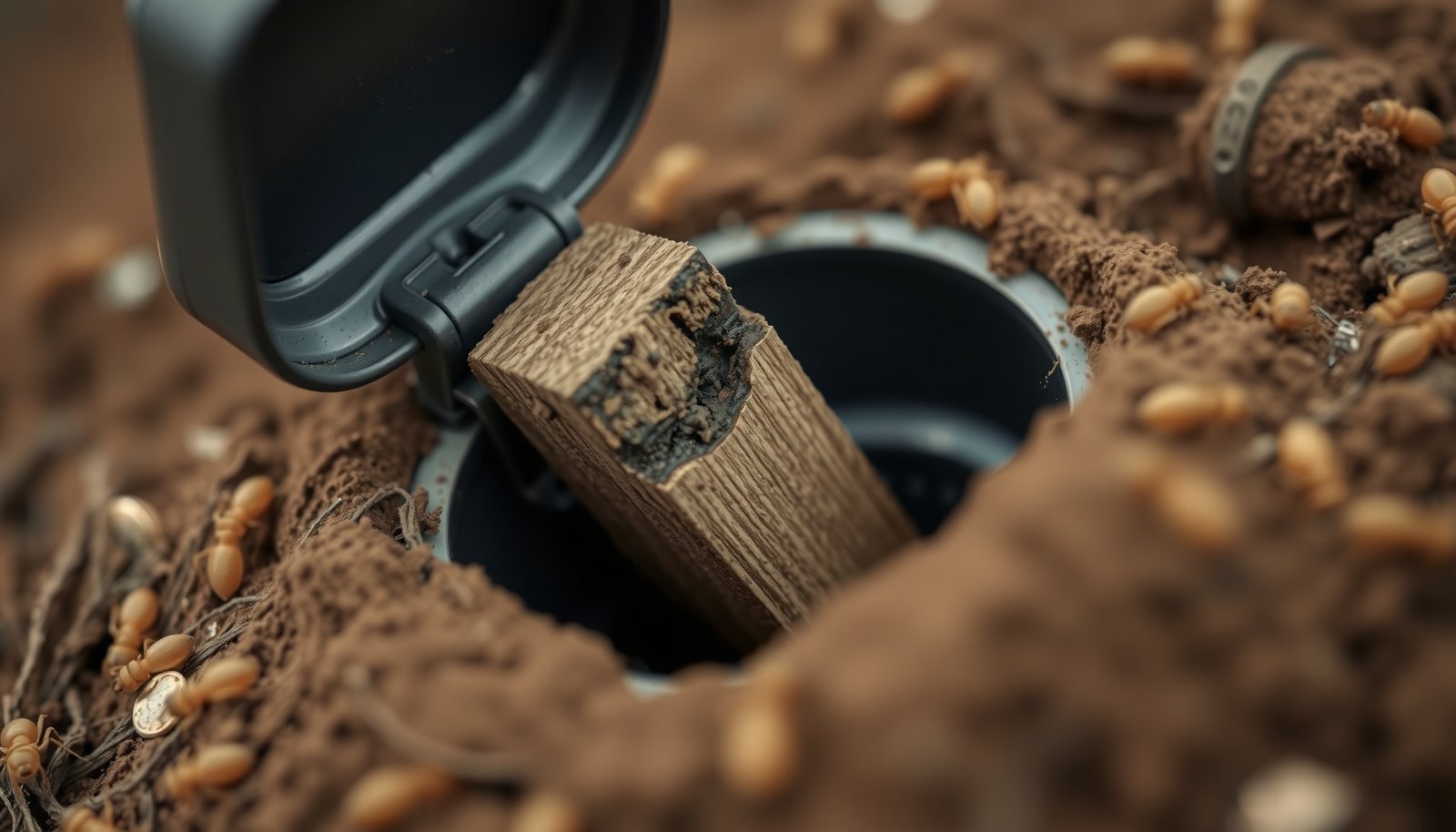
This close-up shows the internal bait matrix and monitoring wood inside a typical in-ground station — understanding what termites encounter when they find the station helps explain why bait loading timing matters so much.
How Do Termite Bait Stations Actually Kill the Colony?
The mechanism is genuinely clever, and it’s worth understanding before you buy anything. Most DIY bait stations use an insect growth regulator (IGR) — typically hexaflumuron or noviflumuron — embedded in a cellulose matrix that termites find attractive. These IGRs don’t kill termites on contact. Instead, they interfere with chitin synthesis, preventing worker termites from molting properly. Workers that can’t molt die during their next growth phase, and because the colony depends on workers for food and moisture, the entire population slowly collapses.
The process takes 60 to 90 days in most conditions — sometimes longer in cooler climates where termite activity slows down. That lag is exactly why homeowners abandon the system too early and assume it isn’t working. Patience isn’t optional with bait technology; it’s part of the mechanism. The colony has to recruit enough workers to carry sufficient bait back before the cascade effect begins.
“The biggest misunderstanding I see with DIY bait programs is that homeowners pull the stations after 30 days and declare them ineffective. Chitin synthesis inhibitors require the bait to move through multiple worker generations before colony decline becomes visible. You’re not supposed to see dead termites — you’re supposed to see an eventual absence of them.”
Dr. Patricia Ng, Board-Certified Entomologist and Urban Pest Management Specialist, Purdue University Extension
Which DIY Termite Bait Stations Are Actually Worth Buying?
Not every product on the shelf delivers what the packaging implies. The DIY market has a wide range — from genuinely effective stations that use the same active ingredients as professional systems, to low-cost monitoring-only setups that contain no bait at all until you add a separate bait cartridge. Knowing the difference matters a lot when you’re comparing prices.
Here’s an honest breakdown of the main options DIY homeowners are actually using:
| Product | Active Ingredient | Monitoring Only or Bait Included? | Best For |
|---|---|---|---|
| Advance Termite Bait System (ATBS) | Diflubenzuron (chitin inhibitor) | Bait cartridge included | Active infestations, perimeter treatment |
| Spectracide Terminate | Hexaflumuron | Bait included in stake | Budget-conscious first-time users |
| Trelona ATBS Annual Bait Stations | Novaluron | Annual bait pre-loaded | Low-maintenance perimeter monitoring |
| DIY Sentricon-style monitoring kits | None (wood only) | Monitoring only — requires separate bait | Detection before committing to bait |
The Advance Termite Bait System is the closest thing to a professional-grade option that’s genuinely available to homeowners. It uses diflubenzuron, which has strong research backing, and the refillable cartridge design means you’re not buying a whole new system every season. Spectracide Terminate is more widely available at big-box stores and works reasonably well for lower-activity situations, though the hex flumuron bait degrades faster in warm, humid conditions — something to keep in mind if you’re in the Southeast or Gulf Coast states.
Where Exactly Should You Place Termite Bait Stations Around Your Home?
Picture this: you’ve just purchased a 15-station kit, and you’re standing in your backyard trying to figure out where to put them. Most instructions say “place around the perimeter” — which tells you almost nothing useful. Here’s a more precise approach that reflects how subterranean termites actually forage.
Placement should prioritize intercept points along likely foraging routes, not just even spacing. Termites are drawn to moisture, decaying cellulose, and areas where soil meets wood. Use this checklist as your placement guide:
- Within 12 inches of any wood-to-soil contact (fence posts, deck supports, wood mulch lines)
- Near downspout splash zones or areas with poor drainage where soil stays consistently moist
- Adjacent to any existing mud tubes you’ve identified on the foundation (but not directly on top — offset about 6 inches)
- Along utility conduits, irrigation lines, or expansion joints where termites commonly travel into structures
- Under or near woodpiles, old stumps, or buried wood debris in the yard
- At corners of the structure, where two foundation walls meet — termites frequently exploit these junctions
Depth matters too. The station needs to sit so that the wood or bait matrix is at or just below the soil surface — not buried 6 inches down, which puts it below most shallow foraging galleries, and not sitting on top of compacted surface soil where it dries out in a week. A consistent soil contact surface around the entire station is what makes termites likely to enter rather than tunnel around it. Just like you’d think about placement strategy for a pest like carpenter bees — where the target pest’s behavior dictates where you intervene — termite station placement is entirely about reading their movement patterns first.
How Often Do You Need to Inspect and Reload Termite Bait Stations?
This is where DIY systems require more discipline than most homeowners expect. A bait station you install and forget is just an empty plastic tube in the ground after about 90 days. The monitoring wood dries out, the bait matrix gets depleted or degraded, and you’ve lost your early-detection window entirely without realizing it.
A realistic maintenance schedule for most climates looks like this:
- Check every 30-90 days during active season (spring through early fall). Open each station, look for mud tunneling inside, feeding damage to the wood, or termite presence. Note which stations show activity.
- Replace the monitoring wood when it shows more than 30% feeding damage. At that threshold, you’ve confirmed activity and should load or reload the bait cartridge immediately.
- Replace bait cartridges every 3-4 months in warm, humid climates. Hexaflumuron and diflubenzuron break down faster in heat and moisture, reducing palatability and efficacy.
- Inspect all stations after heavy rain events. Flooding can fill stations with sediment, blocking termite access and essentially rendering them useless until cleaned.
- Mark inactive stations but don’t remove them. Termite foraging routes shift seasonally. A station with zero activity in June may become the most active one by September.
Honest nuance here: if your home has an active, confirmed infestation inside the structure — visible mud tubes on interior walls, damaged wood that sounds hollow when tapped, or a recent swarm — bait stations alone may not be the right first move. Bait technology works best as a perimeter interception and colony elimination tool, not as an emergency rescue for a colony already feeding inside your walls. In that scenario, a targeted liquid termiticide treatment to the active interior zone, combined with exterior bait stations for long-term colony control, is the more realistic approach. The climate and soil type around your home also affect how well bait stations perform — sandy, dry soils in arid regions slow termite foraging significantly compared to the moist clay soils of the Mid-Atlantic or Southeast.
Pro-Tip: Before you load active bait into a new station, leave just the monitoring wood in place for 2-4 weeks first. If you see feeding damage on that wood, you’ve confirmed termites are in that exact foraging zone — and loading the bait at that point is exponentially more effective than loading it into a station that hasn’t been found yet. Loading bait into an unvisited station essentially wastes the product and can allow it to degrade before termites ever arrive.
One thing that surprises people who’ve dealt with other pest ID challenges — termite bait station efficacy looks nothing like what you see with, say, identifying whether a pest is even present in the first place. With something like a brown marmorated stink bug vs a regular stink bug, you can make a visual determination quickly. With termite bait systems, success is measured by an absence of evidence over time — which requires a completely different kind of patience and documentation mindset.
Start a simple log — date, station number, what you observed, whether you reloaded. Six months from now, that log will tell you exactly which areas of your property carry the highest termite pressure, which is information worth having whether you stay DIY or eventually bring in a professional for a more targeted intervention. The stations don’t just protect your home; over time, they map the termite activity around it.
Frequently Asked Questions
how far apart should termite bait stations be placed?
Most manufacturers recommend spacing termite bait stations every 10 feet around your home’s perimeter. Place them closer together — around 6 feet apart — near areas with known termite activity, moisture problems, or wood-to-soil contact like deck posts or fence lines.
how long does it take for termite bait stations to work?
Don’t expect overnight results — termite bait stations typically take 3 to 6 months to eliminate a colony. The process is slow by design: worker termites carry the bait back to the colony and spread it to others, including the queen, which is what actually collapses the population.
do termite bait stations work if you already have an infestation?
Yes, bait stations can work on an active infestation, but they’re not the fastest solution if termites are already inside your walls. You’ll likely get better results combining bait stations around the perimeter with a direct-contact liquid termiticide applied to the affected areas indoors.
how often do you need to check termite bait stations?
You should inspect your bait stations every 3 months at minimum — monthly checks are better if you’re in a high-risk area or during warmer months when termites are most active. Refill or replace the bait cartridge whenever it’s been consumed or if you notice it’s been sitting untouched for more than one full season.
are DIY termite bait stations as effective as professional ones?
DIY bait stations like Spectracide Terminate or Advance use the same active ingredients found in professional systems, so they can be genuinely effective if installed and monitored correctly. The biggest difference isn’t the product — it’s the consistency of monitoring, since pest control pros check stations on a strict schedule while homeowners sometimes let months slip by.