
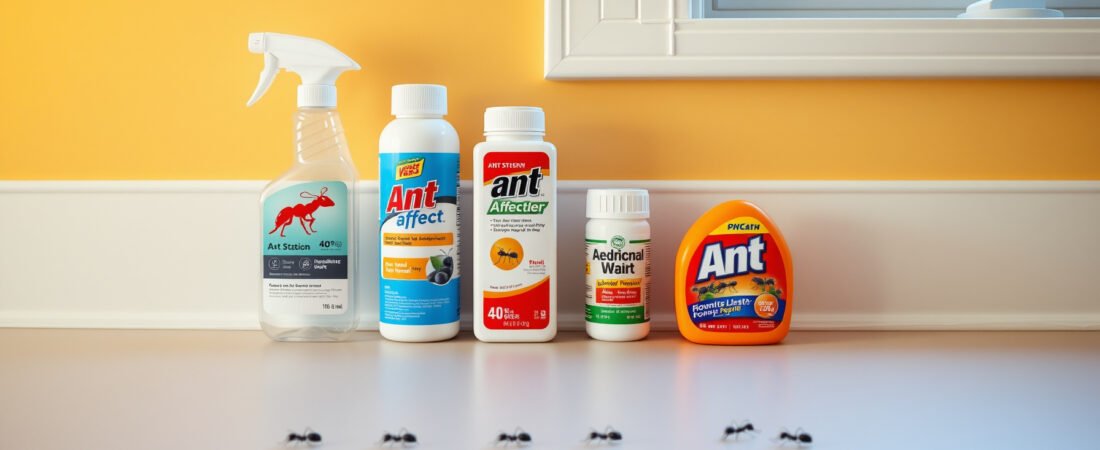
Terro wins for most ant problems — but only if you’re patient enough to let it work. That single sentence will save you more frustration than any product comparison chart ever could. The real mistake people make isn’t choosing the wrong brand; it’s choosing the right product for the wrong stage of an infestation, then giving up too soon when the ants seem to multiply overnight.
Ortho, Raid, and Terro each operate on completely different killing mechanisms, and that’s the piece almost every side-by-side comparison glosses over. Raid sprays kill on contact in seconds. Terro bait takes 24–72 hours to eliminate a colony — intentionally. Ortho granules create a perimeter barrier that prevents new entry. These aren’t interchangeable products competing for the same job. They’re tools for different phases of an ant problem, and understanding that distinction will determine whether you solve your infestation or just relocate it temporarily.
Why Does Raid Kill Instantly But Your Ant Problem Comes Back in 3 Days?
Raid’s active ingredients — typically pyrethrins, imiprothrin, or cypermethrin depending on the formula — attack an ant’s nervous system almost immediately upon contact. An ant sprayed directly will die within minutes. That’s satisfying to watch, no question. The problem is that you’ve just killed the forager scouts, not the colony.
A single carpenter ant colony can contain 3,000 to 10,000 workers, and a mature odorous house ant colony can house up to 100,000 individuals. The foragers you’re spraying represent maybe 10–15% of the active population at any given moment. Killing them triggers a pheromone response in some species that actually causes the colony to split — a process called budding — which means you can turn one problem colony into three or four satellite colonies by being too aggressive with contact sprays too early.
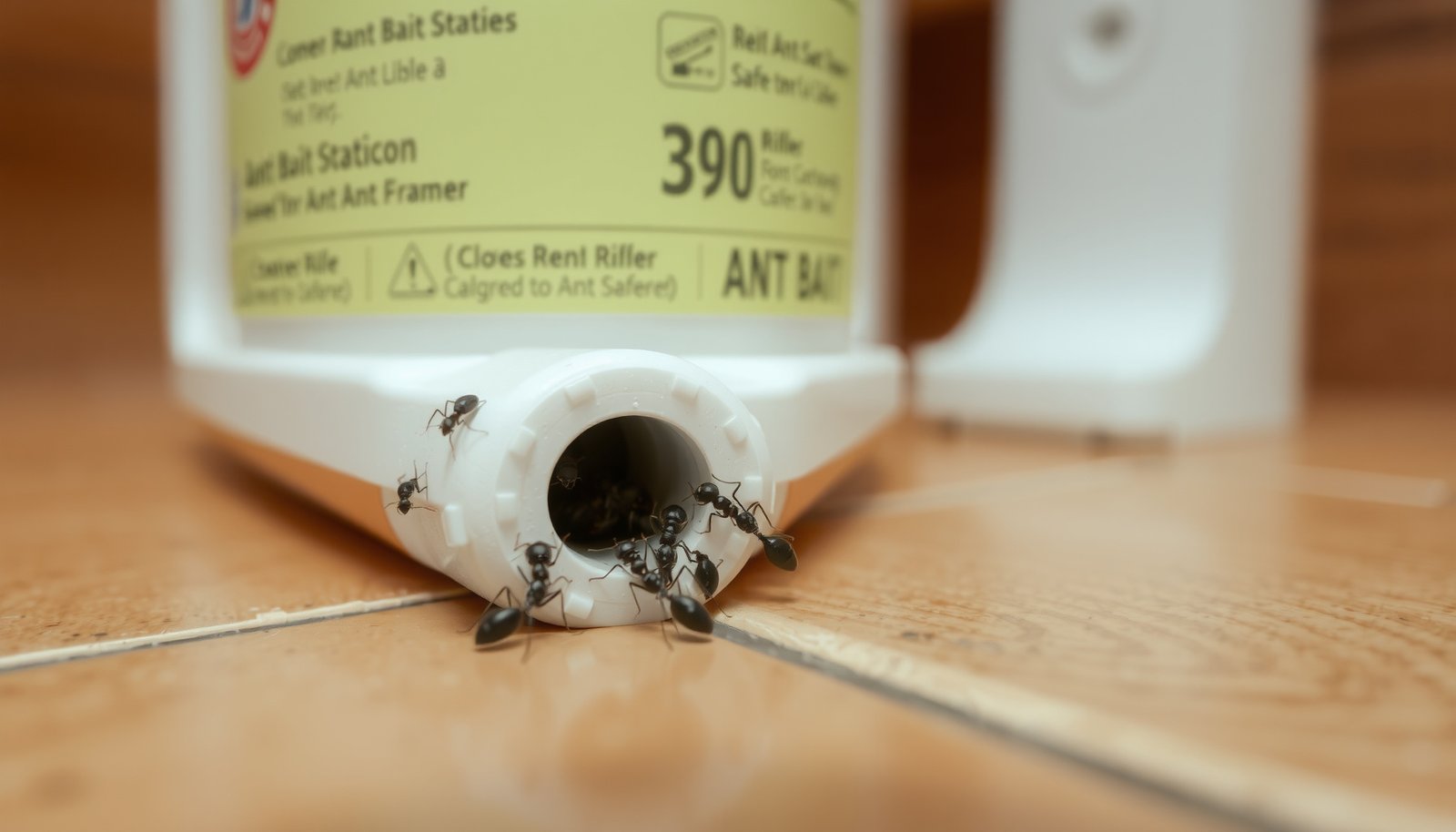
This image shows all three product types side by side — bait stations, contact spray, and granular perimeter treatment — illustrating how each one targets a completely different part of the ant control process.
How Does Terro Actually Work — and Why Do Ants Get Worse Before They Get Better?
Terro’s active ingredient is borax — sodium tetraborate — suspended in a liquid bait that smells and tastes like food to ants. Foragers find the bait, consume it, and carry it back to the nest in their crop (a second stomach used for food storage and sharing). Through a process called trophallaxis — essentially mouth-to-mouth food transfer between colony members — the borax gets distributed through the population, including to the queen.
Borax works by disrupting the ant’s ability to metabolize energy at a cellular level, but it’s slow enough that the carrier ant doesn’t die before reaching the nest. That’s the whole design. If you see 200 ants swarming your Terro bait station on day one and 400 on day two, that’s not failure — that’s the product working exactly as intended. Full colony elimination typically takes 3 to 7 days, and the temptation to spray the trail with Raid during that window is the single most common reason Terro treatments fail.
“The biggest error I see homeowners make is using a contact killer and a bait simultaneously. The repellent compounds in most spray products contaminate the foraging trail and deter ants from ever reaching the bait. You end up with the worst of both worlds — you didn’t kill the colony, and now the bait station is being avoided.”
Dr. Patricia Callahan, Board-Certified Entomologist and Urban Pest Management Specialist, University Extension Program
What Does Ortho Do That Raid and Terro Can’t?
Ortho Home Defense products — particularly the granular perimeter treatment and the liquid concentrate — work as residual insecticides, meaning they don’t just kill ants that touch them now; they leave an active barrier that keeps killing for weeks. The primary active ingredient in most Ortho Home Defense formulas is bifenthrin, a synthetic pyrethroid that binds to soil and treated surfaces and remains active for up to 90 days under typical outdoor conditions.
This is fundamentally different from what Raid and Terro offer. Ortho’s strength is exclusion and prevention — you’re treating the perimeter of your foundation, around windows, along entry points, and across mulch beds where ant colonies typically nest. Picture this: you’ve just used Terro to eliminate an odorous house ant colony that had worked its way into your kitchen — success. But within two weeks, a new colony from your neighbor’s yard has found the same entry point. That’s exactly the scenario where Ortho granules applied around your foundation become the missing third piece of your ant control strategy.
Pro-Tip: Don’t apply Ortho granules and immediately water them in if rain is expected within 4 hours. Granular bifenthrin needs light watering to activate, but a heavy downpour before it’s absorbed will flush it away from the treatment zone entirely.
Which Ant Species Actually Determines the Best Product to Use?
Species identification matters more than most homeowners realize, and it’s the factor that makes a blanket “best ant killer” recommendation genuinely useless without context. Odorous house ants, pavement ants, and Argentine ants all respond very well to Terro bait because these are sugar-feeding species and borax-laced sweet bait is irresistible to them. Carpenter ants and fire ants are a different story.
Carpenter ants are protein and fat feeders — especially in spring during colony-building season — which means Terro liquid bait will be largely ignored. For carpenter ants, protein-based baits or direct Ortho granule application around nest sites produces far better results. Fire ants require broadcast granular baits specifically formulated for them, often containing spinosad or hydramethylnon. Applying Terro bait to a fire ant mound is like offering someone a salad when they ordered steak — the colony will simply forage elsewhere.
| Ant Species | Best Product Match | Why It Works |
|---|---|---|
| Odorous House Ant | Terro Liquid Bait | Sugar feeder; borax carried back to colony via trophallaxis |
| Pavement Ant | Terro or Ortho Granules | Responds to sweet bait; perimeter treatment prevents re-entry |
| Carpenter Ant | Protein bait + Ortho perimeter | Fat/protein feeder; Terro sweet bait largely ineffective |
| Fire Ant | Fire ant–specific granular bait | Requires broadcast treatment; colony structure differs significantly |
One honest nuance worth flagging: in warm, humid climates like the Gulf Coast or Southeast, Argentine ant supercolonies can span multiple city blocks and share queens across thousands of satellite nests. In those situations, even a perfect Terro treatment on one colony produces only temporary results because reinfestation pressure from adjacent colonies is constant. If you’re dealing with a multi-structure infestation in a climate like that, the calculus shifts significantly toward professional perimeter applications with longer-residual products.
How Should You Actually Sequence These Products for a Complete Ant Elimination?
The most counterintuitive truth about ant control is that the best results don’t come from picking one product — they come from using the right products in the right order. Spraying first, baiting second, then treating the perimeter is backwards. The spray contaminates the foraging trail and makes the bait station invisible to ants that have been chemically redirected away from their normal routes.
The correct sequence — the one that pest control professionals use and almost no product packaging explains clearly — is this:
- Identify the ant species first. Knowing whether you’re dealing with a sugar-feeder or protein-feeder determines whether Terro is even the right bait to deploy.
- Place Terro bait stations along active foraging trails without disturbing the trail. Don’t clean the ant trail with cleaner before baiting — you’ll destroy the pheromone path the ants follow to find the bait.
- Wait 5–7 days and resist all contact spray use during this period. This is the hardest part. The ant activity will spike before it collapses.
- After trail activity has dropped by roughly 90%, seal all confirmed entry points. Gaps as small as 1/16 inch in door sweeps, pipe penetrations, or window caulking are sufficient for most ant species to pass through.
- Apply Ortho Home Defense granules or spray around the full perimeter of the structure. Focus on the zone within 3 feet of the foundation, mulch beds, and any wood-to-soil contact points.
- Use Raid contact spray only for isolated indoor strays that appear after the main treatment — not as a primary elimination strategy.
This sequenced approach works because it addresses the ant problem at every level: colony elimination via slow-acting bait, structural exclusion via caulking and sealing, and residual prevention via perimeter treatment. Each product is doing a job the other two can’t. Just as you’d handle a different type of pest problem — like when managing boxelder bugs before they invade requires both exterior treatment and exclusion working together — ant control is most effective when it’s layered rather than singular.
Here’s a quick breakdown of how each product stacks up on the metrics that actually matter to a homeowner dealing with an active problem:
- Speed of visible results: Raid wins outright — contact kill within seconds. Terro shows colony collapse in 3–7 days. Ortho perimeter works preventatively and has no “result” you can see directly.
- Colony elimination rate: Terro is the clear leader for sugar-feeding species — it’s specifically engineered for colony-wide kill. Raid eliminates individuals, not colonies.
- Residual protection duration: Ortho granular bifenthrin treatments last up to 90 days outdoors. Raid has zero residual once it dries. Terro bait stations remain active until the bait is consumed.
- Indoor safety profile: Terro bait stations are enclosed and pose minimal exposure risk to children and pets when used as directed. Raid spray requires ventilation and surface avoidance for at least 15–30 minutes post-application. Ortho granules are intended for exterior use only.
- Cost per treatment: Terro bait stations run approximately $8–$12 for a 6-pack. A Raid ant spray typically costs $6–$10. Ortho Home Defense granules in a 2-lb shaker run $10–$15 and cover 1,000+ square feet of perimeter.
One thing that rarely gets mentioned in product comparisons: the formulation version within each brand matters significantly. Terro’s outdoor liquid bait stakes perform differently from their indoor bait stations. Ortho’s ready-to-use wand spray is not the same product as their concentrated granules. Raid’s Ant Killer spray is formulated differently from their Ant Baits gel. Reading “Terro” or “Ortho” on a label isn’t enough information — knowing which specific product in their line you’re using determines how effective that treatment will actually be.
It’s similar to how identifying the correct species is essential before treating any pest — just as distinguishing between a smokybrown cockroach and an American cockroach outside changes how you approach treatment, misidentifying your ant species and grabbing the nearest product off the shelf can mean spending money on something that’s genuinely useless for your specific infestation.
There’s no single best ant killer brand — but there is a best ant killer for your specific situation. Terro is the right starting point for the vast majority of indoor ant problems caused by sugar-feeding species, and it’s the product most likely to produce lasting results when you use it correctly and leave the Raid in the cabinet for 7 days. Add Ortho perimeter treatment once the colony is gone, and you’ve built a system that addresses both the immediate problem and the next one before it starts.
Frequently Asked Questions
What is the best ant killer brand for getting rid of ants permanently?
Terro is widely considered the best ant killer brand for long-term elimination because its borax-based bait kills the entire colony, not just the ants you see. Workers carry the bait back to the nest, which typically wipes out a colony within 1–2 weeks. Raid and Ortho sprays kill on contact but don’t reach the queen, so ants often come back.
Is Terro or Ortho better for indoor ant infestations?
Terro liquid bait stations are the better pick for indoors because they’re low-mess, pet-safer than sprays when used as directed, and target the colony at the source. Ortho Home Defense works well as a perimeter spray along baseboards and entry points, but it’s best used as a preventive barrier rather than a primary treatment for an active indoor infestation.
How long does it take Raid ant spray to work?
Raid ant and roach sprays kill on contact, usually within seconds to a few minutes of direct exposure. However, the residual effect only lasts about 4 weeks on non-porous surfaces, so you’ll need to reapply if ants keep coming in. It doesn’t kill the colony, so spraying alone rarely solves an infestation for good.
Is Ortho Home Defense safe to use around kids and pets?
Ortho Home Defense is considered safe around kids and pets once it’s fully dry, which takes about 30–60 minutes under normal conditions. The active ingredient, bifenthrin, is toxic to pets and children while wet, so keep them out of the treated area until it dries completely. Always ventilate the space during application and follow the label instructions exactly.
Which ant killer works best for carpenter ants?
For carpenter ants, a combination approach works best — use Ortho Home Defense or a Raid foam spray to treat entry points and wall voids, and place Terro carpenter ant bait gel near active trails. Carpenter ants are harder to eliminate than pavement ants because their nests are often inside wood or walls, so if you don’t see results within 2–3 weeks, it’s worth calling a pest control professional.