
Throwing away your mattress won’t fix a bed bug infestation — it will spread it. That’s the part most people find out too late, after dragging a bug-laden mattress through their home and depositing eggs in every room along the way. Your mattress is almost never the source of the problem, and getting rid of it almost never solves it. The bed frame, box spring, baseboards, outlet covers, and the nightstand six inches away are doing the real work. Here’s how to treat the mattress you already own and actually eliminate the infestation instead of relocating it.
Why Throwing Away Your Mattress Makes the Infestation Worse, Not Better
The instinct to toss the mattress makes complete sense — you found bugs on it, so the mattress is the problem. But bed bugs don’t live exclusively in mattresses. They live within roughly 8 feet of where you sleep, in any tight harborage they can find: seams, cracks, screw holes, electrical plates, behind picture frames. By the time you’ve found live bugs on your mattress surface, there are almost certainly hundreds more distributed across your entire sleeping area.
Moving an infested mattress through your home deposits eggs and nymphs along every inch of that path — hallways, doorframes, stairwells. One study from the University of Kentucky extension program found that mattress disposal is one of the leading ways infestations spread to previously unaffected rooms and neighboring units in apartment buildings. A treated and encased mattress sitting in place is far less dangerous than a discarded one moving through your living space.
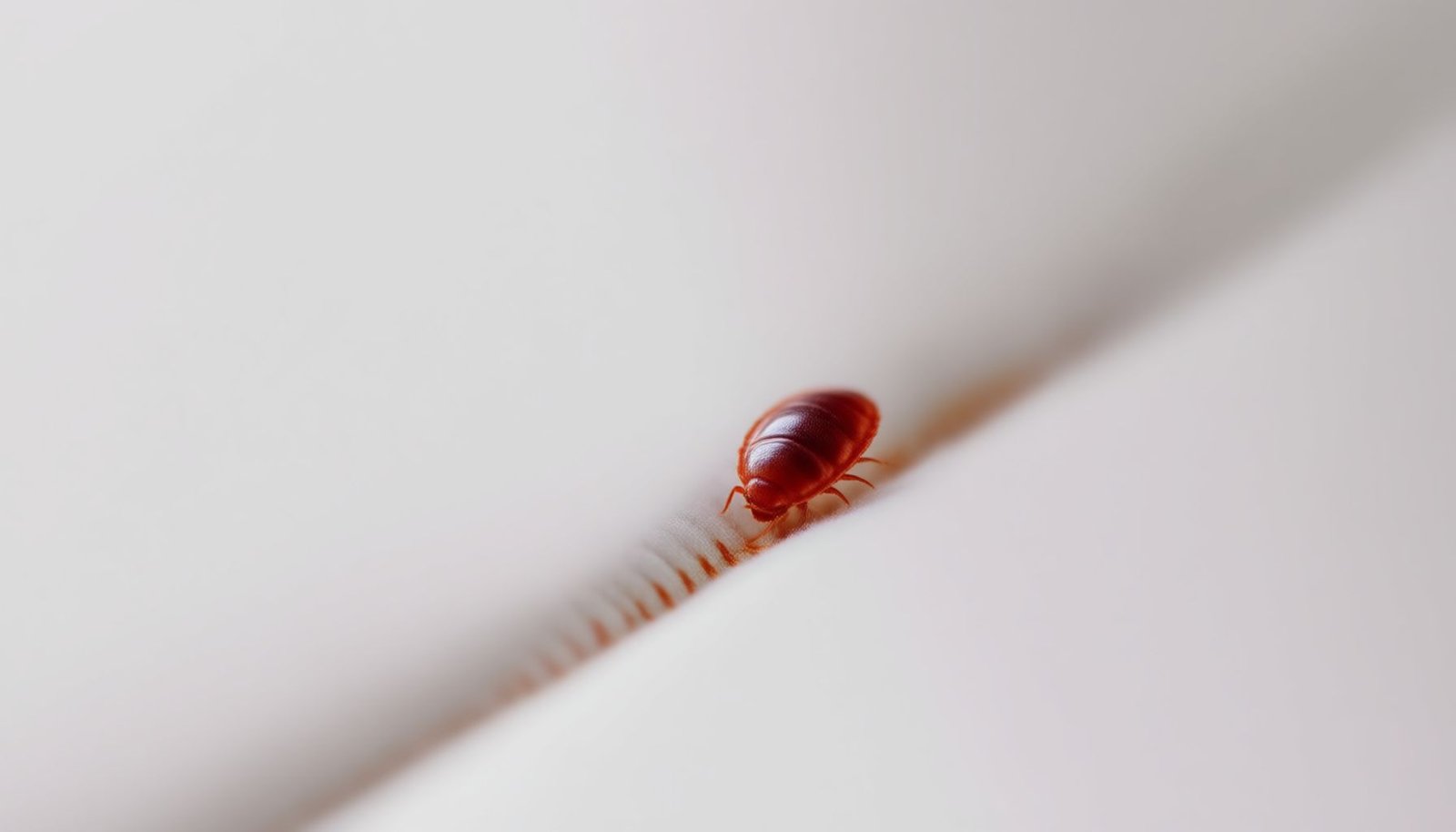
This close-up shows typical bed bug harborage along a mattress seam — the exact location most people miss when they’re looking for live bugs, and the first place any treatment needs to target.
What Bed Bugs Are Actually Doing Inside Your Mattress (And Why It Matters for Treatment)
Understanding the biology changes your entire treatment approach. Adult bed bugs can survive over 300 days without a blood meal under cool conditions, which means any treatment that doesn’t directly contact every life stage is buying you time, not solving the problem. Females lay 1 to 5 eggs per day and up to 500 eggs over a lifetime — tiny, white, and sticky enough to adhere to fabric fibers in ways that make them nearly impossible to remove by hand or vacuuming alone.
The mattress itself provides what pest control professionals call “harborage density” — many tight, dark seams close to the food source. Bed bugs don’t eat the mattress. They use it as a base camp. Treating the mattress is necessary, but the deeper point is that any treatment method has to account for the egg cycle. Eggs hatch in 6 to 10 days, and newly hatched nymphs go through five molts before reaching adulthood. A single missed egg batch can reboot a full infestation within three to four weeks, which is why people think they “killed them all” and then see bugs again a month later.
How to Actually Treat a Mattress for Bed Bugs Step by Step
Picture this: you’ve confirmed live bed bugs on your mattress seam on a Tuesday night. Here’s the exact sequence that gives you the best outcome without replacing the mattress. Order matters — doing these steps out of sequence reduces effectiveness significantly.
- Strip all bedding immediately and bag it in sealed garbage bags before moving it. Carry bags directly to the washing machine — don’t set them down anywhere else. Wash on the hottest water setting and dry on high heat for at least 90 minutes. Sustained heat above 120°F kills all life stages including eggs within minutes of exposure.
- Vacuum the entire mattress with a crevice tool, paying particular attention to every seam, handle, and stitched edge. Go slowly — you’re not cleaning, you’re extracting. After vacuuming, remove the vacuum bag immediately, seal it in plastic, and put it in an outdoor trash can. A bagless canister needs to be emptied into a sealed bag and the canister wiped with a damp cloth containing rubbing alcohol.
- Apply a contact spray labeled for bed bugs directly along every seam, tufting, and handle of the mattress. Steamer treatment is highly effective here — a dry steam unit (not a clothing steamer) delivering 160–180°F steam held 3–4 seconds per inch will kill on contact including eggs. Move the nozzle slowly and methodically. Never rush the steam pass.
- Apply a residual dust like CimeXa (amorphous silica gel) or food-grade diatomaceous earth lightly into the box spring and along the bed frame joints. Unlike contact sprays, dusts work mechanically — they damage the insect’s exoskeleton and cause dehydration over 24 to 72 hours. CimeXa remains effective for up to 10 years in undisturbed locations, making it ideal for hard-to-reach voids.
- Encase the mattress and box spring in bed bug-rated encasements immediately after treatment. These are different from basic mattress protectors — they seal completely with a zipper mechanism and fabric tight enough to trap anything still inside. Any bugs inside the encasement are now cut off from feeding and will die. Any bugs trying to get in from outside can’t. Leave encasements on for a minimum of 18 months.
- Install bed bug interceptors (climb-up monitors) under each leg of the bed frame and move the bed away from walls and bedding off the floor. This turns your bed into an island — bugs can only reach you by climbing up the legs and will fall into the interceptors’ slick-walled moat. This also tells you immediately if treatment is working, because trapped bugs in interceptors tell you there’s still an active population in the room.
One thing people consistently underestimate: this process has to be repeated. Do a full follow-up inspection and retreatment at the 7-day mark and again at 14 days. Those timelines correspond to egg hatching cycles. The first round kills active bugs. The follow-up rounds catch the newly hatched nymphs before they mature and start reproducing.
Which Treatment Method Works Best for the Mattress Itself?
Not every method works equally well on a mattress, and some popular options that work elsewhere in a room are either unsafe or ineffective directly on sleeping surfaces. Here’s an honest comparison of the main approaches:
| Treatment Method | Kills Eggs? | Safe Directly on Mattress? | Residual Effect? |
|---|---|---|---|
| Dry steam (160°F+) | Yes | Yes | No — contact kill only |
| Contact spray (pyrethroid-based) | No | With caution — check label | Short-term |
| CimeXa / silica dust | No (mechanical, slower) | Not recommended on sleep surface | Yes — long-lasting |
| Whole-room heat treatment | Yes | Yes — penetrates mattress interior | No — contact kill only |
Whole-room heat treatment — where a professional raises the ambient room temperature to 120–135°F for several hours — is the only method that reliably kills bugs and eggs inside the mattress core, not just on the surface. DIY heat options like portable bed bug heaters are available and can work, but require careful setup to avoid cold spots where bugs can survive. Steam is a strong DIY option for the mattress surface, but it only penetrates about a quarter inch into the material, so anything deeper in the foam or batting is not affected.
Pro-Tip: If you’re using a steam unit on your mattress, move the nozzle at roughly one inch per three seconds. Going faster doesn’t allow sufficient heat penetration and won’t kill eggs on contact. A common mistake is treating the mattress quickly and assuming the job is done — slow, deliberate steaming along every seam and surface is what actually works.
What You Have to Treat Alongside the Mattress or the Infestation Will Return
This is the part that determines whether your treatment actually works or whether you’re back at square one in six weeks. The mattress is one harborage site. In a typical bedroom, there are at least a dozen others — and bed bugs distribute themselves deliberately across multiple locations as a survival strategy. Finding and treating all of them is non-negotiable.
Just like dealing with pests in concealed locations — the way getting rid of wasps under roof shingles requires treating the harborage, not just the wasps you can see — bed bug treatment only works if you address the locations you can’t immediately see, not just the surface that’s visible. Here’s what needs treatment in the same session as your mattress:
- The entire bed frame including all joints, screw holes, and hollow legs — these are prime harborage spots and often contain more bugs than the mattress itself
- The box spring, especially along the interior fabric and wooden frame — box springs are notoriously difficult to treat thoroughly and are sometimes worth replacing (and encasing the replacement) rather than treating
- Baseboards and the gap between baseboard and flooring for a 6-foot radius around the bed — use a residual spray or dust applied with a fine applicator
- Electrical outlets and switch plates within 8 feet of the bed — remove the cover plate, apply a small puff of CimeXa or similar dust inside the void, replace the cover
- Any upholstered furniture within the room — nightstands, chairs, headboards — receive the same vacuuming and steam treatment as the mattress
- Clutter on the floor and under the bed — eliminate it entirely during treatment; cardboard boxes, stacked clothing, and stored items create dozens of additional harborage sites that make any treatment nearly impossible to complete effectively
“The number one reason DIY bed bug treatments fail isn’t the product — it’s the scope. Homeowners treat the mattress and maybe the box spring, but they don’t treat the bed frame joints, the nightstand, the baseboard gaps, or the outlet voids. Bed bugs exploit every untreated harborage that’s left. You have to treat the entire zone of infestation, not just the surface where you found them.”
Dr. Michael Scharf, Professor of Entomology and Herman Brown Chair in Entomology, Purdue University
One honest nuance worth acknowledging: the severity of infestation genuinely changes what’s realistic as a DIY approach. A light infestation caught early — interceptors showing only a handful of bugs over two weeks, no visible staining on the mattress, bugs found in one room only — is very treatable with the steps above. A heavy, multi-room infestation that’s been active for months is a different situation. At that level, the distribution across the home is wide enough that professional heat treatment or a licensed PCO with a multi-visit chemical protocol is the more realistic path. There’s no shame in that assessment — knowing where DIY stops being sufficient is part of solving the problem, not a failure. Similarly, if you’re dealing with a different kind of hidden pest problem, understanding the scale first is always the right call — the same logic applies whether you’re treating bed bugs or, say, getting rid of fruit flies from a drain, where the visible problem is never the whole picture.
Your mattress is worth saving, and in the vast majority of infestations, it can be. The real work is treating everything around it with the same thoroughness. Encase it, monitor it with interceptors, and follow the retreatment schedule — and you’ll know within 30 days whether the infestation is breaking. If you’re seeing zero new captures in your interceptors after three weeks of aggressive treatment, that’s a genuinely good sign. The goal isn’t to eliminate every bug you can see. It’s to break the reproductive cycle completely — and that’s entirely doable without a trip to the mattress store.
Frequently Asked Questions
can you get rid of bed bugs without throwing away your mattress?
Yes, you can get rid of bed bugs without throwing away your mattress in most cases. Heat treatment, mattress encasements, steam cleaning, and diatomaceous earth are all effective methods that let you keep your mattress. Throwing it away is usually a waste of money since bed bugs are likely hiding in other parts of your room too.
what temperature kills bed bugs in a mattress?
Bed bugs die when exposed to temperatures of 118°F or higher for at least 90 minutes. A professional heat treatment raises the entire room to 120–135°F to make sure heat penetrates deep into the mattress and surrounding areas. A clothes dryer set to high heat works for bedding, but a standard hair dryer won’t get hot enough to treat the mattress itself.
how long do you have to leave a mattress encasement on to kill bed bugs?
You need to leave a bed bug-proof mattress encasement on for at least 12 to 18 months without removing or tearing it. Bed bugs can survive more than a year without feeding, so pulling the encasement off early just releases them again. Make sure you’re buying an encasement specifically labeled for bed bugs — not just a basic mattress protector.
does steam cleaning a mattress kill bed bugs?
Steam cleaning does kill bed bugs on contact, but only where the steam actually reaches temperatures above 160°F. You need to move the steamer slowly — about 1 inch per second — across seams, tufts, and folds where bed bugs hide. It’s effective as part of a broader treatment plan, but steam alone won’t reach bugs hiding deep inside the mattress or in your box spring and bed frame.
how do I know if bed bugs are gone from my mattress?
You can consider bed bugs gone if you’ve had zero live sightings, no new bites, and no fresh dark spotting or blood stains on your sheets for at least 3 consecutive weeks after treatment. Using a bed bug interceptor trap under each bed leg is one of the best ways to confirm they’re gone, since any surviving bugs trying to reach the bed will get trapped. If you’re still seeing activity after 4–6 weeks, it’s time to call a licensed pest control professional.
Disclaimer: This article is for informational purposes only and isn’t a substitute for professional pest control advice. Always read and follow the product label instructions exactly — label directions are legally binding and vary by brand and active ingredient. Keep all pesticides, baits and traps away from children and pets, ventilate treated areas as directed, and consider calling a licensed pest control professional if an infestation is large, recurring, or involves a structural pest like termites or carpenter ants.